Game of Thrones Book Club, Parte the Firste

1384704_565407392956_2023527125_n
Hello everyone, and welcome to the first installment of the Game of Thrones Book Club. First, apologies for starting late—our respective schedules ended up being a wee bit insane to get the first post up last Monday, but we’re up and running now, so you can look forward to weekly installments for the next four weeks.

Today we are talking about the first 159 pages of A Game of Thrones (the first 133 pages in the trade paperback).

Seeing as how this is all about Nikki finally submerging herself in the novels, why don’t we let her start off …

game-of-thronesNikki: First off, I can now see why so many people were drooling over these books in the first place, and why the fans of the books were so bloody excited to see an adaptation of it coming up on HBO when it was first announced. The writing is superb, fast-paced yet detailed and thoughtful, with the characterizations consistent and the dialogue beautifully handled. I got a sense of each character, who they were, and what made them tick right away. As with any book, what you get in the book that you can’t get in the show (unless it’s the oft-intrusive voiceovers in Dexter) is what they’re actually thinking in the scenes. Instead, to let us know why Catelyn really hates Jon Snow, for example, we need a long exposition scene where she actually explains to another character how it felt to find out her husband had fathered a bastard child. And yet, so many of these scenes actually do have dialogue that discusses the past, as if GRRM somehow knew from the beginning that this might somehow make it onto the big or small screen.

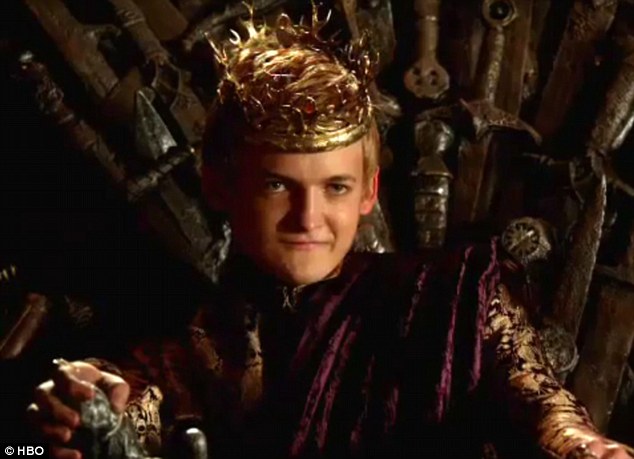
So much can be said about the order in which we consume our popular culture. Just two weeks ago I was on a panel at a Doctor Who convention, and was fascinated to see the different reactions to John Simm’s Master from those who’d watched the Classic Series first, and those who’d watched the New Series first. And the same goes for Game of Thrones. If you read the books first, then you watched the series and said, “Oh, that actor looks nothing like how I pictured _______ in my head.” But if you watch the series first, then you’re dealing with the opposite problem. I have the actors’ faces in my head, and when Joffrey is described as having long flowing curly locks, or Daenerys is 13, I can’t reconcile the actor’s face in my head with this new person being described in the book. And yet, perhaps as a testament to Martin’s descriptive power, in the final part of this section, I’m picture Joffrey with long flowing curly locks . . . even if he does have Jack Gleeson’s magnificently sneering face.
article-0-1204D9BF000005DC-201_634x459
In this section we read the story told from the following points of view: Bran, Catelyn, Daenerys, Eddard, Jon, Arya, Tyrion, and Sansa, some of them more than once. I’d like to talk about each of these voices and what it brings to the characters (and how each perspective shapes the characterization of others), and also look at where the series diverged from the book as well as how closely it stuck to a lot of it.

But let’s start right at the beginning with the prologue. This is almost exactly the same opening as the series back in the pilot episode, right down to the description of the Others, as if casting a pall over the entire story. “You know those little scary stories the children hear before they go to bed? They’re real.” From the very first page, I thought, Whoa. The HBO showrunners really WERE faithful to their subject matter. There are certainly many other changes after that, but fundamentally, their adherence to Martin’s vision is uncanny.

So, Chris, you’re picking up the first book again after reading it so many times. When I first met you in 1996, you were already a fan of this first book, if I recall correctly. What’s it like coming back to it after watching the series?

Chris: It’s not so much coming back to it after seeing the series—I’ve been rereading the novels as we go through their respective seasons—as it is sitting down with A Game of Thrones with a more specifically critical eye. We’re currently looking at it in my graduate seminar on contemporary fantasy, so I’ll definitely pass on the thoughts my students have; but it’s always interesting to approach a novel you have always loved from a different perspective (I’m teaching a course on The Lord of the Rings next term, so that should be even odder).

One of the things I’m noticing most acutely is GRRM’s economy of storytelling—a counterintuitive thing to suggest with an eight-hundred page novel perhaps, but he does a pretty remarkable job of laying out the key characters and conflicts within about sixty or seventy pages. The various stories mushroom exponentially out from here—cribbing Tolkien, GRRM often says that the story “grew in the telling”—to the point where, frankly, it’s starting to get unwieldy. At this point I will follow these novels wherever they go, but A Dance With Dragons was, to quote a friend of mine, something like pulling taffy (narratively speaking). So it’s kind of refreshing to go back to the beginning of things where GRRM isn’t overwriting it all yet.

I also thought, “here’s where we see the predominant reason for the series’ success,” namely the way he creates compelling characters embedded in a vividly imagined and detailed world. I think it goes without saying that one of the reasons fantasy as a genre errs on the side of bloat is because the author is obliged to lay out a believable and interesting alternative world, one we want to return to repeatedly. GRRM is very deft with the details that make his world resonate in the imagination—those elements of tactile reality, from the roughness of the stone to the taste of the food (you can tell he likes his food) that gives life to an imaginary place. To a certain extent, all fiction faces this issue, except that with narratives set in the “real” world (what Tolkien called the “primary reality”), it’s far easier to offer shorthand for everything readers will be familiar with and pay close attention to those elements the author wants to defamiliarize.

What I love most about A Game of Thrones is that what GRRM wants to defamiliarize is fantasy itself—and he’s smart enough to give us many of the conventional tropes (knights, castles, kings and queens, etc.) while at the same time withholding others: magic, chivalry, nobility of behavior, high-flown manners and speech, to say nothing of magical creatures. Of course, you read that preceding sentence and think “Um … direwolves? Dragon eggs? White walkers? And wait, isn’t Ned Stark the epitome of honour?” And yes … too true. But I would suggest that, even in these early pages, there’s a suggestion that not all is fantasyland. For one thing—and I’ll be returning to this theme as our reading goes on—the principal narrative dynamic established is less fantasy and more murder mystery. This, after all, is Ned’s main motivator: was Jon Arryn murdered? Was it in fact the Lannisters? And on a secondary note: will Jaime and Cersei be discovered? These questions set the stage for a novel preoccupied not with magical power but political power. Ned’s predawn ride with Robert provides our first inkling of what he’ll be facing in King’s Landing: a capricious and impulsive king with pet obsessions, but who is easily led; the machinations of the most powerful family in Westeros; and the fact that as Hand he’ll be serving a king indifferent to the minutiae of ruling a kingdom.

Nikki: A murder mystery is exactly what it is. And you’re right; the dragons and white walkers and direwolves aren’t considered magical at all, but larger-than-life aspects of their world. A direwolf is a real animal, just like dragons. The reason they’re so awe-inspiring to the young people in the book is because they’ve both been rendered extinct in one way or the other, and suddenly the direwolves have shown up. They’re not magical; they’re simply something that no longer exists. The white walkers are considered the stuff of legend, like the chubacabra or the Yeti, but not something magical by any means.

The direwolves are the only thing I think the show didn’t quite do justice to, and I think it would have been difficult to have done so. For the past three years, as you and I have been discussing the show, I’ve talked about how much I love the direwolves as pets, while you love them as these gigantic majestic creatures. Yes, they’re made to look larger than wolves on the show, but not the massive beasts they are in the books. They’re omnipresent in the books, and just appear occasionally on the show. I would refer to them as “Arya’s direwolf” or “Sansa’s direwolf” while you referred to them as Nymeria or Lady. I could never remember their names, but that’s all they’re called in the books. I have an entirely new appreciation for the importance of these animals after reading the books.

game_of_thrones___book_cover_by_jamga-d4qs5b6
The ages of the characters was another thing I had to get used to. Daenerys is 13; on the show she appears to be about 19 or 20. Jon and Robb are 14; on the show they’re in their early 20s. Bran is 7; on the show I’d say he’s about 10 or 11. Rickon is 3; the two and a half times he’s been on the show he looks about 7. Ned is 35; on the show he’s probably in his mid-50s. But then again, that works. Bringing it back to what you were saying, Chris, the show seems to be set in some sort of medieval land, with medieval England being the closest comparison point, right down to the relative shape of the country. And in medieval England, life expectancy was probably about age 40. In that case, at 13/14, Jon, Robb, and Daenerys are the equivalent of today’s late 20s/early 30s. Bran, at 7, would the equivalent of today’s 13 or 14. So the casting is quite perfect. (Not to mention, any casting agent knows that if you cast too young, you run into difficulties; just look at the rapid aging they’re trying to hide already with Bran and Arya.) So really, the only thing I had to get used to with the different ages was when I first read them, but the way they acted seems consistent with the ages of the actors.

It’s been a while since we wrote that very first piece about the pilot episode, Chris. Do you remember what your initial reactions were to the casting, based on the book? Were GRRM fans generally happy with the choices?

Chris: I don’t know of many people unhappy with the casting; I was quite pleased, and completely unsurprised at how they’d advanced the characters’ ages. After all, in a novel it’s disturbing and creepy for a thirteen-year-old girl to be married off to a musclebound barbarian, but at least there’s an intellectual and historicist calculation you can do, reminding yourself that child brides have been the norm for the larger proportion of human history (and when, as you say, life expectancy is around 40, it doesn’t seem quite so egregious). That being said, I don’t think even HBO could get away with a literally Lolita-aged Daenerys—for one thing, I think depicting that might actually be technically illegal. On the other hand, I’d forgotten how surprisingly tender the consummation of Drogo and Dany’s marriage is in the book … she’s terrified, but he is gentle with her, whereas in the series it is presented as unequivocal rape.

I read a book this summer called The Time Traveler’s Guide to Medieval England by Ian Mortimer, and I’d recommend it to anyone who needs a reality check about fantasy’s often sentimental or nostalgic depiction of the medieval world. A representative quotation, describing what you can expect as you approach a 14th-century town:

And then you notice the smell. Four hundred yards from the city gate, the muddy road you are following crosses a brook. As you look along the banks you see piles of refuse, broken crockery, animal bones, entrails, human faeces, and rotting meat strewn in and around the bushes. In some places the muddy banks slide into thick quagmires where townsmen have hauled out their refuse and pitched it into the stream. In others, rich green grasses, reeds, and undergrowth spring from the highly fertilized earth. As you watch, two semi-naked men lift another barrel of excrement from the back of a cart and empty it into the water. A small brown pig roots around on the garbage. It is not called Shitbrook for nothing.

There’s no fantasy author I’ve yet encountered who really manages to captures the squalor of medieval life (for that, I maintain, nothing gets it like Monty Python and the Holy Grail), though it does pose the question of just how many people would cheerfully read something that did. For all that, however, GRRM does a reasonable job: though he mostly downplays the dirt, shit, and rampant disease of the medieval world (except for when he highlights it in the slums of King’s Landing), he’s quite unflinching about its matter-of-fact violence and the fact that the common folks’ fortunes and the quality of their civic lives are entirely dependent on whether or not they have a fair and generous lord. The knights of Westeros are not the gallant figures of Arthurian legend, but highly trained killers.

It’s telling that Sansa is the only character who’s allowed to entertain her illusions for any length of time: Jon Snow learns soon enough that his idea of life at the wall is dramatically different from its reality. In fact, as we go forward it might be interesting to map out the degree and scope of characters’ delusions, and how it relates to their station and role. Again, Sansa is the obvious example here, and her delusions persist in part because they are encouraged by her septa and by all the others grooming her to be a proper lady. But at the same time, her father is just as delusional, and he’s in the process of bringing that naivety about honour and right to King’s Landing—which, unless I’m misremembering, Obi-Wan Kenobi called “a hive of scum and villainy.”

Nikki: What a great passage; I’ll have to check out that book. I remember years ago, the first time I went to England I visited Battle and the castle there. The tour guide was explaining that the “indoor toilets” consisted of these holes in the floor that were along the edges of the room, which were built to be set out from the walls below it. So you’d do your business, so to speak, through the open hole, it would slide down this chute that’s positioned on the outside walls and just… land on the grounds there. And I remember thinking, “God, this country must have reeked to high hell in the medieval period.” And with limited baths, soap, dental care, and any sort of personal hygiene, it makes the idea of personal intimacy somewhat revolting.

Yes, I was quite surprised to see the tenderness with which Khal Drogo treats Daenerys in the book, because I vividly remember him bending her over and taking her quite violently on the show. (And you’re right; it would be illegal to show someone as young as her in any sort of sexual way.) But here he’s quite surprisingly tender from the start, and to be honest, that made a little more sense to me. Knowing how he treats Daenerys on the show in the beginning, but then ultimately earns her complete love, devotion, and loyalty, was always a bit uncomfortable, but what does work with that idea on the show is that Daenerys is the one who turns things around, and in so doing earns his respect and love, which then makes her respect and love him just as much. So I’m interested in watching this love bloom and grow a little differently than it did on the show.

Another thing that struck me in the book was just how much Catelyn despises Jon Snow. In season 3, there’s a scene immediately before the Red Wedding where Catelyn is travelling and she’s making a dream catcher, and she recalls in this beautiful scene the time when she wished Jon Snow dead, and then the boy got really sick, and she sat by his bed, made one of these dream catchers for him, and prayed to save him, because she realized he was completely innocent and shouldn’t be blamed for the faults of his father. I remember you saying that scene was entirely fabricated for the show and didn’t exist in the book. Now, reading how much Catelyn hates him, I wonder if that scene seems a little out of place; if she recalls that feeling of sympathy and a small bit of caring for the boy, then why does she show him nothing but contempt and hostility now? On the show it still works, because you can’t read her mind and you don’t know if she hisses at him to get away from her while inside feeling a little sorry for him. But in the book it’s unequivocal hatred, not an ounce of sympathy for him. So it seems reasonable to me now that we never would have had that scene here.

I must say I laughed out loud when Jon Snow mutters to Arya, “Joffrey is truly a little shit.” HAHA! I thought that was just our term for him, and didn’t realize it had actually been coined in the book! Brilliant.

As for Sansa, I’m hoping getting things from her point of view will help us sympathize with her a little more than I did in the first couple of seasons of the show. But so far, even with that one Sansa p.o.v. chapter, I loathed her for taking Joffrey’s side in the Arya/Joffrey debate. I’m looking forward to the next perspective chapter of hers, though.

One character who seemed more complex to me in the books than in the series is Viserys. He’s still horrible, hissing at Daenerys that he doesn’t care if all 40,000 men rape her as long as he gets what he wants, but there’s this moment in the second Daenerys chapter, I think it was, where the narrator explains what Viserys went through during the battle, that he saw his mother die giving birth to Daenerys and that’s why he hated his sister so much, and I suddenly saw him as a little boy, loving his mother and watching her die, then having to take care of this baby as their family was massacred around them. It’s a momentary sympathy, for sure, but more than I ever had for the TV character.

Well, I’m ready to move on to section two! (For those reading along, this will be pp. 160-323 in the mass market; 134-271 in the trade paper, starting with BRAN It seemed as thought he’d been falling for years…” and ending before “TYRION As he stood in the predawn chill…”) I’ll leave the last words to you, Chris.

Chris: Yes, the reality of the personal hygiene in the Middle Ages is a sobering thought, and somewhat amusing when one considers just how sexed-up depictions in fantasy or historical fiction can be. And never mind the smell, we should always remind ourselves when watching GoT that the sheer amount of flawless skin on display during the brothel scenes would have been historically anachronistic—you’d see a lot of boils, rashes, fleabites, and scabs, and I doubt everyone would be shaved, plucked, and primped to such a contemporary standard … even in such a high-end establishment as Littlefinger’s.

Catelyn’s deep antipathy to Jon Snow always struck me as her sole character flaw (or at least the only one really worth mentioning), though it also serves to show just how much she has come to love and respect Ned. Considering that he married her out of duty and she was being used—whether being wed to Ned or his older brother—as a bargaining chip in the sealing of an alliance, they certainly appear to have the most loving and balanced marriage in the book (and, I’ll hazard to say, in the entire series). I suppose Daenerys gets there with Drogo, but we see too much of the early, painful phases with them … Ned and Catelyn come to us after having over the years grown to genuinely love one another. Which is what makes Jon Snow such a sticking point—on one hand, we want her to forgive Ned his ostensible philandering, especially considering it was just the once (and with Ned, we do believe it was just the once); and if she cannot, we want her to not take it out on Jon. On the other hand, it is easy to see how that one nagging transgression, especially considering he refuses to even talk about it, acts as an onion in her ointment.

I actually enjoyed the speech they gave Catelyn in the show: it provided a little more context, and gave us more than just her implacable hatred of her husband’s bastard.

I’m ready for section two as well! So happy we’re finally doing this. We’ll see everyone next week. Meanwhile, stay warm. Winter is coming.

293212_543978711206_354036202_n

Leave a comment

Filed under book club

I blame Mike Harris for Rob Ford. No, really.

I hadn’t planned to write anything about the ongoing Rob Ford debacle. It doesn’t really fall under the scope of this blog, for one thing, but I also didn’t really feel I had anything to say that wouldn’t just add to the noise. It has been fun to take shots on Facebook and laugh at the savaging he’s been receiving on The Daily Show and The Colbert Report, but I didn’t really think it was worthwhile to add to the growing chorus of concern and condemnation, even as a native Torontonian who has been absolutely appalled by the tragicomedy. Schadenfreude (or “schadenford,” as the new term goes) can be fun, but there are limits. I keep thinking of Sideshow Bob stepping on rakes: after a while, the gag becomes vaguely uncomfortable, even as you’re fascinated by the prospect of just how much longer this can go on.

Every day, it seems Rob Ford steps on a new rake. To say he’s become a sideshow isn’t entirely accurate, as it suggests he hasn’t always been a sideshow—something to which I suspect anyone familiar with his antics as a councillor would attest. At this point he is train-wreck theatre, with his brother Doug in the dual role of stage manager and co-star. It mesmerizes the audience and provides fat Stewart/Colbert bait as everyone wonders what he’ll do or say next, what will be revealed next, and just how long he’ll soldier on. Ford himself is a sideshow in something resembling the literal sense of the word, but one so fascinating that we mistake him for the main stage. When all is said and done he will be a textbook case of delusion and dishonesty as inextricable elements of addiction, and little more.

What worries me, and what made me sit down to write this, is the possibility (or probability) that Rob Ford the man will distract from the more vital questions arising from Rob Ford the phenomenon. First and foremost is the steadfast support he continues to enjoy in the face of his myriad transgressions. As the allegations mount and the full, shocking scope of his illegal behaviour and associations becomes know, one starts to wonder exactly what it would take for his base to turn on him. It has happened among many of his erstwhile supporters, from his former allies on Council to conservative columnists like Margaret Wente—but these are people who fall a little too neatly into the category of “elites,” whom the brothers Ford have defined themselves against.

More and more I am coming to believe that political entities of a certain size reach a tipping point at which they become unwieldy, increasingly prone to dysfunction, and ultimately unmanageable. I started pondering this question while watching U.S. politics: wondering whether the sheer size of that country obviates federal solutions when the social, cultural, economic, and ideological faultlines run so deeply. When you have a not-insignificant minority and their elected representatives irrevocably convinced that government is the source of all their ills, it should surprise no one that those elected representatives are going to do everything in their power to sabotage the workings of government. Whatever the validity of their beliefs, when a critical mass of anti-government activists get into government, and do whatever is in their power to gum up the works, the assertion that government is incompetent becomes a self-fulfilling prophecy.

The current crisis in Toronto, though on a much smaller scale, proceeds from much the same problem. Rob Ford would fit in well with the Tea Party, at least in terms of their anti-tax fundamentalism (some of the social conservatives might take issue with drug use and the acknowledgment of the existence of cunnilingus). Certainly, when reading the words written by those in support of Ford, the most common theme is “I don’t care what he does, so long as he keeps my taxes low.” While I can certainly sympathize with taxation frustration, this particular expression of it strikes me as a pernicious form of NIMBYism, given that Ford is no longer simply an anti-tax crusader, but is actively damaging Toronto. He has made the city a laughing-stock and deeply hurt its reputation, and his stubborn refusal to step down or even temporarily step away is a huge monkey wrench in the Council’s ability to actually govern the city.

What is even more troubling, however, Is the increasing certainty of Ford’s connection to the world of drug crime. Back in May when the crack video was still just an allegation, I commented to a friend of mine that, ultimately, substance abuse was the least problem in the firmament of Rob Ford’s shortcomings. My friend vehemently disagreed, saying he would be less bothered if crack use was all there was to it, but that if the allegations about the video were true—as we now know they were—then in hanging out with the dealers, Ford proved himself unfit to be mayor. The picture of him standing with drug dealers is a picture of him standing with the enemies of the city. Doing drugs while proclaiming oneself a paragon of law and order is egregiously hypocritical, to be certain—but then, addiction follows its own twisted logic and we should be sympathetic to anyone so afflicted. But as that picture showed, and as more evidence that has surfaced shows, Ford is more than an affluent drug user shielded from the origins of his illicit substances by money and privilege. He is, rather, entirely imbricated with the very criminal element for whom he declares to have “zero tolerance.”

It is this crucial element that makes the lower-taxes-at-all-costs constituency so patently selfish. Never mind the fact that Ford’s claims about just how much money he has saved the city are dubious at best; surely, even if he was the relentless cost-and-tax-cutter he portrays himself as, the spectacle of a mayor actively involved with the drug underworld must give everyone pause.

Except apparently not. Which brings me back to my question of size and tipping points: if nothing else good comes of this ongoing fiasco, hopefully it will inspire a certain amount of measured thought and consideration about how we arrived at this impasse, and how, precisely, Rob Ford could ever have been elected. As Emmett McFarlane recently observed in a Globe and Mail op-ed, the current situation highlights the flaws in Toronto’s policies and procedures (not least of which being the absence of an impeachment option). But it also has served to highlight the deep divides at work in a city that became much too large about twenty years ago.

I find it eminently appropriate to blame Ford’s election on that other great Ontario conservative blowhard, Mike Harris. The amalgamation of Toronto with its neighbouring municipalities is what made Mayor Ford possible. The creation of the “megacity” also proceeded from the kind of deep antipathy to Toronto that animates Rob Ford. Aside from the simple logistical fact that amalgamation meant an Etobicoke councillor could run for mayor of Toronto, it also provided the constituency that elected him and which continues to be vocal in its support.

2010ElectionResults

How Toronto voted in 2010. (credit: torontoist.com)

ford-smitherman

A slightly more nuanced map showing the same thing. (credit: Prof. Zack Taylor, UTSC)

One of the most pernicious aspects of amalgamation is the degree to which it facilitates precisely the NIMBYism of Ford’s base, insofar as it makes the city large enough to establish literal and figurative distance between the suburbs and Toronto proper. “Toronto” as an identifier is a catch-all, but in truth people from Scarborough or Etobicoke often identify more closely to those former municipal entities. Certainly, Rob Ford’s tenure so far has served to highlight this division, as his entire mayoralty (and indeed his entire tenure as a city councillor before that) has been about ginning up resentment against the “elites” of downtown, who get depicted as latte-drinking intellectuals and bohemians who think themselves entitled to use your tax dollars howsoever they please. That he succeeded in getting elected and continues to enjoy a significant amount of (very vocal) support speaks to the success of this strategy, which in turn speaks to the very real resentments (how much these resentments are justified is beyond my expertise to comment upon) fracturing the GTA’s civic psyche.

I really have to wonder: if amalgamation had never happened, and Rob Ford had become mayor of Etobicoke, would his constituents be quite so sanguine about his behaviour? If it actually was happening in their backyards, would they still be so steadfast in their support? Of course, much of what has happened was quite literally happening in their backyards, but that is what I mean about figurative distance: Ford might be the champion of suburbia, but as Mayor of Toronto, all of the symbolic fallout from his transgressions is associated with Toronto. He has become the physical embodiment of his political rhetoric, a thumb in the eye of smug downtown Toronto. In a perverse way, the damage he has done and continues to do to the city is perfectly of a piece with his entire political philosophy, which has been driven by hatred for the very city of which he has become mayor.

http://torontoist.com/2010/10/which_wards_voted_for_who_for_mayor/

Leave a comment

Filed under maunderings, wingnuttery

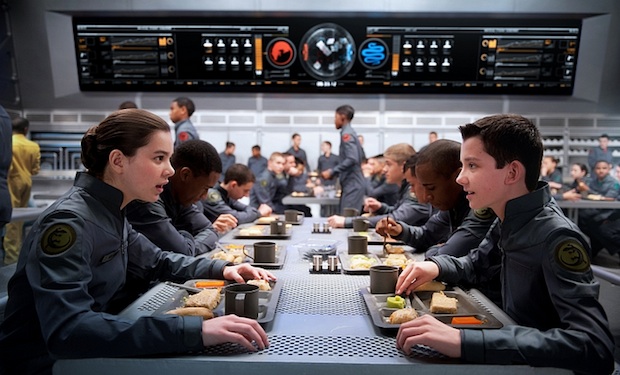
Ender’s Game and Empathy

enders_game_movie_wallpaper-1280x800

Warning: the following contains spoilers for Ender’s Game.

If I had to sum up my reaction to the film adaptation of Ender’s Game in a single, Simpsons-inspired word? Meh.

I suppose it shouldn’t come as much of a surprise that the film was underwhelming, any more than I should be surprised at how un-disappointed I was by this fact. I know there are many who, repulsed by Orson Scott Card’s homophobic rhetoric, want the film to bomb; I also suspect that there are many devoted fans of the novel who hoped (whatever their thoughts on Card’s politics) that the film would be a triumph. I myself am however quite satisfied at the fact that the film will likely pass from the public consciousness with nary a ripple, which is to my mind a more potent rebuke to Card’s anti-gay vitriol.

It is tempting to think that the novel is simply not amenable to adaptation, but there were enough high points in the film to suggest otherwise. The overarching problem is that, while generally well made and was at some points visually stunning, the whole exercise proved rather affectless. I can’t in all honesty lay that at the feet of the actors, either—there weren’t many weak points, and Asa Butterfield did as great a job as Ender as was possible, given the limited range of his material. In a cast comprised largely of children (or young adult) actors, this is no mean feat.

endersgame_trailerscreencap_large_verge_medium_landscape

One of the novel’s crucial themes lies in the consideration of what makes a brilliant battle commander and, concomitantly, how to make a brilliant battle commander. Ender Wiggin, we learn at the outset, possesses the ideal genetic balance: intelligence, audacity, ruthlessness, charisma, imagination, and empathy. It is this last element that the novel teases out so brilliantly and the film completely botches—mainly because the novel demonstrates how Ender’s capacity for empathy develops, how it makes him understand his enemies, and how it brings him close to the brink of madness, in a series of well-developed sequences and encounters. The film, by contrast, chooses to elide most of those experiences in favour of having his adult keepers say repeatedly that his empathy makes him brilliant. The moment from the novel—replicated faithfully in the film—in which Ender makes this point explicit, confessing to his sister that his ability to love his enemy is what makes him so effective at destroying him, comes after a long series of protracted war games at the orbital Battle School. The film chooses to truncate those war games into a handful of scenes that are woefully inadequate in communicating Ender’s development as a commander.

ender battle room

It goes without saying that when adapting literature to film, a significant amount of the source material has to get left out. The secondary storyline in the novel about Ender’s siblings Peter and Valentine is entirely excised: Peter, so powerful a character in the novel, is reduced in the film to a few moments of screen time, enough to establish his violent and abusive tendencies. Valentine plays a larger role, though not by much—representative in the novel of Ender’s violent and empathic tendencies, they become little more than ciphers in the film. That being said, it was not this elision that marred the film, but the lack of any sense at all of Ender’s development as a commander: his adaptive abilities, his overcoming of the various stigma he’s given, earning the trust and loyalty of his soldiers, and above all the increasing isolation he suffers as his reputation and authority grows.

And honestly, it would not have taken much to correct this lack. I don’t often argue for films to be longer, but they could have easily added fifteen or twenty minutes to Ender’s Game—especially considering that that extra time would have mostly been devoted to the Battle Room, a zero-G environment in which the recruits learn and practice tactics in the fighting of mock battles. Few people who have read the novel would dispute that the Battle Room is Orson Scott Card’s greatest imaginative creation—to the point where the novel has been put on a variety of military school or officer training curricula in the U.S. It is here that Ender proves his mettle, as Colonel Graff, the commandant of Battle School (played by a satisfyingly gruff Harrison Ford in the film), sends him into battle against increasingly ridiculous odds.

Rendering the Battle Room cinematically was always going to be the most challenging dimension of adapting the novel, and the filmmakers did a superb job—which makes it doubly frustrating that we don’t have much action unfold here. The cinematography captured the dizziness and vertigo that I have to imagine would afflict anyone in zero-G.

But again, we don’t get enough of Ender’s development, which I would argue is crucial to the story. Everything that follows after he leaves Battle School for Command School is rooted in the lessons he learns there, and the profound ambivalence he develops for his own talent. What makes Ender’s Game such a good novel is its refusal to glorify violence and warfare, which is not to say the battle sequences aren’t thrilling to read. Even (or perhaps especially) the mock warfare of the Battle Room, however, takes a constant toll on Ender physically, emotionally, and psychologically. At the same time, we see the machinations of the military as they manipulate Ender and his fellow recruits, changing the rules of the game on the fly, moving the goalposts, selectively isolating or tormenting (or lauding) their charges, like a huge, elaborate psychological experiment. When some of the officers have scruples, others acknowledge the monstrosity of their project—and, if they are to defeat the alien threat, its necessity. In the novel, Colonel Graff resigns himself to facing charges of war crimes … if they win the war. In the film he phrases it more bluntly, barking at his adjutant that destroying Ender psychologically will matter not at all if they’re all exterminated by the aliens.

Ender’s Game, in this respect, functions as an extended ethical debate: what cost survival? The final bait-and-switch, in which Ender destroys the aliens’ home world while under the illusion that he is playing just one more training simulation, carries so much more force in the novel precisely because we have been witness to his ambivalence and anxiety about his own monstrosity. In the end he becomes a monster in spite of his ambivalence—that he has that decision taken away from him (or that he’s encouraged to make it under false pretenses) is the final, most egregious injury dealt him by those in command. In the film however, in spite of some powerful acting by Asa Butterfield, the emotional impact of the “reveal” (to say nothing of its surprise) is fundamentally subverted.

enders-game-hailee-steinfeld1

There have been a number of reviews of the film and commentaries of the novel apropos of the film’s release puzzling over this central question of empathy. Most crucially, a lot of reviewers and critics have expressed a frustrating cognitive dissonance between a novel that celebrates Ender’s capacity for empathy with an alien species, and its author, who seems incapable of similar empathy for certain fellow humans. What do we make of that? I raised this question last winter when I taught Ender’s Game in a third-year SF class, and I also asked how we deal with a novel whose author expresses a hateful worldview and advocates criminalizing a sexual lifestyle practised between consenting adults. I’m not really any closer to answering that question now than I was then. An obvious approach would be, as a significant number of people have advocated, boycotting his works (and also this film, which obviously I did not do). It poses a knotty question: do I teach Ender’s Game again? (I had put it on my SF course’s reading list before discovering the full extent of Card’s political activism). I’m loath to put more money in his pockets, something requiring thirty-odd students to buy his novel would do. But as I hope this review has made clear, Ender’s Game is a fantastic book to teach, precisely because of its ethical dimensions.

A recent article by Jonathan Rauch made what I thought was an excellent point: that screeds like Orson Scott Card’s various fulminations against gays and the “gay agenda” might rouse the homophobic passions of a few, but more and more—as LGBT individuals become increasingly visible, vocal, and heterosexual anxiety becomes thus increasingly allayed—such intemperate assertions are recognized for what they are, paranoid and ludicrous hate. As Rauch writes:

Some of the things [Card] has said are execrable. He wrote in 2004 that when gay marriage is allowed, “society will bend all its efforts to seize upon any hint of homosexuality in our young people and encourage it.” That was not quite a flat reiteration of the ancient lie that homosexuals seduce and recruit children—the homophobic equivalent of the anti-Semitic blood libel—but it is about as close as anyone dares to come today.

Fortunately, Card’s claim is false. Better still, it is preposterous. Most fair-minded people who read his screeds will see that they are not proper arguments at all, but merely ill-tempered reflexes. When Card puts his stuff out there, he makes us look good by comparison. The more he talks, and the more we talk, the better we sound.

Considering Rauch’s words, I have to wonder if the controversy over Ender’s Game isn’t perhaps something of a gift—both for the cause of forwarding gay rights, and for those of us who teach these sort of things in the classroom. The thought of putting money in Card’s pocket makes me vaguely ill, but I also cannot deny that whatever his politics, the man wrote a damn good novel … and that however much money I make for him putting it on a course (anyone know the percentage the average author gets in royalties? Times about $12 for the paperback, times, say, thirty-five students?), I have to hope that raising these issues in the classroom more than outweighs the mischief he can do with the $65 dollars or so my class would earn him.

Perhaps I’ll even show clips from the film.

Leave a comment

Filed under film, wingnuttery

Coming Soon: the Game of Thrones Book Club

game-of-thrones-bannerOn my old blog, as some of you know, I posted back-and-forth commentaries on each episode of Game of Thrones with my good friend Nikki Stafford; she had originally proposed the idea to me because she knew I was a longtime reader of the novels, whereas she was not. And with each season, the question was: would she be able to resist picking them up?

She held out a whole lot longer than I could have, but at last gave in—somewhere halfway through season three, she decided that there was nothing else for it but to read the books. At which point we decided that it would be fun to retrace territory we’ve covered in the television show, but with the books.

So we’re starting the Game of Thrones Book Club. Our first post will go up in a week and a half, and I’m announcing this now in case anyone is interested in following along with us. I’ve broken A Game of Thrones down into five chunks, about which we will do weekly posts. As with the series, we’ll each post to our own blogs. Nikki has the trade paperback and I have the mass market, which have different pagination:

November 11:
Part One: 1-159 mass market; 1-133 trade paperback
November 18:
Part Two: 160-323 mass market; 134-271 trade paperback (starting with BRAN “It seemed as though he’d been falling for years”)
November 25:
Part Three: 324-488 mass market; 272-408 trade paperback (starting with TYRION “As he stood in the predawn chill…”)
December 2:
Part Four: 489-651 mass market; 409-543 trade paperback (starting with DAENERYS “The heart was steaming in the cool…”)
December 9:
Part Five: 652-end mass market; 544-end trade paperback (starting with JON “Are you well, Snow?”)

Join us as Nikki reads George R.R. Martin for the first time, and join the conversation!

Leave a comment

Filed under book club, what I'm reading

Winter (term) is coming

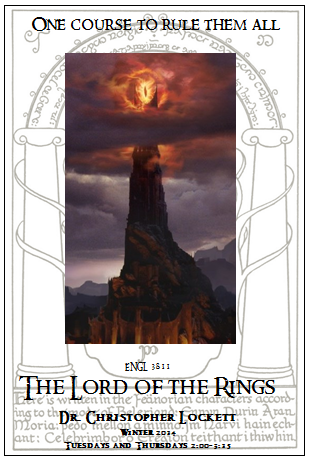
I was asked to make a poster to advertise my winter term courses. I was quite pleased with this one.

course posterYep. It will be a term of some serious geeking out.

Leave a comment

Filed under teaching

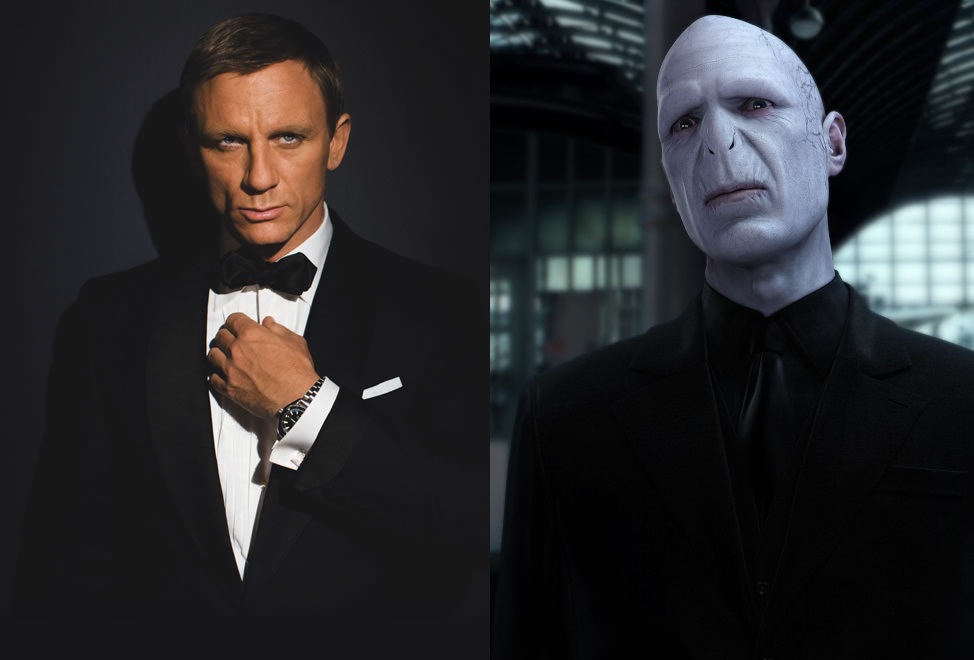
James Bond vs. Voldemort: A Thought Experiment

We did Harry Potter and the Prisoner of Azkaban in my fantasy and humanism grad class this week, much to the delight of my students. As much as I love the Harry Potter series, there have always been elements of it that irk me—mostly, what we might characterize as its relation to the “muggle” world. In some ways, the cognitive dissonance of Rowlings’ novels play to comic and symbolic effect; in other ways, for fantasy novels meant to depict an interface with the “primary reality,” they start to stretch credulity.

I could go on about this in pedantic fashion, but for a long time now I’ve been toying with a little setpiece drama that articulates my critique. Having dwelt at length this morning on the main elements, here it is.

James-bond-daniel-craig

SETTING: the summer between the end of The Half-Blood Prince and the start of The Deathly Hallows. James Bond, dressed impeccably as always in a Saville Row suit, sits at a long table in Malfoy Manor, his feet resting insouciantly on the well-polished dark wood, the most recent edition of The Daily Prophet open in front of his face. On the table beside him sits his Walther PPK, fitted with a silencer. In the shadows behind him we can glimpse the still, unconscious forms of Lucius and Narcissa Malfoy.

There is a noise from the manor’s front hall as the door opens, and the sounds of low voices and footsteps approaching the room in which Bond waits. Laughter, low and satisfied—whatever the people entering have been doing, they have been successful. Voldemort enters, Nagini sliding silently along at his feet, followed by Bellatrix LeStrange and about half a dozen Death Eaters.

They all stop in confusion when they see the man sitting at the table.

BOND: (flipping the corner of the paper aside so they can see his face) Ah, there you are. About bloody time.

(mutters of confusion and outrage from the Death Eaters, silenced by Voldemort)

VOLDEMORT: A muggle?

(he speaks the word with great distaste, but also with caution, cocking his head as he stares at Bond. He has seen the Malfoys on the ground beyond him; though he senses that Bond is no wizard, he simply cannot grasp how a muggle would have invaded this space)

BOND: A muggle? Yes, of course, that name you give us. (slowly and deliberately, he folds up the paper as he talks and places it on the table, but does not remove his feet) Yes, I fear I am a … “muggle.” And I am here to deliver—

BELLATRIX: (enraged, lurches past Voldemort and levels her wand) AVADA KEDAVARA!

(the bolt of green light streaks across the room and dissolves as it strikes something invisible about three feet away from Bond’s face. He smiles at them suavely as they stare in disbelief)

BOND: (finally swinging his legs off the table, he leans forward and steeples his fingers) As I was saying, I am here to deliver a message from Her Majesty’s Secret Service. (gestures at the chairs opposite) Perhaps you would all like to sit down? No reason we cannot be civilized.

BELLATRIX: AVADA KEDAVARA!

(again, the bolt of green falters and evaporates against some invisible barrier. Bond sighs)

BOND: (to Voldemort) Would you please tell her to stop that? She can keep on all night, and all it will serve to do is interrupt.

VOLDEMORT: (leans on the edge of the table) How?

BOND: Ah. (raises his hands to show them his jewelled cuff links) Something Q and the boffins worked up. Couldn’t tell you how it works, but it gives me an anti-magical field extending three feet out in all directions. I suppose I should thank you, Miss LeStrange, for field-testing them.

BELLATRIX: Bloody, filthy muggle! Who do you think you are, coming in here—

(Voldemort irritably waves her silent)

BOND: Thank you.

VOLDEMORT: (sitting) I don’t disagree with her. The only reason I’m not killing you is because you … have a message?

BOND: Also, my cuff links.

VOLDEMORT: Your message, scum?

BOND: You’d do well to learn some courtesy, Mr. Riddle. Yes, we know who you are—or who you were—we do have our resources, you know, dirty muggles that we are. But I suppose I cannot expect you to adapt to the unexpected all at once.

VOLDEMORT: (visibly angry) Your message?

BOND: On behalf of Her Majesty’s Secret Service, I am here to inform you that all attacks on non-magical British citizens will cease immediately.

VOLDEMORT: (stares at Bond for a long moment incredulously and then bursts into a high-pitched laugh. His Death Eaters echo him) They will cease? And who, precisely, are you to demand anything of the Dark Lord? We will do as we wish, and all muggles will cower before us!

BOND: I’m not cowering. (to Bellatrix) Care to try your luck again? (for a moment it looks as though she will, but then he picks up his pistol) Be warned, this time, I’ll shoot back. Oh, and … (glancing down at the floor) if your snake comes any closer, I will in fact shoot it in the fucking head.

VOLDEMORT: (a little hastily) Nagini!

BOND: Let’s make a few things clear hear. For a very long time, the custom has been that, when we have a new prime minister, your Minister of Magic pays him a visit …

DEATH EATER: He’s not our minister.

BOND: (shrugging) From what I hear, he will be soon enough. Not that that matters a whit to us. But for generations now, your Minister of Magic pops into the office of the newly minted Prime Minister, and says something to the effect of “Hello, there are wizards in your country. Don’t worry your head about it. We’ll only ever need to speak if something goes wrong.” Is that about right? (he surveys the group opposite him, but no one answers) Sorry. Rhetorical question. But here’s another question: what, precisely, did you lot think would happen then? (again, silence, but a more confused one. Bond nods pityingly) I suspected as much. You lot thought we’d—what? Try desperately to forget? Think we’d just imagined it all? You’re very good at hiding yourselves from us, I’ll give you that. But let me tell you what happens every time a new prime minister gets a visit from your man: after a few minutes of bewilderment, he’s on the phone to the heads of MI-6 and MI-5, demanding—and pardon my French—“What the fuck just happened?”

(Bond smiles and leans forward)

And do you know what they say to him? “We’ll be right over to brief you, Prime Minister.” Because of course, having known we share a country with people of your particular … talents … we have been naturally a little uneasy. We have been looking into this … issue … for a very long time now. (there is a murmur of surprise from the Death Eaters. Bond shakes his head at them disdainfully) Honestly, you lot have been stupid. Underestimating your enemy is the first and last sin of warfare. Did you really think we’d discover there are wizards and witches among us and not prepare ourselves? (Bond has been getting slightly agitated. With an effort he calms himself and straightens his tie) Not that we’ve had cause for much concern. To be fair, your lot has been pretty quiescent for a long time. It was only about seventeen years ago that we started to get really worried. Care to guess why?

(again, silence from Voldemort and his cohort, except for a few embarrassed coughs)

Suddenly, you lot weren’t so quiescent. Deaths, violence … lots of dead “muggles.” Your minister was suddenly in contact with ours an awful lot, and we gathered that there was an unusually powerful wizard keen to conquer the rest of the magical world. Which would have mattered little to us, except that he and his people seemed pretty hostile to muggles.

(shakes his head)

Did you ever—ever—imagine that we were going to ignore a prospective threat in our nation? Well, of course you did. You can’t bring yourself to think that mudbloods are worth anything, much less muggles. In your eyes, we’re sheep. Am I wrong? (he stares challengingly at Voldemort)

VOLDEMORT: You are sheep. How dare you challenge us like this! How dare you even speak to me like this! AVADA KEDAVARA!

(he stands and flourishes his wand. The green bolt disperses just as Bellatrix’s did, and Bond does not even flinch. He reaches into his breast pocket and pulls out a tablet about half the size of an iPhone)

BOND: Impressive. I suppose you won’t be surprised to know your spell was twice as powerful as your friend’s. Not that it matters. (replaces the tablet in his pocket) This all is, frankly, getting tedious. If I can get to the bottom of the page: we have been developing countermeasures against your “magic” for decades now. And that’s just us here in Britain—I can’t even begin to tell you what the Americans are up to. This little meeting wouldn’t have been necessary, except that you lot seem to be getting a little ahead of yourselves. We don’t care, one way or another, who wins this war of yours … but it does seem that you have dreams beyond domination of the magical world, yes? You want the muggles to be your slaves?

VOLDEMORT: It is the right of the purebloods to rule over the tainted and the weak.

BOND: (scratching his chin ironically) Hm. Yes, that sounds familiar, somehow. You might do yourself a favour and study some muggle history and see how that attitude played out before. (shrugs) But really, that’s neither here nor there. You might want to revise your conception of muggles as somehow “weak.” Magic is an impressive thing, to be sure … and you have a talent for killing, Mr. Riddle. But … (Bond stands, and leans forward, his hands on the table) you might want to do some research and think about how many people you’re able to kill all at once … and how many we are able to kill all at once. (he straightens, and shrugs) It’s not something we’re necessarily proud of. But you should think twice about bringing your … (he gestures vaguely) hocus pocus into a fight where the other fellow has an atom bomb. (Voldemort and the Death Eaters stare at him blankly. Bond favours them with a cold smile) This is what I mean when I suggest you do some research.

VOLDEMORT: What are you telling us? What is your message?

BOND: I am telling you that you are free to wage your war as you see fit. Conquer your enemies. We muggles who know what’s what hope you will lose, of course, but we are not involved. But know this: the moment you decide dominion over the magical world isn’t enough, and you seek to subjugate the rest of us? (smiles frostily) That will spell the end of you.

(this causes the Death Eaters to erupt in a storm of outrage, the Dark Lord himself most of all. He levels his wand again at Bond)

VOLDEMORT: Crucio!

(this time, Bond holds up his right hand so his signet ring points directly at Voldemort. He presses the band on the inside of his finger and it emits a blinking light. Voldemort screams in agony as his spell rebounds on him)

BOND: (to himself) Well done, Q. You’ve outdone yourself. (to the Death Eaters, who stand in shocked silence, staring at Voldemort as he recovers from the effects of his own spell). One more thing: any and all killings of muggles will end now. Her Majesty’s Secret Service will remain neutral in your war, but we will respond with lethal force against the Death Eaters every time a non-magical citizen is murdered. To wit … (he picks up his pistol and glares, narrow-eyed, at the Death Eaters clustered around Voldemort) There was a shopkeeper found dead this evening in Bristol. No visible wounds. I imagine that was one of you?

(silence for a moment, and then a burly Death Eater steps belligerently forward)

DEATH EATER: That was me. I killed the dirty—

(he is cut off as Bond raises his gun and shoots him neatly twice in the head. There is a shocked silence)

BOND: Oh, yes. We’ve also developed ammunition that is impervious to your spells. (straightens his tie) I believe that is all, gentlemen … and lady. Your friends here behind me will recover in due time. I fear that your other friend there will not. Have yourselves a good evening.

(No one, not even Bellatrix, attempts to stop him as he circles the table and walks past where they’ve huddled around their fallen comrade. He is just past the threshold when Bellatrix breaks the silence)

BELLATRIX: Who are you?

(he pauses for a moment)

BOND: The name is Bond. James Bond.

(exit)

1 Comment

Filed under course readings

Sir Terry’s Gospel of Pragmatism

“Bad spelling can be lethal. For example, the greedy Seriph of Al-Ybi was cursed by a badly-educated deity and for some days everything he touched turned to Glod, which happened to be the name of a small dwarf from a mountain community hundreds of miles away who found himself magically dragged to the kingdom and mercilessly duplicated. Some two thousand Glods later the spell wore off. These days, the people of Al-Ybi are renowned for being unusually short and bad-tempered.”
Witches Abroad

pratchett_portrait Last week we did Witches Abroad by Sir Terry Pratchett in my graduate seminar, which was both a joy and a frustration—a frustration because I only allotted one class for him. The true genius of the Discworld novels only starts to become apparent once you have read five or six or twelve of them. Which, perhaps, seems like a backhanded compliment—suggesting that a truly great author could demonstrate that greatness in a single novel. And that might be true enough, as far as it goes; but it is also representative of just one approach to fiction and, more importantly, fictional worlds. Trying to teach Pratchett is not unlike trying to teach television: a single episode of Breaking Bad might offer up interesting formal and thematic considerations, but if you only ever watch one episode you won’t come close to understanding Breaking Bad.

So it is with Discworld.

For those unfamiliar with Discworld: hie thee to the fantasy section of your closest bookstore, post haste! But if you’re reading this outside regular business hours, or have currently barricaded yourself against zombies, or can’t go out for some other reason (though really, zombie apocalypse is the only acceptable one in this instance), let me set the series up for you. The Discworld is … well, let’s let Sir Terry himself describe it for you:

Through the fathomless deeps of space swims the star turtle Great A’Tuin, bearing on his back the four giant elephants who carry on their shoulders the mass of the Discworld. A tiny sun and moon spin around them, on a complicated orbit to induce seasons, so probably nowhere else in the multiverse is it sometimes necessary for an elephant to cock a leg to allow the sun to go past.

Exactly why this should be may never be known. Possibly the Creator of the universe got bored with all the usual business of axial inclination, albedos and rotational velocity, and decided to have a bit of fun for once. (Wyrd Sisters)

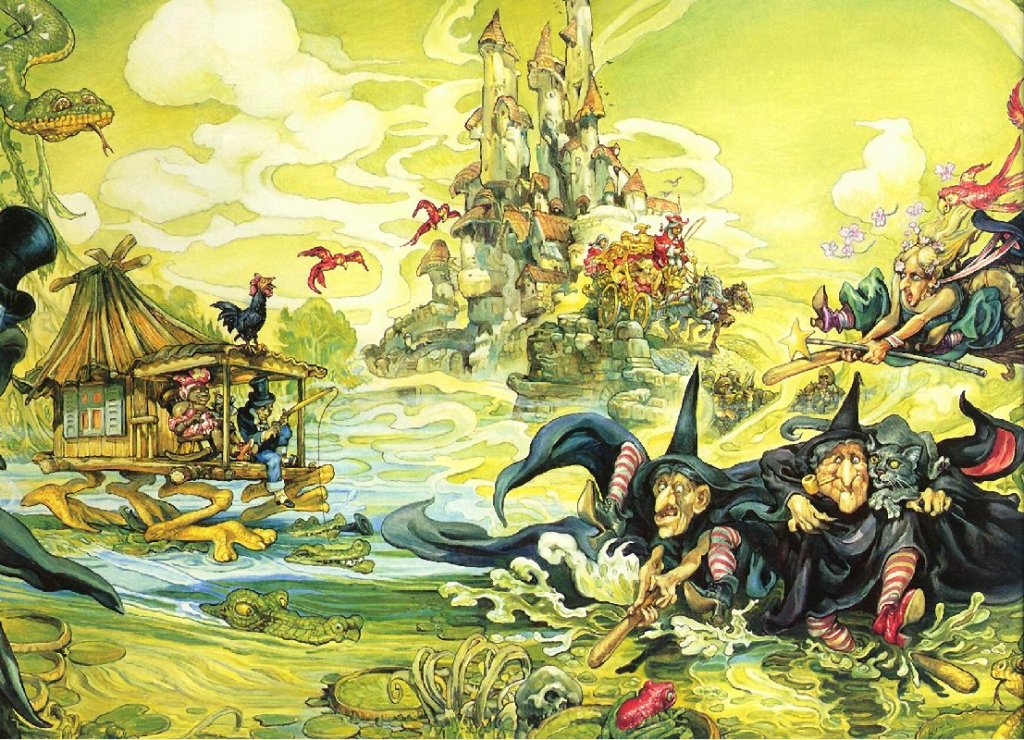
Paul_Kidby_Discworld

I started reading Discworld three and a half years ago, and in that time have read thirty of the thirty-three Discworld novels proper (which is to distinguish them from the five young adult Discworld novels and the one illustrated adventure The Last Hero). Pratchett’s output is astounding: folding in the five young adult Discworld novels, The Last Hero, Good Omens (his collaboration with Neil Gaiman), The Long Earth and The Long War (his collaborations with Stephen Baxter), The Carpet People, Truckers, Diggers, Wings, Nation (non-Discworld young adult novels), and … well, honestly, there’s more, but at this point the count is forty-six novels since he published The Colour of Magic in 1983.

And he has a new Discworld novel, Raising Steam, coming out in a month. Ye gods.

This prolific output is one of the things that has made Sir Terry a less-than-attractive subject for scholarly and academic attention.1 Never mind the standard prejudice that obtains once an author writes this much (“If he’s written that many novels, how good can they be?”), there is also the simple difficulty in accounting for the sheer volume of his work. Again, not dissimilar to teaching television: how does one account for an entire season, never mind the entire run of a show?

Discworld is an example of what I have taken to calling an “iterative world”: a fantasy world or alternative reality whose laws, geography, science, mythology, and history are refined with each new narrative added to the collective. If you go back and read one of the earlier novels—The Colour of Magic, for example, or Equal Rites—after having read a handful of the later ones, you’ll find a familiar Discworld … though not entirely familiar, as it has somewhat more nebulous dimensions and outlines, a more embryonic version of a place that comes into increasingly sharp focus as it accrues detail and substance.2

I could talk endlessly about Discworld as an imaginative space and the theoretical implications of it when set alongside other such iterative worlds as Middle-Earth, Westeros, or collaborative worlds like Azeroth (and I will, oh yes my preciouss, in future posts I will), but what struck me yet again in returning to Witches Abroad is Terry Pratchett’s humanistic pragmatism. Like much else informing Pratchett’s fiction, the humour and occasional slapstick of the stories—to say nothing of the frequent, hilarious footnotes he offers—can obscure his broader ethical preoccupations. For the Discworld novels do comprise, among other things, an extended discourse on secular humanist ethics, rooted in the acknowledgement of human imperfection and a deep suspicion of ideological solutions.

The idea for a graduate seminar on fantasy and humanism—and the research that informs it—derived from several places, but it is fair to say that reading Sir Terry had a huge influence on it. Discworld boasts pretty much every fantasy convention imaginable: from magic and magical beings, to every imaginable fantasy species (trolls, dwarfs, orcs, goblins, vampires, golems, werewolves, dragons, and so forth), great heroes (albeit often in ironic form, such as the octogenarian Cohen the Barbarian), castles and peasantry, and enchanted forests galore. But always the stories, many of them recognizable riffs on classic fantasy (“Do not meddle in the affairs of wizards because a refusal often offends, I read somewhere”), or popular narratives (Macbeth, A Midsummer Night’s Dream, The Phantom of the Opera in Wyrd Sisters, Lords and Ladies, and Maskerade, respectively), or real-world concerns (cinema and Hollywood in Moving Pictures, rock and roll in Soul Music, newspapers in The Truth, Christmas in Hogfather) … always the stories, whatever their focus, proceed from a sensibility that, even as it pays homage to the subject and/or source material, is at pains to frustrate generic expectations and draw attention to fantasy’s more regressive tendencies.

By way of example: in Men at Arms, we glean that the impressive Corporal Carrot of the City Watch is the prophesied King of Ankh-Morpork, and in fact possesses the sword that identifies him as such. But he does not take his “rightful” place, because Ankh-Morpork is much better off without a king, and he’s not really interested in the job anyway. In Jingo, the inevitable march to war against an identifiably Middle-Eastern enemy is halted by Samuel Vimes, who sees negotiation and compromise as preferable to bloodshed. In Monstrous Regiment, the familiar story of a girl from an impoverished family disguising herself as a man to join the army is given a comic twist as we slowly realize that every soldier in her regiment is actually an impoverished girl in disguise.

And in Witches Abroad, familiar stories and the expectations they evoke are the story:

Stories etch grooves deep enough for people to follow in the same way that water follows certain paths down a mountainside. And every time fresh actors tread the path of the story, the groove runs deeper.

This is called the theory of narrative causality and it means that a story, once started, takes a shape. It picks up on all the vibrations of all of all the others workings of the story that have ever been.

This is why history keeps on repeating all the time.

So a thousand heroes have stolen fire from the gods. A thousand wolves have eaten grandmother, a thousand princesses have been kissed. A million unknowing actors have moved, unknowing, through the pathways of story.

It is now impossible for the third and youngest son of any king, if he should embark on a quest which has so far claimed his older brothers, not to succeed.

Witches Abroad is about a demented fairy godmother who is absolutely determined to give people happy endings, and who has become the effective dictator of the Discworld city of Genua (a thinly veiled New Orleans), as she orchestrates her masterwork—bringing the Princess Emberella (whose true identity is secret, as she slaves in the home of her ostensible stepsisters) together with a nobleman (the “Duc”). The three witches of the title—Granny Weatherwax, Nanny Ogg, and Magrit Garlick—make their way to Genua to foil her. Along the way they encounter a series of other familiar stories, such as a Gollum-like creature in a subterranean river (Granny Weatherwax hits him with her paddle); a village terrorized by a vampire (Magrit smacks it with her window as it attempts to enter her room in bat form, and it gets eaten by Nanny Ogg’s cat as it lies, stunned, on the ground); they also encounter a confused wolf that feels compelled to eat a grandmother, a sleeping princess in an enchanted castle, hear tell of a trio of pigs in a neighbouring village with wolf issues, and Nanny Ogg—wearing her red boots—has a farmhouse suddenly fall on her head.

discworld-witches-abroad

Their journey to Genua is thus comically picaresque, and as they get closer they see the fairy godmother’s handiwork in the stories they stumble across (and into). But while the novel begins with the apparently benign assertion that stories are happening all the time and that the frequency of their repetition gives their outcomes a certain inevitability, this determinism takes on an increasingly pernicious character. The Red Riding Hood sequence is actually heartbreaking, as the wolf has literally become a tortured soul in being compelled to behave in singularly un-wolflike ways, and ultimately makes a plaintive appeal to Granny Weatherwax to make an end. The woodsman who does the deed reflects in surprise at how willingly the poor beast puts its head on the chopping block.

When they reach Genua, which is under the thrall of Lilith, the fairy godmother, they find a city that is bright, clean, smiling, and utterly terrified—for if the people do not step outside the boundaries of what is acceptable for their stories, they are severely punished (such as the toymaker, who is thrown in the dungeon because he does not tell charming stories to children. Protesting that he doesn’t know any stories and is, furthermore, very bad at telling them, doesn’t garner him any leniency). The previous tyrant, the Baron, was cruel and ruthless; Lilith’s rule, however, is the other end of the dystopian spectrum: the utopian vision taken to despotic extremes. As Granny Weatherwax asserts, “You can’t go around building a better world for people. Only people can build a better world for people. Otherwise it’s just a cage.” Or as Sam Vimes puts it in in Night Watch, “The moment you start measuring people, some people won’t measure up.”

What the texts I’m teaching in this seminar articulate—and which Sir Terry’s work pretty much exemplifies—is a tendency within some recent fantasy to reverse what we might characterize as traditional fantasy’s religious temperament, at least where power dynamics are concerned. Such transcendent imperatives as prophecy, fate, destiny, and the presence of deterministic higher powers—so crucial to authors like Tolkien and Lewis—find themselves (at the very least) complicated, challenged, critiqued, or quite simply ignored in the works of authors like Neil Gaiman, Lev Grossman, J.K. Rowling, George R.R. Martin, Richard K. Morgan, or Patrick Rothfuss. In some of these works, this shift is subtle, perhaps even incidental; but what I love about Sir Terry is the way in which the Discworld novels function as specific critiques of what Jacques Derrida called “the transcendental signified,” i.e., discourse imagined as somehow innate, whose logic proceeds from something beyond the horizon of our understanding. Gods exist in Pratchett’s alternative world, but they are the product of human belief and thought rather than the other way around; magic exists, but is mostly avoided, as its use more often than not leads to more complications; and the greatest virtue practised (if not always espoused) is common sense and making allowances for human (and dwarf, and troll, etc.) failings and caprice. Indeed, the greatest conflicts in the Discworld novels arise when individuals or groups attempt to assert that this is the way things should be.

Those who have read a lot of Discworld novels will grasp what I mean when I say: there is a big, long essay to be written about Lord Vetinari in this respect.

Sir Terry makes his personal philosophy known in numerous interviews as well, in which he makes such humanistic statements as “in my religion, the building of a telescope is the building of a cathedral” or, more famously, “I would much rather be a rising ape than a falling angel.” For a sense of his wit and wisdom, this interview is one of my favourites:

I have three Discworld novels left to read, not counting the new one coming out in November. I have not yet been able to start any of them. I am reluctant to do so: a great part of me does not want to come to the end of these books, even though Sir Terry is still writing them.

NOTES

1. He suffers on this front from a quadruple-whammy—first, his output; second, his popularity (he was the highest-selling pre-Rowling author in the UK in the 1990s), for which authors are always treated with suspicion in English departments; thirdly, he writes fantasy; and lastly, he is absolutely, brilliantly, uproariously hilarious. Literary scholarship has difficulty dealing with genuinely funny texts, for it starts to feel as though our lectures and essays are just explaining the jokes (unless you’re teaching the likes of Shakespeare or Jonathan Swift, in which case explaining the jokes is a necessary preamble to your lecture).

2. Discworld has also been expanded and refined by fans and collaborators as well, with The Folklore of Discworld (written by Pratchett in collaboration with Jacqueline Simpson), four volumes of The Science of Discworld (with Ian Stewart and Jack Cohen), and The Discworld Mapp, a definitive map of Discworld created by cartographer Stephen Briggs. There are other books as well, some authorized and some not, to say nothing of a Discworld Wiki page and numerous other fan sites.

Leave a comment

Filed under course readings

Political Dystopias and Half-Baked Hegelianism

I’m no expert on German philosophy (or any philosophy, really), but the current state of U.S. politics has come to seem to me a rather spectacular vindication of Hegel’s theory of history.

As I watch the drama of the U.S. government shutdown unfolding, I do so with a feeling of incredulity I’m certain I share with many, if not most, of my fellow Canadians. This incredulity takes a variety of forms, not least of which is the bafflement at the apocalyptic terms with which a relatively mild and definitively conservative form of health care is being described. To listen to Ted Cruz and the rest of his “suicide caucus,” you’d think that what was on the table was a proposal to replace the Pledge of Allegiance with daily readings from Das Kapital.

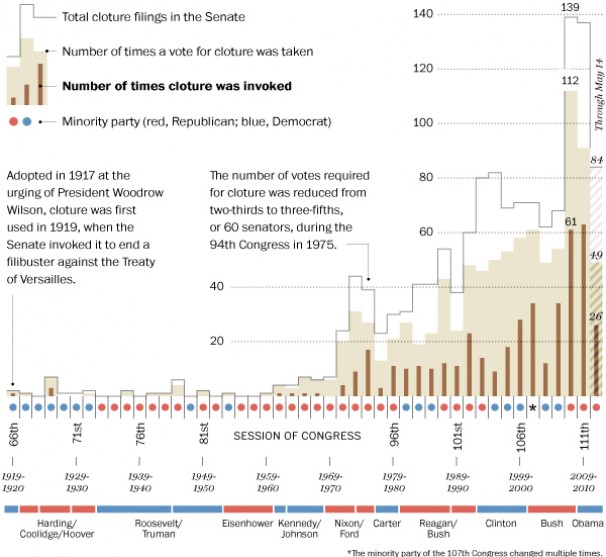
That’s the larger-scale incredulity. On a procedural scale, the question is, depending on the questioner, “How is this happening?” or “Why has this never happened before?” The latter question is better framed as “why has this never happened in this way or on this scale before,” as government shutdowns have occurred several times in the past, most famously when Newt Gingrich’s Republican-majority House sought to punish Bill Clinton in 1995. The House of Representatives has periodically shut down the government for various reasons at various times, and were that all that was happening now, it would not be as worrisome as it actually is. It is worrisome now in a way it has never been before, because it is emblematic of dysfunction that has been growing at an alarming rate since the Clinton presidency. The answer to the first question, “How is this happening?” is simple: it is built into the parliamentary rules of the U.S. government. The shutdown is only symptomatic: in the last five years, we have seen parliamentary procedure in the form of the filibuster being used more than in all of U.S. history combined (well, OK, not that much—but as the graph shows, it has been used a lot); and for those who have the romantic image of Jimmy Stewart in Mr. Smith Goes to Washington, you should know that actual physical filibusters are rare—the “filibuster” now entails cloture motions, which simply use the threat of filibustering to prevent a motion from coming to a vote. (Ezra Klein explains it much better than I can here).

filibuster graph

That’s as far as I’m going to go in explaining American governmental dysfunction, because it’s been hashed out ad nauseum elsewhere, and besides, if you don’t believe me on the face of it, nothing else I’m going to say here will make sense. I will go one step further however and say that, as much as I’d love to do a “plague on both your houses” thing, I can’t. Because it’s the Republicans who are to blame—more specifically, a rump of the party that has receded so far into its epistemic closure that it has become genuinely delusional, and it has the cohort of the party that might otherwise be reasonable running scared.

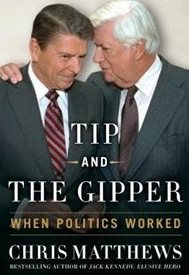
And so: all of the parliamentary problems built into the U.S. constitution that have rarely, if ever, provided impediments to the functioning of government because lawmakers were too genteel to employ them? They’re now in play. All of the tacit understanding of unwritten rules that has informed executive and legislative behaviour for the balance of U.S. history has been abandoned. I’m no tipadgippergreat fan of MSNBC host Chris Matthews—I think he’s a blowhard and a bully whose political inclinations bend toward whatever president sends a thrill up his leg—but he has a new book that interests me about his time as a staffer for Tip O’Neill, the Democratic Speaker of the House during the Reagan years. The subtitle is “When Politics Worked,” and the overarching premise seems to be that politics “worked” back then because politicians observed those unwritten rules—that Tip O’Neill, as Joan Walsh observes, “recognized that Reagan had won a big mandate and ought to be able to enact much of his program—and then be stuck with the results if they turned out badly.” Though ideologically at odds with Reagan, O’Neill was willing to acknowledge the will of the people in electing him, and by the same token let Reagan own the consequences of his policies, good or bad. As has been repeated by many people lately: Obama won the election. The Affordable Care Act has been made law, and was effectively ratified by the Supreme Court. Perhaps, as so many Republicans are claiming, it will be utterly disastrous. But rather than letting that play out, they are doing quite literally everything in their power to kill it with fire.

Which brings us back to Hegel.

My crude understanding of Hegel goes precisely this far: each society at its inception has embedded within it contradictions either invisible or ignorable; but as it develops, these contradictions become more and more glaring, harder and harder to ignore, until they develop into a conflict (which might be violent but not necessarily so), the resolution of which provides a new synthesis … and this new synthesis has its own minor contradictions, which eventually become glaring, and so on. The example I give my theory students when teaching this is that famous line from the United States’ Declaration of Independence: “We hold these truths to be self-evident, that all men are created equal …” And I ask: what are the two problems with this assertion? One, it leaves out women; and two, the author of this document, Thomas Jefferson, owned slaves. The great African-American novelist Ralph Ellison pointed to this when he said of the Declaration that “In the beginning was the word, and in the word was the contradiction.” Almost a century before that, Frederick Douglass wrote one of the most poignant essays in the history of American letters, “What to the Slave is the Fourth of July?”, observing that the great American narrative of revolution and independence was effectively meaningless to an indentured population. It is pretty simple to offer an Hegelian reading of American history: its founding documents contain some pretty profound contradictions, which came to a head in the Civil War; the resolution of the Civil War, with the indignities of Reconstruction and implementation of Jim Crow, was far from perfect, and brought about a new set of conflicts with the Civil Rights Movement. Each time there were improvements, moving the U.S. forward, but also the seeds of new conflicts and problems.

In this vein, it is difficult to not see the antipathy of Tea Party conservatism as the most recent manifestation of these contradictions. The election of Barack Obama was seen by many (myself included) as a moment of both historical and symbolic closure; my favourite editorial cartoon after the election was by Tom Toles, which featured Obama walking up to the White House under the Declaration’s assertion of all men being equal, with the footnote “Ratified November 4, 2008.” At the same time however, the lingering unresolved racial divide in the U.S. was exacerbated by Obama’s election—and however much Fox News and their fellow travelers howl in outrage whenever one of us lefties plays “the race card,” the particularly vicious vitriol directed at Obama has edged into race-baiting too often—and the Tea Party right is far too monochromatic—for it to not be based at least in part in unreconstructed white panic.

Obama cartoonThat being said, the implicit and explicit racism underlying the backlash against Obama is just one of the contradictions being exacerbated by the present conflict. What underwrites the current legislative showdown, as I suggested above, is the fact that the system has provided the means for a stubborn and uncompromising minority to bring the government to a screeching halt—and if the debt ceiling is breached, it won’t just be the government. Hopefully I’m not overextending the metaphor too much when I characterize this as a perfect Hegelian storm, wherein the social and cultural contradictions have managed to employ the systemic contradictions. One way or another, I find it difficult to imagine that the U.S. government is going to look the same when all is done … my lefty heart is gladdened to see that Obama et al seem to be determined to hold fast, come hell, high water, or default, having come at last (I hope) to the realization that any compromise now only leads to further hostage-taking in the future (as it were).

The problem (one of them) with Hegel however is that he has a pretty relentlessly upbeat conception of history as inevitably progressive. The “syntheses” emerging from conflict, he suggests, are invariably positive … perhaps this is my deficient understanding of his work, but I don’t think he tends to account for the possibility of devolution, or a new synthesis that resolved previous contradictions in a negative or regressive manner. Andrew Sullivan, one of my favourite political bloggers, says again and again that the current Republican party should be ashamed to call itself conservative, as they are anything but. As he says in a recent post, “[Republicans] are the real Alinskyites and Obama is the real conservative,” i.e. Republicans have become a party of radicalism and revolution, the antithesis of traditional conservatism. I agree with that to a point, but beyond that point I think the radical Republicans are quite literally ultra-conservative: they demand stasis, absolute and paralytic cultural stasis, but want it to be of a sort they imagine to have existed fifty or one hundred years ago. Or possibly even before that: the rollback of gay rights, civil rights, the New Deal, scientific advances, and general social progress they seem to desire is really nothing short of terrifying.

And who knows? The direst predictions about breaching the debt ceiling say it will precipitate a global economic meltdown; in my more cynical moments, I wonder if the suicide caucus is genuinely suicidal, desiring precisely that kind of crisis, which could blackmanpotentially dissolve the federal government’s authority and fracture the union. Perhaps I’m being overly bleak, but then, as someone steeped in dystopian fiction, my mind has some well-trodden pathways it can take. The novel that keeps popping up for me now is Richard Morgan’s Black Man, which I wrote about on my old blog, and which I taught in my SF class last winter. In his imagined future, the United States has fractured into three parts: the Union, which is closely associated with the U.N. and Europe, and which comprises the northeastern states; the Rim States, the western states on the Pacific, which have entered into a loose federation with the rest of the Pacific Rim; and the Republic, the main swathe of Middle America, what we would call “Red States.” In the novel it also goes by the derogatory name “Jesusland,” and is precisely what that name suggests: a theocracy that rejects evolution, gay rights, women’s rights, where teaching creationism is the law and abortion a felony.

At times like these, it’s hard to think of Morgan’s vision of the future without feeling a little shiver of recognition.

2 Comments

Filed under wingnuttery

My top one hundred. Sort of. After a fashion. You know.

David Bowie recently listed his top one hundred must-read books as a part of his art show David Bowie Is, which has had spectacular runs at the Victoria and Albert Museum in London, and more recently at the Art Gallery of Ontario. He has, as one would expect of such an extraordinarily talented and intelligent person, some thought-provoking choices, and the list, overall, is endearingly eclectic. It is gratifying to see some of my own favourites there (Lolita, Herzog, In Cold Blood, Nights at the Circus, The Brief Wondrous Life of Oscar Wao), though he also includes On The Road (ick) … and there are a lot of Newfoundlanders who will not be pleased to see Howard Norman’s The Bird Artist, a book that ranks even lower in people’s esteem than The Shipping News for its hackneyed and egregiously inaccurate depiction of outport Newfoundland.

That being said, reading the list got me thinking … not so much about what my one hundred “must-reads” would be, but which one hundred books have affected me the most profoundly over the years. I’m not sure why my mind went there precisely, when the practice of telling people what they should read is both a pedantic hobby and a professional imperative … but I suspect that in the aftermath of last week’s posts about David Gilmour and his insistence on only teaching what he loves had me reflecting on those texts that I love.

It didn’t really occur to me as I wrote those posts, but when I go back and reread Gilmour’s Hazlitt piece and his interview in The National Post, I find it a little odd that, if his personal mandate is to teach only what he truly loves, he seems to have such a narrow range of authors he’s willing to teach. As I sat and made my own list, I reflected that the books I have read that I love and which had affected me profoundly is massive. My favourite part of teaching is that I get to share some of these books with my students.

But then, perhaps I’m just undiscriminating.

I’ve been picking away at this list all week in my spare moments. I started compiling it partially out of curiosity, because I’ve never really done it before. I was also curious to see—after two posts in which I took issue with David Gilmour’s and Margaret Wente’s antipathy to women authors—whether I would prove myself a hypocrite. The one comment I received on those posts was someone pointing out that the banner image at the top of this blog is almost exclusively male, with only Zadie Smith and Marjorie Garber as exceptions. As I replied, my choice of banner image is actually quite random: I took a few pictures of the various bookshelves in my office at home, and that was the one that turned out best (if I’d posted the shelf beneath, you’d think this was a George R.R. Martin fan site). I quite deliberately did not rearrange books to be more flattering—I wanted something honest, if not necessarily representative.

So, a word on my list: my rules to myself were that I could choose one book per author. (If it was a list of books proper, regardless of author, you’d see an awful lot more of Don DeLillo, Toni Morrison, Martin Amis, and so forth). The representative book had to be the work by that author that affected me in a significant manner, not the book that I would later come to consider the best by that author. So for example, Love in the Time of Cholera is the entry here from Gabriel García Marquez, even though I believe One Hundred Years of Solitude is his masterpiece (and one of the greatest novels of the twentieth century), because that was my first real encounter with Marquez. By contrast, the first book of Annie Dillard’s I read was The Writing Life, a slim volume in which she talks about the nature of writing and what the writer’s task is. I read that in high school and loved it, but it was eclipsed a few years later when I read A Pilgrim at Tinker Creek. I read Jane Austen’s Emma when I was an undergraduate, and hated it. Later I read Pride and Prejudice, which made me grudgingly think maybe this Austen person had some game; but it was on reading Northanger Abbey as the urging of an Austen-mad friend that I truly grasped Austen’s genius. I then went back and reread the other two novels (as well as the rest of her books) with new eyes , but it was Northanger that had the greatest affect.

All this is by way of saying that these choices are entirely idiosyncratic.

Also: there is no poetry, for the simple reason that, for me, that is an entirely different category and an entirely different species of affect. What we have here are novels, histories, philosophy and theory, and a handful of plays.

I encourage other lists. Most of the people reading this probably came here from Facebook: if so, post a list there! Otherwise, for you other bloggers, post to your blog and I’ll link to you.

Isabelle Allende, The House of the Spirits
Dorothy Allison, Bastard out of Carolina
Martin Amis, Time’s Arrow
Karen Armstrong, The Battle for God
Margaret Atwood, Lady Oracle
Jane Austen, Northanger Abbey
John Banville, Doctor Copernicus
Pat Barker, The Eye in the Door
Julian Barnes, A History of the World in 10 ½ Chapters
Walter Benjamin, Illuminations
Jorge Luis Borges, Labyrinths
Charlotte Brontë, Jane Eyre
Emily Brontë, Wuthering Heights
Judith Butler, Gender Trouble
Italo Calvino, Invisible Cities
Angela Carter, Nights at the Circus
Noam Chomsky, Necessary Illusions
Kate Chopin, The Awakening
Agatha Christie, And Then There Were None
Joseph Conrad, Heart of Darkness
Don DeLillo, Libra
Junot Diaz, The Brief Wondrous Life of Oscar Wao
Charles Dickens, A Tale of Two Cities
Joan Didion, Slouching Toward Bethlehem
Annie Dillard, A Pilgrim at Tinker Creek
Umberto Eco, The Name of the Rose
George Eliot, Middlemarch
Susan Faludi, The Terror Dream
William Faulkner, As I Lay Dying
Timothy Findley, Famous Last Words
E.M. Forster, A Passage to India
Michel Foucault, The Order of Things
George MacDonald Fraser, Flashman
Northrop Frye, The Educated Imagination
Paul Fussel, Wartime
Neil Gaiman, American Gods
Marjorie Garber, Shakespeare’s Ghost Writers
William Gibson, Neuromancer
Seamus Heaney, Preoccupations
Ernest Hemingway, A Farewell to Arms
Christopher Hitchens, God is not Great
Richard Hofstadter, The Paranoid Style in American Politics
Homer, The Iliad
Zora Neale Hurston, Their Eyes Were Watching God
Linda Hutcheon, A Poetics of Postmodernism
Henrik Ibsen, Hedda Gabler
Fredric Jameson, Postmodernism, or, The Cultural Logic of Late Capitalism
James Joyce, A Portrait of the Artist as a Young Man
Maxine Hong Kingston, The Woman Warrior
Arthur Koestler, The Sleepwalkers
Thomas Kuhn, The Copernican Revolution
Harper Lee, To Kill a Mockingbird
Milan Kundera, Immortality
Margaret Laurence, The Diviners
Ursula K. Le Guin, The Left Hand of Darkness
C.S. Lewis, Prince Caspian
Margaret MacMillan, Paris 1919: Six Months that Changed the World
Christopher Marlowe, Doctor Faustus
Gabriel García Marquez, Love in the Time of Cholera
George R.R. Martin, A Game of Thrones
Cormac McCarthy, Suttree
Ian McEwan, Atonement
Herman Melville, Moby-Dick
Toni Morrison, Paradise
Haruki Murakami, A Wild Sheep Chase
Vladimir Nabokov, Pale Fire
Azar Nafisi, Reading Lolita in Tehran
Gloria Naylor, Mama Day
Edna O’Brien, The House of Splendid Isolation
Flannery O’Connor, The Violent Bear it Away
Michael Ondaatje, The English Patient
Ann Patchett, Bel Canto
Terry Pratchett, Night Watch
Sylvia Plath, The Bell Jar
Thomas Pynchon, The Crying of Lot 49
Bill Readings, The University in Ruins
Jean Rhys, The Wide Sargasso Sea
Richard Rorty, Contingency, Irony, Solidarity
Philip Roth, The Human Stain
Salman Rushdie, Midnight’s Children
Elaine Scarry, On Beauty
William Shakespeare, Macbeth
Mary Shelley, Frankenstein
Jane Smiley, Moo
Susan Sontag, Against Interpretation
Sophocles, Antigone
Muriel Spark, The Prime of Miss Jean Brodie
Art Spiegelman, Maus
John Steinbeck, East of Eden
Bram Stoker, Dracula
Tom Stoppard, Rosencrantz and Guildenstern are Dead
J.R.R. Tolkien, The Lord of the Rings
Monique Truong, The Book of Salt
Alice Walker, Possessing the Secret of Joy
Evelyn Waugh, Brideshead Revisited
Edith Wharton, The Age of Innocence
Colson Whitehead, Sag Harbor
Jeannette Winterson, Sexing the Cherry
Virginia Woolf, A Room of One’s Own
Slavoj Zizek, Everything You Always Wanted to Know About Lacan, But were Afraid to Ask Hitchcock

Leave a comment

Filed under Uncategorized

Wente on Gilmour (because none of us saw that coming)

ab-Toni-Morrison

For the record, Toni Morrison could totally kick Hemingway’s ass.

Once the scope and scale of the reaction to David Gilmour’s comments became clear, is was also clear that the chances Margaret Wente would not put in her two cents in her weekly column were slim to none. Huge surprise: she’s pro-Gilmour, anti-feminist, and if you weren’t certain what her response would be, her opening sentences put that uncertainty to rest: “How does an obscure Canadian author become an international sensation overnight?” she asks, and answers: “Easy. Just insult some feminists!”

Yes. Some feminists. Because the range of responses was limited to a narrow, shrill band of men-haters who haunt Wente’s imagination and, presumably, the imaginations of her devoted readers. And for the record, it is this latter group that makes me inclined to say something more on this topic: however often I promise myself I’m just going to ignore her—to avoid feeding the troll, as the saying goes these days—I can’t help but remember that there are people out there who take her words as unalloyed truth and imagine that she is a brave and besieged voice of reason in the midst of leftist hate, as opposed to a lazy, sinecured columnist who writes the same argument over and over, and even then sometimes can’t be bothered to use her own words and ideas.

Or perhaps the horde of Wente admirers is just what haunts my imagination.

Nevertheless, no matter how much I know she’s just poking us with a stick to goad a response, I can’t help pointing out where she’s being misleading, mendacious, or simply wrong. Take for example this seemingly mild defense of Gilmour, which is actually just an excuse to reiterate her biggest complaint about current English curricula:

Frankly, I was surprised and glad to learn that there remains one small testosterone-safe zone at U of T (although I guess it’s not safe any more). As anyone who’s set foot on campus in the past 30 years ought to know, courses in guy-guy writers are vastly outnumbered by courses in women writers, queer writers, black writers, colonial writers, postcolonial writers, Canadian writers, indigenous writers, Caribbean, African, Asian and South Asian writers, and various sub- and sub-subsets of the above. But if you’re interested in Hemingway, good luck. No wonder male students are all but extinct in the humanities.

If by “testosterone-safe zone,” she means courses devoted exclusively to male writers, you don’t actually have to look too hard to find them—you just have to look early, as in chronologically, to find numerous courses on the U of T 2013-2014 undergraduate schedule dedicated entirely to dudes. That their names are Chaucer, Shakespeare, Spenser, and Milton doesn’t exactly obviate their gender. After that? Well, the women start to creep in. They’re sneaky that way. But what Wente doesn’t say (as I’m sure it never occurred to her) is that the presence of names like Austen, Gaskell, Eliot, and the Brontës on nineteenth-century literature courses isn’t some feminist conspiracy to eclipse the dudes, but an honest and scrupulous attempt to construct curricula that offer a representative range of authors well-regarded and widely-read in their own times (even if George Eliot and the Brontë sisters did have to assume male pseudonyms). Ditto for the twentieth century.

Her suggestion that people wishing to study Hemingway at university are shit out of luck comes as rather a surprise, as I just wrapped up a unit on A Farewell to Arms. Before that? The Great Gatsby, another Gilmour-approved novel. And on Tuesday, we start The Sound and the Fury … and while Gilmour had nothing to say about Faulkner, I have to imagine he wouldn’t complain about that one. But here’s the thing: having devoted the first half of my C20 American Fiction course to a holy trinity of the American fiction canon, I was compelled to offer some balance, and the second half will be Flannery O’Connor, Toni Morrison, and Julia Alvarez. Not out of some politically-correct, milquetoast liberal guilt, but because I owe it to my students to offer some sort of representative balance. Filling out a survey course is always a mug’s game, especially when you have thirteen weeks to cover an entire century. So you do the best you can, and in the end there is always room to teach your passion.But it’s not about what the professor loves, it’s about how best to give your students a wide range of ideas, styles, voices, experiences, personalities, worldviews, and vocabularies. That, ultimately, is why the humanities are so crucial: they offer the opportunity, to paraphrase critic Denis Donaghue, to encounter lives more richly imagined than our own. And, I would add, lives we would not otherwise encounter unless we devote our own to traveling all over the world.

But to return to Wente’s harrumph, re: Hemingway. As I said, I just taught one of his novels. But I suspect she’s using Papa metonymically here, having him stand in for the broad range of proud literary masculinity currently getting the short shrift. Is what she says true, my own class notwithstanding? Are these white hetero men, as Patrick Buchanan suggested in another context, an endangered species? Let’s check out the current undergraduate course offerings for U of T English’s 2013-2014 school year.

Well, OK … I don’t see any listings for “Testosterone 101” or “Guy-Guy Lit.” And yes, many of these courses include women authors. Well, not the first-year course “The English Literary Tradition.” Nary a woman to be seen on that list. Or how about “Literature in Our Time”? Seven authors listed, but only two women, Virginia Woolf (whom we’ll call an honourary guy-guy, as she is Gilmour-approved) and Sylvia Plath. Moving on to second-year classes, “The Novel” gets a little more estrogen-heavy with five women (Anne Radcliffe, Jane Austen, Emily Bronte, Virginia Woolf, Toni Morrison) elbowing onto the course with seven men. Then we come to three sections of  the course “American Literature,” whose C20 readings do not, in fact, include Hemingway but do feature William Faulkner, Richard Brautigan, Cormac McCarthy, and such Gilmour-approved guy-guys as Fitzgerald and Philip Roth. Moving on to third-year courses, “Modern Fiction to 1960” gives us yet more Faulkner, as well as Malcolm Lowry, whom I suspect is a guy-guy. (Just so it’s clear, I’m not mentioning every hetero male on these courses, just the ones I imagine Gilmour would approve of. Nor, for that matter, am I mentioning most of the actual courses offered). In “Twentieth Century American Literature,” hey—Hemingway! As well as even more Faulkner (wow, U of T loves it some Faulkner), more Richard Brautigan, more Philip Roth, as well as Thomas Pynchon, Ishmael Reed, and Raymond Carver. “Contemporary American Fiction” features more Roth, more Cormac McCarthy, and Don DeLillo. Fourth year course offerings, admittedly, seem to feature fewer guy-guys, except for the fact that there is one course devoted exclusively to Ezra Pound, who was perhaps the ultimate stereotype of the guy-guy (once comparing the pen to the penis and ink to semen. Ick).

All of which is by way of pointing out that Margaret Wente, once again, really needs to do a little research before she honks off. Does the U of T undergraduate English curriculum—as well as most in the country—make a point of offering women’s literature? Yes. Does it attempt to balance canonical, male writers with women, with authors or colour, and with other traditionally marginal groups? Yes. Does it do so to the utter exclusion of the aforementioned canonical male writers?

No. No, in thunder. And if people like Margaret Wente would spend the five minutes it would take to actually peruse course offerings rather than screaming in outrage the moment they saw courses with titles like “Gynocentric Approaches to Modern Literature,” (not actually a course) they would know that.

*

One more thing (he said, putting on his Columbo voice).

Did anyone else notice Wente’s little bit of implicit racism in the passage I quoted above? To repeat, (italics mine) she says that courses in “guy-guy” writers are “vastly outnumbered by courses in women writers, queer writers, black writers, colonial writers, postcolonial writers, Canadian writers, indigenous writers, Caribbean, African, Asian and South Asian writers.” Catch it? Apparently “guy-guy” also means emphatically white and, weirdly, non-Canadian. There are no macho, straight-up hetero black authors? (paging Richard Wright). Caribbean authors? (V.S. Naipaul would be surprised by that one). African, Asian, South Asian, or Canadian authors? (Because on this last one, I can think of at least one Governor-General award-winner who would protest). To “testosterone-safe zone” I suppose we must also append the sign “whites only.”

1 Comment

Filed under maunderings, thrice-yearly responses to Margaret Wente's columns, wingnuttery