I’m not interested in teaching books by women. Virginia Woolf is the only writer that interests me as a woman writer, so I do teach one of her short stories. But once again, when I was given this job I said I would only teach the people that I truly, truly love. Unfortunately, none of those happen to be Chinese, or women. Except for Virginia Woolf. And when I tried to teach Virginia Woolf, she’s too sophisticated, even for a third-year class. Usually at the beginning of the semester a hand shoots up and someone asks why there aren’t any women writers in the course. I say I don’t love women writers enough to teach them, if you want women writers go down the hall. What I teach is guys. Serious heterosexual guys. F. Scott Fitzgerald, Chekhov, Tolstoy. Real guy-guys. Henry Miller. Philip Roth.
—David Gilmour
My own favourite guy’s guy.
I should begin by saying that I don’t think David Gilmour should be fired or otherwise shouldered out of his U of T job. If professors were banned from teaching for being arseholes, there wouldn’t be many of us. And for what it’s worth, I don’t think a course that teaches his brand of literary machismo is necessarily a bad thing; in and of itself, which is to say, taken in isolation from other courses, reading lists, and approaches, it is a manifestly terrible thing, but your average English degree and English department (especially one as huge as U of T’s) is capacious enough to take all kinds. I would go further and say that if, in the course of an English degree, you don’t have at least one class with a hoary old unreconstructed literary curmudgeon who doesn’t believe that anything worthwhile was written after 1922 (or 1622), you’re missing a key English Lit experience.
The point is that there is room in the pedagogical firmament for the David Gilmours of the world, more so now that they find themselves in the minority. Which isn’t to say that I agree with, endorse, or otherwise tolerate his particularly arrogant brand of literary chauvinism—just that sometimes such characters (I’m looking at you too, Harold Bloom) can be inadvertent catalysts for fruitful and beneficial argument and discussion.
Case in point: though I am writing this the morning after Gilmour’s ill-conceived assertions in Hazlitt, and his even more ill-conceived follow-ups in The National Post, I am coming very late to the party, so much so that I wasn’t sure there was any point to actually putting in my two cents. So far I have read threeblogposts taking issue with his comments, and one very funny parodic biography of a Chinese Virginia Woolf by “David Gilmour” (to say nothing of the many, many articles popping up on various news sites). These pieces do a lovely job of showing just how simple-minded and indeed closed-minded Gilmour’s comments are, so I won’t waste my energy or your time rehashing them, other than to say that Lucia Lorenza’s comments (the second blog post I link to) are particularly worth reading, and are a wonderfully elegant discussion of just why Gilmour’s pedagogical approach is unbelievably myopic.
The copia of response over social media, from outrage to snark to tentative defenses of Gilmour, is to my mind an example of when social media works to intellectual and social advantage—the speed and critical mass of the responses, the ongoing arguments, and the overall attention being paid to the otherwise innocuous question of the contents of English syllabi, all of this puts certain crucial questions and issues that are always-ongoing in literary study front and center, and gives it an immediacy that otherwise does not exist, that otherwise would not be possible.
As has been pointed out by several people, Gilmour is free to choose what he teaches. Academic freedom is, among other things, the right of the professoriate to organize readings and classes without interference. Academic freedom does not, however, guarantee one against criticism, mockery, and/or derision when one loudly and arrogantly trumpets one’s opinions in the public square. As I said, I don’t think he should lose his job over this, but I am heartened by the response to his words. From what he says in the original article and the follow-up interview, I suspect he is not nearly as good a teacher as he imagines—but he has certainly provided us all with a very teachable moment.
*
OK, I lied … I said I wasn’t going to rehash the arguments against Gilmour’s idiocy, and I won’t—not much—but I do have one thought I feel compelled to voice.
When all is said and done, what I find most appalling about Gilmour’s statements isn’t his insult to his colleagues “down the hall,” who, he implies, obviously do not teach worthy texts; it isn’t his blinkered suggestion that the number of texts worth studying can be counted on one hand; it isn’t the breathtaking arrogance of a second-tier novelist dismissing the need to read outside one’s comfort zone; it isn’t even his overt misogyny. No, what appalls me is his smug assertion of his excellence as a teacher, when everything he says provides evidence to the contrary.
Whatever my theoretical defense of Gilmour’s class, I feel sorry for his students and hope they learn, through a broader exposure to various conceptions of literature and various approaches to its study, just how narrow and impoverished Gilmour’s approach is. Which isn’t to say I don’t think we should study the writers he celebrates—there is no one on his list (with the exception of Proust—I’m ashamed to say, I have never made that attempt) that I do not endorse as worthy of study. But I really have to wonder: he says “I teach only the best,” which I suppose is fair enough. But what qualifies as “the best”? He does not say. I hope he explicates that in his classes, though from his comments I’m not hopeful on that front. Apparently, it’s standard at the start of his courses for some student to ask why there are no women on the course, and he responds that “I don’t love women writers enough to teach them, if you want women writers go down the hall.” I think it’s safe to say that much of the outrage that has proliferated in the last day is rooted in the unbelievably dismissive arrogance of this comment. Gilmour goes on at length about what an awesome teacher he is, how “impeccable” he is in the classroom, and how much passion he has for it. And yet in sneeringly suggesting that his students “go down the hall,” he gives the lie to these pretensions, for he makes it obvious that he has no interest at all in actually teaching. You want to teach macho hetero dead white men? That is entirely your prerogative (see above, freedom, comma, academic). But if you have serious, genuine academic and intellectual reasons for doing so, that question you get—if you’re lucky enough to get it!—is a gift. “Why no women? Let me tell you …” Honestly, I have difficulty imagining an explanation that won’t enrage me and all the other people currently bashing Gilmour on Facebook, but for the love of literature, have a better reason than “I don’t like women authors.” Presumably there is some reason for this antipathy … presumably, you have a well-thought-out rationale for such exclusive reading lists.
Apparently not, though. Such a response suggests a complete and utter lack of intellectual content to these choices, to say nothing of a reactionary refusal to defend them. But what is worst is the way in which such a response functions as a figurative slap in the face to whoever is brave enough to ask the question. A student asking you a question deserves the respect of a real answer, especially when it is one as fundamental as asking about reading selection. At one point in the original Hazlitt piece, Gilmour says “I’m a natural teacher, I was trained in television for many years. I know how to talk to a camera, therefore I know how to talk to a room of students.” The “therefore” in the second sentence here is dumbfounding and yet entirely enlightening. Never mind the fact that some of the best professors I have had hemmed and hawed and digressed and stuttered and otherwise would have made utterly useless TV personalities—the idea that students are like a camera is rather appalling. That’s not teaching—that’s self-congratulatory, masturbatory performance.
And really, that’s all I have to say on the matter.
While re-reading the novels for my upcoming grad course this past summer, I suddenly realized I might have inadvertently ruined some of my students’ lives.
Well, not ruined them … I had reread American Gods by Neil Gaiman and Witches Abroad by Terry Pratchett, and that was all well and good. Then I moved onto The Winter King, which is the first novel in a trilogy by Bernard Cornwell that reimagines the Arthurian legends from a rigorously historical perspective. That is to say, Cornwell sat down and, starting with the supposition that Arthur actually existed and lived around A.D. 500—which is the generally accepted time frame for Arthur’s supposed existence—posed the question what would Arthur have really been like? And, what would life have been like in Britain? And, what kind of king would he have been?
The answers in his trio of novels—The Winter King, Enemy of God, and Excalibur—make for fascinating and engaging reading. I often recommend them: Cornwell, best known for his series of Sharpe novels, is a writer of military historical fiction of the same order as Patrick O’Brian and C.S. Forester. He has, at times, a distressing tendency to be formulaic—unsurprising, perhaps, seeing as how he’s written fifty-one novels in the last thirty-two years (of which the Sharpe series comprises twenty-four), but at his best, no one can write a battle scene or integrate a history lesson into fiction as deftly as he can. And I would say that the Arthur trilogy (which goes by the title “The Warlord Chronicles”) is easily his best work.
The point here is that when I reread The Winter King this summer, it was probably the fourth or fifth time I’ve done so. I know the story, and I know it well. And yet when I came to the end of the novel, there was absolutely nothing else for it but to pick up Enemy of God and carry on with the trilogy. Wait! my mind screamed at me. You’ve read these! You’re only teaching the first one! There is so much else you have to read, why are you doing this?
And that was when I realized I had a problem.
Well, two problems. The primary one is my own narrative addiction. This is a well-documented affliction, and one I have long, and cheerfully, resigned myself to. No NA (Narratives Anonymous) for me. But I worry that I risk passing my addiction on to the younger generation.
Because as I reviewed my reading list for my graduate course, I realized that American Gods and Witches Abroad are the only stand-alone novels I’ve assigned.1 All the rest are parts of series … and except for Harry Potter and the Prisoner of Azkaban, all the rest are the first installments of series: The Winter King, A Game of Thrones, The Magicians, The Steel Remains … The novels by Cornwell, Lev Grossman, and Richard K. Morgan are engaging enough, but they’re the gateway drugs. George R.R. Martin is the crack, the smack, the Heisenberg-quality meth … Like an unscrupulous pusher on a playground, I peddle these wares and it is almost certain I will get a handful of my students hooked.
NOTES
1. And even then, there are not mere one-offs. Gaiman followed up American Gods with the lesser but still lovely novel Anansi Boys, and Witches Abroad is but one of the nearly forty novels set in Pratchett’s Discworld.
“There are two novels that can change a bookish fourteen-year old’s life: The Lord of the Rings and Atlas Shrugged. One is a childish fantasy that often engenders a lifelong obsession with its unbelievable heroes, leading to an emotionally stunted, socially crippled adulthood, unable to deal with the real world. The other, of course, involves orcs.”
—John Rogers
Warning: spoilers for all five seasons of Breaking Bad, and mild spoilers for The Sopranos and The Wire.
The other day I saw the following meme posted in Facebook:
What I love about this isn’t just the smug Canadian schadenfreude (though I do love that, make no mistake), but the way in which this meme symbolically encapsulates the quasi-canard about the difference between Canadians and Americans. (I say “quasi” because it’s not all fiction, but I’ll get to that below). As anyone who watches Breaking Bad knows, the crisis point that comes in the very first episode is that Walter White—ostensibly mild and meek teacher of high school chemistry—receives a dire prognosis of lung cancer and, knowing that his insurance will not cover his treatments, chooses to put his expertise as a chemist to use cooking methamphetamine. Five seasons later as the show enters its endgame, Walt has long ago discarded his initial intention to make just enough cash to leave his family comfortable when he dies, and has instead risen the pinnacle of the drug world as “Heisenberg.”
What the meme highlights is that, in a context with nationally-funded health care, Breaking Bad loses its most crucial plot point, the catalyst that sends Walt on his lucrative and self-destructive path. In the early days when we were all still naïve about Walt’s character and imagined him as a nice guy forced into dire straits by American health care policy (or the lack thereof), Breaking Bad was often characterized as a trenchant critique of same. Such a reading wasn’t hurt by the fact that season two aired from March-May 2009, when the initial debates about Obamacare were in the works, and season three was just getting under way when it was passed in March 2010. And it should be said that such a reading of the show isn’t wrong by any means—just that, as we head into the final stretch, the series has proved rather more nuanced and complex.
The corollary argument to the Breaking Bad Canada meme is that, whatever his ultimate faults and crimes, Walter White would never have rediscovered ambition, excellence, and accomplishment in the Canadian system—he would have received his treatment, gone on being meek and ineffectual, a shell of a man who had traded off his original chance for wealth and power in exchange (as he tells Jesse) for a few months’ rent. He would never have learned—or relearned—personal power. He would never have risen to the top of his chosen profession, and likely would have simply been consumed by his cancer and died without ever having achieved greatness.
I call this the Ayn Rand argument.
Increasingly as I have watched the series I have come to see Walt as an ambivalent critique of Randian, and by extension, libertarian philosophy. Ambivalent for several reasons: one, however appalling Walt’s actions and behaviours have been, there remains that kernel of sympathy for him (and for many, much more than a kernel—the fact that there are legions of fans who hate Skyler because they see her as a shrew and a killjoy is at once awful and unsurprising); two, because the facts of Walt’s original dire circumstances and his health-care straitjacket are unavoidable; three, because Breaking Bad is not simplistic or straightforward in its various critiques. Like The Wire, it is a show that (to use David Simon’s phrasing) “builds toward argument.” Unlike The Wire, it is far less rooted in systemic issues and far more in character; and four, in the end Walt is himself a deeply ambivalent figure who ultimately fails (he says, hoping this argument isn’t obviated by the final episodes) as a Randian protagonist. In the end, he cannot divest himself of those personal attachments—in his case, family—that Rand repeatedly argued were impediments to greatness. The only true morality, she argued, was selfishness—and that such qualities as charity, love, generosity, spirituality, and so forth, were emphatically immoral.
My overarching argument here, then, is that Breaking Bad is among other things a wonderfully complex and shrewd critique of a broader philosophy and mindset that has enthralled a significant American constituency since … well, I want to say Reagan, but in truth it has always been around. Ayn Rand is merely a good lightning-rod for this discussion, as her novels and other writings tend to distill the go-it-alone spirit to its most absurd extremes.
My discussion proceeds in two sections: first, considering Walter White in the context of the other anti-heroes of prestige television (especially Tony Soprano); and second, looking at the Randian elements and political implications of the series.
Bear with me, I’ve been working on this one for a while.
A Different Species of Anti-Hero
I wrote a blog post last summer about Aaron Sorkin’s new HBO drama The Newsroom in the context of the other key shows in what I suppose we now call “prestige television.” To sum up: I basically observed that most of these shows, such as The Sopranos, Oz, Deadwood, The Wire, Sons of Anarchy, and so forth, reversed a long tradition in television drama insofar as they were not aspirational. That is to say, they focused on working-class, uneducated but extremely intelligent characters whose lifestyles and livings were largely based in illegality. This is in marked contrast to the legions of hospital and medical procedurals, legal dramas, and other situations and contexts that valorized education and professions that required education. From the start, television has tended to eschew working-class characters and contexts, with the handful of shows like The Honeymooners, All in the Family or King of Queens functioning as the exceptions that proved the rule. Even police procedurals tended to follow suit: for every gritty street-smart drama like NYPD Blue or Hill Street Blues, there are many shows like C.S.I., as well as any number of cop shows featuring unusually expensively-dressed and expensively-wheeled detectives (Miami Vice, anyone?).
So this shift is notable, especially considering that these new prestige shows have as a significant portion of their audiences the intelligentsia: those highly-educated and affluent people who might well have been the focus of traditional television dramas have delighted to the shrewd but unlettered machinations of Tony Soprano. Precisely why there has been this shift is uncertain, but aspirational shows like The Newsroom or Mad Men are the exceptions (though it does beg the question about just how aspirational a figure Don Draper is).
At any rate, I don’t want to rehash my original discussion. I just raise it because it occurred to me recently that Breaking Bad, while superficially possessing many of the elements and qualities of other prestige shows about illegal endeavours, is actually doing something very different—something subtly and yet crucially different, which, I want to argue, is the root of its brilliance.
Vince Gilligan famously pitched Breaking Bad as “Mr. Chips becomes Scarface.” That description, which seems to get quoted any time anyone writes about Breaking Bad (guilty), is wonderfully compelling and woefully inadequate, as all good synopses of complex narratives are. It was a description that held up well for the first stretch of the series but has increasingly become less than satisfactory. We have come to realize that Walter White is not a good man forced by circumstances into a series of soul-destroying choices and actions, but rather a prideful, cruel, and arrogant man who has found circumstances in which these elements of his nature can emerge and indeed flourish. He always was Scarface; his “Mr. Chips” persona was something he only reluctantly adopted.
This reversal is at the heart of Breaking Bad’s particular genius, and it is part of what sets Walter White apart from the other anti-heroes of prestige television. Had Walter come to the meth trade as a good man, honestly and genuinely exploiting his talents as a chemist (or, well, as honestly as one can in the production of illegal narcotics), we might have expected to see him become somewhat more like Tony Soprano. But he is utterly unlike Tony: he is austere where Tony is sensual and hedonistic, focused and rigid where Tony is opportunistic and improvisational, uncompromising where Tony is pragmatic. As I suggested in my previously-mentioned blog post, much of the television shows in the vein of The Sopranos are very much about the negotiation of power—they are, as Tony might say, about business, and in business, it’s all in the game (to quote another show).
Power is obviously a crucial trope in Breaking Bad, but in a significantly different manner. When, halfway through season five, Jesse Pinkman tries to convince Walt to agree to sell their hijacked methylamine, he quotes back the numbers Walt had crunched in the first season—the amount he needed to earn to provide for his family when he died of the cancer ravaging his system. At the beginning, it was three quarters of a million dollars … but as the series went on, the actual dollar value of Walt’s meth cooking became less and less significant to him. What became more important was being the best—which was why his lab assistant Gale was a threat.
(Can we have a parenthetical celebration of the actor who played Gale, David Constabile? I have seen this guy now in countless shows, and he is never anything but amazing in a quiet and competent way. Wire-heads will know him as the unctuous managing editor of the Baltimore Sun, Thomas Klebanow. Klebanow tracks well enough with the nebbish Gale, but Constabile proved he could play menacing and dangerous in the first two seasons of Damages, in which he played a corrupt cop moonlighting as a fixer and hitman).
Gale was a threat because he was a chemist almost as good as Walt, and in practical terms that meant he could potentially figure out how to replicate Walt’s formula and make Walt redundant. But as Kira Bolonik points out in an excellent article about Breaking Bad’s use of poetry generally (and Walt Whitman specifically), where Gale quotes Whitman’s “When I Heard the Learn’d Astronomer” to disparage the pedantry of the lecture hall and celebrate the creativity and “magic” of the laboratory, “Walt loves being a teacher—his ego is ravenous for the applause—so he winds up swapping out Gale for the less competent Jesse, his old student and partner.” Indeed, Bolonik’s observation raises a crucial point about Walt, whose fraught relationship with Jesse Pinkman comprises one of the show’s key thematic arcs. They begin as the irascible teacher and slacker student; Walt is constantly resentful of his reliance on Jesse, and the resentment makes itself known in a steady stream of condescension, high-handedness, and outright bullying. But as the show progresses, Jesse goes from being a hapless meth head and clown to becoming the show’s moral compass. For Walt, Jesse’s presence becomes ever more important as he develops a fatherly affection—but as Bolonik points out, Jesse is more critical to Walt as audience to his brilliance. The early resentment at his reliance on Jesse becomes a different kind of resentment—a resentment born of jealousy—when Mike takes Jesse under his wing and attempts to wean him away from what he sees (rightly) as Walt’s pernicious influence.
To return to my early comparison between Breaking Bad and The Sopranos, the laconic and surly Mike Ehrmantraut could well be read as the representative figure from Tony’s world—and indeed, he would fit in well among Tony’s crew (or in the Baltimore police department). So, for that matter, would Gus Fring: both of them are businessmen in the mold of Tony Soprano, Al Swearingen, or Stringer Bell, and both of them have an instinctive distrust of Walter White … a fact that baffles Walt to no end, and deepens his resentment when Jesse starts to admire Mike. Walt’s attempts to connect with Mike are pathetic and would be comic if they weren’t played with such deliberate humourlessness. Mike’s rant at Walt early in season five, castigating him for screwing up the good thing they had going with Gus, epitomizes this conflict: as Mike points out, Walt couldn’t be satisfied with keeping his head down and working, and in the process earning far more than the initial sum he had entered the meth business to make. Somewhere along the line it became about pride, probably exacerbated by the fact that he received no thanks or praise from his new employers for his genius—just the goad of being given a lab “assistant” whose job was to make him obsolete.
It is this prideful need for praise and greatness that make both Gus and Mike leery of Walt, for they know too well it makes him erratic and unpredictable. Over its six seasons, The Sopranos was littered with the corpses of those who let personal pride and ambition interfere with Tony’s earnings—and indeed, most of Tony’s biggest crises arose when he let his own pride and petty hatreds interfere with his business. But perhaps the best analog that comes to mind is this wonderful three minutes from The Wire:
In his own, much more understated way, Avon Barksdale has a bit of Walt to him—as does his successor Marlo Stanfield—insofar as he becomes less concerned about making money than he does with having his “name ring out.” And later in the series when Marlo is warned that “prisons and graveyards, full of boys who wore the crown,” he retorts, “But they wore it.” Wearing the crown, and being seen wearing it, is the driving force for Marlo and Avon … as it becomes for Walt. Marlo’s later angry declaration that “My name is my name” finds an echo in the now notorious scene from season five of Breaking Bad:
As Shakespeare himself was fond of pointing out however, crowns are ephemeral—hence the preoccupation with the name, which is supposed to become the legacy. One of the trailers for the final stretch of Breaking Bad, however, offers a poetic dismissal of this sentiment: it features a montage of familiar New Mexico landscapes while Walter White recites Percy Bysshe Shelley’s poem “Ozymandias.”
The poem, a classic commentary on the hubris of power and empire, is eminently appropriate to Breaking Bad, especially after Walt’s speech to Jesse in the penultimate episode of season five’s first half:
The second half of season five has thus far changed this particular game: the apogee of Walt’s empire-building comes with the “say my name” scene (and the subsequent montage of him earning obscene amounts of money, with his meth spreading out far beyond New Mexico). But he has apparently relinquished his desire for empire, and given it up; the drama of the home stretch looks like it will be about the battle of wills between Walt and Hank.
That being said, that battle of wills is a direct result of Walt’s previous ambitions. Indeed, the shift in tone in the second half of season five is perhaps the most contrived plot turn Breaking Bad has offered—Walt’s sudden change of heart, his willingness to give up his empire and return to his family, all of these elements are believable but sudden after his bravura display of arrogance.
The Failed Randian Hero
Of a piece with this last clip is the bit where Walt rebukes Jesse for willingly walking away from his chance for greatness: “Jesse, this—what we do? Being the best at something? It’s a very rare thing. You don’t just toss something like that away. You want to squander that potential? Your potential? Why? To do what?” On one hand his anger at Jesse is yet another lie he tells himself, believing that he is helping Jesse realize his potential, rather than needing him around as audience to his brilliance and justification for his choices. On another hand, this self-image as being “the best” has long since displaced his need and desire for money. Walt’s obsession with product purity becomes a powerful metaphor for ideological purity. His disparagement of Jesse for giving up the opportunity to be the absolute best at something (or, more accurately, be in the best’s august presence), for instead wallowing in the morass of his conscience, resonates with Ayn Rand’s two most famous heroes, John Galt and Howard Roark—though more, perhaps with the latter, for The Fountainhead is less concerned with economic power (as Atlas Shrugged is) than with the purity and excellence of one’s craft. For Roark it is architecture; for Walt, chemistry. But in both novels, as in Breaking Bad, the protagonists seek to practice their art without the interference of lesser, weaker minds whose resentment in the face of greatness leads them to want to tear it down and domesticate it. Rand’s novels are fables of individual brilliance besieged by collective mediocrity, and both possess a certain petulant nihilism: Howard Roark blows up his masterpiece rather than allow it to be compromised, and Atlas Shrugs is basically the story of the uber-wealthy leaving the world to rack and ruin in retaliation for “socialist” policies.
In a host of ways, Walter White is nine-tenths of the perfect Ayn Rand protagonist. His initial story arc, or what we are able to glean, starts out with the ruin of a man: a high school teacher whose students contemptuously ignore him, and whose teaching salary is so paltry he is reduced to working a second job at a local car wash. To make matters worse, his brother-in-law Hank is initially presented as a bellicose, ultra-masculine man with an ultra-masculine job in the DEA. Despite the fact that Hank also works a public sector job, his salary is apparently enough to afford him and his wife a far larger and more attractive house than the one Walt shares with his wife and son. Hank clearly pities Walt, and just as clearly sees him (and treats him) as something less than a man.
Walt, it seems clear, is someone who has long been victimized because he plays by society’s written and unwritten rules and has allowed himself to be trod upon. Early on, we learn that he had been in on the ground floor of a new company while still in college, one that has since become worth billions, and which he sold his stake in because he was newly married and had a baby on the way (though the reasons why he sold become murkier as the series goes on)—again, ostensibly doing the responsible thing and playing by the rules.
It is his emergence from this cowed and put-upon bubble that forms the show’s Randian subtext. His transformation from meek Walter to drug kingpin Heisenberg sees him embracing the attitudes and behaviour that Rand’s “objectivism” celebrate: he is arrogant and uncompromising, driven by a singular pursuit of excellence and perfection, and perfectly willing to flout laws both governmental and social. When he first meets Gale and asks him how he got into the meth business, Gale replies that he is by temperament a libertarian, and he doesn’t think the government has any right to tell people what they can and cannot put in their bodies. “Consenting adults want what they want,” he says. “At least with me they’re getting exactly what they pay for.”
But Gale’s political sensibility is more anti-establishment than it is Randian (more Rand Paul than Ayn Rand, if you like), far more interested in personal exploration than personal accomplishment, something made evident in his vaguely artistic journal and his personality more generally. To again quote Bolonik, he is “a sensual, sentient, self-admitted nerd, a vegan with a passion for Italian music and horticulture, and who prides himself on his elaborate vacuum reflux/distillation system that brews the perfect cup of coffee.” Gale is self-effacing to a fault, and has no apparent desire to do more than futz about in a lab and play with chemical equations, which, so long as he makes his quotas, makes him a far more amenable master chef for Gus Fring than Walt’s demanding arrogance.
(Fring himself is a fascinating paradox of a character, the massively powerful kingpin who manages to be veritably invisible. He is the consummate businessman, and would probably make Stringer Bell rabidly jealous of the scope and reach of his empire. As already mentioned, someone like Walt is anathema to the way he does business. It is against his better judgment that he makes Walt his head meth cook, and he pays for it with suddenly increased visibility, as Walt’s blue meth makes the appearance and circulation of the product much easier for law enforcement to track. Also, Walt ends up killing him … so, y’know, doubly a poor choice).
Walt remains however a flawed Randian character because he clings to those initial reasons for getting into the meth business to begin with—namely, his wife and son. The Randian purist argues that family, friendships, romantic relationships, and love itself more broadly are impediments to success. Whereas Walt’s refusal to let Skyler and Walt Jr. (sorry, Flynn) go has provided one of the show’s most troubling conflicts. As stated above, there is a not-insignificant portion of Breaking Bad’s viewership that delights in Walt’s escalating badassery and has come to hate Skyler for spoiling the fun. This constituency of viewers has founded a handful of websites and Facebook pages, as well as numerous discussion threads in fan forums. They have been vocal enough and virulent enough that the hatred has spilled over from vilifying Skyler to attacking Anna Gunn, the actress portraying her. It has gotten bad enough that Gunn recently authored a bewildered op-ed in The New York Times asking “Could it be that they can’t stand a woman who won’t suffer silently or ‘stand by her man’? That they despise her because she won’t back down or give up? Or because she is, in fact, Walter’s equal?” Vince Gilligan himself dismissed the Skyler-haters with contempt: “People are griping about Skyler White being too much of a killjoy to her meth-cooking, murdering husband? She’s telling him not to be a murderer and a guy who cooks drugs for kids. How could you have a problem with that?”
How indeed? This is still just an embryonic thought for me, but it strikes me that this fan reaction gets to the heart of Breaking Bad’s broader critique. Are the haters really angry with Skyler, or are they more frustrated with Walt for not cutting her loose? She certainly gives him ample opportunities to do so from the moment she discovers his criminal activities. Also, it is possible the irritation comes from the fact that Walt effectively flouts the expectation of genre. I would suggest this is especially the case if we consider Scarface: Tony Montana ends up alone but magnificently unrepentant in his mansion as his enemies close in on him. At this point it remains to be seen how Breaking Bad will end, though a similar catastrophic climax is presumably not out of the question. Certainly, I would have to assume that such a finale would please the fans of Badass Heisenberg.
Skyler is to my mind however the show’s most pivotal character. Even more than Jesse Pinkman, she represents something like a badly magnetized moral compass. Jesse is there to say “But … but …” at whatever the most egregious transgression has been, and to wear his guilty conscience on his sleeve while Walt buries his own (if he has one: I think there’s a decent case to be made for Walt’s sociopathic tendencies). Skyler, conversely, presents a much more complex, much more fraught study. She is both victim and accomplice, hostage and negotiator, and by the most recent episodes has had little choice but to embrace her complicity. But of course she does so at huge personal cost. Walt essentially put her in a no-win situation, in which her only options were turning him in, which at the start would have left her destitute and would have devastated her son; after a certain amount of time, she was culpable. She could have fled, but would have had to leave her son behind. What she ended up doing was at once the best and worst compromise. Unlike Walt, she and Jesse suffer genuine emotional trauma from the whole sordid mess; unlike Jesse, Skyler was one of Walt’s principal reasons for doing everything he did to start with. Jesse always had the option of telling Walt to fuck off; that option was never available to Skyler, or at least not to the same extent as it was for Jesse. As a result, Walt’s transformation into Heisenberg was unavoidably, irredeemably toxic. The cancer with which he was diagnosed in episode one became an elaborate metaphor for the disease that metastasized in the family unit he set out to save.
I’ve cited Shelley and Whitman—how about Wilde?
And all men kill the thing they love,
By all let this be heard,
Some do it with a bitter look,
Some with a flattering word,
The coward does it with a kiss,
The brave man with a sword!
To reiterate my point, Walt’s flaw from a Randian perspective is his refusal to divest himself of emotional ties, and instead of Scarface’s meteoric rise and spectacular fall, he agrees in the end to abandon meth and return to his family. The second half of season five (so far) has seen the apogee of Heisenberg and a tentative reconciliation with Skyler—though the latter is a fragile thing, and has entailed Skyler’s final, irrevocable complicity with Walt. I think it is safe to say that Breaking Bad will not end well for anyone involved, and therein lies the rub. The easy divestment of familial and social ties in the name of personal accomplishment is a myth, and in the end I suspect Walt will indeed have killed the things he loves.
As always, it feels as though the Labour Day weekend has ambushed me. Somehow the summer has slipped past and I find myself staring at the date in the lower right corner of my laptop screen incredulously.
The end of summer is always a bittersweet time—bitter because, as the Starks say, winter is coming; because I look at my list of things I meant to accomplish and get depressed at just how few things are checked off—but sweet because Labour Day is, for me, New Year’s Eve. I remember walking up the hill at University College at UWO on the first day of classes in the first year of my PhD, reflecting in amazement that that day marked my twenty-second straight first day of school.
That was sixteen years ago … and the unbroken streak continues.
I’ve always loved the first weeks of the school year, even when, from grades nine to twelve, I hated school. I was always optimistic though: something about the crispness of autumnal air, the blank potential of new notebooks and pens, and seeing people whom you had (mostly) not seen since classes ended the previous spring. It wasn’t until my final year of high school that things started to work for me, when I realized (1) what I was good at, and (2) what I loved. Then university started, and I’ve never looked back. And now I still love the first weeks of school.
It occurred to me I should started including periodic round-ups on this blog. All summer long I have been reading, and as per my habit, it’s been all over the map. I’ve also been watching a lot of amazing stuff. Any one of these books or shows could have a post all to itself, but if I did that, I’d never get anything done. So here’s a brief recap of some of my summer reading and watching highlights.
Benjamin Black, A Death in Summer. Benjamin Black is the nom de plume of novelist John Banville, an identity he takes when he wants to slum it in the world of genre fiction. A Death in Summer is his fourth mystery novel (of six) starring Quirke—a middle-aged consulting pathologist who works at the Dublin morgue. As the novels progress, Quirke keeps getting embroiled in mysteries and comes to have a wary friendship with a detective named Hackett. By this fourth novel, they have become quite the double act. Quirke is a large, shambling man who was an orphan for a time at a corrupt orphanage, until he was adopted into a well-to-do Dublin family. In the present of the novels—1950s Dublin—he is a vaguely depressive widower with a laundry-list of self-destructive tendencies centered on alcohol and women (and a tendency to get caught up in murder mysteries, which isn’t always healthy for him). The novels are at once great fun and deeply depressing. They are a wonderful antidote to the tendency to romanticize Ireland as a quasi-magical land of poets and singers—Quirke’s Dublin is a grimy, parochial city, small in every sense of the word, caught up in petty moralizing and under the thumb of an autocratic Church. And because Benjamin Black is really John Banville, they are beautifully written and resist genre fiction’s formulaic tendencies. Every time I read one, I can’t help but wish the BBC would turn them into a series of TV movies—ideally, starring Liam Neeson as Quirke and Stephen Rea as Hackett.
Orange is the New Black. At some stage I will post at greater length on this beautiful, compelling, and addictive show. I’m currently working on a short essay on Oz for a collection, and I think an exploration of the similarities and differences between these two prison dramas would be useful. Mostly the differences: Orange is a much gentler, more soulful show, more concerned with the individual stories of the many and varied women in the prison, and far less concerned (but by no means unconcerned) with the negotiations of power in a closed environment. As much as I love prestige television, it bothers me that most of the shows I watch comprise something of a boys’ club. Orange represents a significant step toward redressing that imbalance. There’s still a long way to go … but the success of this amazing series is heartening.
The Newsroom. Speaking of boys’ clubs … Last summer I posted on the first season of Aaron Sorkin’s newest drama, echoing the complaints and criticisms the show very much deserved. It was pedantic, preachy, sententious; the female characters were caricatures; like The West Wing, The Newsroom was liberal wish fulfillment—unlike The West Wing, it was entirely lacking in nuance. This season? Well, it’s still far from perfect, but it’s obvious that Sorkin has heard his critics. It has (mercifully) abandoned its civilizing mission, and instead is actually giving us some tightly written drama. Some of it feels contrived, but it’s a damn sight better than what came before, and Sorkin is giving the women on the show something to do besides being foils for the men.
Jonathan Franzen, Farther Away. Franzen is, in my opinion, a brilliant novelist—but whenever I read his essays, I have to wonder if perhaps that is where his true talent lies. He has wonderfully lucid prose and a very engaging conversational style. Farther Away is a collection of occasional essays, reviews, and articles, many of which have to do with Franzen’s songbird obsession: to call him an avid birdwatcher is to understate the case egregiously, and it’s a testament to his writing that a hobby I find otherwise utterly uninteresting and pointless he makes fascinating. But the true soul of this book lies in his series of essays dealing with his friendship with David Foster Wallace, and coming to grips with his suicide.
David Rakoff, Fraud. I came late to the David Rakoff bandwagon—too late to properly appreciate him when he was still alive. He died a year ago, and I only really became aware of his work when I listened to a The American Life dedicated to his memory. I recognized his voice from previous episodes of This American Life, but had not been aware of him as an accomplished essayist. I read his other two collections Don’t Get Too Comfortable and Half Empty in short order after that, but resisted reading Fraud—which was his first—because I enjoyed the others so much, I wanted to save it. But I finally broke down early this summer. Rakoff’s writing is impossibly, enviably eloquent, his humour wonderfully cynical and caustic, and his observations laser-like in the way they dissect his topics. He is sort of like David Sedaris for adults.
Broadchurch. What a wonderful surprise this understated British mini-series has been. The story of the murder of an eleven-year-old boy in a sleepy seaside tourist town, Broadchurch does what the British have been doing brilliantly since Dame Agatha first put pen to paper. The real drama is less about the murder itself than how the delicate skein of lies and secrets cobwebbing everyone’s everyday lives comes undone. As Hercule Poirot says in The Murder of Roger Ackroyd, everyone has secrets. Broadchurch follows the classic murder-mystery playbook so subtly and deftly that when something shocking happens, the impact feels greater by a magnitude. David Tennant is wonderful as the savant-like arsehole with secrets of his own, brought in to head up the investigation; but the real triumph is Olivia Colman, who plays his long-suffering partner and subordinate, who had expected the promotion that Tennant swooped in and received in her stead. It is also a delight to see David Bradley’s late-career renaissance. You might remember him from such roles as Argus Filch in the Harry Potter films, but he also had a wonderfully crusty turn as Walder Frey on Game of Thrones. And he shows up as a conspiracy crank in Simon Pegg’s latest. Speaking of …
The World’s End. I haven’t seen many movies this summer, mainly because this summer has been a veritable wasteland for film. Which was why it was lovely to go see the third film of the so-called Cornetto Trilogy. The World’s End is better than Hot Fuzz and not as good as Shaun of the Dead, but it is a highly entertaining film for anyone who (1) has a fondness for British pubs and ale, (2) came of age in the late 80s and/or early 90s, and (3) likes Simon Pegg’s particular brand of genre-based parodic comedy. Well, I scored the trifecta there. Simon Pegg’s character Gary King wheedles and cajoles his college buddies to return to their old town and recreate a failed epic pub crawl—twelve pubs culminating in “The World’s End,” the final stop they never made it to the first go-around. Except that early on they discover that the town has been taken over by robots impersonating the townsfolk in anticipation of an alien invasion. It’s basically The Stepford Wives meets Invasion of the Body Snatchers, except British and increasingly, howlingly drunk, all to an awesomely retro soundtrack (The Soupdragons, Pulp, Sisters of Mercy, Blur, The Housemartins? Yes, please).
Neil Gaiman, The Ocean at the End of the Lane. The praise this slim book—really more a novella than novel—received felt excessive. This was the summer, I think, when people suddenly realized who Neil Gaiman was and were elbowing each other to get to the front of the bandwagon … while those of us who read Sandman in high school and have Good Omens in hardcover put on our thick-rimmed glasses and said “Oh, I read him before he was cool.” I did not come across a single review of this novel(la) that wasn’t slavishly complimentary. That kind of unanimity among critics is rare, and usually goes in the other direction (such as last summer’s unjustly snide and sneering reviews of The Casual Vacancy). That being said, I can’t say I disagree: I loved The Ocean at the End of the Lane. Not as much as I loved American Gods or Good Omens, but I was really impressed. Much of Gaiman’s oeuvre is lost on me, because I don’t care for children’s literature; The Graveyard Book, The Wolves in the Walls and Coraline, among others, all of which have received critical acclaim, are not books I have or will be likely to read. That being said, watching the following blurb makes me curious about his newest children’s book, Fortunately, the Milk … Perhaps it would make a nice Christmas gift for my niece and nephew.
Breaking Bad. It’s the endgame now … the first three episodes of the final stretch have successively ratcheted up the stakes and the tension. I don’t think viewers have been this obsessed about how it all ends since Lost. As I have said, I have a Breaking Bad post I’ve been working on for way too long now, so I’ll reserve further comment for it.
So … there’s my roundup. Stay tuned for upcoming posts about Breaking Bad and the law of diminishing returns in American politics, as well as updates from my classes as they happen. Happy New Year, everyone!
Apologies for this blog’s inadvertent hiatus. I actually have an awful lot of things in the hopper, and once classes start I’ll be posting more frequently, with regard to what we’re reading. I’ve got a Breaking Bad post in the works, as well as the long-promised follow-ups to my initial post on fantasy and cruelty. What can I say? It’s summer.
But for today, it’s all about everyone’s favourite SF homophobe, Orson Scott Card.
Why I’ll Go See Ender’s Game
This past winter I taught Orson Scott Card’s novel Ender’s Game for the first time in my science fiction class (which I was also teaching for the first time). I put it on the course list without thinking, by which I mean its inclusion was something of a no-brainer for me. I’d first read the novel about twelve years before and reread it several times since, and I looked forward to the chance to discuss it in a classroom setting. I knew, vaguely, that Orson Scott Card (OSC from here on in) was something of a religious conservative, but as there was no suggestion of that in the novel it never bothered me.
The true scope of OSC’s political and religious conservatism came glaringly to light after I’d put in my book orders for the term, when a number of articles he’d written advocating, among other things, armed revolt against the “gay agenda” and for the recriminalization of homosexuality, received a storm of publicity. Between the buzz about the film adaptation of Ender’s Game in progress and the series of court decisions in favor of gay marriage, OSC’s anti-gay opinions became impossible to ignore, as did his political crusading.
It raised an interesting but fraught problem, one which we addressed at length in class: how do we approach a novel that, in itself, has a great deal of merit, when its author not only holds opinions we find vile and reprehensible, but actively uses his not-inconsiderable wealth and fame to try and marginalize and disenfranchise a certain segment of the population? The opinions themselves are not so much the issue—if we eliminated from our reading and viewing all the work of artists we thought were assholes, we wouldn’t be left with much. But the inescapable fact about OSC is that purchasing his books contributes to his bottom line, both rewarding him financially and augmenting his influence.
There has been a great deal of discussion and argument about this question online—Alyssa Rosenberg, as usual, has some excellent thoughts here and here—with some people advocating for a boycott of the film of Ender’s Game. Though I’ve gone back and forth on the question, I know I will myself go see the film. I’m reluctant to put money in OSC’s pocket, but the past few months have convinced me that all of the publicity isn’t actually doing OSC any favours. Gay marriage, as the expression goes, is an idea whose time has come—and OSC’s very vocal opposition has raised his profile in a way that is starting to impact him negatively. While SF and fantasy fandom is hardly a hotbed of pro-gay activism, it does possess a significant and vocal constituency in that respect, which managed to scuttle a Superman story arc that DC Comics had hired him to write. And Summit Entertainment is being very conspicuous in keeping OSC inconspicuous in the lead-up to the release of Ender’s Game, leaving him off the publicity slate. He has actually become quite toxic, a fact he can’t be unaware of, especially in light of the current popular disgust with Russia’s anti-gay laws and the IOC’s timidity. It makes me wonder how an unreconstructed American religious conservative feels, knowing he’s making common cause with Vladimir Putin?
(He recently resigned from the board of directors of the National Organization of Marriage. It’s nice to imagine that this storm of bad publicity led to this resignation, and that he’s retreating from being so vocal in his homophobia, but I suspect not.)
One of the arguments for boycotting Ender’s Game, besides the fact that it will enrich a bigot, is that if the film is a great success, it will validate OSC. I’m far more sympathetic to the first position; far from validating OSC and his opinions, the potential popularity of Ender’s Game will, I suspect, create a cognitive dissonance between that story’s basic humanity and its author’s hateful politics. I say this with a certain amount of confidence, as I know that already happens with the novel—in my SF class, many of my students expressed shock that the person who created Ender Wiggin and craft such a compelling story could also be so paranoid and irrational. There is always the possibility that some people are or will be so taken with Ender’s Game that they’ll give his anti-gay rants (and his particular species of paranoid batshit generally—see below) some credence. But I have hope that OSC’s raised profile, coupled with an idea whose time has come, will do him and his opinions more harm than good.
Unlikely Events that will Totally Happen
As Dave Weigel observed recently in Slate, OSC’s attempt to keep a lower profile has led the furor over his anti-gay writings to subside somewhat. But, Weigel maintains, this is good, for “the gay marriage foofarah was a distraction from Card’s much more fascinating political paranoia.” He points to a blog post OSC wrote in May titled “Unlikely Events” in which he promises in the first sentence to predict “how American democracy ends.”
Except not really. “No, no,” he protests in his next sentence, “it’s just a silly thought experiment! I’m not serious about this! Nobody can predict the future! It’s just a game. The game of Unlikely Events.” What follows is a lengthy prevarication about the differences between fiction and history. Fiction, he says, depends on plausibility, and the task of the fiction writer is to make a causal series of events not just likely but inevitable. Historians, conversely, require evidence, and the reason prognostication almost invariably ends up being wrong is because history does not have fiction’s convenient form of causation.
Fair enough, I suppose. He goes on to point out that historical lies have a great persistence, because they almost always reinforce some people’s story they tell themselves about history. Also fair, though the trio of examples he offers are somewhat head-scratching:
Historical lies have great persistence. There are still people who think that Winston Churchill “failed” at Gallipoli; who believe that Richard III murdered his nephews, though the only person with a motive to kill them was Henry Tudor; who believe that George W. Bush lied about WMDs in Iraq.
Oh … where to begin? Right here OSC demonstrates, inadvertently, that the distinction he wants to make between history and fiction is far more nebulous than he allows. Gallipoli was an unmitigated disaster, and it was Churchill’s brainchild. I have yet to read anything claiming that the operation was actually a success, but I’m sure such arguments are out there; and while a lot has been done to recuperate the reputation of Richard III, the question of whether he murdered his nephews is far from settled—it is, indeed, the object of much debate still. (Ironically for OSC’s blithe assertion, the single most influential argument for RIII’s innocence was a novel—the wonderful Daughter of Time by Josephine Tey). In both of these cases, the “lies” OSC cites have been, and continue to be, matters of debate and discussion.
And the less said about the WMD claim, the better. Moving on.
All of this is in the service of a rather disingenuous throat-clearing—fiction is about causation, history about evidence, and anyone who predicts the future is doomed to get it wrong. BUT … that being said, of course, there is a dire end to American democracy, and OSC, SF writer extraordinaire, has seen it. Or, to quote his post,
Yet this doesn’t mean prediction is useless or meaningless. There were plenty of people who foretold the disaster that Hitler would bring to the world if he came to power in Germany, and those predictions were exactly fulfilled … The only reason people were taken by surprise was that they simply refused to believe (a) what Hitler himself said he would do, and (b) the previous related examples from history.
Hmm. Interesting example to use. Never mind the fact that Obama’s most vociferous opponents love comparing him to Hitler—what I want lock in here is the idea of people doing what they promise to do. I wish Obama had done what he promised in the 2008 campaign—or, well, more of it. But he hasn’t. And there is a huge, delusional wing of the American right—including our friend OSC—who want to find him guilty of a host of things he hasn’t done, and never promised to do. But keep the thought of promises and avowed intentions in mind, because I’ll be coming back to it.
For now, I just want to laugh with the mirth of the damned at OSC’s dystopian scenario. To quote The Princess Bride, let me explain … no, there is too much—let me sum up. Basically, Michelle Obama will be the president after Barack, and he will continue to reign through her.
Seriously:
Michelle Obama is going to be Barack’s Lurleen Wallace. Remember how George Wallace got around Alabama’s ban on governors serving two terms in a row? He ran his wife for the office. Everyone knew Wallace would actually be pulling the strings, even though they denied it.
Michelle Obama will be Obama’s designated “successor,” and any Democrat who seriously opposes her will be destroyed in the media the way everyone who contested Obama’s run for the Democratic nomination in 2008 was destroyed.
Of course, this is an unlikely scenario—even with the willing and slavish assistance of the mainstream media, which OSC maintains have always been in Obama’s camp—so Obama will need assistance in seeing his dictatorial vision through.
As OSC admits, unlikely. But plausible! Plausible, if you buy the canard that the mainstream media is entirely in the pocket of the Obama Administration, and that their unthinking acquiescence to his every whim translates into similar acquiescence on the part of every member of the Democratic Party (including, presumably, Hilary Clinton—but OSC seems to think that Obama completely destroyed her chances by hanging her out to dry on Benghazi). Of course, this nefarious plan runs up against the fact that there are many right-thinking Americans like OSC. However will Obama overcome their opposition?
By mobilizing inner-city (i.e. black) gangs into a national police force. Seriously:
Where will he get his “national police”? The NaPo will be recruited from “young out-of-work urban men” and it will be hailed as a cure for the economic malaise of the inner cities.
In other words, Obama will put a thin veneer of training and military structure on urban gangs, and send them out to channel their violence against Obama’s enemies.
Instead of doing drive-by shootings in their own neighborhoods, these young thugs will do beatings and murders of people “trying to escape”—people who all seem to be leaders and members of groups that oppose Obama.
Already the thugs who serve the far left agenda of Obama’s team do systematic character assassination as a means of intimidating their opponents into silence. But physical beatings and “legal” disappearances will be even more effective—as Hitler and Putin and many other dictators have demonstrated over and over.
And thus does the Republic die. I read these lines over and get weary at the thought of pointing out the basic flaws in OSC’s scenario, so fortunately I can just like to Dave Weigel’s succinct and searing demolition of it in Slate. I’m less interested here in how absurd it all is than with just how disingenuous OSC is in setting it up. He titles the post “Unlikely Events,” and is careful to point out the fact that prognostication is almost always wrong. BUT … as a fiction writer, etc. etc., and as a student of history—again, etc. etc.—he is peculiarly situated to offer a plausible scenario. Or to put it more succinctly: this will never happen, except that it totally will.
I wouldn’t have thought twice about this piece of paranoid scribbling had it not been for the fact that I’d recently read the new novel Christian Nation by Frederic Rich. The premise is alternative history, positing what might have happened if John McCain had won the 2008 election and, mere months into his presidency, died of an aneurism. Under President Palin (shudder), the United States finds itself on the road to Christian theocracy, culminating in civil war in 2020 and a totalitarian evangelical government.
As a novel, Christian Nation is a miserable failure—principally because it is poorly written, with one-dimensional characters, and a hackneyed and shaky narrative. The premise is intriguing, but requires too much exposition: Rich gives us as one of his principal characters a preternaturally serene and intelligent gay Indian man named Sanjay, who plays the Cassandra role in the years leading up to and immediately following the rise of Sarah Palin to the presidency (again: shudder). I have to assume that the vast majority of people who read this novel, like me, will do so because of the premise and because they bear great antipathy to militant evangelicals. But I promise you that, however much you agree with Sanjay and however much he warnings alarm you, you will be so pissed off with him … because for the first third of the novel, everything he says starts with “But did you know …” and proceeds to enumerate yet another little-known fact about Christian fundamentalist political ambition.
At the same time, as annoying as he gets, Sanjay’s screeds are why you should read the novel. Rich has done his research: the best thing I can say about Christian Nation is that it doesn’t unfold as a liberal fabulation about how we fear evangelical theocracy might happen so much as a point-by-point explication of what they want to do. Sanjay’s irritating conversational tic is the author’s way (clumsily) of communicating the fact that nothing he depicts after Palin’s ascendancy (third time: shudder) is actually out of step with what numerous Christianists from the 1960s onward have called for in books or from the pulpit.
Which brings us back to the OSC statement I highlighted, about how people were only surprised by Hitler because they hadn’t expected him to actually do the things he promised he’d do. This distinction is important, for it emphasizes (ironically) everything wrong with OSC’s post and everything right about Rich’s novel. I confess, when I read Christian Nation, I kept thinking “this is like Left Behind, just for liberals” (and, I’m sad to say, not much better written). The frustrating thing about Christian Nation, in hindsight, is that it would have worked much better as non-fiction … or as a two-part endeavour, which outlined the background of evangelical political desires, and then proceeded to say “let’s imagine …” At least that way, we could have avoided the inane characters and Sanjay’s irritating conversational gambits.
By which I mean to say, at least Rich has based his “unlikely events” in the voluminous series of marching orders evangelicals have been giving the faithful for years. OSC’s fantasy, for all his prevarications about knowing history, is just fantasy. Oh, he gives one piece of “evidence” for his prognostication, vis à vis his urban enforcers:
Obama called for a “national police force” in 2008, though he never gave a clue about why such a thing would be necessary. We have the National Guard. We have the armed forces. The FBI. The Secret Service. And all the local and state police forces.
The trouble is that all of these groups have long independent histories and none of them is reliably under Barack Obama’s personal control. He needs Brown Shirts—thugs who will do his bidding without any reference to law.
I think I’ll let Dave Weigel repudiate this:
This is a revealing bit of craziness, and one you occasionally hear from members of Congress. Obama never called for a “national police force.” In a July 2008 speech he used the words “civilian national security force” to describe how he’d “expand AmeriCorps to 250,000 slots,” “double the size of the Peace Corps,” and “grow our foreign service.” That was five years ago, and he actually failed to do it.
Not to be a snob about it, but anyone looking logically at the Obama record from then to now might notice that he hasn’t actually created a civilian strike force answerable only to him. (How its budget would exist outside of congressional appropriations I do not know).
You know what? Now that I get to the end of this discussion of OSC’s batshit wingnuttery, I’m seriously rethinking paying ten bucks to see Ender’s Game.
A few posts ago I mentioned that I’ve been renovating my home’s back deck and reminisced about the art of the mixed tape—an exercise largely lost in the world of MP3s and iPods, in which a playlist can be thrown together in minutes. As nostalgic as I got—exactly nostalgic enough to write a blog post about it, apparently—I do reiterate my protestation that I do not regret this particular evolution of technology. At all. Certainly, there is a lingering affection for handwritten playlists on those always-too-small card inserts in blank tapes, and the time and care that went into making them … but nostalgia is a dangerous thing, as it tends to elide the less-than-excellent elements of the past, in this case the crappy sound quality, heavy, chunky walkmans, the tapes that tended to get chewed up and tangled, and the space they occupied. As a friend of mine observed, people who grew up with iTunes will likely find excuses to be nostalgic about a time when you actually chose what MP3s you wanted rather than having Apple anticipate, based on an algorithm, what your next favourite songs would be. (Actually, I have a feeling that might be happening very soon).
So, the massive library of music at my fingertips? All on a device so small, granted, I worry I might inhale it by mistake? Yeah, that doesn’t bother me so much.
But there’s also the amazing fact of podcasts. In the last several years I have become a podcast addict, discovering and downloading a whole assortment of stuff, political discussions and arguments, dramatic and comedic series, food shows, literary shows—and what’s so great about the medium is how, while many of these are professionally done by institutions like the CBC or Slate Magazine, many are also just done out of some guy’s basement … and often, the latter prove to be just as good or better.
I’m thinking as I write this that I’ll start doing a weekly podcast recommendation … starting with this one.
I listen to podcasts in the car, or when I’m doing dishes or housework. I like having something to occupy my mind at such times. I will also listen to them when playing Civilization V or a comparable strategic game on the computer, or when I’m working on something that doesn’t require me to write or comprehend sentences. And while the process of tearing up my old deck was best accompanied by eclectic mixes of heavy metal and Korean dance music, the process of framing and laying decking is much better accompanied by podcasts.
And because I’m a dork, many of the things I listen to are quasi-educational: podcasts about books and writers, about politics, and, most recently, I have discovered the joy that is iTunesU.
For the uninitiated, iTunes has a section dedicated to all things academic—or, well, some things academic. There is a lot of dreck to wade through, as many if not most universities posting channels have used it principally for advertising purposes. But there are some gems in there, and my favourite so far is Open Yale … which has put up podcasts of entire courses, mostly (so far as I can see) undergraduate survey courses. Which makes sense: a seminar course would not work on podcast, whereas as a series of lectures delivered to large classes fits the bill nicely. There have been two I’m listening to, a course on European history after 1645 by John Merriman, and an introduction to ancient Greece by Donald Kagan. I’ve only listened to a few of Merriman’s lectures so far; I’ve been entirely sucked in by Kagan’s. I’ll get back to Europe when my sojourn in ancient Greece is done. For now, I’m thoroughly enjoying the endearingly cantankerous Kagan’s narrative of Greece from the dark ages to the twilight of the city-state—not least because it reminds me of my time as a first-year university student taking a very similar class. For the record, Kagan is an academic rock star (a number of years ago, I read his magisterial account on the Peloponnesian War, and was entranced), but that doesn’t necessarily translate into being a good lecturer. Kagan? Great lecturer. He may have a lot of harrumphs, both bronchial and political (he likes to refer to the contemporary university as the “Politburo”), but the story he tells of the rise and fall of Greek society is wonderfully compelling.
(Credit where it’s due: I learned of Open Yale by way of the blog of Ta-Nehisi Coates, who blogs for The Atlantic—someone whom, if you’re at all interested in American politics, you should read. One of the smartest and best writers currently blogging. The link is to your right).
Kagan had one lecture that sent me to YouTube, in which he uses students in his class to demonstrate the arrangement of a hoplite phalanx. This had me wracking my brain to think of novels I could teach that would allow me to make a similar demonstration. The fun stuff starts to happen at 17:30:
I like to think I’m a good lecturer, but then I listen to such things and am reminded that I can always get better.
So: Open Yale. My podcast recommendation for the week.
I can’t quite let this go, however, without a little more nostalgia—even though I inveighed against nostalgia at the start of this post. As I said, one of the things I love about listening to these podcasts is remembering how amazed I was by some of the lecturers I encountered in my undergrad. I really hope people reading this post had similar experiences, because there is really nothing, nothing, like sitting in a lecture hall and listening to someone who knows his or her craft blowing your mind with their account of, well, anything. I don’t discriminate: some of the best lectures I had in my first year were on the history of science. I suppose that is one of the things—or perhaps the thing—that makes me a dork. I just love learning stuff. Which is why I am so happy to be out under the blazing sun (well, sun that blazes as much as it can in Newfoundland) building a deck while listening to the vagaries of ancient Athenian politics. IF … and this, granted, is a big if … it can be done in an engaging and compelling way. If it can be done so that the story is good (see how I brought that around to this blog’s theme?).
On that note, I leave you with something I recently discovered. My undergraduate alma mater, York University, has discovered YouTube … and while much of its postings are of an advertising nature, they have also posted some lectures by prominent professors—including my favourite professor ever, and my first real academic mentor, Arthur Haberman. Arthur is now retired, but he is one of those people who affected me profoundly. Every time I teach—and I am not exaggerating there—I sense his influence. He was, and is, an extraordinary educator and academic, and a wonderful person. York has posted a lecture of his on Impressionism and society, broken into nine parts. Here is the first.
I watch this and think: students of mine will probably see echoes in my teaching. Believe me when I say they are just echoes. I could never live up to Arthur’s example.
I went to see Pacific Rim on opening night, and I’m happy to report that it was pretty much everything I’d hoped for. I enjoyed it thoroughly; what follows isn’t so much a review as a consideration of those elements that could have really benefited from closer attention to detail. Ultimately, the balance of my complaints are all concerned with narrative and story … because visually and viscerally, this film was awesome. And I mean that in the truest sense of the word.
Because really, all you need to know about Pacific Rim is that it’s giant robots fighting sea monsters. Like snakes on a plane or a sharknado, it’s a pretty unbeatable concept. It’s also a concept that, without knowing context, you’d be entirely forgiven for assuming was a Michael Bay or Jerry Bruckheimer joint.
Except that as everyone who hasn’t been living in a cave in Nepal for the past year knows, Pacific Rim was the brainchild of Guillermo de Toro. And while his vitae does include a few less-than-stellar forays (Hellboy II, Blade II), he also gave the world Pan’s Labyrinth—which means he could also give us a shot-for-shot remake of Heaven’s Gate starring Gilbert Gottfried and Lindsay Lohan, and he’d still be forgiven. He is not unlike Ridley Scott in this respect, who gets a lifetime pass for having directed Alien and Blade Runner … but where Scott seems determined to stretch our patience to the breaking point, de Toro’s films are never irredeemable.
But de Toro is akin to Ridley Scott in another way, in that he is first and foremost a visual and not a narrative artist—and like Scott, his best work tends to happen when he marries his visual talents to an excellent script. And as much as I enjoyed Pacific Rim—and I really did enjoy it because, hello, giant robots versus sea monsters!—he was not working from anything resembling a good script for this one. We had an inkling of this from the very first trailer when Idris Elba declares “Tonight, we are cancelling the apocalypse!” Even the magnificent Elba, who has more gravitas in his little finger than a small town’s worth of motivational speakers, can’t make the line work. Cancelling the apocalypse? Really? They couldn’t come up with a better phrasing? (It does make we want to see Idris Elba play Henry V, if for no other reason than to see him deliver a well-written troops-rallying speech.) So the dialogue is mostly forgettable, and there are plot holes you could drive one of those giant robots through. But I will get to those presently.
By now, most people know the premise, whether you’re interested in seeing the film or not: sometime in the near future, humanity comes under attack from giant, Godzilla-like alien sea monsters—which become known as “kaiju,” the Japanese word for “beast”—who enter our world through a dimensional rift in the floor of the Pacific ocean. In order to fight back, the nations of the world pool resources to build “jaegars” (German for hunter), giant robots operated by pilots who merge mentally with the machine. And here we come to a crucial pivot-point, as we learn that these mechanical monsters are simply too much for a single pilot’s neurons to deal with. The solution is to have two pilots, who mentally link with one another in a mind-meld called “the Drift.” In the Drift, they share thoughts and memories, and essentially inhabit each other’s minds. So no secrets from your co-pilot.
The film begins with all this narrated by Raleigh Becket, a hotshot jaegar pilot played by Charlie Hunnam of Sons of Anarchy fame. He and his brother Yancy operated an American jaegar called Gypsy Danger … until they were defeated by a kaiju and Yancy was killed. This was the first of a series of defeats the kaiju inflict on the jaegar program as they grow and evolve into bigger and more efficient killers, until the giant robots are in full retreat everywhere and the politicians have decided to abandon the program in favour of building a giant wall.
Yes, a giant wall. Bear with me. This all comes to pass five years after Raleigh loses his brother, and though the jaegar program is still alive, it is only barely so, and the remaining pilots and crews are gearing up for a final assault on the dimensional rift. Idris Elba plays the man in command of it all, with the unlikely name of Stacker Pentacost (yes, the names get a wee bit ridiculous), and he tracks down Raleigh to where the former pilot is a construction worker building the Alaskan section of the wall. After a hilariously abbreviated discussion in which Pentacost convinces Raleigh to overcome his trauma and grief (which really almost comes down to “Hey, come and fight for me again.” “Can’t. Too traumatized.” “Come on.” “Oh, all right.”), Raleigh returns with Pentacost to Hong Kong. There we meet Mako Mori (which I think is Latin for “blue shark of death”), a young Japanese woman who (it turns out) has been Stacker Pentacost’s ward since he saved her from a kaiju attack. She has also been trained as a pilot, and very obviously wants to be teamed up with Raleigh. Which of course, in spite of Pentacost’s reluctance, she is. (“Let me pilot with him!” “No, you’re too inexperienced.” “But everyone else sucks!” “Oh, all right. Go on, then.”)
However, the first time they enter the Drift together, Mako is caught up in her memories and loses control, almost launching her jaegar’s weapons while still docked.
OK, that’s all I’ll say on the plot, aside from the fact that the ultimate mission is to close the rift by dropping a thermonuclear bomb into it, which of course they succeed in doing (after a fashion). Peace and democracy reign again.
Did I mention I really enjoyed this film? I just want to reiterate that because I can feel myself getting snarky. It was visually stunning, and all the fight sequences were brilliantly done. Del Toro brings a kind of brutal intimacy to the clashes while still emphasizing their massive scale. And because it can’t be emphasized enough: there is something deeply satisfying in watching a giant robot punch a sea monster.
That being said, here are a handful of plot holes that bugged me before I move on to a more careful critique:
As the title suggests, the kaiju threat is indeed specific to the Pacific Rim. All of the sites attacked are coastal cities in this area. So … living as I do in Atlantic Canada, I wouldn’t have to worry about giant sea monsters so much? What does the rest of the world think? And what if you lived in, say, Saskatchewan? The speed and urgency of the film, and the attitude of its characters, communicate apocalyptic immediacy. Presumably, seeing as how the kaiju are evolving and emerging at a geometric rate, they would soon be making inroads into the middle of continents and spreading beyond the Pacific … but that is still just a possibility at the end of Pacific Rim when Tony Stark flies the nuke through the dimensional portal Raleigh Beckett blows up the portal. What does the rest of the world think about what’s happening?
On a similar note, why are there still densely populated cities on the coasts? Who thought that was a good idea?
The co-pilot selection process seems entirely limited to having prospective candidates fight Raleigh Beckett, further evidence that proficiency at martial arts makes you qualified for anything.
Mako is the only one who can match his mad kung fu skills, and ergo is a suitable co-pilot. Um, what? If you’re trying to match people for mind-melding compatibility, wouldn’t there be a series of in-depth, you know, psychological and/or neurological tests?
By the same token, wouldn’t they have at least one dry run where they enter the Drift together in a safe space, i.e. one in which someone freaking out isn’t connected to a huge nuclear-powered weapon?
If these pilots are in fact mind-melding, why are they constantly talking to each other? There’s a lot of one pilot ordering the other to “arm the plasma cannon!” and things like that. Wouldn’t that be unnecessary if you’re sharing thoughts?
It can be frustrating when SF films introduce a potentially very cool, very intriguing speculative concept whose implications pose significant philosophical questions, and then neglect to follow through on it at all. To be fair, there are occasions of pedantry and excessive exposition—I’m thinking most specifically of The Architect from The Matrix Reloaded here—but more often than not it is treated as incidental to the main story. Even when, as in the case of the Drift, it is in fact a central premise.
I think Alyssa Rosenberg puts her finger on it when she argues that this should have been two films. We begin in media res, with a pretty quick background—monsters emerge from a dimensional rift, start attacking cities, and then for a time are successfully repulsed by the jaegers. Until they evolve and start defeating the jaegers, the first instance of which is the battle in which Raleigh loses his brother.
While I appreciate the narrative economy, it occurs to me that there is a huge missed opportunity here. The story of how the monsters appear and humanity figures out how to fight back would have made for a great film, with huge dramatic potential—especially in the early days as the jaegers were first developed and the bugs in the Drift worked out. There would be, on has to assume, a significant human toll in working through the technology and evolving it to the point where it’s effective (there is a brief gesture toward this with Stacker Pentacost, who still suffers the ill effects of his time piloting the early jaegers). You could have ended the first film with the battle where Raleigh loses his brother, and spent a good chunk of the second film showing how the jaegers were losing and the strife that emerges amongst the partner nations.
Above all, the characters and their development would not have received such short shrift. The key device in this film is this mind-melding technology: as mentioned above, the Drift is potentially brilliant SF material, as it adds a very human dimension to the giant robot trope, making piloting jaegers not just a fundamentally cooperative exercise, but one that necessitates the subordination of the self to that of the team. There has been a lot of talk about the influence on del Toro of everything from Godzilla movies to mecha anime to Voltron to even The Mighty Morphin Power Rangers; I have to wonder however if the story was not at least in part influenced by Joe Haldeman’s novel Forever Peace. In it, the western world in the future maintains its colonial holdings and fights its short wars with robotic soldier-drones operated remotely by individuals plugged in to a collective consciousness (the novel is, among other things, totally prescient about drone warfare). Linked in together, the soldiers share thoughts, memories, loves, hates, and so forth—there are no secrets. And as it turns out, staying connected with others for too long leads to some interesting side effects (which I won’t spoil—read the book!).
Del Toro’s jaegers seem to operate on a similar premise, albeit not remotely—the pilots are inside the robot’s “head.” And in Forever Peace, though the operators are mentally linked, each pilots their own robot. The implications of a single unit being piloted simultaneously by two linked individuals is a fantastic speculative device, as it carries all sorts of questions about how differing, contrasting, conflicting, or competing personalities and impulses can work together in unity.
Unfortunately, aside from some very truncated gestures toward these questions, the film effectively ignores them and instead gives us a very familiar pilot / co-pilot dynamic in all the jaegar cockpits we see. Yes, we see the pilots move in unison as they walk, we see them punch and strike in tandem as they fight the kaiju, but there is otherwise very little sense of them having actually merged consciousness. They speak individually, carry out separate actions in the cockpit, shout encouragement at each other. As mentioned above, why would you even need to speak? Yes, they sometimes have to speak on the radio with command, but how uncanny, then, to have had them speak in perfect unison?
On top of all this is the obvious fact of asymmetrical power relationships between the pilots depicted: though Mako is ostensibly the best match for Raleigh, she is obviously his subordinate in every way. The other jaegar team of significance are the Australians, who are father and son and possess the same experienced elder / brash youth dynamic. Perhaps this is the best sort of pairing, as their respective strengths complement each other? That would have been a brilliant point to explore.
(The other two teams have very little to do: a Russian man and women with weird hair who look like villains from a 70s Bond film, and Chinese triplets—who are in fact indistinguishable, which raises a whole host of disturbing racial and ethnic overtones I don’t want to get into right now. Suffice to say neither of the other teams have much to do before they are kaiju kibble).
Perhaps this all seems like me totally overthinking what is essentially just a big, shiny summer blockbuster—perhaps I should just enjoy the film without nitpicking? Perhaps … except that, as I’ve repeated several times, I did enjoy the film. I loved it, as a matter of fact. Which is why these problems make me grind my teeth in frustration so much. The film is good, and the ideas behind it (while borrowing from just about every SF monster trope in existence) are intriguing. Believe me when I say I never spared a thought about the philosophical implications of Transformers.
One of the things I want to do on this blog is air snippets of the research and writing I’m doing, stuff that’s still only partially thought out and in process. Hopefully it won’t be as garbled as all that—the idea here is more thinking out loud, as it were, working through some of my key ideas and (hopefully) getting some feedback and (even more hopefully) starting a conversation. This post is my first attempt.
I’ve been thinking for some time now about fantasy’s odd appeal—odd, because when you think about it, only those among us with absolutely no sense of history would willingly be zapped back in time to the middle ages. And yet that is what fantasy (imaginatively) does, and arguably is part of its great appeal to many readers. One of the larger questions I’m trying to address is the nature of this appeal, and the ways in which fantasy operates in dialogue with our contemporary historical moment (or the historical moments in which different narratives were composed). And one of the questions within that is the persistence of cruelty as a theme and motif.
This post is the first of a series looking at the knotty (and naughty) presence of cruelty, torture, sexual violence, and misogyny in fantasy fiction. Given that this preamble enters the subject by way of a discussion of misogyny in Game of Thrones, I found myself stuck for a banner image. On one hand, a picture of Ros’ cleavage or Daenerys naked and soot-covered would be appropriate to the topic and wholly inappropriate to the tone I hope this post conveys; then I thought of trying to balance the preponderance of female flesh in the series a bit by posting something like a shirtless Robb Stark, but that might go too far in the other direction. So in the interests of splitting the difference, here’s a picture of Jon Snow holding a direwolf puppy. Everyone wins.
When I was visiting London, Ontario in May, I had drinks with one of my favourite people in the world, a professor at my doctoral alma mater who was the second reader on my dissertation; but more importantly, she is simply one of the smartest, coolest, and most level-headed academics I’ve ever known. So imagine my delight when I discovered that she had become a huge Game of Thrones fan.
This delight exists on several levels. First is the lovely experience of having someone you love and respect share an enthusiasm—always gratifying, like when a good friend finally reads that novel you’ve been recommending and is an instant convert. But with something like Game of Thrones, there’s a satisfying feeling of vindication, because both the novels and the series come in at times for the sneering or dismissive criticism that genre fiction often receives. So when someone whose critical acumen you respect and admire effectively endorses something you love that others dismiss, there’s no small feeling of triumph.
With Game of Thrones there is a further dimension, however. While I disagree with a certain amount of the criticism the series receives, there’s not much I can say when it is attacked for overdoing the gratuitous nudity, for throwing in unnecessary amounts of naked female flesh for what are often purely salacious reasons. It is bothersome to me for a host of reasons, not least of which is the straightforward misogyny of it. But it is also bothersome because, to my mind, the show is (or should be) better than that. The story is compelling, the characters vivid, and the sword-and-sorcery elements subordinated to a more specifically historical sensibility. Unlike the Starz series Spartacus, which combines softcore porn and the worst excesses of 300’s sepia-tinged violence, Game of Thrones actually has a story worth watching. And what’s more, sometimes nudity, violence, and cruelty are thematically crucial … a fact that gets obscured when yet again we are treated to wholly unnecessary sexposition.
In all my blog posts on Game of Thrones with Nikki, I skirted these discomforting elements, aside from snarking at a few of the more ridiculous instances—in part because it’s easy enough to focus on the good stuff, but also because I’d never framed a decent answer to the implied question, “Sure, it’s a good series, but how do you deal with the misogyny?”
So when I discovered that my friend, whom we’ll call Alison (because, well, that’s her name), was a fan, I was doubly delighted because she’s someone with pretty solid feminist street cred. Understand, I did not think to myself “Excellent! If a feminist likes GoT, I’m off the hook!” … or, well, I didn’t think so in so many words. But Alison doesn’t give out hall passes, and somewhere in the middle of geeking out about the show, she asked “But how do you deal with the misogyny?” Because of course, it bothered her too—and neither of us being baby-with-bathwater types, the solution of dismissing the series of out hand wasn’t an option.
As an aside: what follows is the first post of several teasing out some of the broader implications of this straightforward question, which ultimately does not give a straightforward answer. The straightforward answer goes something like this: the gratuitous nudity on display in Game of Thrones makes me cringe, and at times makes me angry, and I wish they’d ratchet it back—not least because, as I just said above, it cheapens those instances when it is thematically significant. I would argue, for example, that Daenerys’ nude scenes fall into this category, wherein her nakedness has moved progressively from symbolizing her vulnerability and exploitation at others’ hands to her growing strength and confidence. By contrast, pretty much every scene in Littlefinger’s bordello has been excessive and unnecessary.
More puppies.
So, that’s the straightforward answer, for what it’s worth. It’s not perfect, but hopefully the more extended meditations that follow will fill in the gaps. There are of course several other simple answers to the question, none of which are satisfying. “At least it has strong and nuanced female characters”; “Well, brothels are a recurrent setting in the novels, and you can’t really expect an HBO series to be prudish”; “But sometimes the nudity and sexual violence is thematically significant!”; or, worst of all, a shrug and “I try not to think about it.” There’s something to all of these answers (except the last, which is a cowardly cop-out), but none really address the question properly, any more than a wholesale condemnation of the series is fair.
Part of the problem—and what makes the question interesting—is that it gets at a larger question inherent to fantasy as a genre. For about ten minutes or so after Alison asked the question, I essayed a half-assed attempt to frame it within what I see as the bigger picture of cruelty as a structural motif in fantasy. My convoluted response (a little bit straightened out here) went something like this: fantasy tends to walk a line between gothic and romantic irrationalism on one hand, and historical realism on the other. Which is to say: it is a genre rooted in medieval romance and the capital-R Romantics’ rejection of modernity, and a certain nostalgic fascination with medieval Europe. Hence the mixing of magic and the supernatural with displaced historical realities. These tendencies were generally inchoate until the mid-twentieth century, when they were conflated (or, if you’re uncharitable, calcified) into the works that, for all intents and purposes, created fantasy as a genre: C.S. Lewis’ Narnia Chronicles, and J.R.R. Tolkien’s The Lord of the Rings.
(Please note: this is an extremely reductive account of fantasy’s history. I’ll be more expansive in future posts).
The result is a speculative genre—much, of not all, of fantasy can be read as asking “what if?”—grafted onto a fascination with medievalism, a fascination that is in no small measure nostalgic for a premodern, pre-industrial world. Tolkien epitomizes this pastoral sensibility, with all of his virtuous characters being identified in some capacity with nature (whether agrarian hobbits or forest-dwelling elves), and the villains identified with industrialism and its depredations.
The Alberta Tar Sands, replete with the Eye of Harper.
There is thus a tension built into fantasy, between its supernatural and romantic elements on one hand and its need to make its settings recognizably medieval (however vaguely). Always at question is its degree of historical fidelity, or, to put it another way: just how medieval does the story want to be? How much squalor, filth, disease, and appalling hygiene does it want to depict? (I find it somewhat ironic that the most honest depiction of medieval squalor is Monty Python and the Holy Grail, wherein the king is recognizably a king because “He hasn’t got shit all over him”).
By the same token, how much of medieval political and social mores does the story want to include? Perhaps unsurprisingly, these tend to get more play than the gritty, grimy textures of medieval life—if for no other reason than that an unrelentingly accurate depiction of the age’s hygiene (or lack thereof) would sooner or later prove repellent. But divine right and absolute monarchy? Rigid caste systems? The disenfranchisement of women? Valorization of warrior culture? Rapine as a weapon of war? Roving bands of ruthless bandits? Torture as an accepted fact of life? Yup. That’ll do for much fantasy. At its best, the genre uses these historical realities in intelligent and thought-provoking ways, at times discomfiting audiences, at times reflexively making us question why precisely we are drawn to these scenarios. At its best, fantasy proceeds speculatively, suturing the imaginative freedom of an invented world onto historical actualities in such a way that reflects back on our own contemporary moment.
And at its worst? Well, while I am an avid reader of fantasy, and have been since first reading Lewis and Tolkien, I am not undiscriminating. There is much that has been written in the genre that I find simply unpalatable, which embraces the social mores as enumerated above uncritically and unironically, expressing nostalgia for regressive social and political structures. (As with any genre or art form, often the unpalatable elements are present in its greatest works: while Tolkien will always be one of my favourite authors, I would never attempt to defend his treatments of race and gender.)
Which is one of the reasons why the sexposition in Game of Thrones irks me: the series, and the novels on which it is based, is otherwise a remarkable example of how fantasy employs its neo-medieval setting to great thematic and critical effect.
I’ll bring this to a close here; I’ll be continuing this line of discussion with a few more posts. My next installment will deal a little more specifically with fantasy’s tendency toward lurid and exploitative representations of women, apropos of the fact that I am currently reading the Conan stories (the barbarian, not the late-night host) for the first time (yup, I’ve somehow avoided that all these years—part of that selective fantasy reading I mentioned above). I will then have posts on rapine and warfare, and torture and the dungeon as imaginative space. So, y’know … stay tuned.
Warning to young people: this post deals with old technology, and the vaguely luddite maunderings of someone who has found reason to be nostalgic about it.
I’m currently ripping up my back deck so I can rebuild it, something that is at least two years overdue. Next door, my neighbours are having the clapboard on their house replaced and repainted. Actually, they’ve been having their clapboard redone for almost a year—their last contractor did the contractor dick move, i.e. left the job half done and never came back, except (finally) to reclaim their decrepit scaffolding. Now they have a much more conscientious bunch working on their place, which seems to be a family affair—at least three generations represented.
Seeing them work makes me remember my undergrad summers, when I worked for my uncle doing painting and reno work. And today as I worked ripping up my deck, while they did their thing painting and nailing in clapboard, I remembered that staple of summers past—my mixed tapes.
This is one of those generational things … it has occurred to me more than once to photograph my iPod Nano, which is precisely two and a half centimeters square and about five millimeters thick, beside stacks of ninety-minute tapes that would approximate the amount of music my pill-sized device contains. Which is to say that that I have more music at my fingertips—by a magnitude—than I had in my teenage record collection at its apogee. Prior to working on the deck, I attacked the jungle that my backyard tends to become in the summer with my weed whacker while listening to one of my playlists—and in the process realized that “Gagnam Style” is actually a pretty awesome song to do yard work to (a discovery I of course posted to Facebook and Twitter as soon as I took a break).While I had lunch, it occurred to me that I should make a dedicated “deck destruction playlist,” which I did … and which took me all of ten minutes to do.
Please understand: when I worked for my uncle, I had dedicated mixed tapes that I’d listen to while I painted, tapes that were specifically designed to see me though an otherwise tedious day of edging rooms or painting siding or rolling out ceilings. Each tape marked out ninety minutes of the day, and each was calibrated to a given mood. Was I mellow that day? Irritated? Hyper? Did I feel like punk, or grunge? Was it a Pogues kind of day, or U2? Of course, things could change. A day that started with me feeling angry and angsty, necessitating some Rage Against the Machine and Front 242, could change if my fellow painter was in the mood to smoke a joint on our break … at which point, Bob Marley would become the order of the day.
The point is that I was obliged to have backups in my bag. And all of those mixed tapes necessitated a certain investment of time and thought. As did all mixed tapes: even the most casual of mixes meant spending the time to sit beside the stereo stopping and starting the tape as you recorded things. And when you were making a mixed tape for someone? Well, that was another order of thought and effort entirely.
By contrast, the creation of my deck destruction mix involved plugging my iPod into my computer, scrolling through my library, and transferring songs that seemed appropriate. Then there was an added minute or two of arranging the order, and done! I had my music.
For the record: I do rather love this brave new world of technology. I’m not complaining. My iPod is my favourite device, if for no other reason than it makes running a palatable exercise. All of this would not have occurred to me today were it not for the guys working on my neighbours’ house, reminding me of my own time spent similarly occupied. But I will admit to a vague sense of loss, which I suspect I hold in common with those who watched the 8-track eclipsed, with those who watched television supersede radio, with those who saw the printing press proliferate through Europe (because the transition from mixed tape to MP3 is almost exactly the experience of the monastic scribe watching the Guttenberg revolution).
I re-read The Great Gatsby before Baz Lurhmann’s adaptation hit the theaters, and the question I pondered in my journal was whether the film would grasp the nature of the novel’s tragedy. It was obvious from the trailers that Gatsby would be of a piece with Lurhmann’s other successes Romeo + Juliet and Moulin Rouge (Strictly Ballroom is a charming film, but positively minimalist by Lurhmann standards, and the less said about the execrable Australia the better). And both of those films are tragic love stories—as, superficially at least, is The Great Gatsby. But where the first two are tragedies of circumstance, Gatsby is what we might call a systemic tragedy: the deaths of the titular character and Myrtle Wilson are not so much accidents of fortune as the end results of a culture of excess and, as Nick Carraway characterizes it, of carelessness. Would Lurhmann’s film capture that tragedy, the indictment of an age, rather than see it as another grand love story?
In a word: no.
Let me back up. My first thought on leaving the theater was that Lurhmann, or whoever markets his films, was premature as establishing Strictly Ballroom as the first film of his “Red Curtain” trilogy. Yes, that made for handy three-DVD sets to sell, but I’ve always felt that Lurhmann’s first film is something of the odd man out in that trio. For one thing, it’s a happy film; for another, in spite of all the glamorous dance sequences, it is aesthetically and thematically out of step with the other two. R+J and Moulin Rouge establish a certain Lurhmannian (Bazian?) preoccupation with the mixing of historical material and contemporary aesthetic, whether it’s Shakespearean characters duelling with 9mm handguns, or fin-de-siecle dandies belting out Nirvana. Finally, these two films center upon tragic love—the all-consuming love of the liebstod variety that effectively eclipses all other concerns.
For all intents and purposes, The Great Gatsby reshapes the Red Curtain Trilogy. Strictly Ballroom should go off into the world as its own entity, and R+J should be counted as the first film of three. I say this not just because Gatsby looks and sounds the same (the soundtrack, as usual, is amazing), but also because it follows a similar narrative pattern in the first act: in R+J and Moulin Rouge, our handsome if slightly naïve protagonist finds himself at a somewhat hallucinogenic pre-party, followed by a much grander party of bewildering proportions.
Handsome, naive protagonists: Romeo, Christian, and Nick Carraway.
In Gatsby, Nick follows Tom Buchanan into New York, with an impromptu stop on the way to pick up Tom’s mistress, Myrtle Wilson. There in the city, in Tom and Myrtle’s love nest, Nick gets drunk for the second time in his life, with much the same effect (cinematically) as when Romeo drops Mercutio’s acid and Christian tries absinthe for the first time. Though there is a small gap in Gatsby between the Nick’s New York debauch and his first party at Gatsby’s mansion, the sequences are very much of a piece. Gatsby’s party—with its music and vaguely choreographed dancing, the revelry that unfolds like a fever dream, and just the general loud, colourful excess of it all—strikingly resembles the Capulets’ masked ball and Christian’s first experience of the Moulin Rouge floor show.
Mercutio rocking the staircase in Romeo + Juliet
Moulin Rouge
The Great Gatsby
Top: Moulin Rouge Bottom: The Great Gatsby
Dude loves his fireworks. Top: Romeo+Juliet; bottom: The Great Gatsby
For the record, this is where the film is at its best: love Baz Lurhmann or hate him, you cannot deny his extraordinary talent for excess in his mise-en-scène. The extended party scene is always just this side of being too confusing, too jumbled … but somehow holds together.
But: Aha! you say. In R+J and Moulin Rouge, the handsome young protagonist then espies at the party the woman with whom he falls madly, hopelessly in love. Not so with The Great Gatsby. Yes, Nick runs into Jordan Baker, the friend of Daisy’s with whom he carries on a casual love affair over the summer, but that hardly counts as a grand love on par with Romeo and Juliet and Christian and Satine. The true tragic love of this story is Gatsby and Daisy—and that does not happen until later.
Well, imaginary interlocutor, you have a good point there. Except that you’re wrong. Structurally speaking—which is to say, looking at Gatsby in the context of the other two films of the reshaped trilogy—the film figures Nick as the young lover. And the beloved? Gatsby, of course. And unfortunately, it is in this subtle thematic shift that the wheels come off.
Let me back up again. Lurhmann’s film makes obsequious obeisance to the novel … or at least to the quality of Fitzgerald’s prose. It does so by having Nick Carraway (Toby Maguire) narrate much of the exposition in voiceover, mostly quoting verbatim from the novel. While I am (1) not the standard cinephile hater of voiceover, and (2) theoretically in favour of preserving a novel’s text as much as possible in adaptations, Nick’s VOs really, really grated on me … in part because more often than not the actual text of what he’s saying appears on the screen. Though the film is superficially faithful to the novel (i.e. very little happens in the film that is not in the novel—which, as I’ll emphasize below, isn’t the same thing as getting the novel right), the one major departure is that Lurhmann frames the story within Nick’s retelling several years later, as he recuperates in a well-heeled mental hospice. As part of his “therapy,” his doctor encourages him to write down the story of his summer with Gatsby—which, as quickly becomes clear, is the site and source of his trauma.
In this respect, Nick is strongly reminiscent of Christian (Ewan McGregor) in Moulin Rouge, whom we also initially meet as a man devastated by the death of his beloved and who can only take solace in the writing of his story.
The writing in both cases is an act of catharsis and tribute—though with Nick and Gatsby, there is the added element of recuperation, in which he essentially defends Gatsby’s character against the popular perceptions of media gawkers. In Lurhmann’s hands, the story loses its critical edge. Two small moments serve to illustrate what I mean by this, and highlight the way in which the film turns Nick from a jaded, detached observer into a Gatsby partisan.
First, toward the end of the film, after Myrtle’s death, Nick worriedly leaves Gatsby—unlike the novel, Gatsby is waiting in pathetic anticipation for a call from Daisy in which, he assumes, she will tell him she’s ready to leave Tom for him. In the novel, it is left far more ambivalent: when Nick attempts to call from work later, he is told that the line is being kept open for a call from Philadelphia; in the film, Gatsby wants the line kept free for a call from Daisy. As he leaves Gatsby, Nick calls back “They’re a rotten crowd … You’re worth the whole damn bunch put together.” This line is taken verbatim from the novel, as is the voice-over that follows: “I’ve always been glad I said that,” he says. “It was the only compliment I ever gave him.”
The problem here, as those who’ve read the novel will grasp, is that the film leaves out the crucial caveat that follows: “because I disapproved of him from beginning to end.” The novel frames the fact that Nick only ever complimented Gatsby once as perfectly understandable, and ultimately generous for having done so at all; the film frames it as a woeful failing.
Second, the film ends with the completion of Nick’s manuscript. He has placed it in a handsome box, and looks down for several long, soulful moments at the simple title GATSBY. After a moment of consideration he uncaps his fountain pen and writes in “The Great.”
Fitzgerald struggled with the title for his most famous novel oscillating between the ludicrous (The High-Bouncing Lover) and the obscure (Trimalchio in West Egg), until he was finally convinced by his wife and his publisher to settle (reluctantly) on The Great Gatsby. He was never entirely satisfied with his final choice, and I like to imagine it’s because he worried some readers might not catch the irony.
One way or another, Lurhmann’s film does not. Emphatically does not. On one level, the film is a magnificent example of how cinema can bring the vision of a novel to life; on another (and, I would argue, more crucial) level, it’s exemplary of how the visualization of text can brutally obscure or elide its necessary subtleties. As I hope I managed to say in my first Gatsby post, there is a pretty massive dissonance in the novel between the tone and quality of Nick Carraway’s narration—his talent for understatement—and the excess and spectacle of Gatsby’s wealth. Superficially, Gatsby is ideal source material for Baz Lurhmann, insofar as opulence and excess are his principal métier. But where he falls down is in the lack of anything resembling critique: even given his historical perch, not just post-1929, but post-2008, the film cannot quite bring itself to be critical of Gatsby. It has no problem being critical of Tom and Daisy and their old money, any more than Moulin Rouge had difficulty vilifying the Duke. But Gatsby himself—bafflingly, when you really think about it—comes across as a paragon of innocent love, even when it’s made clear that he got to where he is by nefarious means. There is a faux-B&W newsreel montage about Prohibition and bootlegging, as well as commentary on the new culture of greed infesting the early 1920s—which, very obviously, is meant as critique of contemporary Wall Street. Well and good … but the film does not follow through.
For Lurhmann-lovers, this film is a beautiful example of what he can do; but as an interpretation of The Great Gatsby (and I say this to students who might toy with the idea of watching the film instead of reading the novel), for all of its technical narrative fidelity, it misses the point entirely.
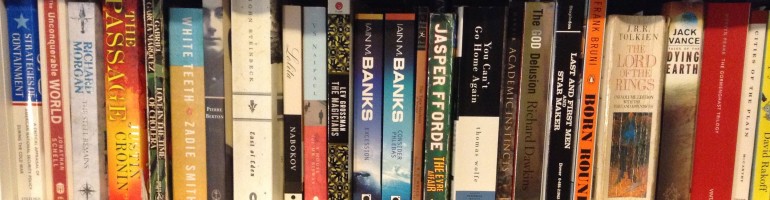
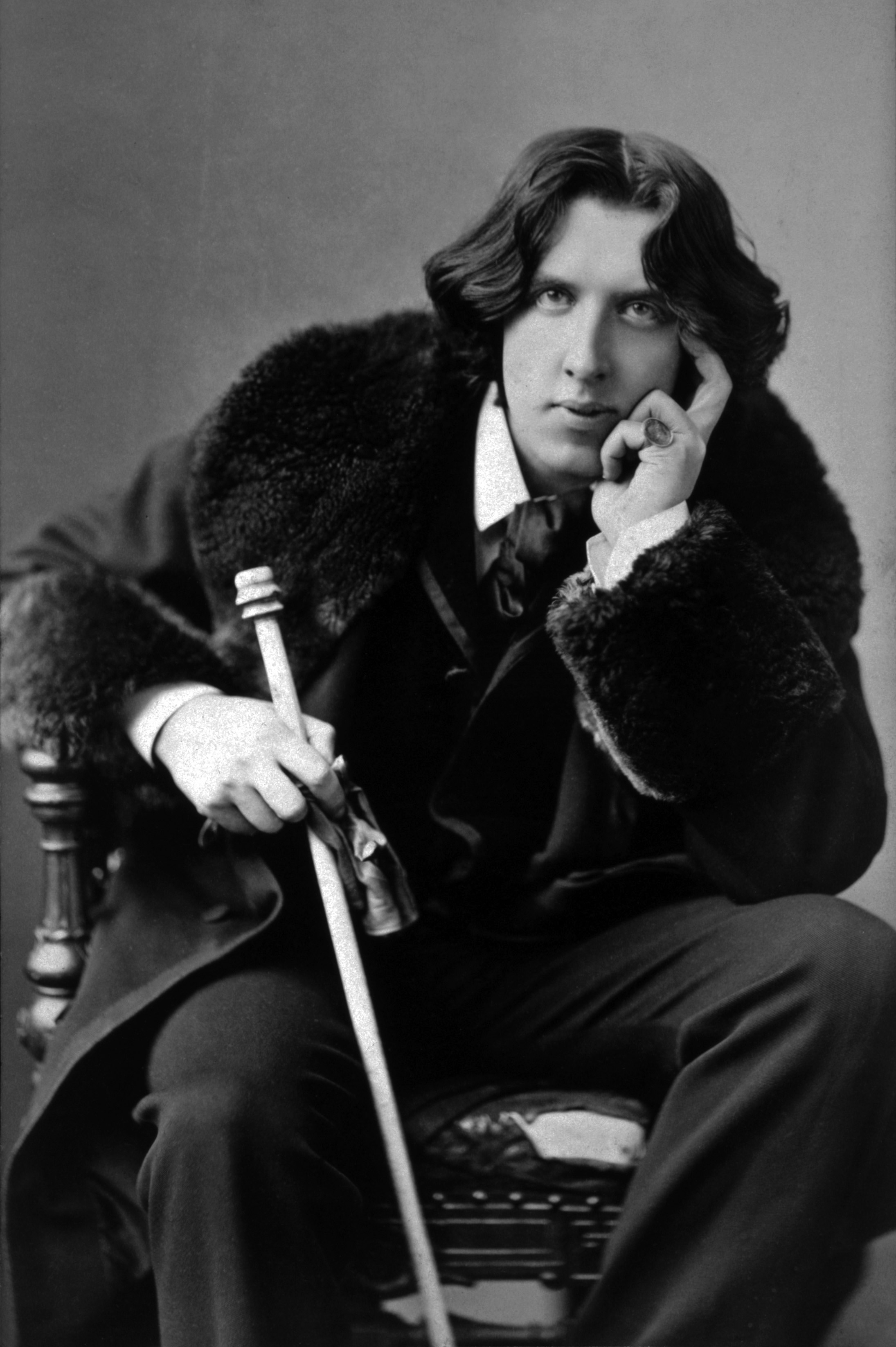

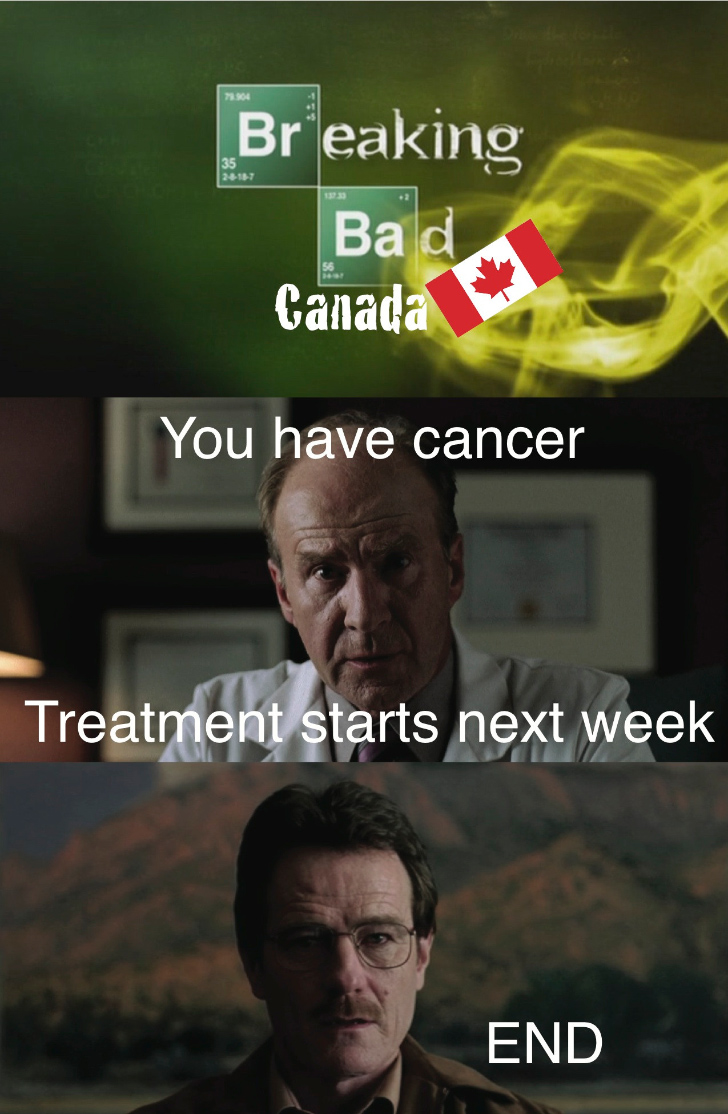
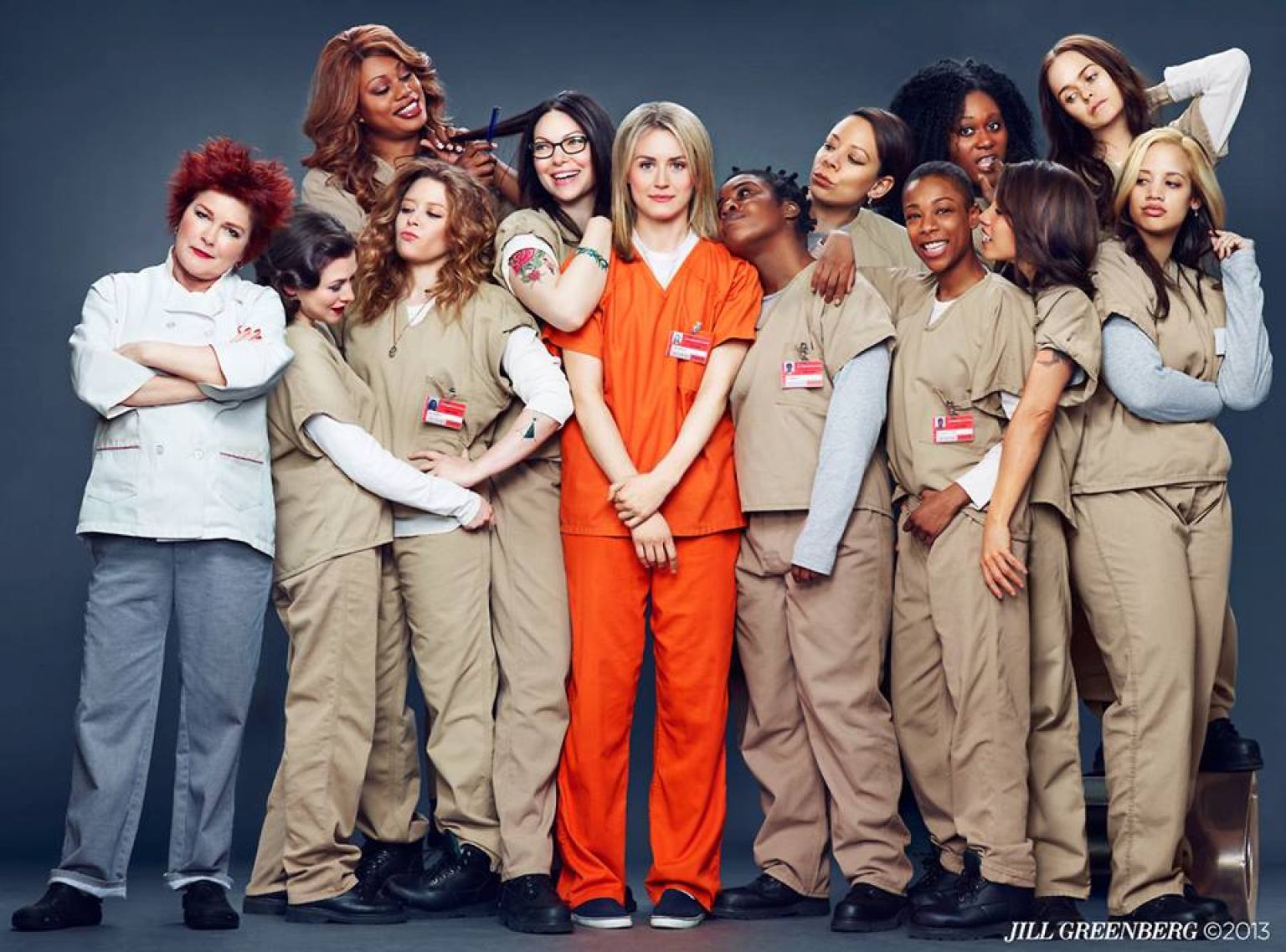
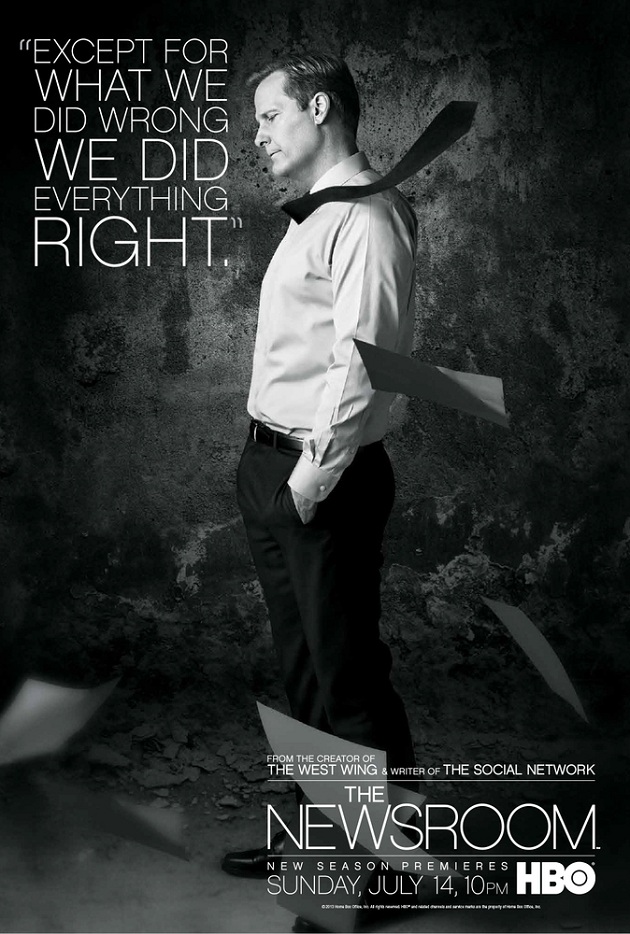
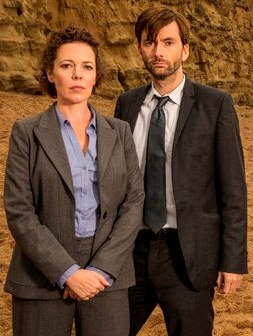
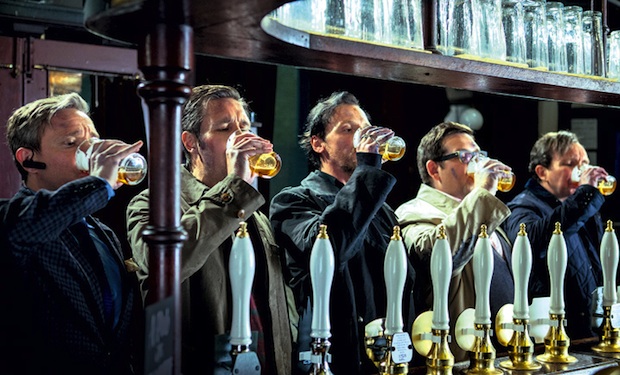

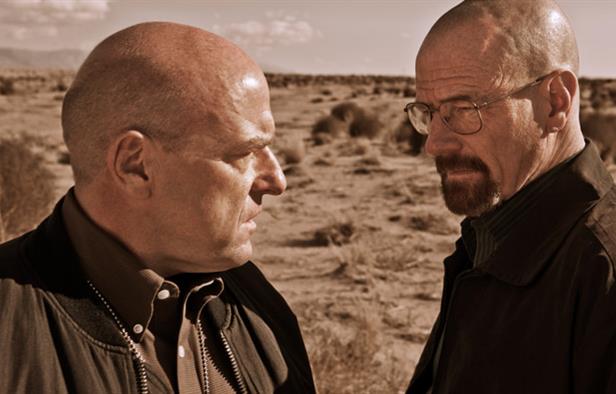
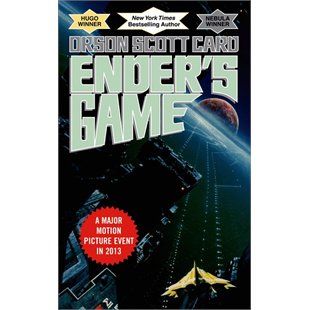
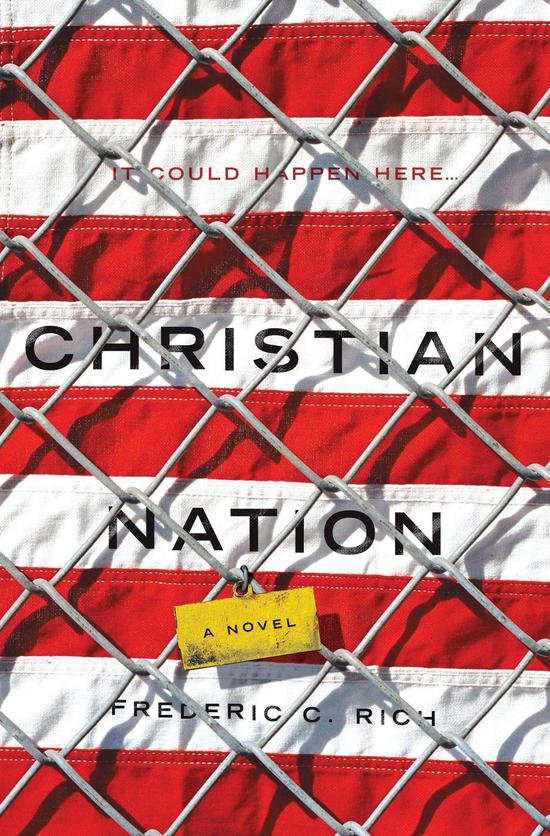


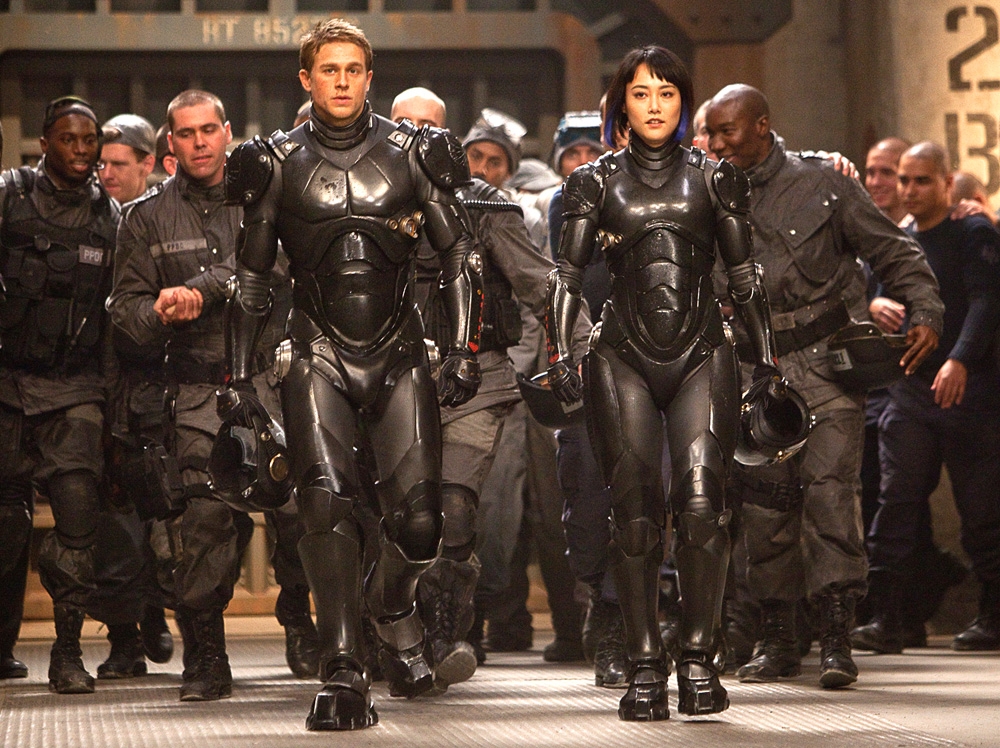


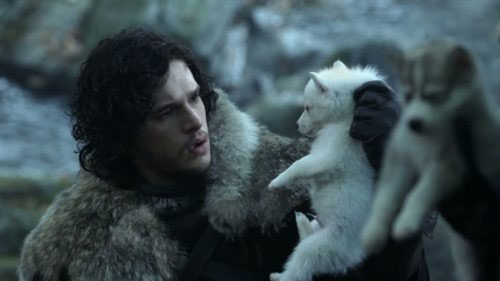
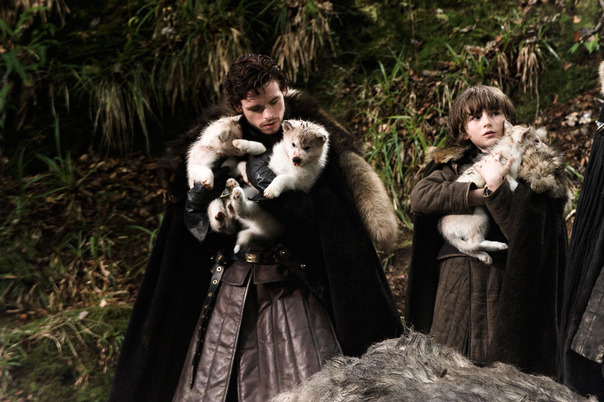
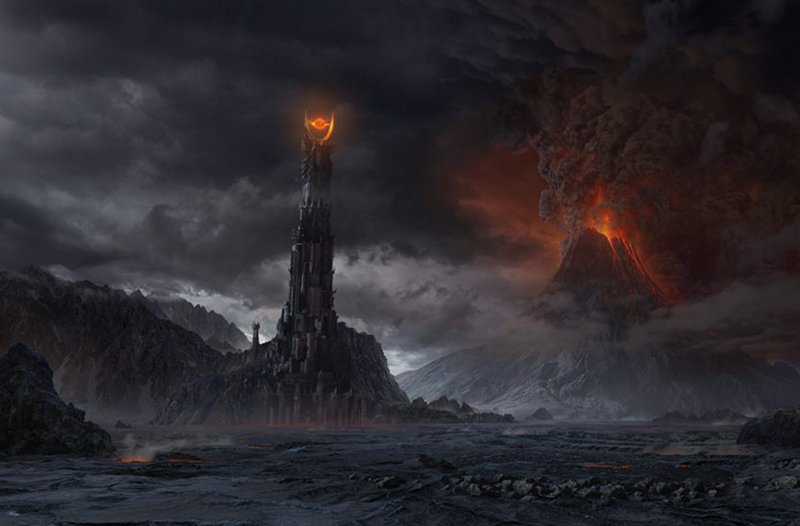
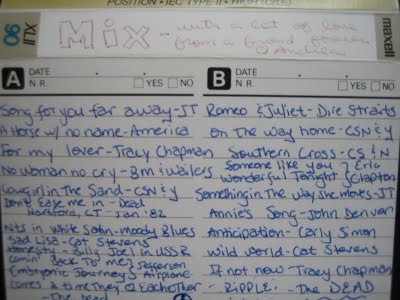






 it's all narrative