On Reading The Lord of the Rings, Parte the Seconde

In my Tolkien class, we’ve had a week and a half of background material: an introductory lecture on Tolkien and fantasy, a walk-through of his essay “On Fairy-Stories,” and a lecture on The Hobbit. This Tuesday we finally get into the thing itself as we read the first five chapters of Fellowship, and I’ll likely have something to say about that. But for the time being, here’s one more self-indulgent reminiscence about my relationship with Tolkien’s fiction.

ring_edited-2 In the fourth year of my B.A. I took a class on C.S. Lewis and J.R.R. Tolkien. Seeing that course listed in the York University calendar made me vaguely light-headed, and filled with the dread certainty that I’d never get into the class—surely everyone in the known world (and possibly worlds unknown) would be clamoring for a spot. But I was fortunate: that summer I had an enlistment window very early, and for the first time in my undergraduate career was able to get precisely the schedule I wanted.

The Lewis & Tolkien class was in the winter term, and as it approached I started to feel a slight gnawing unease. I had not picked up either the Narnia novels of The Lord of the Rings since high school; in the three and a half years of my undergrad that had passed, my reading habits, my critical acumen, my preferences and proclivities had all changed—in some cases dramatically. That sort of thing is the bittersweet dimension of a humanities education: if it takes root, if you genuinely learn from your classes and professors and peers, it changes the way you think (which is why I will always champion the value of the humanities). In its most superficial effects, it can teach you to be embarrassed by texts you previously enjoyed, whether they be the novels of Stephen King, or television, or romantic comedies, because you feel (without truly believing) that such texts aren’t worthwhile … but that is mere posturing. More invidious is when those past loves start to seem … well, childish. Or less satisfying or revelatory as you once believed, as your reading and/or viewing sophistication has grown, or simply because you have matured a great deal—to the point where Holden Caulfield no longer speaks fundamental truths but simply comes across to you as an obnoxiously angsty teen.

All this is by way of saying: I was afraid this would be my experience with Tolkien. Would I read LotR and suddenly see its escapism and childishness, its sexism and racism and Kipling-esque imperialist arrogance? A fairly large number of books I had loved when I was younger had so fallen in my estimation with the onslaught of pretentious twenty-something bookishness (some, but not all, have been recuperated as I got older). Would this happen, I worried, with The Lord of the Rings? I was genuinely anxious, for I didn’t think I could deal with it if the novel that had essentially been a defining experience for me—that had, for all intents and purposes, turned me into a student of literature long before I was aware of it—if that novel suddenly appeared to me somehow deficient, or less than I had always felt it to be. I knew instinctively how devastating that would be.

I needn’t have worried. I had decided in advance not to reread LotR in depth, but to skim—I still remembered the novel like the back of my hand, and given what felt at the time like an unreasonable amount of reading for all my classes it seemed not a bad idea to alleviate that load where I could. And in truth, I also felt that if I just skimmed I could avoid the pitfalls of whatever my three and a half years of university English had primed me to see.

It didn’t quite work out that way. Almost as soon as I started reading, I was sucked back into Middle-Earth. As I had not opened the book in about four years—when I had reread it multiple times between grade seven and the end of high school—the story, the characters, the words were like a favourite meal that has long been unavailable, which one tastes again as if for the first time.

And how did I react to the novel, after my three and a half years of literary-critical indoctrination? I had been worried that LotR would suffer the fate of other novels I could no longer take seriously; but if anything, I found I had a far deeper appreciation for Tolkien’s art and craft. Sure, a few things now seemed almost unbearably hokey—most notably, the overly formal greeting and addresses (such phrasings as “What ho, Legolas!” were vaguely cringeworthy)—but the richness of the prose, the compelling story, the complex characters, the moral and ethical drama, and above all the masterful act of creation that Tolkien had engaged in, all quite frankly took my breath away in a manner that had been simply impossible for my twelve-year-old self. I was depressed when I first finished reading LotR way back when because I knew I could never again read it for the first time; reading it after a lengthy absence from it and after I had truly learned to read (or had started to learn, anyway) was about as close as I could come to actually reading it again for the first time.

*

When I bought my books for that winter term, it was necessary to buy a new copy of LotR. The original copy which my mother had skeptically bought for me was pretty much in tatters. Incessant re-readings over the course of seven years had given the book’s thick spine a deep concavity; the writing on the spine was itself all but illegible from all the creases, scars bestowed by me folding the book open. The front cover had long ago fallen off, and required frequent re-applications of scotch tape to hold it on. The title pages inside, along with about half of the prologue, were long gone, and many of the pages in the middle of the book and become unglued, sticking out from their fellows like errant bookmarks. The quality of the paper itself had degraded, becoming brittle and easily torn at the corners and edges where it had been assaulted by my fingers.

I cannot remember what happened to that copy. I assume I threw it out; I’ve never really been sentimental about individual copies of books—I’m not the kind of person who refrains from cracking spines or who gets irate or anxious about dog-eared pages—but I wish I’d held onto that particular artifact. I would never read it again, to be certain (it would have completely fallen apart back then, never mind today), but it would be nice to still have it as a keepsake.

The edition I bought for that class was identical but for the colour of the cover, which was white. It has weathered the years somewhat better, for the simple reason that it hasn’t been as incessantly re-read as its predecessor. Still, the front cover also fell off, necessitating the same scotch-tape repair. When I ordered books for this term’s course, I had to decide whether to opt for the one-volume edition (now available with handsome red and significantly sturdier covers), or for one of the many, many three-volume editions out. Perhaps unsurprisingly, I chose the single-volume edition for sentimental reasons … knowing that, whatever I chose, it was a good bet the university bookstore would not be making much money off my course, as a significant number of my students probably had their own well-thumbed copies.

Because I am both sentimental and a dork, I took a picture of my desk copy beside my somewhat more battered old copy. If only my original copy was still around to complete the set …

making friends

Leave a comment

Filed under course readings, Return to Middle-Earth

On first coming to The Lord of the Rings, Parte the Firste

The Lord of the Rings is one of those books that is a deeply personal, deeply significant text for me. For all my excitement about the fact that I get to teach a course devoted to it, I am also rather anxious—it has been my experience that those texts you love above all others can also be the most difficult ones to teach. For one thing, you tend to know them so well that it is easy to jump enthusiastically all through them, forgetting that your students don’t have the same facility with them. For another thing, that same enthusiasm makes it easy to go off script and confuse your students with your “oh, and there’s this cool thing here too!” impromptu riffs. And perhaps worst of all, it can be deeply depressing when your students don’t share your love. There’s really nothing worse than looking around, as you geek out about how awesome this novel/play/poem/film is, and see a sea of indifferent faces.

I have had variations of this happen to me in the past when teaching, among other things, Rosencrantz and Guildenstern are Dead, The Crying of Lot 49, Chronicle of a Death Foretold, Dr. Strangelove, and Neuromancer. Considering the general enthusiasm of my LotR class for Tolkien, I am hopeful to avoid at least the third pitfall. But I’m still anxious.

All that is just apropos of introducing my next Return to Middle-Earth installment, which was the title of this post suggests, is something of a self-indulgent memory of first coming to read Tolkien. Even better: it’s the first part of two!

ring_edited-2

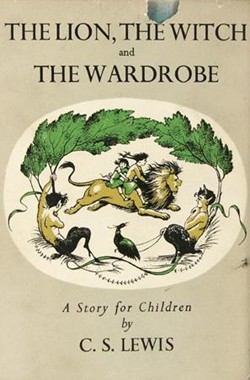
When I was nine years old or so, my aunt bought me a boxed set of the Chronicles of Narnia by C.S. Lewis for Christmas (or possibly my birthday—if the latter, I was just turning ten). As much as I loved reading, I did not immediately get into them. I was a devotee of Hardy Boys novels and anything on sharks or WWII that I could get out of the school library, but had not yet felt the attraction to fantasy. I did make a few attempts at The Magician’s Nephew, but never quite got into it. I wish I had known then that it wasn’t necessary to read that one first, that C.S. Lewis had in fact written it sixth; had I started with The Lion, The Witch, and The Wardrobe, I think I might have gotten into the series much sooner.

(If I can make an aside here as a much-belated thanks to my aunt: I remember getting that collection of books, and I remember being unenthused at the time. However much I might have loved reading, books were never what I wanted as Christmas or birthday gifts, not unless they had a lot of big, glossy photographs of fighter jets or sharks. So my muted thanks were probably less than gratifying to my aunt, but her choice of gift has been vindicated. This was very much on my mind this past Christmas, as one of my gifts to my niece Morgan was Neil Gaiman’s latest children’s book Fortunately, The Milk—a brilliant tale of time-traveling dinosaurs, pirates, aliens, and volcano-gods named Splod—and which I knew would not be appreciated amidst even the other gifts I’d given her, never mind the cornucopia of stuff from everyone else. But I hope it takes root in the months and years to come, much as my aunt’s gift of Narnia did for me. So: thank you, Aunt Carolyn. If I was less then enthused then, I have built up slightly more than thirty years of enthusiasm since).

I wish I could remember the moment that Narnia first came alive for me. I feel like I should, but there is only a vague gap between being unimpressed with The Magician’s Nephew and every single book in that collection being (barely) held together with scotch tape. I also started writing, then, stories that, like Lewis’, involved children from this world having adventures in a fantasy world they blundered or were drawn into. Mostly they featured me and my friends from school.

As all children of a certain age do, I talked endlessly about what fascinated me, and at this point it was all Narnia all the time. Normally, of course, adults listening to such disquisitions tend to have their eyes gloss over, and just nod vaguely until they can politely change the subject or walk away (something I encountered later in life with unwary people who asked me “Oh, so what’s your dissertation about?”). So it was weirdly disconcerting to have one of my father’s friends, a neighbor from across the street, actually listen and ask pointed questions about what I liked about C.S. Lewis. The conversation then took this turn:

ME: So, you like the Narnia books?
HIM: (shrugs) Yeah, they’re OK.
ME: (vaguely offended) They’re “OK”?
HIM: Oh, don’t get me wrong. They’re good. But Lewis is no Tolkien.
ME: What’s … a Tolkien?
HIM: (laughs knowingly) Kid, if you like Narnia, you will love The Lord of the Rings.

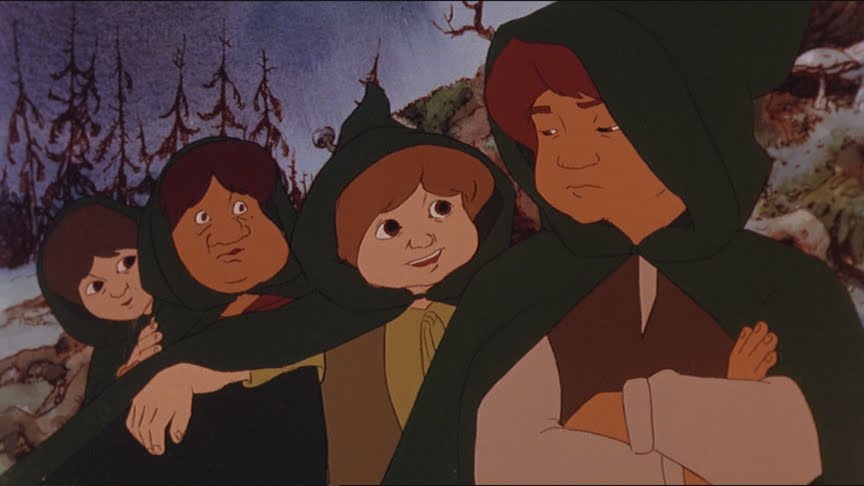
He then loaned me, not LotR proper, but a children’s-book version with images from Ralph Bakshi’s 1978 animated film. “See if you like this,” my dad’s friend said, “because the actual novel’s pretty long.” To this day I don’t know why he didn’t just recommend I read The Hobbit—the existence of which I only learned about when I was about halfway through LotR—but the upshot is that my first experience of the story was infused with late-1970s fantasy art. A few examples:

LOTRAnimated

The hobbits. Not actually all that different from what we got in the films.

nazgultree2

The Black Rider threatening the hidden hobbits. Even closer to what we saw in the film.

lord-of-the-rings-1978-legolas

Legolas. It impresses me that the animated Legolas makes Orlando Bloom’s version look like Rambo by comparison. Also, fun fact: the actor who voiced Legolas in the animated film was Anthony Daniels, aka C3P0. Seriously.

aragorn animated

And this is Aragorn. Until Viggo Mortensen totally owned this role, I had this image of the scion of Gondor as looking vaguely like Chief Bromden.

The film was designed to be the first of two, but the second (to the best of my knowledge) never got made, so the storybook ended with Gollum about to lead Sam and Frodo through the secret entrance to Mordor that proved to be Shelob’s lair.

One way or another, the story captivated me. Not long afterwards, I was out with my mother as she ran errands. We stopped at the local mall for a few things, and went to the W.H. Smith (a bookstore I ended up working at for the better part of my high school years). I always loved our outings when we stopped at the bookstore, because I was allowed to choose a book that Mom would buy for me. I was perusing the SF section when a great, huge, black brick of a book caught my eye.

l_lord_rings_paperback_1983Without thinking, I grabbed it and took it up to where my mother waited by the cash. She looked dubiously at the book, and then at me, obviously more than a little skeptical. “Will you actually read that?” I nodded. “Do you promise?” Again, I nodded.

I don’t think I convinced her, but she bought me the book anyway, even though it was about three times the price of the paperbacks I normally got. Now that is maternal love and faith.

That was late spring of 1984. I finished it some time in early autumn, having spent the better part of the summer engrossed in it. I have few memories of where I was when reading it, except for two. That summer I went to a friend of my parents’ cottage with my father, brother, and a friend of mine from school. On the drive home, it was a sunny, sultry summer day; my friend was listening to his walkman and dozing, but I was in the midst of the battle of Helm’s Deep. Even now when I reread those sections—even, bizarrely, when I watch those sequences in the film of The Two Towers—I have a vivid sense-memory of hot summer air buffeting through open car windows, the smell of dust and asphalt and pine trees, the vague memory of those trees as a green blur outside the car windows, and the incessant sounds of Credence Clearwater Revival, which was my father’s choice for that summer’s road trip soundtrack.

My second memory was reading the last line of the final chapter. It was autumn, and I was in my room. Sam Gamgee returned from seeing Frodo off at the Grey Havens, and sadly walked into Bag End. He sat down, settled his daughter into his lap, and sighed to his wife, “Well, I’m back.”

Before I go on, I just want to say: as much as I loved the LotR films, I will never forgive Peter Jackson for not ending on that specific note. He came so damn close: Sam walking down the lane to Bag End, his daughter coming out to greet him, a happy/sad moment with his whole family by the door … I suppose I am being picky, because he got the spirit of the moment exactly right. I was just rotted that he didn’t give the emotional punch I was waiting for with the words.

“Well, I’m back.” Wow, was I miserable for at least two weeks after that. And then even more miserable after I found my way to the chronology in LotR’s appendices, which as I discovered did not merely recount the events leading up to the novel and then the events of the novel itself, but the next one hundred and twenty years or so after the end, in which we learn about the golden reign of King Elessar and the prosperous lives led by Merry, Pippin, and Sam in the Shire. And then I came to this last entry:

In this year on March 1st came at last the passing of King Elessar. It is said that the beds of Meriadoc and Peregrin were set beside the bed of the great king. The Legolas built a ship in Ithilien, and sailed down the Anduin and so over Sea; and with him, it is said, went Gimli the Dwarf. And when that ship passed an end was come in Middle-Earth of the Fellowship of the Ring.

I kid you not: writing this passage out, I am tearing up.

Not quite thirty years ago when I read this passage for the first time, I was devastated. Because I knew that, however much I might reread this extraordinary novel, I would never again read it for the first time. I suspect that anyone who is an inveterate reader like me can point to an experience like this: a moment in which your experience of a story knocks something loose inside you and you feel yourself somehow change. I don’t think there is a word for it, because it isn’t the same thing as the experience of the sublime (though it can have sublime elements). It’s more as if the borders of who you are and what you know expand, and expand shockingly enough that it is actually felt, almost physically, rather than sensed.

If anyone reading this post wants to respond: what story changed your world? And why?

*

That is all for now. Up next: part two of my LotR reading experience, and some thoughts on The Silmarillion.

2 Comments

Filed under course readings, Return to Middle-Earth

On The Hobbit: The Desolation of Smaug and why Peter Jackson needs an Emma Thompson

I started my Tolkien course last Thursday, and have been hip-deep in cobbling together my lectures for upcoming classes. I’m not sure how much lecture material will surface on this blog; some, certainly, but mostly what I’m thinking here is personal recollections of reading LotR and subjective reactions to my current re-reading. That being said, I’m doing a lecture this week on The Hobbit as preface to getting into LotR proper; and while I’ll spare you, gentle reader, my pedantry on how The Hobbit fits into the Tolkien mythos, I have been pecking away at a review of The Desolation of Smaug since I went to see it a few weeks ago. It is not, perhaps, how I wanted to kick off my Return to Middle-Earth posts, but it’s the one that I have done.

Also: spoilers.

ring_edited-2

It possibly seems, if not counter-intuitive, then possibly a little pedantic to criticize fantasy for willfully ignoring the laws of physics. Come on, you might say: we’re talking about an alternative reality in which magic, dragons, goblins, wizards, immortal elves, and giant talking spiders exist. Surely in such a context, anything goes?

Well, no. Not at all, really … and when Thorin Oakenshield rides a wheelbarrow down a river of molten metal in the bowels of the Lonely Mountain, the fact that he was doing so to escape a fire-breathing dragon with the voice of Benedict Cumberbatch didn’t prevent my hackles from going up. You see, Thorin was more or less prone in the wheelbarrow, lying on his belly, and did not seem to suffer at all from the raging heat a few inches on the other side of the vessel. Even granting the possibility that Middle-Earth’s dwarves have developed building materials with the heat-protection qualities of uber-asbestos, such close proximity to molten metal would certainly roast one’s lungs and eyeballs and raise a few blisters.

hobbit-desolation-of-smaug-barrel-rapids

I was similarly irked by Peter Jackson’s revision of the barrel-riding sequence, in which the dwarves and Bilbo escape from the wood-elves in empty wine barrels. In the novel, they are sealed inside. In the film, they ride them as if they were little boats, plunging over waterfalls and through surging rapids, and not only do none of them get swamped or flipped or simply sunk, but apparently the barrels are stable enough for our old friend Legolas to leap into the middle of the stream and balance with each of his feet on the head of a dwarf while he shoots arrows at pursuing orcs … and then jump straight up, turn around in mid-air, and land again on the annoyed dwarves so he can shoot in the other direction.

Granted, we’re familiar with Legolas’ acrobatics in The Lord of the Rings, whether he’s riding a shield down a set of stairs or sliding down a massive elephant’s trunk (again, shooting arrows all the while). But this film takes even his nimbleness to absurd levels.

legolasAs I watched The Desolation of Smaug, I had the same thought I had with An Unexpected Journey: that Peter Jackson really needs someone on his team to say “Um, perhaps that’s a little much?” Actually, I suspect he does have people like that … perhaps he just has to listen to them. It’s sort of like when Kenneth Branagh first started making films: Henry V and Much Ado About Nothing were both extremely well done, and while they approached the line between restraint and excess, they both held back … just barely, perhaps, but they held back. My theory is that Emma Thompson was his voice of reason, because after they split, he did not just cross that line but pole-vaulted it.

Peter Jackson needs an Emma Thompson.

Like Branagh, Jackson seems always to want to err on the side of excess, and he has an unfortunate tendency toward slapstick (poor Gimli). For whatever reason, he showed considerable restraint in The Lord of the Rings. Of course, I had no way of knowing he had showed restraint until I saw The Hobbit: An Unexpected Journey, a film in which all of his unfortunate tendencies were on display: the film was dilatory to the point of being tedious, frequently glib and silly, and … the slapstick. Oh, the slapstick. Whether it was the unfortunately expanded role of Radagast the Brown or the comic turn of the Great Goblin (voiced by Barry Humphries, aka Dame Edna), there weren’t very many moments where Jackson resisted the temptation for physical humour.

THE HOBBIT: AN UNEXPECTED JOURNEYNow, one protest that could be made here is that this is merely in keeping with the source material: The Hobbit is an eminently silly novel, and indeed slapstick plays a significant role in some of what might otherwise be terrifying scenes. The trolls’ working-class yob dialogue, for example, or the goblins’ hysterical reaction to Gandalf and Thorin’s swords, which ultimately reminds me of nothing other than a manic Benny Hill skit. Ditto for the encounter with the giant spiders, whose natural menace is mitigated by the fact that, like the trolls, they talk like bumbling and hapless Cockney comic villains. With this in mind, it raises the question: in making these films deliberately sillier, isn’t Peter Jackson simply being more faithful to the novel?

Well, yes and no … one of the shrewd things about the way in which J.K. Rowling wrote the Harry Potter series is the way in which the novels mature along with Harry (and, as Rowling has said, her ideal reader, who starts the series at age eleven). But in so doing she introduces comic elements in The Philosopher’s Stone—such as the wizarding world’s complete bafflement with Muggle science, technology, and fashion—that are entirely at home in a children’s novel but which become increasingly incongruous as the novels grown more expansive, more complex, and more serious. In The Philosopher’s Stone we laugh at wizards’ confusion about wearing polka dots with stripes, but by The Half-Blood Prince, it strains credulity that Arthur Weasley’s dearest wish is to learn how airplanes stay aloft (if he really is as obsessed with Muggle technology as the books make him out to be, it would not be a difficult thing to figure out—Ask Hermione! is what I always yell).

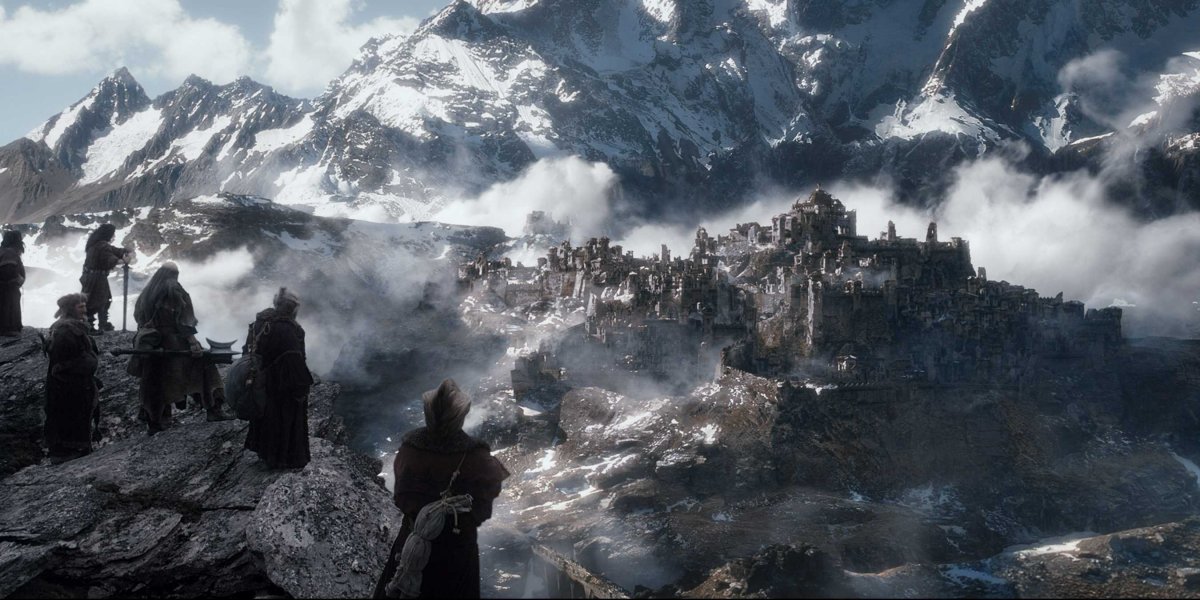
the-hobbit-desolation-of-smaug-landscapeThere is a similar shift in voice between The Hobbit and The Lord of the Rings. The former is a children’s novel through and through; the latter, entirely not. How does Tolkien manage this shift? Well, he cheats: as the old saying goes, The Lord of the Rings puts aside childish things (Tom Bombadil notwithstanding). The Cockney trolls of The Hobbit lose their comic accents, and indeed their voices entire, becoming little more than massive, fearsome beasts; the Benny Hill-esque goblins become terrifying orcs; and the hapless spiders of Mirkwood become Shelob, who remains one of the most terrifying creations I have encountered in fantasy fiction. The first five chapters are transitional, still evincing the general tone and voice of The Hobbit, but once they get to Bree and encounter Strider, the hobbits leave The Hobbit behind for good.

I had wondered how the Hobbit films were going to negotiate this shift in tone; two films in, the answer seems to be: unevenly. Though as I’ve hinted, this unevenness can be at least partially blamed on Jackson’s slapstick tendencies. There is nevertheless the occasional irruption of The Hobbit’s more childish nature—less on display in Smaug, but present nonetheless.

Am I perhaps being unfair? The Hobbit, you might protest, is in fact a children’s novel, and we should not be surprised when its original spirit shows though. Which, I suppose, poses the question: could a film of The Hobbit have in fact been made that was faithful to the tone and spirit of the novel? I’ve mulled this question over, and my answer has to be no—not now, not after Peter Jackson essentially defined Tolkien cinematically. The problem with these Hobbit films is precisely that they must needs provide continuity with The Lord of the Rings—which is to say, we cannot but watch The Hobbit retroactively, with all of the grand sweep of Jackson’s vision of Middle-Earth in our minds. Tolkien’s novel, despite all of the distance traveled by Bilbo, provides a very narrow perspective on Middle-Earth: not just in terms of geography, but also history. The Lord of the Rings expands outwards in space and backwards in time almost exponentially. Tolkien did a lot to square up his epic with the substance of his children’s book, and vice versa: he produced a revised edition of The Hobbit in 1947 while he was midway through LotR. He also included material in his appendices to The Lord of the Rings and in Unfinished Tales that supplemented the story of The Hobbit in such a way as to fold it into the broader sweep of Middle-Earth’s history.

It was this supplementary narrative that initially made me cautiously optimistic about Jackson’s overt intention to transform the 350 page Hobbit into a cinematic epic on par with the 1000+ page Lord of the Rings—cautious optimism admittedly fueled by my Tolkien-geek desire to actually see the battle between the White Council and the Necromancer, and all the arguments leading up to it. And indeed, one of the scenes I enjoyed in Smaug was Gandalf’s “chance” meeting with Thorin in Bree, wherein he first proposes the plan to reclaim Erebor from the dragon.

But even so: there simply isn’t enough supplemental material in Tolkien’s paratexts to turn The Hobbit into three three-hour epics, and both films so far have felt excruciatingly long. Again, Jackson errs on the side of excess: the final forty-five minutes of Smaug is like every single overly-long chase scene in every movie you’ve ever seen stitched together and played end to end. Or perhaps I’m exaggerating … but honestly, that is what it felt like.

What is perhaps most frustrating is that these films could have been so good, had Jackson exhibited something resembling restraint. There are gem-like moments, many of them simply sublime shots of the New Zealand-cum-Middle Earth landscape. But the casting is also (mostly) lovely: Martin Freeman was an inspired choice for Bilbo, and he labours heroically; I will watch Ian McKellen in literally anything; and if the best part of the first film was the riddle in the dark sequence between Gollum and Bilbo, Bilbo’s confrontation with Smaug is very nearly as good. Fans of Sherlock like myself will love the Cumberbatch/Freeman verbal jousting, and it was also a fantastic example of when CGI can work wonders: the entire film is practically worth the price of admission to see Smaug’s lip curl in a sneer.

dragon1Such a shame they ruined it with the protracted chase sequence.

Leave a comment

Filed under course readings, Return to Middle-Earth

Welcome 2014, or, My semester of geeking out

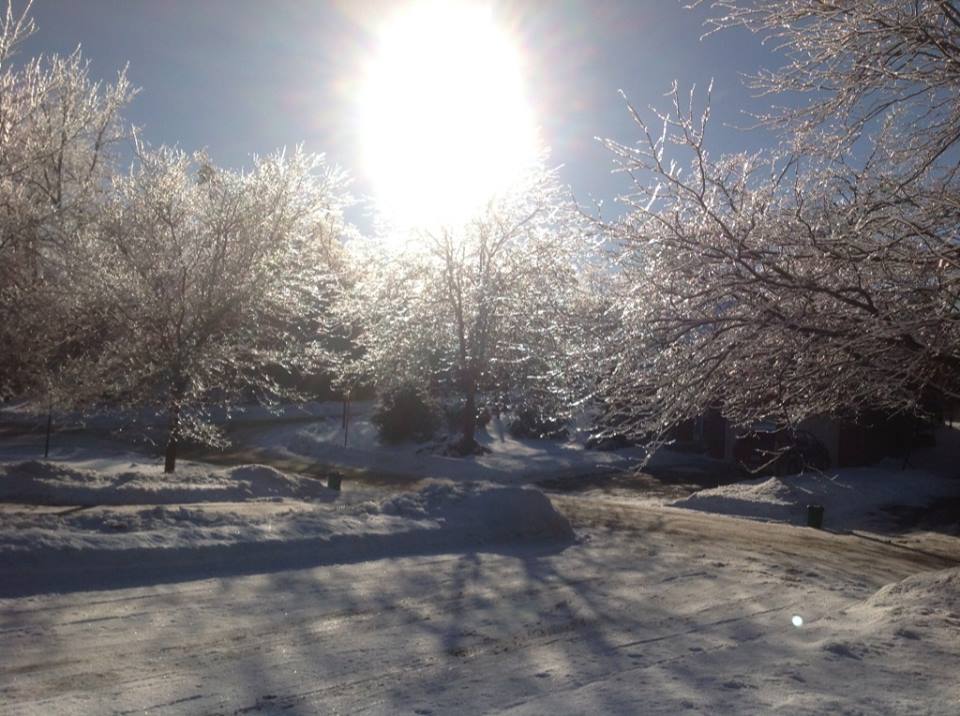
Happy New Year, everyone! This blog has been on a quasi-hiatus since mid-December, as I recovered from the term and enjoyed the holidays at my parents’ house in Uxbridge, Ontario—which miraculously escaped the ice-storm-induced power outages while providing such scenery as the ice-encrusted tree in the front yard:

1231387_568662025646_1840509492_n

But then, as if in karmic retribution for my cozy sojourn while so many in Ontario went with power, we’ve been experiencing the double whammy of unseasonably cold temperatures, huge amounts of snow, and power outages here in Newfoundland since I got home. Harrumph. Oh well. So it goes.

But I’m back now and gearing up for the winter term. I’ll be teaching two classes. The first, a fourth-year seminar looking at the troika of William Faulkner, Toni Morrison, and Cormac McCarthy. The concept for this course is cheerfully stolen from a graduate course I took during my PhD—same authors, (mostly) different novels. I’ll have more to say about that course in future posts.

For now, I want to talk about my other course, which I can quite honestly say I’ve been preparing to teach since I was eleven years old: English 3811, which will focus more or less exclusively on The Lord of the Rings. While my academic career has been principally focused on contemporary American literature, film and popular culture, and postmodernism, the reading experience that defined—and still defines—how I read and why was my first encounter with Tolkien. As I have mentioned at various points, fantasy as a genre has always loomed large in my imagination. Over the last year or so, I have migrated back towards it from a more scholarly perspective, looking closely at contemporary fantasists like George R.R. Martin and Neil Gaiman and examining the ways in which a not-insignificant number of contemporary writers have been reinventing the genre. Gaiman, Martin, Terry Pratchett, Lev Grossman, and even her nibs Dame Rowling herself, have shifted fantasy’s basis from one grounded in an essentially mythopoeic outlook to a markedly humanist, secular one.

But however much I work on these authors, I keep coming back to Tolkien as if pulled by the gravitational force of a huge planet—he is to fantasy fiction what W.B. Yeats is to Irish poetry, or William Faulkner is to Southern Gothic, except even more so, because his work is as definitional as it is influential.

All of which makes teaching this course an extraordinary opportunity to return to the source, as it were, and to comb through the novel that first taught me that literature can have affect. I’ve been keeping a reading journal as I slowly re-read my favourite novel; over the next few months I’ll be posting on the journey. So have an eye for a Return to Middle-Earth.

ring_edited-2

Coming soon: a recollection of my first copy of LotR, and a belated review of The Hobbit: The Desolation of Smaug. Stay tuned.

Leave a comment

Filed under course readings

Game of Thrones Book Club, the Final Stave

got-book-club
Hello again, and welcome to the final installment of the Game of Thrones Book Club, wherein Nikki Stafford and I, after having done three seasons of co-blogging on HBO’s Game of Thrones, talk through the first novel in the series. There will be more to come in the new year as Nikki surges on ahead in the series with book two … we won’t say when we’ll be posting as of yet, though it occurs to me that it might make for a good lead-up to the fourth season of the series.

We’ll see. In the meantime, nothing says Christmas like beheadings, large-scale medieval battles, and dragons.

Christopher: Well, here we are at the end of A Game of Thrones, and if the way GRRM leaves it doesn’t make everyone who’s made it through want to run out and buy A Clash of Kings … well, I just don’t understand you. Of course, Nikki, I know you’ve already ordered book number two, so I guess my first question to you is: did you find the conclusion of the novel as satisfying as the series?

Say what you will about GRRM, he’s a dab hand at keeping us turning the page and running out to the bookstore for the next book. The admixture of triumph and despair, of shock and confusion that we encounter here is genuinely impressive. Here at the end, the war that everyone has feared has finally broken out, and first blood goes to the Starks. Well … first blood on the battlefield, at any rate. The Shot Heard Around Westeros was of course the shocking execution of Ned Stark; and like the assassination of Franz Ferdinand, it collapsed all the shaky structures of diplomacy that had been hastily built and made a grinding, bloody war inevitable. Had everything worked out as it was supposed to, with Ned taking the black, the Starks might have been brought back into line—certainly, with Ned “confessing” his crime and naming himself traitor, there would be nothing for the North to stand on in terms of casus belli. Even with the Lannisters and the Starks clashing on the field of battle, peace could have been brokered.

If not for the Little Shit. Joffrey. Who decided all on his own that he would not suffer traitors and nicked off Ned’s head before anyone could do anything. Isn’t he just adorable.

What I love about Joffrey’s capricious assertion of royal fiat is how it asserts a similar caprice in the movement of history. Fantasy as a genre is frequently invested in the idea of prophecy and fate and destiny; what happens is meant to happen, and it all unfolds according to a larger, transcendent logic. Not that that sort of logic isn’t on display in A Game of Thrones—after all, the broader story arc entails a great cosmic showdown between the forces of implacably cold anti-life in the form of the Others, and, well, everything in Westeros with a warm body.

But here at the moment of Joffrey’s petulant sentence, he throws everything into disarray (and reminds us that he’s a total sociopath). History is capricious, and GRRM does a really subtle job of playing that basic fact off against the broader sense of social and political (and magical and mythical) moving in mysterious but often implacable ways.

Speaking of the battlefield that Westeros is to become, we get our first glimpse of that common fantasy setpiece: the large-scale clash of armed forces. GRRM does not disappoint on this front: the battle as experienced by Tyrion is wonderfully rendered, with enough detail to communicate how it proceeds and give the reader a sense of the disposition of forces; but falling short of a Bernard-Cornwell-style history lecture (though I do love those, too—for anyone who craves specific historical detail, check out any one of his many, many works of historical fiction). And here, the novel is vastly superior to the series: I remember being quite put out by the way in which the show cheated, giving us a glimpse of the camp and Tyrion’s rousing little speech to his troops … but then Tyrion is knocked unconscious as his men trample him in their eagerness to get to the battle, and he comes to after everything is done. I understand the need to keep things on budget—large-scale battles are expensive to film—but it felt a lot like a cop-out at the time.

Some day we’ll have to have a discussion of battle sequences on TV versus on film. What did you think of the first actual clash of arms, Nikki?

Nikki: It was wonderful, and I’m glad you reminded us that Tyrion gets knocked unconscious in the show. Even though I hadn’t yet read the book, I remember being put out at the time that that’s all we get from the battle. So put out… I apparently put it out of my mind. So when the battle happens from Tyrion’s POV in the book, I kept thinking, Why don’t I remember this?! I’m glad it’s because the show didn’t bother showing it, and not because my memory is terribly faulty. As I read it, I thought it felt so visual, like GRRM was actually writing the script for the series and not just the scene in the book. I loved it; it was on-the-edge-of-your-seat tense, and even knowing how it was going to pan out, I thought it was still full of suspense.

As was the actual beheading scene. On the series, we see the sword come down on Ned’s head, and Arya’s head turned away by Yoren, who grabs her because Ned pleads with him to not let her see it. And yet… we know the sword connects with Ned’s neck. We know he’s dead. (I still remember the chatter after, and the few people who thought he was NOT dead, despite it being pretty darn clear on the episode.) And yet… how shocking to get to that part and discover that you see even less of the execution in the pages of GRRM’s book than you did on the show! We see Ilyn Payne come out, and then Arya’s wrenched away, and the moment that Ice makes contact with Ned’s neck is overshadowed by Arya’s distress, and trying to remember the name of the man who has her. I kept thinking they were coming back to it, that time had been suspended for this moment of Arya trying to get her bearings, when the story continues… “The plaza was beginning to empty. The press dissolved around them as people drifted back to their lives.” Wait, what? I had to go back and reread that page about three times before I realized the decapitation happens entirely within our minds, with no description. It’s as if GRRM came to a point in his book where he had to kill off his hero, and then couldn’t bring himself to actually do it. So he just left the execution out and put us directly in Arya’s perspective, being jostled about on the streets and confused and trying to put her mind on something else. It’s one of the most brilliant scenes I’ve ever read in a book.

And then there’s how the word travels. From that point on we see the others find out… Bran gets a raven; Sansa throws herself on the bed and hides from the world; Tyrion finds out from an offhand remark made at a council meeting, and nearly chokes on his food… and then we get to Jon Snow and Catelyn, and their stories continue after they’ve found out. Again, like with the beheading, we don’t read how they find out, just what they do when they know. Jon jumps on his horse and races southward, thinking he’ll join Robb’s battle and help him. And Catelyn is grief-stricken and in shock, trying to focus on her son’s battle, but she can’t help but thinking of her husband, followed by, “Oh Ned…” or “Oh, poor Ned…” as the memory suddenly hits her anew once more. I loved how GRRM has this ability to unfold the story by showing the consequences and reactions, not necessarily the Big Moments themselves.

Do you remember your reaction when you first read the scene of Ned’s execution?

Christopher: I remember being baffled more than shocked. Your description of how GRRM handles the moment of execution is spot-on—you don’t see the actual downstroke of Ice, and with Arya our gaze is forcefully turned aside. The first time I read it I didn’t gasp or throw the book down, as it seemed entirely likely Ned might still be alive, that I’d just been subjected to some cruel misdirection. But as you astutely point out, all doubt about Ned’s death is erased in the subsequent chapters.

I’m also struck by your observation that GRRM quite artfully emphasizes not the shock of Ned’s death in the moment but the reverberations through Westeros. For the assembled crowd, it’s an afternoon’s entertainment. The real sturm und drang in King’s Landing, we assume, happens offstage as Cersei et al panic over Joffrey’s peremptory action. Elsewhere, we see how irrevocably things have shifted. When one of Tywin’s more craven knights suggests suing the Starks for peace, Tyrion’s answer is apt: throwing his wine goblet to shatter on the floor, he declares, “There’s your peace … My sweet nephew broke it for good and all when he decided to ornament the Red Keep with Lord Eddard’s head. You’ll have an easier time drinking wine from that cup than you will convincing Robb Stark to make peace now. He’s winning … or hadn’t you noticed?”

It really is such a GRRM flourish to hand the Starks a great victory simultaneously with unspeakable loss. Robb’s first victory shows the Lannisters that they had underestimated him drastically, and in capturing Jaime he has taken that which is most precious to Tywin. Had Ned not been killed, trading Jaime for him would have been the obvious move, one that might even have established peace—a wary, unstable peace to be certain, but one in which the statesmen would have had some breathing room.

Jon Snow’s reaction to his father’s death is one of my favourite parts of this novel. His headlong flight down the Kingsroad is a poignant reminder of just how much he loved his father, and his friends’ refusal to let him go signals that he now in fact has a new family. Lord Commander Mormont is wonderful here: gruff, sensible, wise. When Jon grudgingly admits that his desertion would not bring his father back to life, Mormont turns that fact around on him rhetorically and reminds him of the stakes the Watch are now playing for: “We’ve seen the dead come back, you and me, and it’s not something I care to see again.” There is so much laded in that brief statement, not the least of which is that death is irrevocable, and where Jon’s ultimate responsibility lies when it proves otherwise.

The last four chapters set us up for A Clash of Kings, each ending with a suggestion of what is to come. Jon Snow’s last chapter has him accepting his new identity as a Brother of the Night’s Watch, and Mormont’s declaration that, for the first time in centuries, the Watch will ride in force.  Mormont’s resolve on this point is both literally and figuratively chilling—something the series translated well by having his speech play over images of the assembled Watch marching through the tunnel at the base of the Wall into the wilderness beyond.

Here at the end, we see several characters transformed. Jon embraces his new identity, while to the south his half-brother is acclaimed King in the North. What did you think of how GRRM brings each of these narrative threads to a provisional close?

Nikki: It’s so beautifully done, and I can’t believe initial readers such as you were forced to wait for the next book. No wonder new installments are snatched up quicker than new Harry Potter novels. GRRM has a masterful touch with knowing just how much to reveal, and how much to hold onto. I’m not sure if he’s able to maintain that throughout the series, but certainly in this first book, he knows what to show and what to suggest; to whom he can give a perspective chapter and who should remain more of a mystery; and in these final chapters, how much of the story to give us here to make it feel like it’s the first major stage in the game of thrones. The entirety of the King’s Landing material leads up to Joffrey becoming king, but he knows you can’t leave it there… you need to go one step further, showing what a nasty and thoughtless (and reckless) king he is. Not only is he a sociopath, but the little shit has just wreaked major havoc throughout the kingdom. In that incredible earlier scene in the Eyrie, with Bronn fighting the champion chosen by Lysa, it’s clear that there’s something not quite right with Robert, Lysa’s young son. (And on the series they cast him perfectly.) And this odd child who’s a little touched in the head continually claps his hands, stomps his feet, and shouts, “Make him fly!!” because his mind wants nothing more than watching a dwarf fly through the Moon Door.

And now, here we are at King’s Landing, where Joffrey is older, more mature, and should know better than to act rashly with so much going on around him, but he’s essentially the same impetuous child that Robert is. He practically hops up and down squeeing and clapping his hands for Ilyn Payne to make Ned’s head fly in much the same way Robert had earlier, and he clearly takes much pleasure and glee in the execution while everyone around him looks horror-stricken. Sansa and Arya because it’s their father losing his head, and Cersei because she’s cunning enough to know this is a VERY grave error. Joffrey is nothing more than a child, and a psychotic one at that. He believes that with Ned Stark dead, the Starks are out of play, and everyone else will claim fealty to him.

He’s forgetting about the mother of dragons.

The scene at the end of the book is as powerful and moving as it was in the series. The death of Khal Drogo was even more devastating on the page than it was on the show. Once again, I was gobsmacked to see just how faithful to the book the show was when it came to the entire thing, from the mage and Khal’s men refusing to listen to Dany, to the death of her baby and her ultimate sacrificing of the zombified Khal that she’s left with. It made me cry in the book, something that it didn’t do on the show. And Ser Jorah stands by her side the entire time, never wavering in his loyalty to her. (Another character that was perfectly cast on the show; I can’t imagine anyone else in the role.) Did you think Daenerys was going to become as powerful a character at the end of this book as she did? Were you surprised when her sun-and-stars died?

Christopher: I wasn’t surprised by Drogo’s death as much, if for no other reason than it was obvious Daenerys was destined to be the one with power, something that couldn’t happen if Drogo lived (which I guess answers your other question—yes, I did expect Dany to become a powerful character. Any doubts I had on that front evaporated when she ate the horse’s heart). But the khal’s death was extremely affecting: much more so than if he’d died in battle. One imagines a Boromir-esque death for Drogo, in which he is impossibly outnumbered and only gives up his last breath atop a mountain of his enemies’ corpses. But again … GRRM doesn’t play to expectations. Drogo suffers a double humiliation: weakened by an infection to the point where he falls off his horse, and then reduced to a vegetative state. There is a certain brutal poetry to his actual death: Daenerys’ act of euthanasia is a mercy but not, in either her or Drogo’s mind (if he could still think), a killing—the Drogo she knew was gone, and she has learned enough about him to love him and know how much he would hate being left like that.

If the other characters like Robb and Jon and Arya take on new identities at the end of A Game of Thrones (and Sansa too, in a somewhat different way), Daenerys is the one to experience a genuine rebirth. The final chapter is one of the most emphatically mythic sequences we find in A Song of Ice and Fire: with Drogo’s humiliation and death, all of those who might have been Daenerys’s power base desert her. She is only left with a few hundred, mostly women, elderly, and infirm—and her would-be bloodriders, all of whom inform her that being bloodrider to a woman would shame them, and their last remaining task is to escort her to Vaes Dothrak to live among the other widowed khaleesis. Ser Jorah implores her to flee with him and sell the dragon eggs—and is horrified when she consigns them to the fire. All of which is a classic moment of divestment, when the mythic hero finds himself shorn of all worldly goods, wealth, and power.

But here the mythic hero is a her. Having lost nearly everything, Daenerys makes a leap of faith. Had she been docile, she would have gone to Vaes Dothrak; had she been pragmatic, she would have fled with Jorah, sold the dragon eggs, and lived in comfortable exile. But no: looking out at her sparse followers, she wonders “How many had Aegon started with?” However little she has, she knows, it is not nothing.

She has next to nothing. She is quite literally in the desert. The setting is frankly biblical. She walks into the conflagration of Drogo’s funeral pyre, glorying in the heat, and Jorah finds her afterward—rising phoenix-like from the ashes, dragons clinging to her. It’s actually a scene done so well in the series that I can’t let it pass without showing it (warning: NSFW):

And as it appears in the novel:

As Daenerys Targaryen rose to her feet, her black hissed, pale smoke venting from its mouth and nostrils. The other two pulled away from her breasts and added their voices to the call, translucent wings unfolding and stirring the air, and for the first time in hundreds of years, the night came alive with the music of dragons.

This moment is a rebirth for the world as well: the magic that had gone out of it with the Fall of Valyria and the decline in Targaryen fortunes is reborn in the three dragons. GRRM does not pull any symbolic punches here: Daenerys literally becomes the Mother of Dragons, having figured out how to hatch the eggs; that two of the three dragons are nursing at her breasts sort of drives that point home.

In all, a pretty spectacular way to end the novel. It’s worth noting that A Game of Thrones is the only novel in the series (so far) to not have an epilogue. Generally, the books begin and end with chapters from the perspective of characters other than those featured in the standard POVs. But here, we end with Daenerys—anything less would subtract from the power of this conclusion.

What did you think, Nikki? How did you feel the novel’s end compared with that of the series?

Nikki: That’s so funny that you posted that YouTube clip, because I had it banked and all ready to post myself! Perfect. I thought the ending was near perfect, and again, almost shot-for-shot the way it was on the show. The main differences were the two dragons suckling at her breasts (I’m kind of glad they removed that for the series, to be honest, although there’s certainly a suggestion of it, the way she has the one positioned on her lap) and the fact that all her hair is singed off so she’s bald when she stands up in the book. I didn’t know about the epilogues (I’m not a huge fan of epilogues) but I’m really glad this one ends like this. It gives the novel a sense of an ending of this first wave of the game of thrones, but every ending also stands as the beginning of the next stage.

As you said at the outset, it was during this final section that I jumped online and ordered A Clash of Kings. And here I said I would be able to stop at the end of the first book… (Now you see why I neither smoke nor drink; I have an addictive personality, apparently.) I couldn’t stop there. Even though I’ve seen so much of it played out on the TV series, reading these books adds a new dimension to the story that you simply can’t get from the series. Despite the astounding fidelity to the books that the series offers, the books put us in their minds, reminding us that Sansa is just a little girl; that Catelyn is a harder woman than I thought she was; that Littlefinger has a difficult past and is worthy of some sympathy; that Viserys was a little boy once who lost his family; that Daenerys might be 14 but she never betrays her youth, not even in her thoughts; that Ned Stark regretted what he did right before he died, and that he lost his head thinking of his children. The show can hint at all of these things, but you only really get a sense of the interior workings of each of these characters’ minds when we get the books from their perspective. I’m very excited to see which voices we’ll hear in the future (presuming he’ll branch out and offer some new ones) and I can’t wait to get started on Book 2. Incidentally, I received the package containing Book 2 just two days ago… on a Sunday. I have never, ever received a package from Canada Post (delivered right to the door, no less) on a Sunday. Methinks there is some magic afoot.

So stay tuned everyone… we will be covering A Clash of Kings next, so make sure you get your second books and we’ll reconvene in the new year, after Chris and I have read the book in advance so we’re not rushing to do these things every week!! I’ll post the schedule in January. And until then, thanks to everyone for reading along with us, and thanks to Christopher, as always, for offering his perspective and being my better half in all of these installments. Prepare for winter… it’s coming.

Leave a comment

Filed under book club

Game of Thrones Book Club Goes Forthe

got-book-club
Hallo there sports fans, and welcome to the penultimate installment of the Game of Thrones Book Club, starring myself and the ethereal Nikki Stafford. We apologize for this week’s late posting—I’ve been grading final essays, and apparently Nikki has been reforming the way the Ontario School Board teaches spelling. We promise to get our last post up on Monday next.

But without further ado …

Nikki: Whew, I was on the edge of my seat for this section. Looking back, it was only about 150 pages in my book, but a lot happens in a short span of time. We begin with Viserys demanding his golden crown, Ned finding out that Robert has been hurt on a hunt, Jon going on his first ranger mission north of the Wall, Tyrion meeting up with the clansmen in the woods, and Catelyn being reunited with Robb. By the end of the section, Viserys is dead and Khal Drogo has agreed to cross the water to join the game of thrones; Robert is dead; Ned’s been captured by the Lannisters; Sansa is under their thumb and being told what to do; Arya has escaped and is on the run; banners in the north are deciding which team to play for; we meet Tywin for the first time; and Catelyn’s made a deal with the Freys involving the futures of two of her children. Wow.

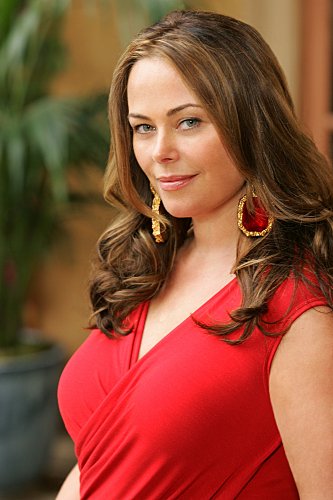
What I’m particularly enjoying in the book is the different subtleties that have been introduced that I don’t remember being there in season 1. Jon Arryn is dead, and Ned’s trying to discover who would have poisoned him to keep the secret of Joffrey’s real father quiet. But now there’s a suggestion that Lysa was terribly unhappy with her husband because he was going to take her beloved son away and let him be raised by Stannis Baratheon. Suddenly she becomes a suspect, even if that never goes anywhere. Meanwhile, Cersei steps up and takes command, getting rid of her enemies quickly, and using Sansa in a brilliant way to try to pull the Starks onside (or just pull them within shooting distance). Now I can see why you’ve been saying all along that she should have been played by Polly Walker, Chris. As of this scene, I say absolutely. Cersei’s far more cunning and harsher than she’s currently played on the show; Lena Headey does a great job, but she plays her a little more demure and contrite, as if there’s more scheming than actual doing. I don’t particularly remember Sansa writing all those letters, but I do remember Cersei manipulating Sansa right out of the gate. If I hadn’t seen Jack Gleeson’s portrayal of Joffrey at this point, I would actually think that he was going to help Sansa. When she begs for mercy for her father, Joffrey is the only one who comes across as sympathetic, who calms her nerves and doesn’t talk down to her like she’s a child. Of course, we all know what awaits Ned anyway… perhaps making Joffrey even worse than he is on the show. I’m looking forward to the little shit having a bigger role soon.

What are your initial thoughts on this section, Chris?

Christopher: I love this part of the novel, and remember feeling entirely taken aback with how quickly everything goes wrong for Ned. Still no idea of what awaits him, of course, and I seem to think I wondered “what else could possibly go wrong?” Ah, but then I was reading in a pre-GRRM paradigm—five novels later and we know, things can always get worse in Westeros.

The part where Daenerys eats the heart is harrowing, not just for the stomach-churning description but the account of how she trained for it by eating bowls of gristle and clotted blood. Urk. If the whole queen gig didn’t work out, she’d have had a good secondary career as a contestant on Fear Factor-like shows.

And Viserys … poor, sociopathic, abusive, megalomaniacal Viserys. It’s a measure of GRRM’s deft touch with character that, even after everything he’s done we feel a certain sympathy for him in his last few moments. Or … I have a certain sympathy for him. Do you? It doesn’t obviate the rather visceral satisfaction of seeing the monster finally get his comeuppance, but at the very end he has gone from being a terror to a pathetic shell, humiliated and inept and completely aware of his failure. Not that he can own that failure, of course—he blames everyone but himself, and his ignorant, drunken blasphemy in the Dothraki holy space serves to epitomize his irredeemably self-obsessed character.

And the scene illustrates just how far Daenerys has come as well—sold cynically by her brother, she has risen to the occasion and become the leader he could never be. There aren’t many bullhorn-symbolism moments in Ice & Fire, but Daenerys eating a stallion’s heart is certainly one of them. Viserys woke the dragon—he just couldn’t have known that the dragon wasn’t him. She is sad but resolute as she sees what Drogo is about to do; the old Daenerys would have begged for her brother’s life, but the khaleesi sees it as justice and necessity.

Also developed in this penultimate section is the growing threat in the North, and Jon’s chilling (ha!) encounter with the wights. We’re some six hundred pages on from the prologue now, with plenty of narrative action to blur the memory of that opening scene north of the Wall—but of course we’re brought sharply back by the appearance of Jon’s dead brothers, both of whom have startlingly blue eyes. When they lurch back to life and attack the Lord Commander, the story itself lurches from straightforward fantasy to that genre we’re all so familiar with, the attack of the living dead (Carl, get back south of the Wall!). That scene is just as terrifying now as it was the first time I read it; when I first read it, however, the zombie craze had not yet begun. I hope readers only coming to the series now don’t think to themselves “sheesh, more zombies … how unoriginal.” GRRM has a knack for genre mixology, and his introduction of the wights is at once an interesting turn on a figure that first appears in Tolkien (the barrow-wights), and a prescient variation on the Romero-esque zombie.

Nikki: The wight scene is truly terrifying. I remember when you and I first started writing about the show and you flipped back and forth between “white” and “wight” and I couldn’t figure out which was the correct spelling, and now I realize they both are! The white walkers are the same as the wights, is that correct? The scene is really frightening, especially when Jon finds the door wide open and the dead guard on the other side; if I’d been reading it without knowing the outcome, I would have thought the direwolf was going to get it. But then again, I started to worry that maybe Ghost WOULD die in the book, and they just kept him on for the show; it was that scary.

I couldn’t agree with you more about Viserys. Last week my husband and I were driving to Toronto, so he was trapped in a car with me for two hours as I talked about the book and how amazing it is, and I told him he really has to read these himself. (Though, like me, he knows he won’t be able to stop and then he’ll be ahead of the TV show; but then again, I kind of like the idea that the TV series spoiled me for the books, and now the books are going to spoil me for the TV show…) And it was Viserys I was talking about specifically. Like you, I felt a pang of sympathy as he drunkenly loped into the party, with thousands of dothraki laughing at him as he roared about being their rightful ruler. As I said a couple of weeks ago, and can’t stress enough, he was a child when his entire family was ripped from him, and he raised Daenerys himself from her infancy. What kind of a child is able to do that? And considering the strong-willed warrior woman she became, perhaps Viserys wasn’t all bad. Not having parents, and spending his childhood and adolescence on the run with a baby on his back, he’s never been allowed to truly mature and grow up, instead just resting on the laurels of the great dragons from whom he’s descended. After being treated like a leper or a wanted man for most of his life, one can’t really fault him for raging against the perceived wrongdoing against him, for insisting that he finally get his due just for bloody surviving all these years in the face of all of Westeros keeping an eye out for him. I really did feel sorry for him as the golden crown was poured over him, and I think GRRM meant for us to.

Speaking of the Targaryen family, I only just realized this week that there are entire family trees of all of the major families at the back of the book. Duh. Let’s just say it’s made reading this book a hell of a lot easier and has cleared up a lot of things with regards to both the book and the series. Something I keep forgetting to ask you, but were the Tyrells introduced prominently back in season 1 of the show? I don’t remember Margaery really coming into anything until the second season with Joffrey, and the grandmother showing up in the third, but they’re already talking about her, and we’ve seen her brother Loras on the jousting field. I DO remember Loras being in the jousting tournament back in season 1, but then he was shown to be Renly’s lover, and that’s not even insinuated in this book (yet). Is that something introduced on the show only, or does it come later in the books?

Christopher:  The white walkers—the “Others”—are distinct from the wights. The former are malevolent magical beings, and the wights are the dead humans they resurrect to act as their undead army. Back in the prologue, Ser Waymar Royce fights an Other and is killed, and then comes back as a wight a few lines later. (Speaking as an English prof, I think someone really needs to write a tongue-in-cheek paper on the white walkers under the title of “Discourse on the Others”).

I have to confess, as regards Renly and Loras, that it never occurred to me that they might be lovers until the series made it explicit. Going back now and rereading, the hints are all over the place, but I was merrily oblivious. Part of the reason for that, to be sure, is that neither Renly or Loras benefit from a POV or that of another character intimate enough with them to reveal their relationship.

The Tyrells as a group are introduced in the novels in dribs and drabs—first with Loras, then with the mention of Margaery. They enter the story in significant fashion in book two and become an increasingly significant presence as the series proceeds (much, as you will have gleaned from the series, to Cersei’s annoyance and unease). For the time being, they fill a role not unlike that of Tywin Lannister for most of this first book—a name and a vague sense of wealth and power. They are, after all, one of the Big Seven, the families that had ruled Westeros when it was still literally the Seven Kingdoms, before the Targaryen conquest. The Tyrell demesne is a large region to the south called The Reach, and the castle of Highgarden their seat of power.

On another front, as you point out, Ned’s Great Unraveling continues (and yes, isn’t Cersei totally Atia-worthy in this part of the novel?). What did you think of that moment of betrayal, when Littlefinger pulls his knife on Ned? I would argue that that is really the pivotal moment of this particular story, and the harshest lesson Ned learns—though too late, far too late. It is a moment that unfolds in the series almost exactly as it is described in the novel … but on rereading, there is a substantive difference in sense and tone, something almost intangible, which I attribute to our slightly different understandings of Littlefinger in the novel versus the adaptation. Or perhaps I’m projecting: it’s in seasons two and three that we really come to understand Baelish’s ruthlessness, epitomized in Varys’ dark observation that “he would see the realm burn if he could be king over the ashes”; but in the novel he’s a far more ambiguous character, and his actions more inscrutable, as it is made obvious just how deep his love for Catelyn was and is. What do you think? I was not shocked by his betrayal of Ned when watching the series, obviously, but when it happened in the novel I was gutted … first, because I had come to like his character in spite of myself and (foolishly) trust him, and second, because it seemed to obvious in retrospect. But what made it seem obvious on that first go-around was the sense that the betrayal proceeded from a singular motive: to have Ned out of the way. Of course, we soon realize that his motives are more tangled than that.

But in the series, his motives again seem straightforward—and far more cynical and mercenary. Thoughts? Did you see much difference in this scene as opposed to the series?

Nikki: There is a huge difference in the two scenes. Like Viserys, Baelish is a far more sympathetic character in the novel, as we’ve discussed. Played on the series, he always has a mischievous, almost sinister gleam in his eye, and the nasally tone of his voice makes you constantly suspicious of him, waiting for him to show his true, nasty colours. But in the book he waffles, moving back and forth, seeming to be trustworthy one moment and deceitful the next. And yet his love for Catelyn, shown through both the flashbacks and in the moments where he’s seen with her and seemingly helping Ned, he appears to be working against the Lannisters, hiding Catelyn away and arranging clandestine meetings with Ned in the brothel. Now we see it was all a trick, making it look like Ned spends his time in brothels while dear, pure Littlefinger was innocently off doing his own thing and had no idea Ned was there. By the time he pulls out the knife, I gasped. I’d COMPLETELY forgotten that he did that, just because this Baelish had drawn me in so much more than the TV one had, and I was just as shocked here as I was on the show when he pulled his knife; more so, in fact. Game of Thrones is one of the best shows on television, but when you are that caught off-guard by something you’ve already seen on the HBO series, it certainly points to the book’s superiority over the series. (Yay, once again… books win!)

And what of the Starks? When Sansa was working with Cersei in the TV series, I rolled my eyes along with everyone else who hadn’t actually read the books and thought she was such an annoying character. Now, from her perspective, you can see how she was drawn in hook, line, and sinker by Cersei and Joffrey, and I don’t hate her at all; I feel sorry for her. There are times when you are right there with her, believing that if she just does these things, the Lannisters will spare her father, right? RIGHT?!

And then there’s Arya. Already established as a scamp and the most fun of the Stark youngsters, she’s in the middle of her dancing lesson when the Kingsguard comes for her. I want to say here that I love how GRRM unfolded the betrayal. Littlefinger pulls the knife on Ned and that pretty much endeth the section. You don’t have Ned being dragged off kicking and screaming, you just have this moment, and GRRM leaves it up to the reader to figure out the obvious conclusion of what happened next. Instead he moves to the children, a far more sympathetic move, because if Ned is captured and locked away for his failing to guess the temperature of the situation, that’s one thing, but watching the far-reaching consequences of his actions puts a much finer point on it. Just as on the show, Syrio steps up and tells Arya to run, and she does, and he stands before the Guard. I remember at the time writing that I really hoped we’d see the teacher again, because I never believe that someone is dead unless I saw them die. But… now I realize that he’s dead. (Unless there’s a REALLY big surprise in a future season or book, but I really doubt it at this point.) With the whole Guard before him, his job has ended, and now we see if Arya can actually take care of herself without him.

Ned is desperate and realizing the scope of his errors as he sits in the dungeon, and Catelyn and Robb are travelling to the Freys to see if they can find a way to cross the Twins. You begin to realize in this section just how scattered the Starks are, with Sansa being kept close to Cersei’s bosom; Arya on the run; Bran and Rickon up at Winterfell and both unable to do anything; and Jon at the Wall, working as a steward and fighting snow zombies. But back to Catelyn; when Walder Frey is brought out on his litter, I couldn’t help but shudder. I know what’s coming with this foul, decrepit old man, and he’s even more disgusting in the book than he was on the show. I barely remember him in this scene in season 1, and instead the extent of his rudeness is shown when Robb and Catelyn return to the castle before the Red Wedding in season 3. But GRRM lays it all out right here. He’s 90, he’s got a 16-year-old wife, he’s got countless children and grandchildren, he’s rude and obnoxious and horrible to everyone around him; the only person I can think of who turns my stomach more in the book just for the way he treats his own family would be Craster, the man north of the Wall who rapes his own daughters to beget more daughters that he can rape. Knowing what’s to come with Frey, I felt a cold chill throughout this entire scene, muttering under my breath, “Don’t agree to this, Catelyn… don’t agree to this.” While I’m the first person to talk about how much I hate spoilers, I must say the tension of the book is increased tenfold when you know what Ned’s fate will ultimately be, and when you know what’s going to happen later at the Freys.

And, speaking of which, we now ready ourselves for the big finish. I can already feel my palms beginning to perspire, knowing what’s coming next.

Christopher:  I can honestly say I’d forgotten how revolting Walder Frey is. Not that he’s at all sympathetic in the series, but David Bradley’s portrayal makes him a truculent asshole rather than a repulsive old man (and this is the actor who played Argus Filch, too!). GRRM’s depiction of Frey makes my skin crawl, between the verbal tics he gives him and the way he describes his toothless mouth working, and of course the prospect of him forcing himself one whatever young bride he’s recently wed. As you say, knowing what is coming way down the road does in fact make this part of the novel more harrowing … and it is also retrospectively fascinating to see all the foundation blocks being laid, especially in terms of Frey’s paper-thin ego and obsession with family honour.

The scene with Syrio handing the guardsmen their asses is one of my bittersweet favourites from this novel. I loved that character from start to finish; and you’re right, there really isn’t any chance that he survived it. Yet another moment where GRRM dashes expectations with a painful dose of realism. Inigo Montoya would have survived, but that’s because he inhabits another fantasy realm. Ditto for D’Artagnan, Zorro, Jack Sparrow, or even the Dread Pirate Roberts himself … not if they stood and fought, anyway. Even with a sword in hand, Syrio could not best a knight in full plate.

But he sacrifices himself for his student, and Arya is able to escape—and in the process kills for the first time. It is a moment that will haunt her in later books, even after she grows accustomed to killing.

I think it’s worth mentioning the slaughter in the Red Keep, in part because I remember being somewhat shocked by it my first go-around. Ned has been taken prisoner, as has Sansa, and if all had gone according to plan, the Lannisters would also have Arya in hand—certainly, enough hostages to bring the Stark people to heel? But no—Arya literally trips over the bodies of her family’s entourage, and even Septa Mordane is murdered as part of what could only be called a purge. This is really our first glimpse of the zero-sum game of thrones, a grisly realization of Cersei’s dictum that “you win or you die.”

And on that cheery note, readers, Nikki and I leave you for another week. Tune in next Monday for our final installment of the Game of Thrones Book Club!

Leave a comment

Filed under book club

Game of Thrones Book Club, Parte the Thirde

GoT Book ClubWelcome once again to the Game of Thrones Book Club, part three. Today Nikki and I discuss, among other this, why it’s a bad idea to underestimate Tyrion, Westrosi architecture, and Ned Stark’s infuriating inability to see things that we as readers are certain we knew the first time we read the book. So without further ado …

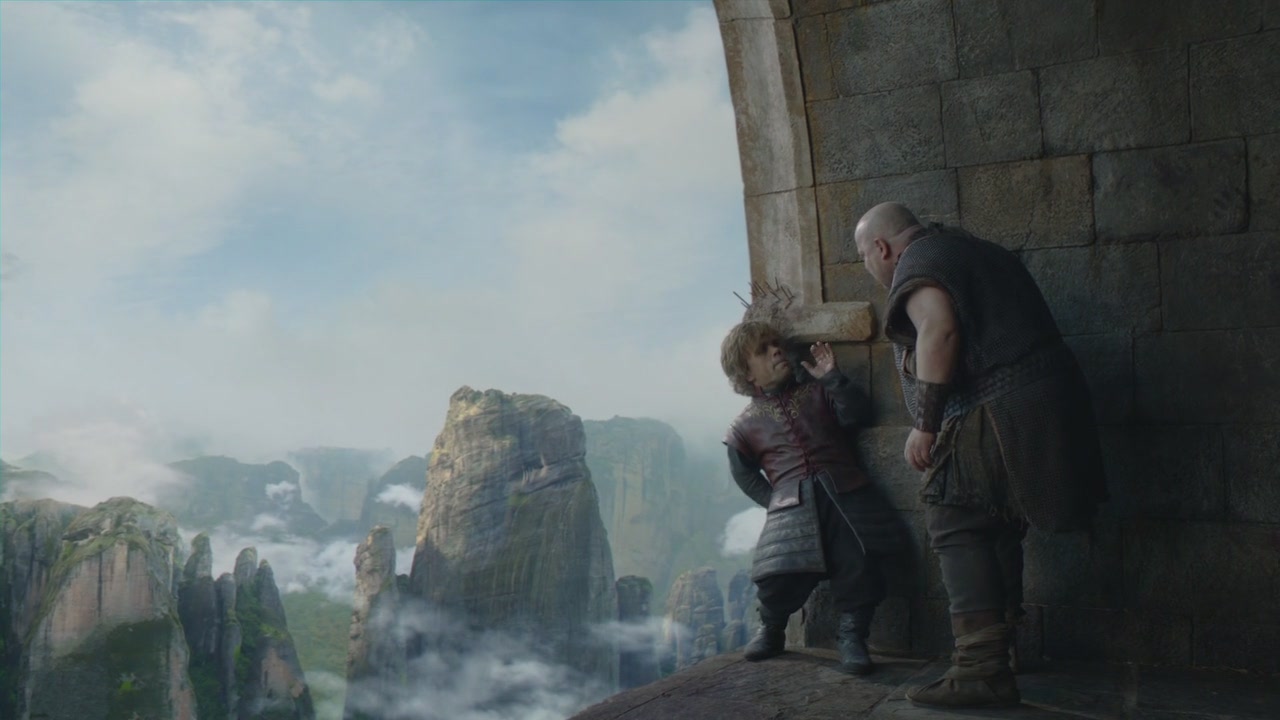
tyrion-catelyn-eyrie-105Chris: We begin part three with Tyrion’s unexpected journey, and what we will come to realize is a massive gaffe on Catelyn’s part. One might assume that once Ned Stark got the bone in his teeth of the mystery of Jon Arryn’s death, he was probably destined for the chopping block—but his wife certainly hurried things along with her ill-advised abduction of Tyrion. Lannisters have a sense of honour as well, and however unpopular Tyrion is with his father, Tywin could hardly let this affront go unanswered.

Rereading this series of chapters, I had to wrack my brain to try and recall whether I initially wondered if Tyrion was guilty … many years and many re-readings later, I can’t say for certain. Certainly, there’s no evidence for it in his POV chapters, but GRRM wouldn’t be the first writer to leave such things out of a murderer’s narration, only to reveal it all later. I want to say that I never thought Tyrion would have sent the assassin, and I think that’s probably true … not because I liked him and didn’t want to believe he’d do it (though I did, and didn’t), but because it seemed to terribly out of character for him.

One way or another, I do remember reading the bit where he watches Chiggen butcher his horse (a gift from his brother) and silently promises revenge, and thinking “not an enemy you want to make, Catelyn.”

We learned an awful lot about Tyrion in the first part, enough to make him one of the most sympathetic characters right out of the gate—but there he was mostly at his ease, never in danger, protected by his name and his father’s men and possessing the freedom that came with both. Here, we see him in rather grave danger: accused, surrounded by enemies, and traveling one of the most treacherous roads in Westeros. And it is here that we see just how shrewd and smart he is: still witty, to be certain, but with a remarkable tactical mind, which Catelyn notes with unease as they ride up to the gate of the Vale: “The little man was more cunning that she liked. When they had entered the mountains, he had been her captive, bound and helpless. What was he now? Her captive still, yet he rode along with a dirk through his belt and an axe strapped to his saddle, wearing the shadowskin cloak he’d won dicing with the singer and the chainmail hauberk he’d taken off Chiggen’s corpse” (360). Seeing that he showed no fear, in spite of being surrounded by enemies, Catelyn starts to question whether her accusation was wrong.

There is a moment much later in the series when a Lannister aunt tells Jaime that it is Tyrion, not he—not the beloved son—who truly takes after Tywin (in cunning if not in proclivities). This of course is one of the cruel ironies GRRM builds into his characterization of Tyrion and Tywin, with the latter never able to overcome his revulsion at having sired a deformed dwarf and see Tyrion’s brilliance. In the entire sequence in the Vale of Arryn, from Tyrion’s abduction to his triumph over Crazy Lysa to his success in winning his way back along the mountain road, we see a new dimension to this character. Before he was clever and amusing … now we know he’s dangerous.

Nikki: Interesting, as I was reading the book, as with the series, I never thought Tyrion was involved with the assassin at all; his surprise is so genuine when Catelyn attacks him, and even though he continues to act haughty and smug, there’s definitely a sense about him like he’s a wronged man. When he’s in the cell and you’re reading from his point of view, I think it was clear to me that he hadn’t done it. He wonders if his brother might have been the one to do it, and then thinks if he WAS, he was very sloppy by using Tyrion’s knife, since that would have linked it back to the Lannisters. But then he pauses and you can tell there’s a moment in his thinking where he actually allows himself to think… what if Jaime purposely set me up? In that moment, I was convinced Tyrion hadn’t done it.

This week’s segment includes our introduction to the Eyrie. I remember being awed by the building in the HBO series, from the door in the floor that opens to send victims to a long-falling death to the jail cells that are missing a wall and are sloped ever-so-slightly, so the prisoner is unable to sleep. As always, they absolutely nailed these structures on the show, so I picture them exactly the same in the book.

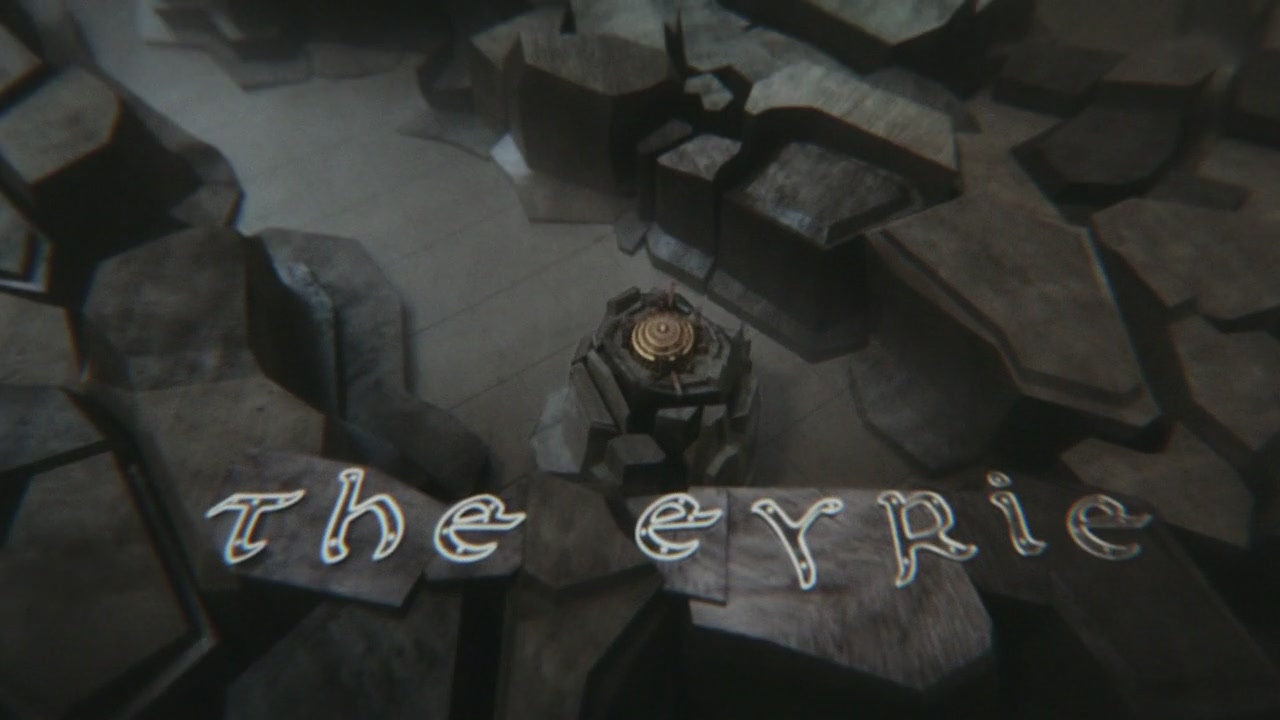
Eyrie_Title_SequenceThe character of Lysa is different in looks on the show, but pretty similar in mannerisms. In the book, she’s plump and looks old. On the show, she’s extremely thin, but that thinness makes her look older, so they got that part right. Just like on the series, the book Lysa dotes on her feeble-minded, simpering son. On the show he appears to be older than he is in the book, looking more like 10 or 11 rather than the 6 in the book. When they first walk into the gallery and she’s sitting on her throne, breastfeeding him, even the most ardent nursing mothers would probably recoil in horror. In the book, he’s only 6, but still too old to be nursing, and it’s shorthand for how weak he is, more of a mama’s boy than any kind of soldier.

Once again I loved how much of the dialogue in the scenes were right from the show, from Robin Arryn saying they must make the little man fly to Tyrion trying to tempt Mord, his gaoler, take his purse of gold and do him a favour in return. As you say, Chris, this section is told much more from Tyrion’s point of view than any of the previous sections, and in the book as well as the show, we get the idea that he may be small, but you do not mess with Tyrion.

One thing that was in the book at length, but entirely missing from the series, is Catelyn’s treacherous climb up the side of the mountains, in three shifts, to get to the top of the Eyrie. I remember on the show when they opened the floor and you could see that looooong drop between mountains, and I thought wait, how the hell did they get all the way up there? In the book, reading about how the climb gets narrower and narrower and even more dangerous, it not only showed what a formidable stronghold the Eyrie was — and just how isolated from the world Robin Arryn is — but it stands as a metaphor for what Catelyn is doing. With every step she takes forward, she puts herself in more danger, just as capturing Tyrion may have been the worst misstep she’s taken in her life. So far, of course.

Christopher: I think there’s something to be written about the strongholds in A Song of Ice and Fire, about how each distinct castle/walled city reflects the qualities of the province in which we find them (or vice versa). When I first started playing World of Warcraft some years ago, I was always intrigued by the way that game designed its capital cities—all of them are architecturally unique, in often dramatic and startling ways. GRRM does something similar, and it becomes even more obvious as the series goes on and we encounter more and more uniquely imagined cities and castles.

The Eyrie remains one of my favourites. It seems almost impossible that people would have built something like it, until one calls to mind the many precipitous monasteries and castles built in mountainous regions around the world—difficult to get to, but impossible to take by assault. The endless climb up the Eyrie’s ever-narrowing, ever-more-harrowing stairs is wonderfully done: I’m not especially afraid of heights, but whenever I read those sequences I get that slightly queasy feeling in the pit of my gut that I get when I’m too close to the edge of a precipice.

Two weeks ago in my grad seminar we had an extended discussion of dungeons—specifically, as dungeons as imaginative spaces in fantasy, and there was a lot my students had to say about the sky cells. The initial premise I started with was that dungeons loom large in the gothic imagination because they are impenetrable, opaque, dark places where such quaint modern notions of rehabilitation and remuneration are absent, and where torment and torture and madness are the name of the game. The sky cells are a brilliant invention on GRRM’s part: not dark, not opaque, but somehow even more terrifying and maddening. Speaking personally, I have always had a horror of dungeons because I am claustrophobic—but honestly, given the choice between the cells beneath King’s Landing, with their reeking blackness and rats, and the sky cells? I think I might have to go with the former.

Tyrion_and_MordThe more I get into it, the more I think one of fantasy’s appeals is this fraught relationship it has to notions of justice—and, frequently, to the lack thereof. This episode with Tyrion and Catelyn illustrates the tenuous nature of the law in Westeros. Catelyn’s ill-conceived gambit proceeds from knowing that, once word of Tyrion’s abduction reaches Tywin, being the wife of the King’s Hand will count for little. So she seeks sanctuary somewhere she imagines she will be safe—with her family. By the time she reaches her sister’s protection, she is no longer certain of Tyrion’s guilt, but finds that whatever she now believes is irrelevant. Lysa sees a vulnerable Lannister before her, and high-handedly strips her sister of whatever right she had to the prisoner.

Tyrion, however, makes recourse to the most basic of rights, which not even Lysa can deny him, trial by combat. This is a right that recurs at various points in Ice and Fire, as sacred as the law of hospitality. It’s a reminder of the primal, mythic nature of this world, but also (weirdly) a reminder of why HBO found it amenable. The negotiations of power here are eerily familiar to shows like The Wire, Deadwood, and The Sopranos—shows that similarly depict lawless worlds in which there were nevertheless certain unwritten rules you only ever transgressed at your own peril.

On the other side of the world, the newly-minted khaleesi is slowly coming into her own as an honorary Dothraki. We arrive at the Dothraki “city” of Vaes Dothrak, not a city in the standard understanding of the world so much as a vast space on the plains populated with all of the idols, statues, monuments, and other prizes the Dothraki hordes have claimed in their wars. Daenerys continues to bloom, growing more and more independent of her brother, more and more enamoured of her husband, and, most significantly, more and more enamoured of the Dothraki. Viserys, unsurprisingly, can’t bring himself to get with the program—never able to see the Dothraki as anything more than barbarians, growing enraged with his sister when she attempts to clothe him in their eminently more practical garb, misunderstanding deliberate insults as esteem, and finally bringing about his own horrifying demise when he arrogantly flouts Dothraki custom.

What do you think of where Daenerys is at, Nikki?

Nikki: Daenerys is someone who became a favourite of mine in the second season, and the one I was 100% rooting for to win the game of thrones by the third. So I already have a very soft spot for her in the books, even though I imagine if I were reading them without having seen the series first, I wouldn’t have been as enamoured of her just yet.

If I recall correctly, the moment where Ser Jorah begins talking about his hatred of Ned Stark happens in exactly the same spot on the HBO show, when you see them walking into this dirty town that doesn’t appear to be overly populated, even though it’s full of buildings. Ser Jorah is a sympathetic character to both the viewer and the reader because he’s the one man who helps Daenerys, making sure his khaleesi is aware of what is going on and is kept as safe as he can, yet at the same time, he despises Ned Stark, someone we are also rooting for over in King’s Landing. GRRM has this uncanny way of showing every side to the story, making it difficult to say, “HE is wrong and HE is right,” and instead making it difficult to choose sides wholeheartedly. (Despite the fact I’ve chosen Daenerys’s…) I loved her in this section, where she tries one last time to appease her horrid brother, only to have him spit on her efforts and force her to stand before him and bellow that she is the khaleesi and he will not speak to her that way. I couldn’t help but cheer in that scene (especially knowing it’s but a tiny, tiny peek at the huge presence she will become). He’s as insipid as he was in the beginning, and I’ve pretty much lost that speck of sympathy for what he’s been through due to his extreme arrogance.

Word of Daenerys’s pregnancy has made it over to King’s Landing now, and it’s interesting to see people shifting positions on the matter. Arya, hiding in the tunnels, overhears two men talking about her pregnancy and what must be done, but also talks about the Lannister’s guilt Jon Arryn’s death and the fate that befell Bran (and could befall her father). Unfortunately, Arya’s mind is scattered to begin with, and she’s also a very young girl who is incapable of understand the very difficult maneuverings that are being presented, so by the time she returns to her father to report back what she heard, it sounds entirely fantastical. Ned musses her hair and chucks her on the arm for being such a silly little girl, and the reader can’t help but be frustrated that he’s missing the point again. He doesn’t seem to put it together, either, when the pregnancy his daughter had only hinted at is actually announced at the council meeting, and Ned completely disagrees with their suggestions that they slaughter Daenerys and her unborn child.

Even more frustrating than Ned’s blindness to so much that happens (which finally falls away at the end of this section) is the characterization of Robert as being one of the most useless kings in literature. Sansa calling him the “old drunken king” pretty much hits the nail on the head; even a young girl can see just how ineffectual and terrible he is. It’s probably too long ago to properly remember, Chris, but I was wondering if on a first read, you thought that the king would turn to the side of the Lannisters against the Starks?

Christopher: I was never worried that he would turn against Ned per se—my worry was more that he would end up being wishy-washy and not choose sides at all. Robert Baratheon is apparently fearsome in battle, but as he demonstrated with the incident over Arya and Sansa’s direwolves (and as we see in the scene beside Ned’s sickbed, where he is reluctant to gainsay Cersei until pushed to anger), he’s pretty much spineless as an actual ruler. The only thing he won’t be brooked on is his hatred for the Targaryens—and there, one begins to wonder how much is based in desire for vengeance and how much in fear. Robert has made it obvious that he knows how awful he is as a king, how ill-suited for ruling; he also knows how tenuous is his claim to the throne. The prospect of a Targaryen challenger must freeze his heart. The more I read this section, the more I think that his bluster and rage is as much a smokescreen as genuine hatred, hiding his fear and insecurity behind a façade of righteous anger.

The first time I read this novel, with no appreciation yet for GRRM’s capacity to throw things into greater and greater chaos, this section felt deeply satisfying. The murder-mystery elements felt as though they were reaching a conclusion, and Ned seemed to have all his ducks in a row. His confrontation with Cersei in the Godswood was particularly satisfying. I suppose I’m just naïve, because I did not see anything that follows coming.

Meanwhile, back at Winterfell … Robb has received news of his mother’s abduction of Tyrion and his father’s confrontation with Jaime Lannister, and has to decide how to act. It’s another reminder of how power functions in this world: for all the politicking, such concepts as honour and family can trump pragmatism. The incipient confrontation between the houses of Stark and Lannister proceeds from an affront to Tyrion; Jaime’s attack on Ned escalates things to the point where Robb feels pressure to call his banners. GRRM does a great job of capturing the power balance of medieval Europe, which, whatever the rhetoric about divine right and the inviolability of kings, was rooted in competing feudal fiefdoms and the strength of their loyalty to whomever they called liege.

Bran’s sole chapter in this section also introduces us to Osha, the wildling woman who will come to play a crucial role in events to come. She and her companions, deserters from the Wall, serve as a not-so-subtle reminder of dire things to come: like the deserter executed in the first chapter, these brigands risk coming this close to Winterfell out of desperation—though not the kind of desperation Maester Luwin imagines.

What did you think of your first meeting here with Tonks … I mean, er, Osha?

Nikki: For some reason I thought we wouldn’t see her until the second book. Was she around in the first season or the second? In any case, as soon as they came creeping out of the woods, I knew it was going to be her, and just as on the show, she stands above the rest as being a little savvier, but also more knowledgeable in the woods. If I didn’t know what was going to happen through the show, I’d have pictured her being tortured next for information, regardless of how I feel about the Starks.

Before we end this, I wanted to mention Baelish in this section. Last week I mentioned that with the addition of hindsight in the books (the show doesn’t offer the flashbacks we get through the novels) I really felt a lot of sympathy for Littlefinger, and a bit of contempt for the haughty princess Catelyn thought she was as a child. This week my sympathy for him only heightened when she recalled the time he had to fight Ned’s brother Brandon Stark, and she’d told Brandon ahead of time not to kill Baelish. The recollection of poor Petyr running around trying to get away from Brandon, clearly about as cut out for battle as is Samwell Tarly, was so sad, made worse by him falling and calling for mercy at the end of Brandon’s sword, before whispering, “Cat…” as what he thought might be his final word. Then, according to her, that was the last time she saw him. You want to talk about Robert Baratheon acting out of fear and revenge, I can only imagine the revenge Littlefinger’s been cooking up all this time. The season 3 moment on the HBO series where he asks Sansa if she wants to run away with him makes so much more sense.

Like you, I really enjoyed Cersei’s meeting with Ned. Despite being very clear and unsubtle about other things in the book, GRRM handles the mystery aspect brilliantly, and even when Sansa makes the remark that Joffrey is nothing like his father, the reader isn’t immediately tipped to what Ned gleans from that remark. It’s only as he’s sitting under the tree, and during his conversation with Cersei (not even before it) that we realize what he’s figured out. Reading this now, I felt like I wanted to beat Ned upside the head for not seeing the bleedin’ obvious right in front of him. But it’s easy to take the high road when I’ve already seen the first season and know what the answer to the mystery is. Would I have figured it out before now if I’d just been reading the books? Probably not. But this section was very exciting, and dire, now that I know how Ned’s threat is going to end up.

Next week: Part Four: 489-651 mass market; 409-543 trade paperback (starting with DAENERYS “The heart was steaming in the cool…”)

Leave a comment

Filed under book club

Much Ado About Joss Whedon

1280-joss-whedon-much-ado-about-nothing

I finally saw Joss Whedon’s rather charming and whimsical Much Ado About Nothing last night, which he filmed in secret entirely at his house and sprang on an unsuspecting world a little more than a year ago. The secrecy and the casual, house-party way in which it was filmed—over a scant two-week period, and casting a group of Whedon regulars—mesh well with the general feel of Shakespeare’s play. Much Ado is an idle play set in a moment of respite and recuperation, with Prince Don Pedro of Aragon taking up temporary residence in the home of Duke Leonato, in the aftermath of a war just ended. And of course, hijinks ensue: young Count Claudio is in love with Hero, Leonato’s daughter; the Prince’s disgraced bastard brother Don John seeks only to revenge himself on everyone; and the Duke’s niece Beatrice engages in a “merry war” with the Prince’s adjutant, the witty but misogynistic Benedick. In these idle days of relaxation, as everyone awaits the upcoming wedding of Hero and Claudio, two plots unfold: Don John’s scheme to disgrace Hero and ruin the nuptials, and the Prince’s to make Beatrice and Bennedick fall in love.

The 1993 film version by Kenneth Branagh, starring himself and his then-wife Emma Thompson as Beatrice, remains one of my favourite pieces of comfort-food cinema. Filmed in Tuscany, the scenery alone is worth the price of admission; but even more spectacular is Shakespeare’s dialogue realized by two of the greatest Shakespearean actors of this or any generation:

The film isn’t universally brilliant: Robert Sean Leonard’s performance as Claudio is so wooden they might as well have given the role to a table, and the less said about Keanu Reeves’ Don John the better. But one of my favourite performances is Denzel Washington as Don Pedro:

All this is by way of saying that Joss Whedon had his work cut out for him, at least as far as this viewer was concerned—not because I expect him or his actors to live up to the RSC standard, but because it is difficult for me to listen to the language of Much Ado without hearing the 1993 version in my head.

Which is why Whedon’s intimate, understated film is so good. There is a distressing tendency to overplay Shakespeare, to shout lines from the rooftops that are best treated with subtlety (I’m looking at you, Stratford Festival) … Kenneth Branagh has at times been guilty of this himself, but he mostly knows when to rein things in (or perhaps that was Emma’s influence—anyone else notice how his filmmaking did a nosedive after they split?).

Much-Ado-About-Nothing2

Alexis Denisof as Bennedick and Amy Acker as Beatrice

Joss Whedon, however—as just about any fan of Buffy the Vampire Slayer or Firefly or, really, any of his work can attest—has an exceptionally good ear for dialogue, for its rhythms and nuances. That he would do well with Shakespeare’s, especially a play loaded with so many double entendres and ironic quips, should be no surprise. His Much Ado feels pretty much exactly like what it is: a weekend house party of old friends, which is ideal for the tone of the play. Given that the entire film takes place in a single house, it has the feel of a bottle episode of a TV show (albeit with a much larger ensemble), and this creates a sort of intimacy, wanted and unwanted: characters constantly have tete-a-tetes in the various rooms of the labyrinthine house, but are also frequently observed by other characters; again, at times by design (such as when Beatrice and Bennedick “overhear” the others talking about them), or when Don John and his lackies spy on the proceedings. As Shakespearean scholars will tell you, there is a pun in the play’s title: “nothing” in Elizabethan England was pronounced “noting,” and this is indeed very much a play about people noting things about other people. Nothing much happens that is not observed.

much-ado-about-nothing

Things being noted.

I confess I was worried that some of the actors would have difficulty with the language; overall, the performances were uneven, which I have to assume was due at least in part to the short filming time and not much opportunity to really rehearse. No one was abysmal, however, and the cast was a smorgasbord for devoted fans of Whedon, as all of the lead characters are actors who have appeared in his television shows and films. Alexis Denisof (Buffy, Angel) was perhaps the most disappointing: he never quite fell into the rhythm of the dialogue, and his timing was less than perfect. It is perhaps telling that his best moments were broad comedy, such as when he is showing off for Beatrice, doing pushups and crunches. In contrast, Amy Acker (Angel, Dollhouse, The Cabin in the Woods) is a lovely surprise as Beatrice, more at home with the Shakespearean language than anyone else in the cast. She grasps both Beatrice’s acerbic wit and her tamped-down loneliness, and communicates with wonderful subtlety the deep and smoldering attraction she harbours for Bennedick (something not, alas, mirrored in Denisof’s stilted performance). Whedon chooses to start the film with a wordless prologue, in which Bennedick sneaks out of Beatrice’s bedroom, hesitating a moment at the door while she pretends to sleep. Establishing that the two of them have this prior relationship provides a welcome subtext for the action that follows: the assumption being that Bennedick steals away to go off to war, not, perhaps, expecting to return—which gives more depth to his later line “When I said I would die a bachelor, I did not think I should live till I were married,” and a double meaning to Beatrice’s comment “I know you of old.”

muchado_02Joss-whedon

Amy Acker as Beatrice, Jillian Morgese as Hero.

The other vague disappointment (though only vague) was newcomer Jillian Morgese as Hero. She wasn’t bad, precisely–just more of a nonentity, which I suppose we have to partially blame Shakespeare for, as Hero is more ornamental a character than anything else (when even Kate Beckinsale suffers this problem in the 1993 version, one has to look less at the performance and more at the text). Sean Maher (Firefly) is good in the somewhat thankless role of Don John, suitably villainous without resorting to overt mustache-twirling; Reed Diamond (Dollhouse) is stolid and noble as Don Pedro; Fran Kanz (Dollhouse, The Cabin in the Woods) is vaguely adorable as the gormless Claudio, especially considering how incongruous it feels to have the stoner Marty from Cabin well-groomed and –dressed.

much-ado_1

Clark Gregg as Leonato

I was particularly happy to see Agent Coulson himself, Clark Gregg (The Avengers, Agents of SHIELD) in the role of Leonato—I’ve been fond of him as an actor for a long while, mostly for his Aaron Sorkin roles as the eleventh-hour savior in Sports Night and the recurring spot on The West Wing as FBI special agent Casper. Gregg is an actor with a talent for conveying quiet authority and mischievousness simultaneously, and Whedon uses him to great effect this way in Much Ado.

snapshot-16

Tom Lenk as Verges, Nathan Fillion as Dogberry.

Perhaps unsurprisingly, however, one of the highlights was Captain Tightpants (Nathan Fillion, for those of you unfamiliar with Firefly) in role of the constable Dogberry. Perennial Whedon geek Tom Lenk (Buffy, Angel, The Cabin in the Woods) is his deputy Verges. In this modern setting, Dogberry and Verges and their hapless underlings are hired security, ensconced in a basement room with closed-circuit monitors. What I said above about how wonderfully understated Whedon has made this film is particularly striking with the rude mechanicals: Fillion resists the urge that has claimed so many other actors in this role, namely to play it with slapstick bombast. His Dogberry is measured, serious, and precise—all of which makes his self-important malapropisms that much funnier. He and Lenk play their “watchmen” as rent-a-cops who desperately want to be cops, right down to some CSI Miami-worthy sunglass acting in the final scenes.

On the whole? Don’t expect RSC-level performances, and you’ll be fine. Joss Whedon always impresses me with his shrewd intellect and his subtlety (even when blowing up New York), and Much Ado is no exception.

2 Comments

Filed under film

Game of Thrones Book Club, Parte the Seconde

GoT Book ClubHi everyone, and welcome to the second installment of the Game of Thrones Book Club, wherein my blogging pal Nikki Stafford and I revisit the territory we’ve covered in blogging about Game of Thrones the series—except this time, with the book! This week we’re looking at our arbitrarily selected second section, which starts with Bran finally awakening from his coma and ends with Ned receiving a grave warning from Lord Varys of the whispers. It’s my turn to kick things off, so here we go …
Game-of-Thrones-1598 Christopher: What strikes me most on rereading this section is how it develops the mystery plot, and how that plays into our expectations. I suppose the anticipation must be different when you read A Game of Thrones now, knowing that there’s another four novels in the series and two yet-to-be-written after that; but when I read it many moons ago, when GRRM hadn’t written any of the others and was still under the illusion it would be a trilogy, there was a definite anticipation built into Ned playing the detective. It’s a clever little bit of genre-tweaking on GRRM’s part, as murder mysteries build to closure—a rather shrewd little bit of misdirection, when you think of it, making us that much more stunned when not only do we get closure on this little caper, but the rulebooks of both mystery and fantasy fiction get emphatically defenestrated.

 I’m also impressed at just how the motif of bastardy surfaces again (and again and again). Like Shakespeare’s history plays, A Game of Thrones (itself loosely based on the Wars of the Roses) is preoccupied with blood, lineage, and patrilineal descent. Who your father was defines you indelibly in this world; and where in Shakespeare bastards like Edmund and Falconbridge, or Don John in Much Ado, are almost invariably villainous, driven to evil out of resentment or given over to it by their “tainted” blood, GRRM deliberately troubles this convention with such characters as Jon Snow and Gendry. Ned’s investigation of Robert’s bastards is a particularly cruel task for him, reminding him of his own relationship with Jon, and prodding him with the concern that he did not do right by him. Certainly, Jon always fared much better in Winterfell under Ned than any of Robert’s bastards have—and though Jon’s relationship with Catelyn was always frosty, she is much more forgiving than Cersei (as we shall see later on).

It is also interesting how bastardy, at this point in the novel, is explicitly associated with the colour black: Jon snow is described as having black hair, in contrast to Robb’s auburn, and Robert’s bastards all share his own dark locks. The Wall itself comprises the Seven Kingdom’s castoffs, and as we come to understand the skepticism, mockery, and indeed contempt in which the Night’s Watch is held by most people south of the neck, it itself comes to be a metaphor for bastardy. This association is also something found in Shakespeare, with his various bastards often described in terms of blackness and darkness. Throughout this second section, as indeed throughout the entire novel, the drama in King’s Landing finds its counterpoint on the Wall—a contrast that is more marked in A Game of Thrones than in the rest of the series so far, mainly because the geography of the narratives hasn’t yet expanded to the extent it will. This contrast is thus especially stark (pardon the pun) at this point, between the monochromatic palette of the North and the sumptuous colour of the south, the sensual riot of sensations in King’s Landing versus the literal numbness at the Wall. How do you think these contrasts work? Are you finding them more or less vivid in the novel as opposed to the series?

Nikki: I think the contrasts work brilliantly, and this section continues to astound me insofar as how faithful to the novels the show really was. On the show as in the books, King’s Landing is full of colour, whereas the Wall is white and black, as you say. Winterfell is in the middle, very grey and stark (pun intended). The metaphor is well taken, with the Wall being the place where things are either good or bad; King’s Landing the place where a happy face is put on everything despite the seamy underbelly of the place, and Winterfell a place where who is good and who is bad is never clear.

Just as in show, I can see why fans were already whispering about Ned Stark being a dumbass. “Hm… look at this dark-haired lad here in the shop, the very picture of Robert Baratheon. Why would Jon Arryn have taken the time to worry about this guy, when Robert has all those lovely golden-haired children of his own at home? Is there something I am missing??!!” 😉 Apparently, in King’s Landing, one does not simply come to an obvious conclusion. Ahem.

I would like to look at Sansa again, and how once again I have far more sympathy for her here than in the show. On HBO, she looks like this vapid girl glancing around the room, seeing what is really going on, and choosing to ignore it for glory and riches. But here, she’s a girl who is in puberty, taken over by the beautiful men on horses handing her roses, heart fluttering as Joffrey dares to look in her direction, dreaming of the day Sir Loras might give her another glance. Despite how much we love making fun of her self-absorption throughout the HBO series, I’m really seeing her as a very young, lovelorn, easily influenced girl here, and I’ve really taken to her a lot in the book. That was a very pleasant surprise.

We’re seeing some of Arya’s “dancing” lessons in this section, bringing back the memories of her learning how to become a swordsman in the book. I remember the actual teacher being more prominent in the series (and perhaps he will be again) but in the book he’s more in the background, as we just see Arya explaining to her exasperated father what she’s learning. I’m falling in love with her character all over again.

More importantly, Bran is back, and it’s interesting seeing his awakening from his point of view. I don’t remember the scene in the series (which doesn’t mean it wasn’t there) where the three-eyed crow tells him he can fly if he wants to, but reading this scene certainly brought a lot more meaning and poignancy to the three-eyed crow, who has become far more prominent as the series goes on.

Christopher: No, they didn’t have the “dream” sequence preceding Bran’s waking in the series, at least not such that it was anything like the novel. I remember that pretty clearly, because I’d wondered whether that dream of flying would happen, and how they would do it—in the novel it’s a pretty elaborate sequence, and always reminds me of the scene in The Fellowship of the Ring when Frodo sits on Amon Hen while wearing the ring and is granted the ability to see almost all of Middle-Earth. (As with GoT, that scene was not replicated in the film as described in the novel). Bran’s vision is similar, and as we know from the details given (such as Catelyn and Ser Rodrik’s galley crossing the Bite) that the vision is no mere dream. This is our first inkling of Bran’s new abilities: having lost use of his legs, he is given new sight, as symbolized by the crow’s third eye, and its insistence that Bran, too, has one.

I must confess, Bran’s storyline over the five novels is the one that, mostly, has interested me the least—something best depicted in the series by the long stretch of time where all we saw of him was one or two perfunctory scenes per episode as he and his entourage trek north. That being said, his waking and the dream that prefaces it is probably my favourite part: the description of him falling and all of Westeros slowly coming into focus beneath him is beautifully done. And as I said, it has echoes of Frodo on Amon Hen, one of my favourite scenes in Fellowship:

At first he could see little. He seemed to be in a world of mist in which there were only shadows: the Ring was upon him. Then here and there the mist gave way and he saw many visions: small and clear as if they were under his eyes on a table, and yet remote. There was no sound, only bright living images. The world seemed to have shrunk and fallen silent … Eastward he looked into wide uncharted lands, namely plains, and forests unexplored. Northward he looked, and the Great River lay like a ribbon beneath him, and the Misty Mountains stood small and hard as broken teeth.

Both Bran and Frodo are very briefly gifted with all-encompassing sight, though to dramatically different ends. For Frodo, it galvanizes him into abandoning the Fellowship and pressing on alone. For Bran, it is just his first indication of abilities quickening in him that he has no understanding of, and is thus baffling. But in both cases, the visions are (for the reader, if not the characters) momentarily unifying, framing the totality of the stories in a geographical whole. Already in A Game of Thrones the action has become fragmentary and fractious (and factious), flung all over the seven kingdoms in a series of individual narratives … but for a brief moment in Bran’s vision we’re reminded that, to quote Lester Freamon, all the pieces matter.

Meanwhile … Sansa is in her element, or so she thinks. This is what she was bred for! All the pageantry and beauty of the Hand’s Tourney, all the handsome knights and delectable food, all the courtly manners and beautiful dresses, and being given the rose by Loras Tyrell … for a brief time, Sansa lives inside one of her beloved songs. There are only a few little suggestions that things might be otherwise, the first coming when the Mountain kills the Vale knight in the lists. Sansa is not as horrified as one might expect—she is, as we will find out, made of sterner stuff than she at first appears—but the death is a reminder of knight’s principal function, and that jousting is not a sport as much as it combat training.

Of course, Sansa’s first real education comes when the Hound walks her back to her room and tells her the story of how his face was burned. In the series, it was Littlefinger whispering the story to her in the bleachers as they stared at his scars; but here, we get it from Sandor’s own mouth, along with the dire threat to kill her if she tells anyone. It is the first moment of the odd relationship he and Sansa develop. What did you think of how it happened in the novel?

Nikki: I entirely agree with you on Bran. His story hasn’t interested me much on the show, and it didn’t interest me much more in the book. The vision was beautifully written, and as you say, it unveiled things happening at Winterfell that Bran couldn’t have possibly known (machinations happening in the very moment after he’d been unconscious for weeks) so it indicates right away that we’re not seeing a dream, but something much more real.

I’m surprised at how much I can remember of the first season, right down to scenery and tiny details, and when they were at the jousting tournament, I kept waiting for Littlefinger to show up, sit next to Sansa, and tell her the story of the Mountain and the Hound. And then he walks over, says hello, gives her a shiver, and turns and walks away again. I thought, “Wait… aren’t we going to get the story?” And instead it’s delivered by the Hound himself. I think it’s actually more powerful to come from Sandor than Baelish, to be honest. I can see why they did it — dramatically speaking, it’s far more effective to know what the Mountain did to the Hound when they’re both in the jousting tourney, and it allows the audience at home to hate the Mountain and cheer when he falls. But the relationship between Sansa and the Hound is a complicated one on the show, and having this beginning to it now gives me far more insight into the later complications. In season 1 she’s merely afraid of him. But in season 2 he seems to take care of her, rushing into her room and offering to whisk her away from the Lannisters and the horrible betrothal to Joffrey (and her certain death, as he sees it) but she turns him down. Yet there’s this affection there that seems to have sprung out of nowhere. (By season 3 he’s with Arya instead.) So I really enjoyed that scene, the moment where she seems rapt by his story and shows sympathy to him, telling him that his brother “was no true knight.” He seems rather bemused by her response, but still growls at her that if she tells anyone what he just said, he’ll kill her. That explains the constant terror she feels around him. On the show, we just chalk her terror up to the look of his face and the seeming menace he presents, but in the book it’s a very real menace.

Speaking of complicated characters, oh how I love the introduction to Varys in this section. On the show I can never put my finger on him. Is he good? Is he bad? In one scene he’s entirely sympathetic, and in the next his little birds have sung to the wrong person and one of our heroes is in trouble. You’ve said in our back and forth discussions on the HBO show many times that they couldn’t have made a better casting decision than bringing on Conleth Hill to play the Spider, and WOW were you ever right. (Not that I questioned you!) Entire sections of dialogue are taken directly from the book, and I can’t help but picture Hill every time Varys enters the scene. Interestingly, I’m not always picturing the actors playing these characters anymore, since some of the descriptions are different from the actual characters on screen, but with Varys, he’s exactly the same character.

In the final EDDARD scene of this section, Varys seems far more on board than he is on the show. I didn’t trust him at all in the first two seasons of the series, but in this scene I really do believe he’s trying to help Ned. But then again, that could all be part of his plan. I look forward to the Varys scenes now, just like I do on the show. But, interestingly, it took until season 3 before I was really intrigued by the character on the show; I’m fascinated by him immediately in the book. Was he a favourite of yours from the get-go?
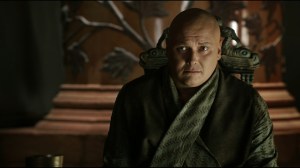
Varys

Conleth Hill as Varys

Christopher: I wish I could remember what my first impression of Varys was, because he has become one of my favourite characters. GRRM has a talent for characterization across a broad spectrum, but he’s particularly good at the sociopaths (The Mountain, the Bastard of Bolton) and such shrewd, highly intelligent schemers as Tyrion, Tywin, Littlefinger … and Varys. I think one of my favourite parts of the series that doesn’t appear in the books is the occasional verbal sparring between Baelish and Varys—and I wonder whether that was just something the writers decided on before the actors were cast, or whether they added the scenes when they realized what brilliant banterers they had in Aidan Gillen and Conleth Hill. We don’t have any such moments in the novel, mainly because we don’t have POVs from either of those characters, but also (I suspect) because the Littlefinger of the novels isn’t quite as ruthless as the one on the show (perhaps we should call this the “Carcetti Effect”). A crucial scene in this respect is his secret conference with Ned and Catelyn—his unrequited love for Lady Stark doesn’t prevent him from betraying Ned (or possibly incites him to do so, it is hard to say), but it humanizes him in a way that the series never allows. In season three, Varys says of Littlefinger that he would burn the realm to the ground if he could be king over the ashes; the Baelish of the novels is not nearly that monomaniacal, and his lingering love for Catelyn is an element of that.

In both the novel and the series, however, Varys and Littlefinger act, at this point in the story, as much as foils to Ned Stark’s suspicious and yet obtuse sense of King’s Landing as anything else. Both act as apparent guides, offering him counsel and advice; in both cases, their counsel and advice seems legitimate at first glance, though we will understand in hindsight that both were just testing the waters and getting a sense of this new Hand. The difference? Varys is, perhaps counter-intuitively, more honest. “I will make another confession, Lord Eddard,” says Varys. “I was curious to see what you would do. Why not come to me? you ask, and I must answer, Why, because I did not trust you, my lord.” The fact that Ned is frankly gobsmacked that anyone would not trust him at once vindicates Varys’ recently-found trust in him and bodes ill for his future in King’s Landing. What both the Spider and the Master of Coin try to teach him is one-half of the X-Files’ dictum: Trust No One. (The “truth,” such as it is, remains pretty far Out There after five novels).

Nikki: You are so correct about the Littlefinger of the novels being more sympathetic than the Carcetti version. Like I said with Viserys, it’s the little details about their childhoods that make you look at them with a little more sympathy than we do on the show. There are no flashbacks to childhood in the HBO version, just the here and now. But hearing about his love for Catelyn, and how he followed her and her friends around like a little lapdog (and how they bullied him and laughed about his sadness in his face) really casts a sympathetic light on him. If a rather unsympathetic one on Catelyn…

We don’t get much of Daenerys in this section, just one check-in with her, but I really enjoyed it. Despite the gentleness of Khal Drogo on their wedding night, the scenes in this section are more in keeping with what we saw on the show, with her in extreme pain from riding the horse, and then having to be taken roughly by her husband every night whether she likes it or not (and generally it’s not). Just like on the show, she takes control and makes him face her when they’re making love, and you can tell how completely consumed by her he becomes in that moment, making everything we know will come later fall right into place. The scene where she humiliates Viserys is well played in the book, reminding me of the same scene on the series. Man, reading this is really making me want to watch season 1 again! 😉

We didn’t get much of a chance to talk about Tyrion last week, and I think we’ll probably get more of a chance to talk about him in next week’s segment, but I’m really enjoying reading his parts. I meant to mention a line that made me gasp in the first section because of how much I loved its poetry, and the line still fits in this section. As Tyrion turns to walk away from Jon Snow after pointing out the similarities between the two of them (both cast off by their fathers; one for being a dwarf, the other for being a bastard), GRRM writes, “And with that he turned and sauntered back into the feast, whistling a tune. When he opened the door, the light from within threw his shadow clear across the yard, and for just a moment Tyrion Lannister stood tall as a king.”

What a beautiful, beautiful line.

In this section he leaves behind Jon Snow and returns home to that fateful moment in the tavern, where Catelyn calls on her bannermen to nab him. It’s played almost exactly the same way as it was on the show, and yet GRRM handled the scene so deftly I still found myself worried and nervous about what was about to happen.

I know back when the show began, you expressed as much delight as the other fans in the choice of Peter Dinklage as Tyrion. In the book, he’s ugly and twisted and far more deformed than he is on TV, and yet I can imagine absolutely no one else. It’s Dinklage on every page where Tyrion appears. When you read it now, are you also picturing Dinklage or do you picture the original Tyrion in your head? How about the other characters?

Christopher: There’s a few discrepancies, to be certain. Dinklage is amazing as Tyrion, but Dinklage is also an exceptionally handsome man. The way Tyrion is described in the novels makes him out as a grotesque, and not just because of his height. The series makes it work, if for no other reason than we expect television to give us more attractive people on the screen than we encounter in normal life, but I do think we lose something of Tyrion’s characterization in the novels by having him portrayed as someone genuinely attractive.
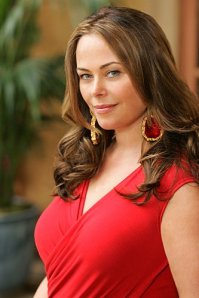
pollywalker

Seriously: all respect to Lena Headey, but imagine Polly Walker as Cersei,

In our episode recaps, I have frequently voiced my ambivalence about Lena Headey as Cersei, and part of that proceeds from her description in the novels. Headey’s performance has been really good—I don’t want to take anything away from her as an actress—but she emphasizes the icy dimension of Cersei and little of the sensuality we see in the novels. It occurred to me recently that Polly Walker, who played Atia of the Julii in Rome would have been ideal in this role: similarly aloof and cold when necessary, but always exuding a syrupy aura of sex. (By the same token, James Purefoy, who played Antony, would have made for a good Jaime … though you’d have had to bleach his entire body).

Aside from those quibbles, the casting on this show has been pretty much spot-on. It’s easy to gloss over those little discrepancies, like Joffrey’s shoulder-length curls. The Darcy Effect only really takes hold, for me, with the Stark children, especially Jon, Robb, and Arya. How about you?

Nikki: As much as I love Purefoy, I think the casting of Jaime Lannister is pretty much spot-on. Even when GRRM describes him the first time, it’s like he’s describing the actor playing him, not just the character in the book. And I haven’t seen enough of Cersei to comment on Lena Headey; she’s cold, that’s for sure, but I agree her character feels a little thin compared to the far more sensuous Cersei in the book. But I’m looking forward to more of her.

The last character is Jon Snow. We get introduced to Samwell Tarly, one of my favourite characters on the show, and while the Sam of the book seems to be even fatter, I think John Bradley plays him wonderfully on the show. Much like it plays out on the show, Jon comes to Sam’s rescue against the bullies on the Wall, and slowly earns the respect (or fear) of those around him by using his cunning. In the books as well as on the show, Jon certainly comes off as the “Stark” who is the smartest of the bunch, save for Arya, perhaps.

And that’s it for week 2!

Next week: Part Three: 324-488 mass market; 272-408 trade paperback (starting with TYRION “As he stood in the predawn chill…”)
293212_543978711206_354036202_n

Leave a comment

Filed under book club

Ich bin ein Narnian

jfk-assassination-1.pngYesterday was the fiftieth anniversary of JFK’s assassination. Given that I wrote my doctoral dissertation on conspiracy theory and paranoia in postwar American literature and popular culture, it seemed appropriate that I should make some comment—I did, after all, devote a good many pages to discussing the key themes and tropes at work in various imaginative treatments of the assassination, especially Don DeLillo’s marvelous novel Libra and Oliver Stone’s less-than-marvelous film JFK (and a whole host of wackiness in between).

The more I thought about what I might write, however, the more it seemed like a futile endeavour—there is little or nothing I could say that would be enlightening about Kennedy at this point, and frankly, I think I’ve got conspiracy fatigue. Not just because I spent five years writing a three-hundred page thesis on the topic, but because of everything that has happened since. When I first conceived of the project, it was still the late 90s (1999, to be precise), a decade that, after some investigation, appeared to comprise a critical mass of conspiracism, from television and film (The X-Files, Enemy of the State, The Matrix) to rather terrifying real-world examples like Timothy McVeigh and the paramilitaries that spawned him. There were very few scholarly studies of conspiracy and paranoia when I sat down to work on my thesis; but as I struggled through it, more and more surfaced, until I began to dread scanning the lists of recently published scholarly books. I never published my thesis as a book, for several reasons: one was that I had the great good fortune to get hired at Memorial about eight months after defending my thesis, which took a lot of the pressure to get it published off; another was that I suffered from that common post-dissertation malaise, in which returning to the scene of the crime (as it were) and revising what you have just devoted (in my case) five years of your life to writing is not unlike probing the nerve of a tooth.

But there was a third factor (or a fourth, if we’re also including my congenital laziness), which was that by the time I defended in September 2004, conspiracism was at once everywhere and nowhere. Everywhere, because 9/11 had given us a brand new morass of paranoid thought (trutherism), and nowhere because the Bush administration—especially in the persons of Donald Rumsfeld and Dick Cheney—was so shameless in its prosecution of the War on Terror and the Iraq War, wearing the Patriot Act on its sleeve, that the entire concept of “conspiracy” came to seem somewhat trite. Surveillance? Of course. Torture? You bet your ass. Blatant misdirection? Well, as one unnamed Bush aide (whom we all assume to be Karl Rove) told a reporter, “We’re an empire now, and when we act, we create our own reality.” It was enough to make one nostalgic for the acknowledgement of transgression that the act of covering up covert operations like Watergate or Iran-Contra implied. The prospect of an enormous conspiracy behind JFK’s assassination is positively comforting by comparison.

I remember an important moment in the evolution of my thinking on conspiracy and paranoia: while going over a chapter in which JFK figured highly, my second reader said, “So tell me something. If someone were to produce absolute, ironclad proof about the truth of Kennedy’s assassination … would it matter?” I’m sure there have been many, many times in my life when I’ve gaped in consternation, and mercifully, I don’t remember most of them. I remember that time. Because of course, the answer is: No, in thunder. The sheer glut of details and information, much of it incongruous and conflicting, has made for a tar-pit that doesn’t just blunt Occam’s Razor but dissolves it to nothing. Don DeLillo captures this critical mass beautifully in Libra in the figure of Nicholas Branch, a CIA researcher tasked with writing the official “secret history” of the Kennedy assassination. After years of work, he has produced next to nothing: “He has extensive and overlapping notes—notes in three-foot drifts, all these years of notes. But of actual finished prose, there is precious little. It is impossible to stop assembling data.” The Warren Report itself, Branch speculates, is “the megaton novel James Joyce would have written if he’d moved to Iowa City and lived to be a hundred.” Included in its twenty-six volumes are

Baptismal records, report cards, postcards, divorce petitions, cancelled checks, daily timesheets, tax returns, property lists, postoperative x-rays, photos of knotted string, thousands of pages of testimony, of voices droning in hearing rooms in old courthouse buildings, an incredible haul of human utterance. It lies so flat on the page, hangs so still in the lazy air, lost to syntax and other arrangement, that it resembles a kind of mind-spatter, a poetry of lives muddied and dripping in language.

Perhaps I’m wrong about this, but it seems to me that the center of gravity of JFK theories has been slowly shifting toward grudging acceptance of the single-shooter theory … or perhaps I only think that because that’s where my mind has gone. Once upon a time, I assumed that the chaos of seemingly conflicting detail, with whole hosts of elements unaccounted for, pointed to a conspiracy; now, I tend to think the opposite. Now, I tend to think that everyday life is a muddle of random crap, most of which we forget when we construct the memory of a given time. If any of us had the misfortune of having a twelve-hour slice of our life, one in which only some of the details were available, pored over by thousands upon thousands of observers and analysts, all of them attempting to determine logical causation, how much of our behaviour wouldn’t add up? How many caprices of impulse, forgetfulness, irritation, weariness, euphoria, to say nothing of such caprices in the lives of all the people we interact with, would conspiratorially-minded observers have to deal with? Narrative is how we make meaning of events, but narrative involves leaving out far more than it leaves in, and when every detail becomes meaningful, everything becomes meaningless. And often the most baffling observations can be made comprehensible with the introduction of the smallest of details (you can skip to 2:56 for an alternative to the “magic bullet” theory):

I’m not naïve: I have no doubt that there will be Kennedy conspiracists until the end of time, in the same way there will be those who deny the moon landing. And there will probably always be truthers and birthers. So it goes.

But what made me sit down to write (a day late) my thoughts on the fiftieth anniversary of November 22, 1963, was the discovery yesterday of something I never knew: on the day of Kennedy’s death, C.S. Lewis died. There is something to be written about this serendipity, something about the resonance between two rather different utopian visions—Kennedy’s New Frontier versus Lewis’ pastoral Narnia, the faith in the possibilities of an American future versus the nostalgia for the romance of an English past—but the thoughts are too inchoate in my mind for me to attempt it at this moment. There is also the possibility of a new swarm of satirical conspiracy theories (is Kennedy sitting on one of the thrones at Cair Paravel? Was the White Witch behind the grassy knoll?), but again, same thing.

TheLionWitchWardrobe(1stEd)In an entirely other, and entirely self-absorbed fashion, however, it is weirdly appropriate that I should only discover this intersection now … given that conspiracy theory was my entre to academia, and I’m currently researching fantasy. C.S. Lewis might not be one of the authors on whom I am focusing, but he is a massive influence—both on them, and on me. My graduate seminar recently looked at The Magicians by Lev Grossman, a novel that is deeply indebted to the Narnia chronicles in a variety of ways—and one of my students did a presentation of The Lion, the Witch, and the Wardrobe apropos of that fact. (For Grossman’s fifty-year tribute to Lewis, which doesn’t mention JFK at all, go here).

I have no real point to this post, unless it is this: something to do with the increasing comfort with life’s messiness and complexity that age bestows. If there is a single point of contact with Narnia and Camelot, it is the investment in reductive mythology. Conspiracism, for all its apparent fascination with vast and myriad seas of information and data, is dedicated to the creation of narratives whose ostensible complexities are really just a smokescreen for their simplistic natures. They are just as mythological in nature as either the hagiographies of Kennedy or the stories of his criminal malfeasance. I was thinking yesterday of the film Thirteen Days, a reasonably good dramatization of the Cuban Missile Crisis—and the fact that in it, Kennedy displays none of his less palatable qualities. There are no quickies with any of his many mistresses, none of the arrogance or cruelty we now know marked many of his interactions with others … Bruce Greenwood does an excellent job of portraying the president as conflicted and beset (though as much as I like Greenwood, fine upstanding Canadian that he is, Stephen Culp’s RFK steals the film), but there is little in the way of nuance. Perhaps even more than Oliver Stone’s JFK, this film settles into the category of Kennedy hagiography. All of which made me wonder: does the sheer scope of JFK’s complexities as a man make him impossible to depict?

TheMagiciansThe Magicians pretty much split my grad class down the middle in terms of students’ reactions: half loved it, half hated it, and for pretty much the same reasons: that it gives us a version of Harry Potter and Narnia that introduces the elements of ordinary angst, emotional caprice, and thoughtless cruelty on the part of characters who are also protagonists. Fantasy as a genre carries the connotations of unequivocal good and evil: Aslan versus the White Witch, Gandalf versus Sauron, Harry Potter versus Voldemort, and so on. What I love about a lot of recent works by George R.R. Martin, Neil Gaiman, and Richard Morgan is that we’re leaving that simplistic mythos behind and finding a more nuanced narrative.

Now, if someone could do that with JFK …

Leave a comment

Filed under course readings, maunderings, what I'm working on