Category Archives: what I’m reading

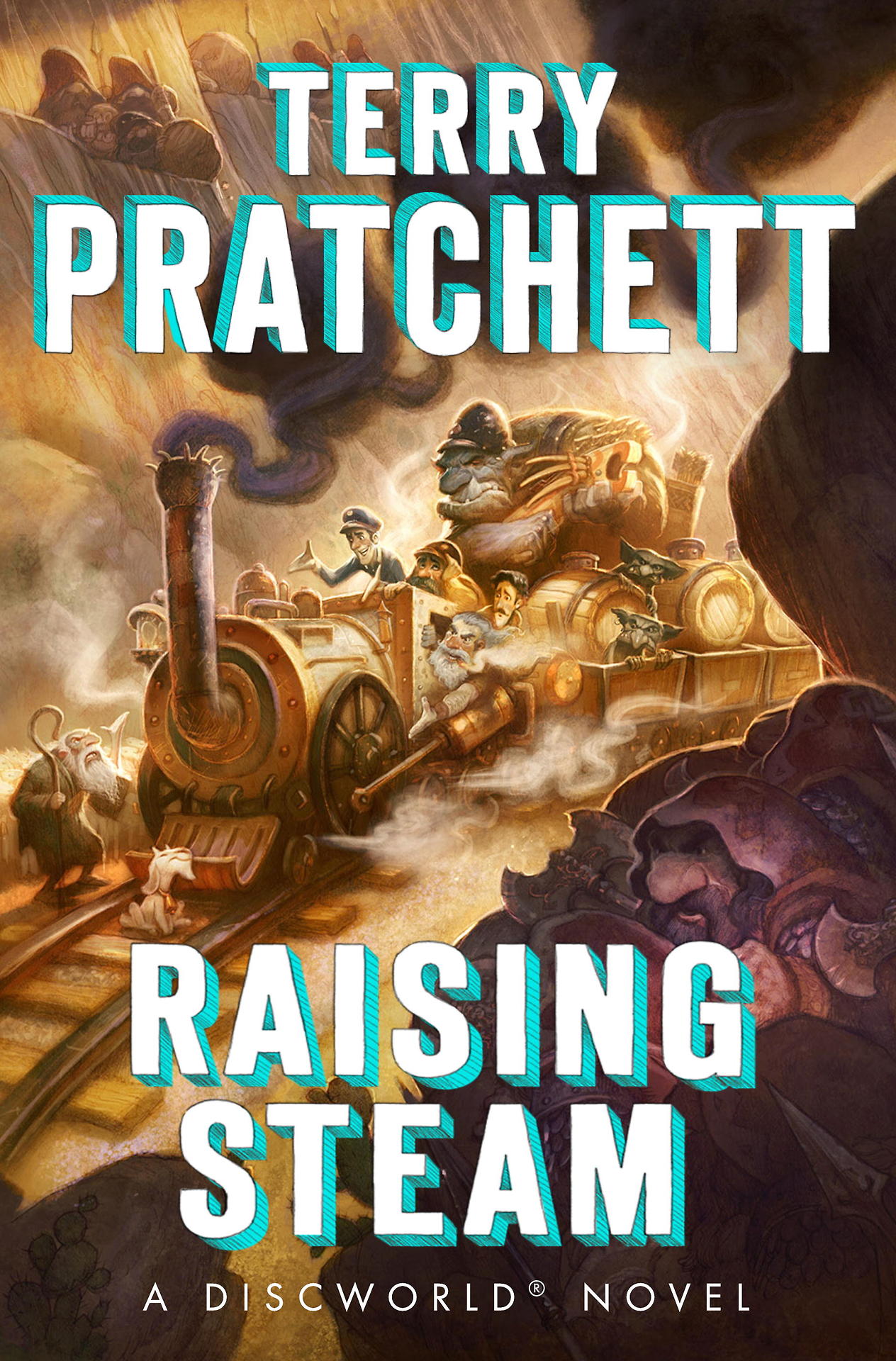
What I’m Reading: Raising Steam, or, Modernity Comes to Discworld

raising-steamThere are a precious few of Terry Pratchett’s Discworld novels that I have not yet read, and I am clinging to them covetously, putting off reading them because all too soon there will be no more additions to the Discworld library. Sir Terry is still alive and kicking and churning out novels, but he is suffering from Alzheimer’s disease—that he remains this prolific is nothing short of heroic. As much as we don’t want to acknowledge it, Discworld devotees know that sooner or later there will be no more novels forthcoming.

Raising Steam is the fortieth Discworld novel (the thirty-sixth if you don’t count the young adult novels), and is still currently in hardcover. I had been putting off buying it, waiting for the paperback but also possibly adding it to the small pile of Discworld novels I was resisting reading. But at Slayage I discovered a fellow Discworld devotee, my new friend Dale whose blog I quoted in my previous post. She had just finished Raising Steam and gifted me with her copy, on the condition that I told her what I thought of it when I was done.

Well … here I go. Fair warning: this post is not so much a review of Raising Steam as it is a working-through of thoughts I have had about Pratchett’s writing for some time, which his most recent novel has managed to bring into something resembling sharp relief.

Also fair warning: spoilers.

*

Raising Steam brings the railway to Discworld: it begins as a young engineer named Dick Simnel continues with the experiments with steam that had killed his father, and ends with the new railway connecting the city of Ankh-Morpork—a center of Discworld commerce and culture—with far-flung Uberwald, in the process facilitating a mission of speedy diplomacy that restores the progressive Low King of the dwarfs to his usurped throne … which itself allows for a seismic change to dwarf society.

I’ve subtitled this review “Modernity Comes to Discworld,” but anyone who is more than just a casual reader of Sir Terry’s novels knows that that is more than just a little disingenuous. The Discworld is a fantasy world through and through, and as such displays all of the conventions of fantasy we have come to expect and then some: dwarfs, trolls, goblins, wizards, witches, gods, magic, castles, quests, prophecies, dragons, supernatural plots and conspiracies, and so forth. But in a variety of ways, Pratchett’s novels only present the façade of fantasy. If we define fantasy fiction as a genre that anchors its magical and supernatural elements in an identifiably medieval or at least premodern setting (as George R.R. Martin has said on several occasions, fantasy and historical fiction are “sisters beneath the skin”), Pratchett arguably performs a constant bait-and-switch insofar as that the Discworld and its denizens—or at least those denizens who star in the novels—don’t exactly embody a Tolkienesque sensibility. “Modernity” has been creeping into the Discworld landscape almost from the start.

Even so, the introduction of the steam engine and the railway is still somewhat jarring, for the simple reason that it is perhaps the single greatest symbol of modernity and industrialization. I have written elsewhere that, in the Harry Potter novels, the Hogwarts Express is a peculiarly potent presence in that it functions as a sort of representative time machine—a nineteenth-century bridge between postmodern London and medieval England. In Raising Steam that trajectory is reversed as Dick Simnel’s newfangled gadget hurtles, along with its many enthusiastic passengers, into Discworld’s uncharted future.

Considering Pratchett’s incremental modernization of Discworld, which I’ll discuss below, it is difficult not to read Raising Steam and the massive paradigm shift the locomotive represents as the culmination of a life’s work. As mentioned about, Sir Terry was diagnosed with early-onset Alzheimer’s in 2007. Mercifully, it has been a mild case, and he does not appear to have missed a step in his writing since then (though now he no longer types his own work, but has to dictate and otherwise work an assistant to get the words on the page). However, his fans wait in dread for the inevitable. Only a few days ago, a friend pointed me to an article in The Guardian, which reports that Sir Terry has had to cancel his appearance at the International Discworld Convention because of his Alzheimers, saying sadly that “the Embuggerance is finally catching up with me.”

Is the railway a parting gift to Discworld? Is he officially ushering it into the modern age while he still can? It might seem odd, in a fantasy series, to impose modern technology on the fantasy world: certainly, Tolkien would have been aghast to have steel rails and belching locomotives cutting a swath through the Shire (as indeed, the dystopian Shire to which the hobbits return was precisely an anti-industrial polemic). But Pratchett has a very different relationship to fantasy than did Tolkien, or really even most people writing fantasy today. The nostalgic quality that inflects much of the genre is largely absent in Discworld—rather, Sir Terry uses fantasy as a comedic means to explore the relationship between narrative’s folkloric tendencies and the exigencies of the modern world.

*
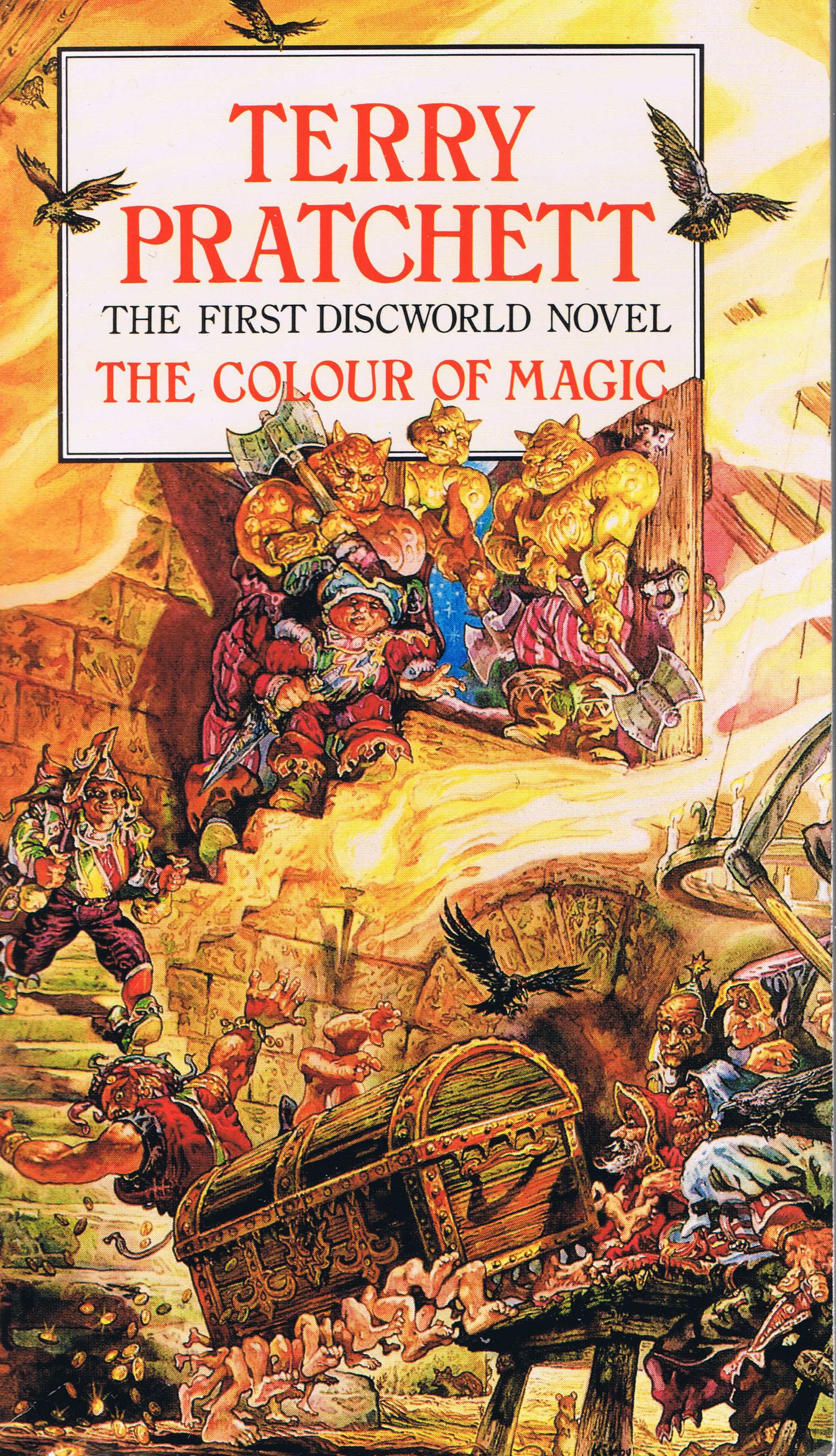
colour-magicThe Discworld novels started in 1983 with The Colour of Magic, which was followed by The Light Fantastic. Both of these novels were essentially parodies of fantasy as a genre, with comically outsized heroes, improbable and illogical encounters, and bizarre plot twists as befit characters traveling across a magical landscape. But as Discworld evolved and Sir Terry added more and more stories to the series (he published fifteen Discworld novels between 1983 and 1993), Discworld and its inhabitants took on form and substance that, while unfailingly funny, became less about parodying fantasy and more about employing fantasy to articulate a markedly humanist and pragmatic world view.

Pratchett himself has always been an outspoken humanist, perhaps most famously in his oft-repeated pronouncement that “I’d rather be a rising ape than a falling angel.” In that sentiment one glimpses something essential to the Discworld ethos: the valorization of human potential over divine intervention, and the figuration of people (which in the case of Discworld is not just humans but dwarfs, trolls, vampires, and so forth) as progressive and emergent rather than fallen, postlapsarian beings. Pratchett’s sensibility, not to put too fine a point on it, is an eminently sensible one, which sees more wonder in the simple fact that beings evolved from monkeys invented streetlamps than in any ostensible divine origin:

I find it far more interesting … that a bunch of monkeys got down off the trees and stopped arguing long enough to build this … to build that, to build everything. And we’re monkeys—our heritage is, in times of difficulty, climb a tree and throw shit at other trees. That’s so much more interesting than being fallen angels … Within the story of evolution is a story far more interesting than any in the Bible. It teaches us amazing things. That stars are not important. There’s nothing interesting about stars. Streetlamps are very important, because they’re so rare … as far as we know, there’s only a few million of them in the universe. And they were built by monkeys! Who came up with philosophy, and gods! And this is so much more interesting, it is so much more right. Admittedly, we err, such as when we made Tony Blair prime minister. But given where we started from … we actually haven’t done that badly. And I would much rather be a rising ape than a falling angel.

I disagree with him on the unimportance or tedium of stars, but his point is well taken (and, really, is just a rhetorical flourish). The above is from a talk he gave for The Guardian, the relevant part of which can be viewed on YouTube:
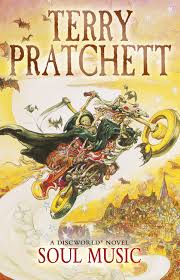
soul-musicThe Discworld novels articulate and expand on the various facets and implications of such sentiments. His assertion that “In my religion, the building of a telescope is the building of a cathedral” finds numerous corollaries, as he introduces various modern phenomena into Discworld in parodic fashion—though not to parody fantasy as in his first two novels, but rather to use fantasy as a means to parody our own real-world foibles. In Moving Pictures (1990) and Soul Music (1994), cinema and rock and roll, respectively, make appearances on the Discworld scene, in both cases facilitated by quasi-magical circumstances to emerge and reach critical mass before disappearing as the magical framework collapses. But where these end up as one-offs in Discworld, the last fifteen years or so (or, to measure time in Pratchett productivity, sixteen Discworld novels) has seen a number of modern incursions into Sir Terry’s fantasy world taking root and expanding.

Perhaps first and foremost among these is the network of “clacks towers,” which first appears in The Fifth Elephant (1999). The clacks towers are the Discworld analogue to the telegraph: lines of towers in visual range of each other, which relay messages through a series of semaphore-type codes, and which (by the time we get to Raising Steam) run the length and breadth of Discworld and have become integral to both politics and commerce. In The Truth (2000), the printing press arrives in the city of Ankh-Morpork, which gives rise to the invention of the newspaper and the profession of journalism. In Going Postal (2004), Ankh-Morpork establishes the modern postal system; and in Making Money (2007), modern banking and coinage.

It is important to note here that as our image of Discworld evolves over numerous novels, it becomes clear that the city of Ankh-Morpork—center of commerce, polyglot metropolis, and emigration destination for pretty much all races and species in Discworld—comes to emblematize Sir Terry’s humanistic ethos. It is a place where peoples from all over Discworld, both humans of all stripes and species such as dwarfs of trolls, come to make new lives, to earn money to send home, or to flee their homelands. It is not, to be clear, a nice place—it is dirty, overpopulated, violent, capricious, and fickle—but in being distinctively un-utopian (without being actually dystopian), it depicts the inescapable messiness of the humanist project. Some of the most profound conflicts in Sir Terry’s novels occur when individuals or groups of great power (magical or otherwise) attempt to clean up the messiness of humanity and impose a “clean,” neat utopian order—such as happens in Reaper Man (1991), Small Gods (1992), Hogfather (1996), The Truth (2000), Thief of Time (2001), and Night Watch (2002). “The moment you start measuring people,” reflects Sam Vimes in Night Watch, “sooner or later, people don’t measure up.” The imposition of an autocratic, absolute external logic is anathema to Sir Terry. One of his key recurring characters is the Patrician of Ankh-Morpork, Lord Havelock Vetinari. Vetinari is, for all intents and purposes, the Platonic ideal of the benevolent dictator, a beautifully Machiavellian character in the truest sense of the word insofar as his primary concern is not the maintenance of his own power but the welfare of his city. Though he is a self-described tyrant and at times behaves in a tyrannical manner (certainly, his enemies never fare well), he proceeds from the foundational understanding that a healthy society is one in which individuals must have the freedom to make their own choices, and that the role of government was to make certain no one faction of society’s choices took precedence over any other’s.

(An attitude that pervades many parts of Discworld, even those more specifically medieval and premodern than Ankh-Morpork. The Kingdom of Lancre, for example, the most obviously medieval European region of Discworld, resists any attempt at democratization, but their attitude to kings is such that imposing an absolute monarchy would be monumentally difficult:

The people of Lancre wouldn’t dream of living in anything other than a monarchy. They’d done so for thousands of years and knew that it worked. But they’d also found that it didn’t do to pay too much attention to what the king wanted, because there was bound to be another king along in forty years or so and he’d be certain to want something different and so they’d have gone to all that trouble for nothing. In the meantime, his job as they saw it was to mostly stay in the palace, practice the waving, have enough sense to face the right way on coins and let them get on with the plowing, sowing, growing and harvesting. It was, as they saw it, a social contract. They did what they always did, and he let them. (Carpe Jugulum)

The Discworld novels are marked by this sort of pragmatism, pragmatism that is both the commonsensical and quotidian variety, and the philosophical kind.)

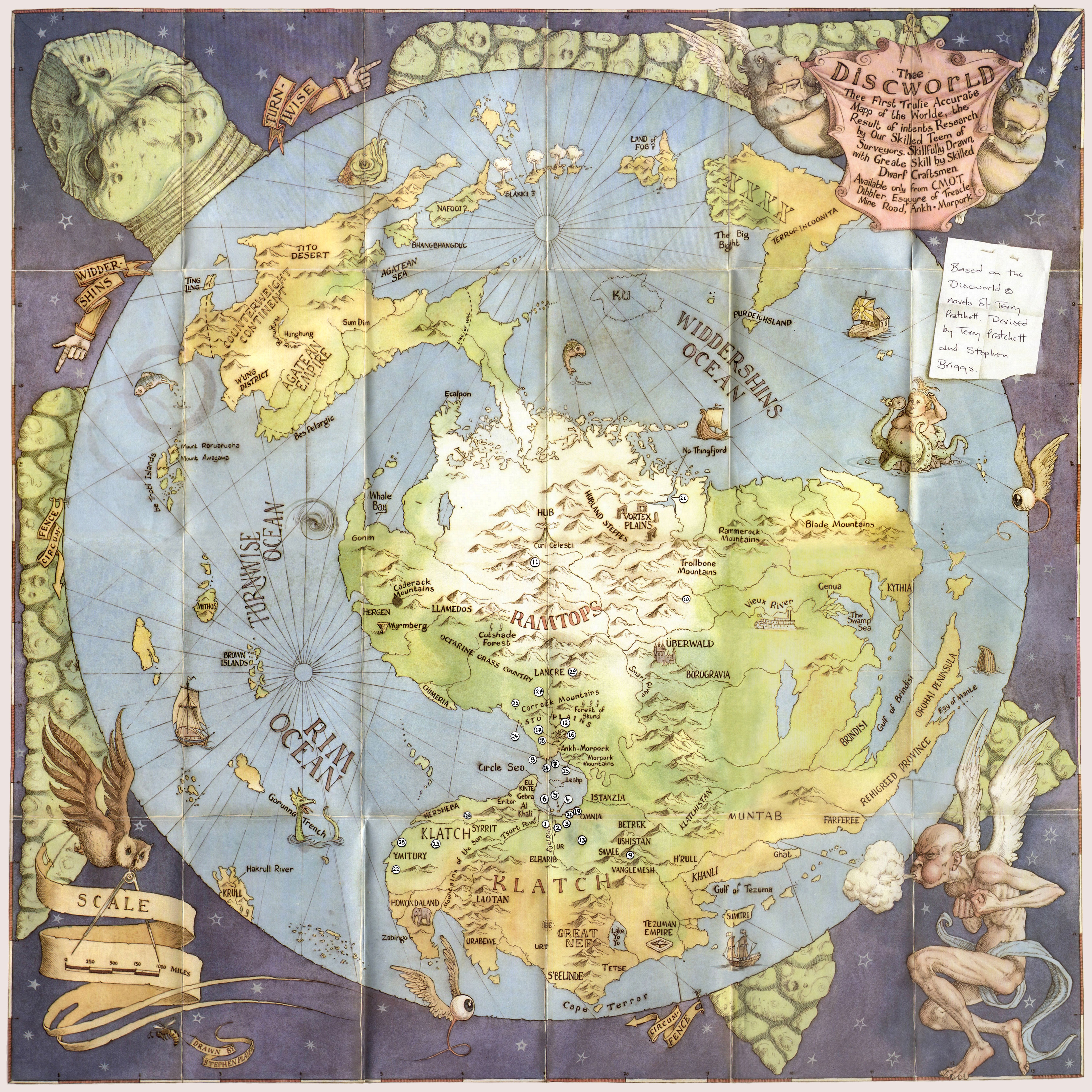
Ankh-Morpork sits in the midst of an archipelago of fantasy analogues to different real-world premodern societies, from Lancre, to Uberwald’s gothic medieval, to Djelibeybi’s re-imagination of ancient Egypt, Klatch’s Middle-East, the Agatean Empire’s dynastic China, or the city-state of Ephebe’s version of ancient Athens. Ankh-Morpork exerts a gravitational pull on all these places and draws the denizens of otherwise isolated and xenophobic societies into direct and profitable contact with one another. And it is therefore unsurprising that all of the elements of modernity that Pratchett introduces into Discworld either emerge in Ankh-Morpork or are refined (and monetized) there.
Discworld_map

The steam engine and railway in Raising Steam are no exception in this respect. The only real difference is that in this novel there is an awful lot more musing on the nature of progress and innovation. Moist von Lipwig, hero of Going Postal and Making Money, whom Vetinari once again ropes into managing a new phenomenon for the benefit of Ankh-Morpork, takes to the task with far less reluctance than with the city’s post office, bank, and mint. The former con man and scoundrel sees all too clearly the railway’s potential, and frequently pauses to reflect on the nature of progress, in both its destructive and beneficial effects in which old orders crumble but create new possibilities. Even Lord Vetinari is more given to philosophical reflection than usual, at first looking suspiciously at this new technology but quickly resigning himself to its inevitability (with Moist looking out for the city’s interests, however).

Curious, the Patrician thought … that people in Ankh-Morpork professed not to like change while at the same time fixating on every new entertainment and diversion that came their way. There was nothing the mob liked better than novelty. Lord Vetinari sighed again. Did they actually think? These days everybody used the clacks, even little old ladies who used it to send him clacks messages complaining about these newfangled ideas, totally missing the irony. And in this doleful mood he ventured to wonder if they ever thought back to when things were just old-fangled or not fangled at all as against the modern day when fangled had reached its apogee. Fangling was indeed, he thought, here to stay.

The conflict at the center of Raising Steam is not about the development of the railway per se, but with a power struggle occurring in dwarf society. Of all the races and species inhabiting Discworld, dwarfs are (after humans) the most complexly imagined. Two previous novels, The Fifth Elephant (1999) and Thud! (2007) looked closely at the history of dwarfish culture, its customs and traditions, and the faultlines that have always run through it. There has always been a divide among dwarfs between the forces of tradition and those of progress, between those purists who wish to hew to an authentic, ur-dwarfishness, and those who leave their homeland and its mines and (frequently) settle in Ankh-Morpork.

At its heart, Raising Steam is less about the modernizing force of technology than the confrontation between a fanatical devotion to tradition and the exigencies of a rapidly changing world. One thing we learned in The Fifth Elephant was that male and female dwarfs look more or less identical, and only acknowledge themselves as male outside the privacy of marriage (which, as Pratchett notes, makes courtship a delicate affair). But in The Fifth Elephant, female dwarfs in Ankh-Morpork have started to identify as female, something veritably heretical in their homeland of Uberwald. The Fifth Elephant was about the coronation of a progressive king; in Thud!, the dwarfs negotiate a peace treaty with their traditional enemies, the trolls. In both cases, these crucial events were quietly orchestrated by Lord Vetinari through his proxy Samuel Vimes, commander of the City Watch.

In Raising Steam, a schism among the absolutist dwarfs—the “grags” or “delvers” as they are known—leads not just to a coup d’etat, but also to terroristic attacks on the clacks network and the embryonic railway, symbols of change and progress that the purist delvers cannot abide. I won’t make any claim that the novel is subtle on this front: the delvers very obviously represent fundamentalist and evangelical factions in contemporary culture, something made painfully obvious by the fact that delvers will only emerge from below ground when clad in heavy black robes that hide their faces.

This lack of subtlety is part of the reason why this novel feels like Pratchett hurrying Discworld out of its medieval trappings and firmly into the modern world. The reinstated dwarfish king, Rhys Rhysson, lays it out for his fundamentalist foes in no uncertain terms:

[I]t is your kind that makes dwarfs small, wrapped up in themselves: declaring that any tiny change in what is thought to be a dwarf is somehow sacrilege. I can remember the days when even talking to a human was forbidden by idiots such as you. And now you have to understand it’s not about dwarfs, or the humans, or the trolls, it’s about the people, and that’s where the troublesome Lord Vetinari wins the game. In Ankh-Morpork you can be whatever you want to be and sometimes people laugh and sometimes they clap, and mostly and beautifully, they don’t really care.

Rhys then goes on to truly shake dwarf society to its core by revealing that he is not, in fact, their king at all but their queen—and defiantly rejects the title of king, saying that from that moment on, dwarfs will no longer be required to hide or deny their gender.

All of which was made possible, of course, by the construction of the railway: anticipating problems in Uberwald (where the dwarfs’ Low Kingdom resides), Vetinari orders Moist von Lipwig to make certain the railway will run the entire distance (which Moist protests is impossible in the allotted time—but Vetinari exercises the tyrant’s prerogative and demands that it be done). Of course, though it is touch and go, he succeeds—and the timely return of Queen Rhys allows her to reclaim the throne and make her game-changing announcement.

I can’t say that Raising Steam is among the best Discworld novels … though it avoids the narrative incoherence that marked Snuff (2012) and Unseen Academicals (2010), as I’ve observed, it is markedly unsubtle in its themes and execution—though thankfully in very interesting ways that have helped clarify some of my thinking about the Discworld series. There is an unmistakably wistful tone that makes me wonder if we’ll see Ankh-Morpork and the geopolitics of Discworld depicted again (Pratchett’s apology to the Discworld Convention states that he has a new Tiffany Aching novel in process, but I find that the YA Discworld novels lack the broader sense of the world at large). The novel’s final word is given to Lord Ventinari, who muses, “all that anyone can say now is: What next? What little thing will change the world because the tinkers carried on tinkering?”

What indeed.
1 Comment

Filed under what I'm reading

What I’m (re)Reading: Evolution

baxter_evolution-181x300I haven’t posted about books I’ve been reading for a while, partly because much of it has been the rereading I do for teaching. And since classes ended, I’ve continued in my rereading of some favourite books. Just this morning I finished Evolution by Stephen Baxter, a novel that is the epitome of nerd crack.

Basically, the novel is the story of human DNA: from the first rodent-like primates running around under the feet of the dinosaurs, to homo erectus, to Neanderthals, to homo sapiens … and then speculating millions of years into the future as to where we’re going. Spoiler alert: we don’t become balls of pure energy as Gene Roddenberry suggested.

The novel is part interlinked short stories interspersed across millions of years, and part extended lecture on evolutionary biology. If you’re the kind of reader who hates novels that explicitly try to teach you something, take a pass. But if you’re like me and love a good story that also offers tons of cool facts, well … like I said, nerd crack.

The story begins with Purga (from purgatorius, one of the first species of primates), and her anxious life at the feet of the dinosaurs. More importantly, Purga lives through the comet-strike that resulted in the mass extinction of the great saurians. The description of the comet hitting the earth, and the effect it had, is really worth the price of admission: while Baxter’s prose is mostly serviceable, here he attains a certain brutal lyrical elegance.

The impact had sent an energy pulse through the body of the earth. In North and South America, across thousands of kilometers, faults gaped and landslides crashed, as the shocked ground shuddered. The rocky waves weakened as they propagated, but the Earth’s internal layers acted like a giant lens to refocus the seismic energy at the impact’s antipode, the southwestern Pacific. Even here, the width of the planet away, the ocean floor heaved in swells ten times higher than the 1906 San Francisco earthquake.

The shock waves would continue to pass through the planet’s body, crossing, interfering, reinforcing. For days, the Earth would ring like a bell.

If the novel has a flaw, it’s that it tends to be repetitive. Certain tenets of evolutionary theory are narrated again and again, and Baxter never misses an opportunity to remind us of the cruel, cold calculus that is survival of the fittest. Aside from this occasional didactic tendency, however, the novel manages to tell the story of evolution with almost a potboiler-level of immediacy—no mean feat, considering that each chapter introduces new characters and new settings that necessitate a whole lot of exposition and mental adjustment on the reader’s part to animals and landscapes literally reshaped and reinvented by time. The narrative’s principal pivot-point balances on the story of a pregnant paleontologist (try saying that five times fast) named Joan Useb who, with the assistance of her friend Alyce Sigurdardottir—a biologist—has organized a huge conference of scientists of varying disciplines in (appropriately) Darwin Australia. The year is 2031, and all the global problems of our present day—climate change, wealth inequality, rapacious corporate culture, dwindling natural resources—have only gotten worse. Much worse, to the point that Joan and Alyce have an ulterior motive for organizing the conference: to bring together the best scientific minds in the world and bang out a manifesto for how to arrest and reverse the global descent into crisis. It’s a Hail Mary play, but we never get a chance to find out if it will work. The conference is attacked by a group of fundamentalist fanatics just as a massive volcano in Papua New Guinea explodes and pushes the planet’s fragile climate past the point of no return.

The chapters following the conference’s failure chart the fortunes of humanity millions of years into the future. A group of Royal Navy soldiers, cryogenically frozen as part of an elaborate deterrence strategy, awake to discover that they had been forgotten and left asleep through the fall of civilization. They do not know how long they have been frozen, but it slowly becomes obvious that at least a millennium has passed. They do encounter people, but people who have reverted to a bestial state, with no language. When one of the soldiers voices incredulity that humans would lose language, another replies,

Why not? Birds lose flight all the time. To be smart costs. Even a brain the size of yours is expensive; it eats a lot of energy from your body’s supply. Maybe this isn’t a world where being smart pays off as much as, say, being able to run fast or see sharply. It probably didn’t take much rewiring for language, even consciousness, to be shut down. And now the brains are free to shrink. Give them a hundred thousand years, and they’ll look like australopithecines.

The “cost” of intelligence in evolutionary terms is another of the points Baxter hammers home repeatedly, describing the evolutionary steps that made intelligence and language advantageous and the concomitant difficulties it posed our genetic ancestors: the inability to breed prolifically, for example, or the necessary helplessness of human infants. Other species’ offspring are vulnerable but emerge with all their faculties intact; deer and horses can walk, turtles can swim, and so forth. Given a lack of predation, they can fend for themselves, whereas a human baby simply cannot. The reason, Baxter points out, is because our brains are incomplete when we’re born. If they weren’t, we simply wouldn’t fit through the birth canal. Human beings, in effect, continue to gestate for several years after birth.

The devolution of humanity, which comprises the final three chapters, is one of the most remarkable elements of the book for the simple reason that it challenges the tacit assumption of progress, that evolution inevitably describes an upward arc. The soldier who commented on the brain’s energy cost also points out, when his commander declares his intention to rebuild civilization, that there is nothing to build with—all of the easily accessible natural resources that made civilization possible have been used up. One of my favourite chapters in the novel—the last historical one before the ill-fated conference—takes place in CE 482, in the midst of the ruins of the Roman Empire. It details a Roman named Honorius’ fascination with old bones. He has traveled widely, collecting a mishmash of fossils, dinosaur bones, and pre-human skulls. Honorius is sort of a proto-Darwin, slowly piecing together an understanding of a much more ancient past than ever previously imagined, out of which humans emerged. But he never has a chance to be Darwin, as he is murdered in a power struggle between Romans and local Gallic nobles.

Honorius’ death, and with him the death of a theory that won’t re-emerge for fourteen hundred years, is a potent little allegory of how Rome’s demise deprived Europe of its social and technological sophistication for a millennium. More significantly however, the chapter is an excuse to depict the tatters of Rome, whose empire “had thrived on expansion, which had brought triumphs for ambitious generals, profits for traders, and a ready source of slaves.” But at a certain point expansion was no longer possible, and the system collapsed:

There came a point of diminishing returns, in which every denarius collected in taxes was pumped into administrative maintenance and the military. The empire became increasingly complex and bureaucratic—and so even more expensive to run—and inequality of wealth became grotesque. By the time of Nero in the first century, all the land from the Rhine to the Euphrates was owned by just two thousand obscenely rich individuals. Tax evasion among the wealthy became endemic, and the increasing cost of propping up the empire fell ever more heavily on the poor. The old middle class—once the backbone of the empire—declined, bled by taxes and squeezed out from above and below. The empire consumed itself from within.

I said this was one of my favourite chapters; I didn’t claim it was subtle. The Roman with Darwinian thoughts is really just an excuse to use the fall of Rome as an object lesson. Rome fell and plunged Europe into the dark ages, but civilization was ultimately rebuilt. One of the novel’s central messages is that, as a species, we won’t have that opportunity. Roman civilization crumbled, but was preserved piecemeal in the east; the Renaissance was to a large extent its rediscovery, and that historical drama of fall and rise was played out in a small section of the globe, having no direct effect beyond the former extent of the empire. Evolution reminds us that any collapse now would necessarily be total, global, and we will lack the resources for anything resembling a reconstruction of the world as we know it.

As enjoyable a read as it is, Evolution is a deeply depressing novel, both for its bleak outlook and for the way in which our current existence is rendered utterly insignificant when viewed on a geological time line. It makes the appeal of creationism somewhat more understandable, as a six thousand year old world made specifically for humanity is a far more comforting prospect than the mind-numbing swath of years depicted in Evolution. Yesterday I watched a documentary on HBO called Challenging Darwin, which looks at creationism in contrast to Darwin’s life and his gradual distancing of himself from his faith, which had been strong enough early in his life to consider a career in the clergy. The documentary itself is forgettable; what I came away from it with was a depressing sense of just how incommensurable these two discourses are. Creationism begins and ends with the Bible, full stop. One of the evangelicals interviewed proudly declared that “if the Bible said two plus two equaled five,” he would have to adopt his understanding of math to conform. But what a lot of the creationists maintained is that they simply cannot accept the idea that the universe was not made specifically for them; again and again they express the belief that everything is meant to be and everything has meaning as part of God’s plan, and that our presence on the earth is not transient but immortal.

They really ought to read Evolution.

darwin

Leave a comment

Filed under what I'm reading

Tolkien and the Humble Tater: Thoughts on Food and Fantasy

ring_edited-2

I always loved the fact that the original Japanese version of Iron Chef started with a epigraph from the nineteenth-century French gourmand Jean Anselme Brillat-Savarin: “Tell me what you eat and I’ll tell you what you are.” Besides being the perfect pretentious opening for one of the most beautifully bombastic television shows ever made, the sentiment has always rung true for me … and unlike many pithy aphorisms, does not start to crumble under examination.

In my other life where I’m still a university professor, I’m a food historian or possibly food anthropologist (as opposed to my other other life, in which I’m a military historian). This is, I should add, a relatively recent enthusiasm: moving to Newfoundland has been something of a catalyst in this regard, as there are so many examples of this province’s history built into its food traditions. Go into the liquor store and you find nearly an entire wall given over to rum—which at first glance is odd, as you wouldn’t think liquor made from sugar cane would have such a foothold in this northern clime. By the same token, the presence of salt cod in so many traditional Caribbean dishes is similarly counter-intuitive, considering the bounty of fresh fish readily available. But both of course are legacies of the trade routes running salt cod south and sugar and rum north, and both are deeply and unfortunately entwined with the horrors of slavery and the depredations of colonialism.

Perhaps it is because of this dilettantish enthusiasm for food (though I stop well short of calling myself a “foodie”) and its history, but I find myself noticing it a lot in fiction … or in some cases, noticing its absence. I always tell my students: pay attention to the stuff. That is, pay attention to what a given author foregrounds, what he or she chooses to devote especial attention to. If that happens to be food, all the better: why, for example, does someone so parsimonious with detail as Ernest Hemingway devote so much attention to what his characters eat and drink (especially drink)? Or consider our first introduction to Mr. Leopold Bloom in Ulysses:

Mr Leopold Bloom ate with relish the inner organs of beasts and fowls. He liked thick giblet soup, nutty gizzards, a stuffed roast heart, liverslices fried with crustcrumbs, fried hencods’ roes. Most of all he liked grilled mutton kidneys which gave to his palate a fine tang of faintly scented urine.

Bloom is, above all else, a sensualist, a man whose tactile and sensory relationship to the world is placed in contradistinction to the moody and cerebral Stephen Dedalus; a partiality to inner organs of beasts and fowls is eminently appropriate to a man with a more visceral experience of life.

Fantasy as a genre has a particularly interesting relationship with food, for the simple reason that the creation of an alternate world requires some benchmarks for readers rooted in what Tolkien called the “primary world.” The most obvious example today is A Song of Ice and Fire, in which George R.R. Martin lavishes loving detail on (it sometimes seems) every single morsel of food his characters consume (seriously: Every. Single. One). On one hand, it is the prose of an author who himself obviously loves good food; on another hand, it is a shrewd and pungent way to establish regional identity in a world that, as the series progresses, just keeps getting bigger.

Indeed, food plays a prominent enough role in Martin’s novels that one of the promotional gimmicks for HBO’s adaptation was a series of food trucks roaming New York and L.A. selling “the food of Westeros” … food inspired by the series and devised by celebrity chef Tom Colicchio:

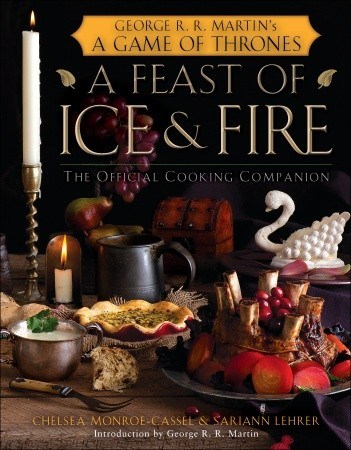
feastoficeandfireMartin’s preoccupation with food has also spawned a Game of Thrones cookbook, A Feast of Ice and Fire—itself the product of a blog, Inn at the Crossroads, which has for several years been approximating meals from the novels like almond-crusted trout, honeyed chicken, honey-spiced locusts (which are probably best to avoid, and not just because they’re insects, as readers of the books will attest), and of course Sansa Stark’s beloved lemon cakes.

But in Tolkien? Not so much. If we are, as I enjoin my students, to pay attention to the stuff in The Lord of the Rings, our attention is drawn predominantly to descriptions of landscape. The most descriptive passages tend to focus on the terrain through which the main characters pass. This preoccupation is perhaps unsurprising, considering that Tolkien was an avid hiker and loved a good walk about as much as George R.R. Martin likes a good restaurant; but more specifically to the novel, landscape in its various iterations becomes deeply significant in its oppositions between the pastoral cultivation in the Shire and dangerous wilderness; between plain and forest; and most crucially between a utopian, idyllic world of beauty, and the blighted, dystopian spaces of Mirkwood or Mordor.

Food is of course present in the novel, but usually in passing and rarely with any detail or description. It is indeed rare that we even know what characters are eating (lembas excepted). There are no Game of Thrones-esque scenes in which “Pippin tore a crisp leg, sticky with honey and crusted with herbs, from the roasted capon.” And what specificity we do get with food tends to rest with the hobbits—the lavish feast at Bilbo’s birthday party, for example, or the hobbits’ two meals of mushrooms. Hobbits, as we are told repeatedly, are small creatures with capacious appetites, so it stands to reason that they’ll be more preoccupied with meals than stern men, stoic dwarves, or ethereal elves.

Hence, when Sam determines to cook a meal for Frodo and cajoles Gollum into catching some rabbits for the task, the scene stands out. And we get a fun little insight into hobbit priorities:

All hobbits, of course, can cook, for they begin to learn the art before their letters (which many never reach); but Sam was a good cook, even by hobbit reckoning, and he had done a good deal of the camp-cooking on their travels, when there was a chance. He still hopefully carried some of his gear in his pack: a small tinder-box, two small shallow pans, the smaller fitting into the larger; inside them a wooden spoon, a short two-pronged fork and some skewers were stowed; and hidden at the bottom of the pack in a flat wooden box a dwindling treasure, some salt.

The resulting meal is, however simple it ends up being, among the most vividly described in the novel. More than that however, it serves to make Sam’s familiar, banal act of cooking that much more remarkable. Indeed, given the context, cooking a simple and wholesome meal is nothing short of heroic, and the attention Tolkien gives it emphasizes its thematic importance, something I’ve touched on in a previous post: the role of “home” and the “homely” as a touchstone, the manner in which it, by contrast, emphasizes just how far from home they actually are, and (of course) it serves as a concrete manifestation of Sam’s loyalty and devotion. That being said, the stew’s lack is just as significant as what it possesses. It has nothing to flesh it out besides the rabbits themselves, and the paltry herbs Sam is able to forage. It is on one hand a reminder of the comforts of home; but Sam is also keenly aware of how deficient a stew it is, with its lack of any vegetative besides herbs—and in particular, its lack of potatoes. His little disquisition on taters in answer to Gollum’s question is one of my favourite Sam moments, and one rendered very well in the film:

“Po—ta—toes,” said Sam. “The Gaffer’s delight, and rare good ballast for an empty belly. But you won’t find any, so you needn’t look. But be good Smeagol and fetch me some herbs, and I’ll think better of you. What’s more, if you turn over a new leaf, and keep it turned, I’ll cook you some taters on of these days. I will: fried fish and chips served by S. Gamgee. You couldn’t say no to that.”

But of course Gollum can say no, preferring his own rather gruesome version of sashimi. This little wistful ode to potatoes speaks to Sam’s rustic and rural simplicity—if we think of potatoes in cultural terms, there is much of the peasant attached to them, in part because of their colonial associations with the rural Irish. And if we can cast our minds back to the very first chapter, we recall that the list of Bilbo’s bequeathals included two sacks of potatoes for “Old Gaffer Gamgee,” Sam’s father (as well as “a new spade, a woolen waistcoat, and a bottle of ointment for creaking joints”).

There is also here yet another fun anachronism, for both potatoes and the practice of frying in oil were alien to the European Middle Ages. We might associate potatoes with Ireland, but in fact potatoes were not indigenous to Europe—they were transplanted from South America in the sixteenth century. And frying as a means of cooking, while practiced in, for example, ancient Rome, was not at all common in the Middle Ages. Certainly, the dish of “fish and chips” as we know it did not become standard fare until the eighteenth century and after. (Fun fact: initially, the batter was not meant to be eaten, but was used to protect the flesh of the fish from the hot oil). The point here being that “fish and chips” is an ahistorical gesture on Tolkien’s part that grounds the hobbits and the Shire in a particular sense of Englishness—and again, in a particular sense of “home.”

So what? (you might well ask). Tolkien isn’t writing historical fiction; potatoes and battered, fried fish might be fatal anachronisms in a novel seeking to accurately depict the middle ages, but there’s no such restrictions in fantasy. Indeed, the presence of a potato in an ostensibly medieval, vaguely European context is rather insignificant next to sorcery, magical rings, and immortal elves. Which is true enough, but misses the point, which is that this scene, with Sam’s ode to the humble tuber, is deeply significant for the fact that nowhere else is food so celebrated except in the abstract. Hobbits, as we have established, love to eat; what they love to eat is left to the imagination.

“Tell me what you eat and I’ll tell you what you are.” Sam’s love of potatoes speaks to who and what he is, the simple but sturdy rural yeoman embodying certain qualities of the English agrarian working class. If other hobbits (such as the Sackville-Bagginses, Ted Sandyman, or those who get in line twice at Bilbo’s party to receive gifts twice) are Tolkien’s gentle poke at country folks’ small-minded parochialism, Samwise Gamgee is his celebration of their virtues of loyalty, tenacity, and common-sense (or “hobbit-sense”). Sam is, ultimately, the novel’s true hero: it is he who gets Frodo to Mount Doom through sheer force of will, finally carrying him when Frodo no longer has the strength to walk. He also, in a moment that bears quoting in full, resists the temptation to take up the Ring himself while he bears it:

As Sam stood there, even though the Ring was not on him but hanging from a chain around about his neck, he felt himself enlarged, as if he were robed in in a huge distorted shadow of himself, a vast and ominous threat halted upon the walls of Mordor. He felt that he had from now on only two choices: to forebear the Ring, though it would torment him; or to claim it, and challenge the Power that sat in its dark hold beyond the valley of shadows. Already the Ring tempted him, gnawing at his will and reason. Wild fantasies arose in his mind; he saw Samwise the Strong, Hero of the Age, striding with a flaming sword across the darkened land, and armies flocking to his call as he marched to the overthrow of Barad-dur. And then all the clouds rolled away, and the white sun shone, and at his command the vale of Gorgoroth became a garden of flowers and trees and brought forth fruit. He had only to put on the Ring and claim it for his own, and all this could be.

In that hour of trial it was the love of his master that helped most to hold him firm; but also deep down in him lived still unconquered his plain hobbit-sense: he knew in the core of his heart that he was not large enough to bear such a burden, even if such visions were not a mere cheat to betray him. The one small garden of a free gardener was all his need and due, not a garden swollen to a realm; his own hands to use, not the hands of others to command.

There is an awful lot in this passage to parse, and I want to come back to it in a future post to talk about Tolkien’s conception of tyranny and what it means to be a “free gardener” (or “free” anything). But for now the main point is the fantasy the Ring gives Sam: that of the uber-gardener, the Great Power who will make the desert bloom. As I mentioned in one of my first Lord of the Rings posts, Tolkien’s vision of the pastoral is not an unequivocal celebration of nature, which it its wild incarnations is perilous and frequently terrifying. Rather, he romanticizes the domestication of wilderness in the form of the Shire, in which domestication is effected not by domination but by cultivation. The twinned figures of the farmer and gardener are ultimately as heroic in Tolkien’s world as the warrior.

I seem to have strayed a little from my overarching topic here, which is about the thematic, symbolic, and metaphorical significance of food. Do I derive this reading of Sam solely from his love of potatoes? Of course not. But that moment—which is, in its way, a moment of honesty and vulnerability, spoken to an unsympathetic listener—stands out for me, not least because it is one of the only instances when food is described in specific terms. “Tell me what you eat and I’ll tell you what you are.”

****

UPDATE: I had literally posted this blog entry when my friend Allan Pero posted this picture to my Facebook wall.

one_donut

2 Comments

Filed under Return to Middle-Earth, what I'm reading

Coming Soon: the Game of Thrones Book Club

game-of-thrones-bannerOn my old blog, as some of you know, I posted back-and-forth commentaries on each episode of Game of Thrones with my good friend Nikki Stafford; she had originally proposed the idea to me because she knew I was a longtime reader of the novels, whereas she was not. And with each season, the question was: would she be able to resist picking them up?

She held out a whole lot longer than I could have, but at last gave in—somewhere halfway through season three, she decided that there was nothing else for it but to read the books. At which point we decided that it would be fun to retrace territory we’ve covered in the television show, but with the books.

So we’re starting the Game of Thrones Book Club. Our first post will go up in a week and a half, and I’m announcing this now in case anyone is interested in following along with us. I’ve broken A Game of Thrones down into five chunks, about which we will do weekly posts. As with the series, we’ll each post to our own blogs. Nikki has the trade paperback and I have the mass market, which have different pagination:

November 11:
Part One: 1-159 mass market; 1-133 trade paperback
November 18:
Part Two: 160-323 mass market; 134-271 trade paperback (starting with BRAN “It seemed as though he’d been falling for years”)
November 25:
Part Three: 324-488 mass market; 272-408 trade paperback (starting with TYRION “As he stood in the predawn chill…”)
December 2:
Part Four: 489-651 mass market; 409-543 trade paperback (starting with DAENERYS “The heart was steaming in the cool…”)
December 9:
Part Five: 652-end mass market; 544-end trade paperback (starting with JON “Are you well, Snow?”)

Join us as Nikki reads George R.R. Martin for the first time, and join the conversation!

Leave a comment

Filed under book club, what I'm reading

Summer Miscellany

As always, it feels as though the Labour Day weekend has ambushed me. Somehow the summer has slipped past and I find myself staring at the date in the lower right corner of my laptop screen incredulously.

The end of summer is always a bittersweet time—bitter because, as the Starks say, winter is coming; because I look at my list of things I meant to accomplish and get depressed at just how few things are checked off—but sweet because Labour Day is, for me, New Year’s Eve. I remember walking up the hill at University College at UWO on the first day of classes in the first year of my PhD, reflecting in amazement that that day marked my twenty-second straight first day of school.

That was sixteen years ago … and the unbroken streak continues.

I’ve always loved the first weeks of the school year, even when, from grades nine to twelve, I hated school. I was always optimistic though: something about the crispness of autumnal air, the blank potential of new notebooks and pens, and seeing people whom you had (mostly) not seen since classes ended the previous spring. It wasn’t until my final year of high school that things started to work for me, when I realized (1) what I was good at, and (2) what I loved. Then university started, and I’ve never looked back. And now I still love the first weeks of school.

It occurred to me I should started including periodic round-ups on this blog. All summer long I have been reading, and as per my habit, it’s been all over the map. I’ve also been watching a lot of amazing stuff. Any one of these books or shows could have a post all to itself, but if I did that, I’d never get anything done. So here’s a brief recap of some of my summer reading and watching highlights.

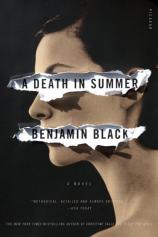
death in summerBenjamin Black, A Death in Summer. Benjamin Black is the nom de plume of novelist John Banville, an identity he takes when he wants to slum it in the world of genre fiction. A Death in Summer is his fourth mystery novel (of six) starring Quirke—a middle-aged consulting pathologist who works at the Dublin morgue. As the novels progress, Quirke keeps getting embroiled in mysteries and comes to have a wary friendship with a detective named Hackett. By this fourth novel, they have become quite the double act. Quirke is a large, shambling man who was an orphan for a time at a corrupt orphanage, until he was adopted into a well-to-do Dublin family. In the present of the novels—1950s Dublin—he is a vaguely depressive widower with a laundry-list of self-destructive tendencies centered on alcohol and women (and a tendency to get caught up in murder mysteries, which isn’t always healthy for him). The novels are at once great fun and deeply depressing. They are a wonderful antidote to the tendency to romanticize Ireland as a quasi-magical land of poets and singers—Quirke’s Dublin is a grimy, parochial city, small in every sense of the word, caught up in petty moralizing and under the thumb of an autocratic Church. And because Benjamin Black is really John Banville, they are beautifully written and resist genre fiction’s formulaic tendencies. Every time I read one, I can’t help but wish the BBC would turn them into a series of TV movies—ideally, starring Liam Neeson as Quirke and Stephen Rea as Hackett.

o-ORANGE-IS-THE-NEW-BLACK-facebook

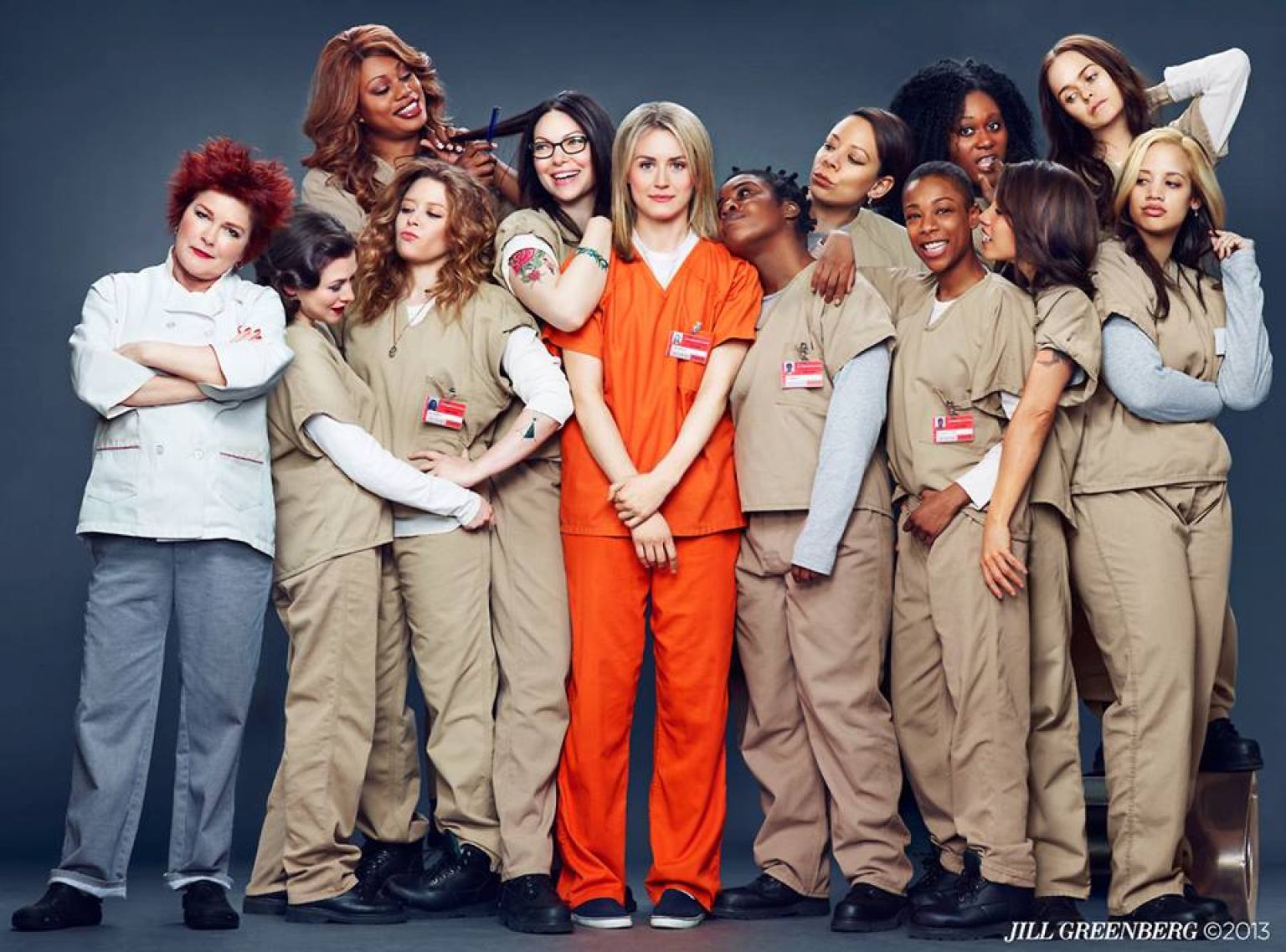
Orange is the New Black. At some stage I will post at greater length on this beautiful, compelling, and addictive show. I’m currently working on a short essay on Oz for a collection, and I think an exploration of the similarities and differences between these two prison dramas would be useful. Mostly the differences: Orange is a much gentler, more soulful show, more concerned with the individual stories of the many and varied women in the prison, and far less concerned (but by no means unconcerned) with the negotiations of power in a closed environment. As much as I love prestige television, it bothers me that most of the shows I watch comprise something of a boys’ club. Orange represents a significant step toward redressing that imbalance. There’s still a long way to go … but the success of this amazing series is heartening.

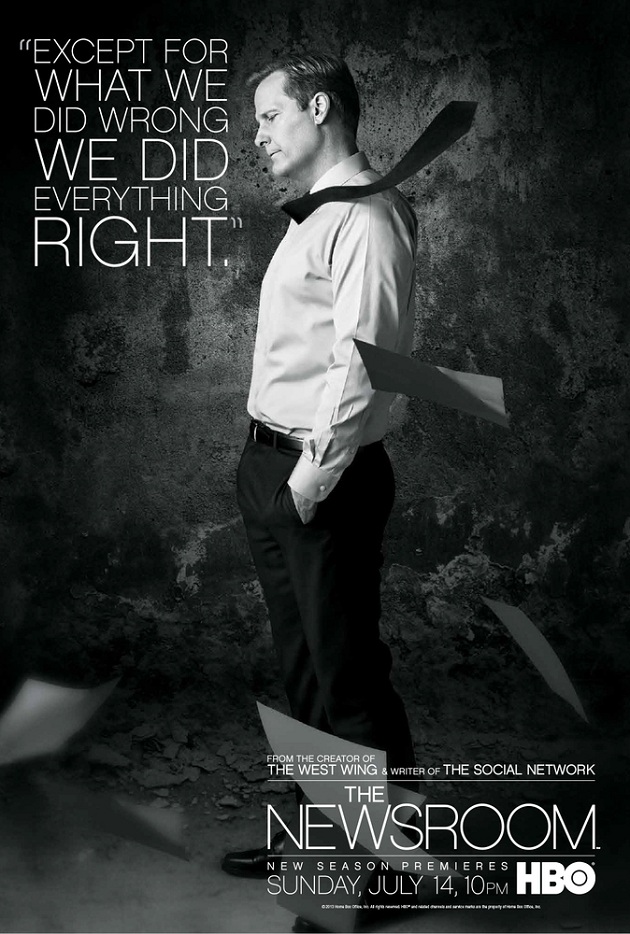
the-newsroom-season-2-willThe Newsroom. Speaking of boys’ clubs … Last summer I posted on the first season of Aaron Sorkin’s newest drama, echoing the complaints and criticisms the show very much deserved. It was pedantic, preachy, sententious; the female characters were caricatures; like The West Wing, The Newsroom was liberal wish fulfillment—unlike The West Wing, it was entirely lacking in nuance. This season? Well, it’s still far from perfect, but it’s obvious that Sorkin has heard his critics. It has (mercifully) abandoned its civilizing mission, and instead is actually giving us some tightly written drama. Some of it feels contrived, but it’s a damn sight better than what came before, and Sorkin is giving the women on the show something to do besides being foils for the men.

Jonathan Franzen, Farther Away. Franzen is, in my opinion, a brilliant novelist—but whenever I read his essays, I have to wonder if perhaps that is where his true talent lies. He has wonderfully lucid prose and a very engaging conversational style. Farther Away is a collection of occasional essays, reviews, and articles, many of which have to do with Franzen’s songbird obsession: to call him an avid birdwatcher is to understate the case egregiously, and it’s a testament to his writing that a hobby I find otherwise utterly uninteresting and pointless he makes fascinating. But the true soul of this book lies in his series of essays dealing with his friendship with David Foster Wallace, and coming to grips with his suicide.

David Rakoff, Fraud. I came late to the David Rakoff bandwagon—too late to properly appreciate him when he was still alive. He died a year ago, and I only really became aware of his work when I listened to a The American Life dedicated to his memory. I recognized his voice from previous episodes of This American Life, but had not been aware of him as an accomplished essayist. I read his other two collections Don’t Get Too Comfortable and Half Empty in short order after that, but resisted reading Fraud—which was his first—because I enjoyed the others so much, I wanted to save it. But I finally broke down early this summer. Rakoff’s writing is impossibly, enviably eloquent, his humour wonderfully cynical and caustic, and his observations laser-like in the way they dissect his topics. He is sort of like David Sedaris for adults.

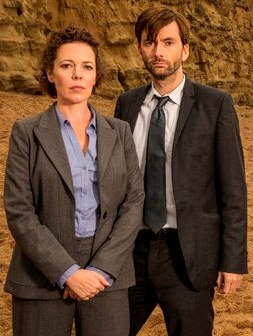
tv-broadchurch-david-tennant-olivia-colman_1Broadchurch. What a wonderful surprise this understated British mini-series has been. The story of the murder of an eleven-year-old boy in a sleepy seaside tourist town, Broadchurch does what the British have been doing brilliantly since Dame Agatha first put pen to paper. The real drama is less about the murder itself than how the delicate skein of lies and secrets cobwebbing everyone’s everyday lives comes undone. As Hercule Poirot says in The Murder of Roger Ackroyd, everyone has secrets. Broadchurch follows the classic murder-mystery playbook so subtly and deftly that when something shocking happens, the impact feels greater by a magnitude. David Tennant is wonderful as the savant-like arsehole with secrets of his own, brought in to head up the investigation; but the real triumph is Olivia Colman, who plays his long-suffering partner and subordinate, who had expected the promotion that Tennant swooped in and received in her stead. It is also a delight to see David Bradley’s late-career renaissance. You might remember him from such roles as Argus Filch in the Harry Potter films, but he also had a wonderfully crusty turn as Walder Frey on Game of Thrones. And he shows up as a conspiracy crank in Simon Pegg’s latest. Speaking of …

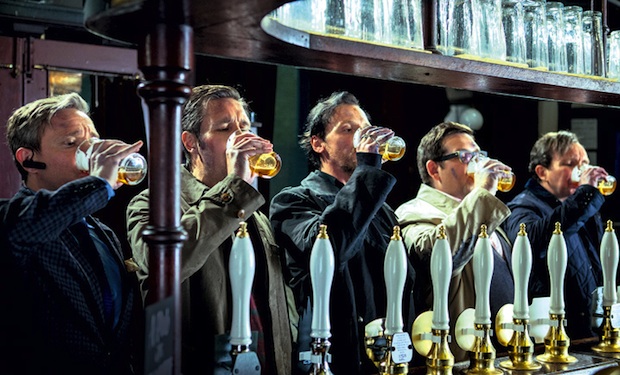
the-worlds-end-pub632The World’s End. I haven’t seen many movies this summer, mainly because this summer has been a veritable wasteland for film. Which was why it was lovely to go see the third film of the so-called Cornetto Trilogy. The World’s End is better than Hot Fuzz and not as good as Shaun of the Dead, but it is a highly entertaining film for anyone who (1) has a fondness for British pubs and ale, (2) came of age in the late 80s and/or early 90s, and (3) likes Simon Pegg’s particular brand of genre-based parodic comedy. Well, I scored the trifecta there. Simon Pegg’s character Gary King wheedles and cajoles his college buddies to return to their old town and recreate a failed epic pub crawl—twelve pubs culminating in “The World’s End,” the final stop they never made it to the first go-around. Except that early on they discover that the town has been taken over by robots impersonating the townsfolk in anticipation of an alien invasion. It’s basically The Stepford Wives meets Invasion of the Body Snatchers, except British and increasingly, howlingly drunk, all to an awesomely retro soundtrack (The Soupdragons, Pulp, Sisters of Mercy, Blur, The Housemartins? Yes, please).

Ocean_at_the_End_of_the_Lane_US_CoverNeil Gaiman, The Ocean at the End of the Lane. The praise this slim book—really more a novella than novel—received felt excessive. This was the summer, I think, when people suddenly realized who Neil Gaiman was and were elbowing each other to get to the front of the bandwagon … while those of us who read Sandman in high school and have Good Omens in hardcover put on our thick-rimmed glasses and said “Oh, I read him before he was cool.” I did not come across a single review of this novel(la) that wasn’t slavishly complimentary. That kind of unanimity among critics is rare, and usually goes in the other direction (such as last summer’s unjustly snide and sneering reviews of The Casual Vacancy). That being said, I can’t say I disagree: I loved The Ocean at the End of the Lane. Not as much as I loved American Gods or Good Omens, but I was really impressed. Much of Gaiman’s oeuvre is lost on me, because I don’t care for children’s literature; The Graveyard Book, The Wolves in the Walls and Coraline, among others, all of which have received critical acclaim, are not books I have or will be likely to read. That being said, watching the following blurb makes me curious about his newest children’s book, Fortunately, the Milk … Perhaps it would make a nice Christmas gift for my niece and nephew.

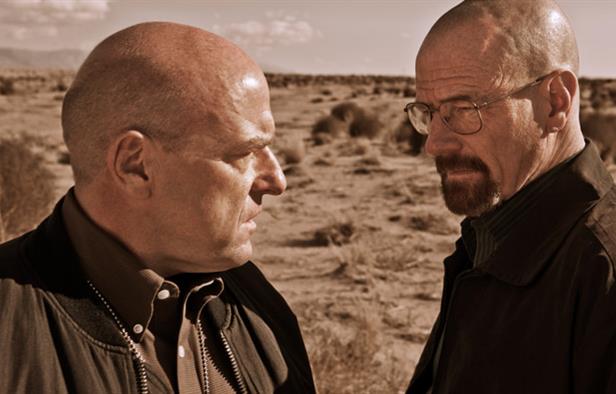
Breaking Bad. It’s the endgame now … the first three episodes of the final stretch have successively ratcheted up the stakes and the tension. I don’t think viewers have been this obsessed about how it all ends since Lost. As I have said, I have a Breaking Bad post I’ve been working on for way too long now, so I’ll reserve further comment for it. breaking-bad-se

So … there’s my roundup. Stay tuned for upcoming posts about Breaking Bad and the law of diminishing returns in American politics, as well as updates from my classes as they happen. Happy New Year, everyone!

Leave a comment

Filed under roundup, what I'm reading, what I'm watching