Fair warning: the following post includes mild spoilers.
If you haven’t yet read anything by Michael Crummey, you need to correct that ASAP. Not because his books are capital-G, capital-L Great Literature (though they are), but because in not reading his work you are denying yourself a great pleasure. I’d rank him as one of the best prose stylists currently writing, but never does his talented wordsmithing distract from his stable of vibrant, humorous, tragic characters or his superb storytelling. Reading a Michael Crummey novel is a balancing act between wanting to read slowly to savor the prose and race ahead to see what happens next.
And because you can’t swing a dead cat in St. John’s without hitting a great writer, I can also personally attest to the fact that he is one of the nicest people you could ever meet (he didn’t even get upset with me for hitting him with a dead cat).
Sweetland is his fourth novel, and like the three previous, it is about Newfoundland’s fraught relationship with its history. In River Thieves (2001) he tells the story of the extinction of the Beothuk as seen from the perspective of British naval officer; in The Wreckage (2005), he depicts a romance between a Catholic young man and a Protestant girl, and the intrusion of the Second World War into Newfoundland in the form of the recruitment of its young men and the presence of American military bases. Both novels are solid pieces of storytelling, beautifully written; but it was his third novel Galore (2009) that truly blew me away. Set in the fictional outport of Paradise Deep, it is a multi-generational narrative (I hesitate to use the word “epic,” though it comes close to being appropriate in this case) that tells the story of a community and their struggles: with each other, with their own selves, but especially with this hostile geography to which they have been brought by hope, misfortune, or happenstance. Galore is a magical realist novel whose most obvious influence (or at least precursor) is One Hundred Years of Solitude. Like Gabriel Garcia Marquez’s landmark novel, Galore is about a small village beyond the fringes of civilization, in which anything can happen and indeed often does. Crummey employs a combination of harsh realism to describe the hardships endured by the community, and a host of legends and folklore from Newfoundland’s past; the result is a narrative that pivots between a painfully tactile sense of reality and outsized events and circumstances.
Sweetland, by contrast, is set in the present day in the midst of what has become the most recent wave of Resettlement. If you wonder why that word deserves a capital R, you need to know that in the aftermath of Newfoundland joining Confederation in 1949, premier Joey Smallwood embarked on a project of modernization. He had been able to sway the province’s opinion to his side on the Confederation issue by making lavish promises to rural Newfoundland about the financial benefits that would accrue by joining Canada. Part of fulfilling those promises entailed resettling huge swaths of outport populations to more central locations, where they would have access to both the promised financial benefits and such infrastructure as roads and electricity, health care, and education. Huge amounts of money were spent in payouts to those being relocated, and in literally uprooting entire villages.
One of the many bewildering images from Resettlement: a house being towed across the water to its new home.
Resettlement remains a painful wound in Newfoundland’s modern history, as it was carried out more or less by fiat and destroyed countless communities with, in many cases, hundreds of years of history.
Today, there is a similar move (this time termed “Relocation,” presumably to avoid the painful connotations of “Resettlement”) as Newfoundland’s economy, largely buoyed by oil revenues, booms; outports, many whose only connection to the rest of the province is by ferry, find their populations shrinking and aging as the young move to St. John’s or farther afield to Alberta. The government is again offering money to those wishing to relocate—and in the process leaving behind villages that will no longer need ferry service or electricity. But with Smallwood’s high-handedness and the resentment it incurred (and still incurs) ever in mind, the deal now is that Relocation can only happen if a community votes unanimously for it.
Which brings us to Sweetland, which is about a fictional island outport called Sweetland and the argument about Relocation. The village is mostly on board, but for one or two holdouts—among whom is Moses Sweetland, a stubborn old bachelor who refuses to sign on even as his few allies fall away and leave him standing alone. He resists the blandishments of his neighbours, which eventually come to comprise threatening notes, vandalism, and a few gruesome messages in the form of mutilated rabbits.
When a certain tragedy befalls the village, however, particularly affecting Moses, he finally agrees to sign the papers. Perhaps predictably, he does not leave with the rest but effectively fakes his own death by setting his boat adrift and hiding until the village has emptied.
The novel’s first half—which is all about Moses’ relationships with his friends and neighbours, and in particular his autistic nephew Jesse—is a wonderfully nuanced and textured depiction of Moses’ life in his village, and dramatizes the political context to great effect. But it is the second half of the novel, when Moses is left alone on the island without power or any means of contacting the outside world, that Crummey’s narrative reaches virtuosic levels. For one thing, it leaves the political argument behind and becomes the story of a man very slowly losing his mind as solitude and winter implacably close in on him. But it is also where the political argument of the first half opens up into symbolic and indeed allegorical dimensions. Left alone with only the ghosts of the past—and his neighbour’s mutt—for company, there is nothing to mediate between the two Sweetlands, the man and the outport with which he shares a name.
The more I reflect on Sweetland, the more I find it functions as a companion piece to Galore. Where the former is a sweeping story in the mold of One Hundred Years of Solitude, Sweetland is a minutely observed story about a single person in a narrow corridor of time. And yet what they have in common is the vivid sense of the mystery of place, the invidious way in which geography conflates with history in ways that are by turns comforting and pernicious. Galore, by its nature as magical realism, romanticizes a certain dimension of Newfoundland history, but it most emphatically does not sentimentalize it. It is romantic in the true sense of the word, in that it depicts a space outside the settled, domesticated world. If not literal wilderness, Paradise Deep is nevertheless as close as one can be to it while still being inhabited: a marginal space that, in the tradition of romance, is also a mythic space home to the embellishments of reality that extreme geographies spawn.
The first half of Sweetland is neither sentimental nor romantic; the romance of Galore does burble up in the second half however, but only in suggestive, fleeting ways, and only at the fringes of Moses’ decaying sanity. His explicit connection to the village, made first by their common nomenclature, develops allegorically as he erodes along with its structures, as he cannibalizes the village for supplies. Seeking toilet paper (which he kicks himself for not having stockpiled), he plunders his neighbour’s collection of Harlequin romances. Among the pulp novels are a handful of “literary” texts the woman’s daughter had attempted to get her to read, one of which has the bookmark at the halfway point. It is a novel about Newfoundland, he sees, and as a means of passing the time decides that he will finish what she had started:
Half an hour later he was ready to throw the bloody thing in the stove. Three afternoons in a row he sat in the day’s last light with the book, feeling like a man sentenced to dragging beach stones up the face of the Mackerel cliffs. He looked at the cover each time he quit reading, flipped it to inspect the back. A quote from a Toronto paper about “authentic Newfoundland.” Whoever wrote the book didn’t know his arse from a dory, Sweetland figured, and had never caught or cleaned a fish in his life. “Jesus fuck,” he whispered.
This comic reaction to a novel about “authentic” Newfoundland (my money is on The Bird Artist) speaks to one of Sweetland’s subtle themes, which is the fallacy of authenticity. Though Sweetland is adamant in his refusal to abandon his home, even in the face of overwhelming opposition and threats, he cannot articulate his reasoning to himself. He offers no speeches, articulated either internally or externally, about history or community roots, about the depredation of traditional Newfoundland, about the need to hold fast to one’s principles in the face of nefarious societal change. He is no sentimentalist, and in the final stages of his life bears little in the way of affection for any of his neighbours (with the exceptions of Jesse and his longtime friend Duke).
So why does he reject Relocation for so long, and after capitulating, go to the extreme of faking his own death in order to stay behind? Crummey leaves that questions unanswered, and it is in the very lack of articulation of Sweetland’s motives that the novel ultimately rests. As mentioned above, it is in part the mystery of history and geography: Sweetland’s home as both a lived reality but also an imaginary space, which functions as a representation of Newfoundland more broadly. The fallacy of authenticity on display in the nameless novel he reads finds a somewhat more symbolic articulation in the final few pages of the novel. Not long after winter starts to set in, Sweetland takes refuge from a snowstorm in a cabin once owned by the thuggish Priddle brothers. In a delirium of near-hypothermia (as well as the alcohol and stale pot he finds stashed there), he annotates a map of Newfoundland tacked to one of the walls. He takes the map with him when he escapes back to the village, but forgets about it until the final pages, when he looks at what he has written:
Noticed the map there, spread across the table’s surface, the paper kinked along the rough creases where it had been folded in his knapsack. Stay Home Year scrawled across the top. Sweetland shook his head at that now, at the long list of fanciful harbours and coves and islands and straits he’d pencilled around the coast. Along the entire length of Newfoundland’s south coast were the words Here Be Monsters with a shaky emoticon happy face drawn beside it. His handwriting, though he couldn’t for the life of him remember settling them there.
In one way, Sweetland is a novel about the impossibility of writing a novel about Newfoundland—or rather, the impossibility of reaching an authentic understanding of what I’m calling the conflation of history and geography and its effects, of the representation of place as being at once a set of lived realities and necessarily imaginary. Moses’ literally ecstatic over-writing of the map, especially with the warning Here Be Monsters, evokes the medieval cartographic imagination and the long tradition of romance in which the spaces beyond the known are invariably filled with the stuff of legend. It also however evokes the geographies of Galore, which articulate the truths of story and myth and the unreality of history.
In the end, Moses Sweetland’s very name provides one of the novel’s central ironies: if his surname explicitly speaks to his apparently absolute connection to place, his first name is a cruel reminder that there is no Promised Land, and that the exodus his people undertake is a movement away from home. If there is an epiphany for Sweetland at all, it is at best an ambivalent one, which occurs as he nearly drowns trying to escape his self-imposed solitude:
This was the sway of things, Sweetland knew. There was fighting the sway of things or improvising some fashion of riding it out. And then there was the sway of things beyond fighting and improvisation. It was almost impossible to know the difference between one and the other.
I didn’t post that much this summer … I had all the best intentions, as exhibited in my folder of unfinished blog posts, some of which barely made it past a sentence or two. All of which speaks to the fact that I had a lot on my mind these past few months, but little in the way of closing. Always be closing! Dammit, now Alec Baldwin will deny me coffee …
I hope that will change in the coming months. I am now eleven days into my very first sabbatical, and while my favourite new pastime has been walking up and down my department hallways and making faces at my colleagues as they teach, I do mean for this to be a productive year. And given that being prolific on this blog tends to reflect being productive in other areas, I mean to be posting a lot more here.
I haven’t done a “What I’m Reading” post in a while … which, again, isn’t for a lack of fragmentary paragraphs in my work-in-progress folder. I read a lot this summer, though much of it was re-reading, as I was doing a directed reading course with one of our doctoral students. And there were some unfortunate reading choices (most notably, the Guillermo del Toro collaboration with Chuck Hogan on The Strain), but I also read some pretty extraordinary books. I’ll give you the highlights here.
Rebecca Solnit, The Faraway Nearby and Men Explain Things to Me
This was the summer when I discovered the writing of Rebecca Solnit and fell deeply in love with her gorgeous prose and genre-defying vaguely-autobiographical essays. I had read her without being aware of her for some time, as she is prolific and frequently turned up on online journals and magazines. But it was her now-famous (or notorious, depending on your perspective) essay “Men Explain Things to Me” that stuck the landing for me and made me sit up and take notice whenever I saw her name on a byline.
I was in San Francisco for a few days in June and made the requisite pilgrimage to City Lights bookstore. And because I cannot enter a bookstore without giving them money, but also not wanting to be a cliché and buy something by the Beats, I picked up The Faraway Nearby. Next door to City Lights is the bar Vesuvio, made famous by a list of clientele in the 50s and 60s that reads like a who’s-who of San Francisco arts and letters: Jack Kerouac, Alan Ginsberg, Lawrence Ferlinghetti, Neal Cassady, among others … and the pictures crowding the walls show everyone from Dylan Thomas to Bob Dylan dropping in for a drink or three (or, presumably in Dylan Thomas’ case, a dozen). Because I’d been tramping all over the city, I had a pint there and started reading Solnit—which turned out to be serendipitous, as she lives in San Francisco. (Lest I felt like too much of a cliché, reading in a famous literary bar, I was out-cliched by a magnitude by a fellow in hipster glasses and big mutton-chop sideburns sitting in an alcove reading On the Road).
The view from my seat in Vesuvio.
Suffice to say, The Faraway Nearby is one of the most gorgeous collections of personal essays I’ve ever read, moving effortlessly between Solnit’s fraught relationship with her mother and her mother’s descent into dementia, through a dizzying series of meditations on winter, Iceland, adventuring, rafting, and the proper methods of preserving several bushels of apricots she finds herself with. The essays are deeply erudite without being esoteric, personal without being mawkish, and written in prose that I can only envy with the white-hot intensity of a thousand stars.
I then read Men Explain Things to Me, a slim volume of essays on women and violence prefaced by the original essay that inadvertently gave rise to the concept of “mansplaining.” Solnit has expressed ambivalence about having become associated with the term, not because it is not a real thing (and as someone who has occasionally been guilty of it, there was a lot of internal cringing when I first read the essay), but because it is reductive. The essays grouped in this short but incredibly powerful book remind us—forecfully—of the original essay’s main thesis, which is that the phenomenon of men condescendingly explaining things to women (even, or especially, when they’re ignorant on the topic) is reflective of the gendered structures of power in the world today and systemic violence that proceeds from it.
Michael Waldman, The Second Amendment: A Biography
I won’t say much about this book, as I’m slowly working on a blog post talking about it in greater detail. I will say this: it is a bracing and very concise read that manages to make the endless debates in and around the Continental Congresses, and all of the court rulings on the Second Amendment since, not merely not tedious but gripping. It is a persuasive and balanced discussion of the Second Amendment’s origins, interpretations, and evolution, but in some ways, the focus of the book isn’t really the right to bear arms at all: rather, it’s a polemic against constitutional originalism, the judicial philosophy holding that the Constitution must be interpreted in terms of what were the Framers’ original intentions. As it turns out, the Second Amendment (for a variety of reasons) is the perfect departure point for this argument.
As I said, I’ll have more to say about this book at a later time.
Terry Pratchett, Equal Rites
As I said in my post of July 5th, I’ve been rationing the remaining Discworld novels against the unthinkable day when Sir Terry will not be around to write any more. Equal Rites has been sitting on my shelf for a long time, both because of my rationing but also because I don’t care as much for the earlier novels. Equal Rites was the third, after The Colour of Magic and The Light Fantastic; what’s slightly off-putting about the earliest novels (when you have, like me, initially entered Discworld with the more recent novels) is that everything still feels a little formless—as if the landmarks and characters still await greater definition, like rudely shaped clay. Granny Weatherwax makes her first appearance here, and while she is very identifiably Granny, she is also … not. Or not quite. Nevertheless, the novel is hilariously funny: a baby girl is accidentally chosen by a dying wizard to take his place, precipitating a protracted argument between Granny and the wizards of Unseen University about what defines magic, about what is specific to men and women—or wizards and witches—respectively, and how those definitions are arbitrary.
What I loved about this book, coming at it as I am from the far end of Discworld journeying, is how you can see Sir Terry’s shift from the overt parody of his first two novels (in which he’s just basically taking the piss of fantasy as a genre) to a more thoughtful use of fantasy and its conventions to offer a critique of “real world” social and societal mores—which in the end is what tends to define the Discworld novels overall.
Lev Grossman, The Magician’s Land
Speaking of parodic fantasy that isn’t really parody at all: if you haven’t yet read the first two installments of Grossman’s trilogy about a school of magic and a Narnia-like alternative world, you really must do so. Like, now. The Magician’s Land completes the story begun in The Magicians and carried on in The Magician King, the story of narcissistic and self-absorbed Quentin Coldwater, who is inducted into a secret school of magic called Brakebills at the age of seventeen. As critics have pointed out, it’s like Hogwarts for grownups.
Again, there will be a more in-depth blog post in the future on this book, and the trilogy as a whole. But for now, let me just say: this was about as perfect a conclusion to a fantasy series as has been written.
N.K. Jemisin, The Killing Moon
No, I didn’t read this because it shares a title with an Echo and the Bunnymen song. My broad research project of the moment is all about humanism and fantasy; one of the problems I have right now is one of representation. That is to say: my current list of authors on whom to focus is almost entirely male, and so I have been on the hunt for fantasy written by women that fits the criteria of the novels I want to look at. N.K. Jemisin was a repeated recommendation, and so I started on her Dreamblood trilogy, set in an alternative world modeled vaguely on Ancient Egypt. Reading fantasy that moves outside the medieval European model is wonderful in and of itself, but Jemisin is a very talented writer who renders her world with wonderful tactility and establishes its mythology with an enviable economy of storytelling. The overarching conceit is that in the city-state of Gujaareh, an elite priesthood exist to harvest “dreamblood,” the magic that exists in sleeping minds. Dreamblood is used for healing and other positive ends, but its reaping by the “Gatherers” kills … and so the Gatherers move at night across the rooftops to harvest it from those who have been judged corrupt.
For several reasons, The Killing Moon is not a novel I will be able to use to argue my broader thesis, but the second book of the trilogy (The Shadowed Sun) sits in the pile of my eagerly anticipated reading.
Radley Balko, Rise of the Warrior Cop
About three weeks ago I wrote a post about the crisis in Ferguson, Missouri, the rise of police militarization, and The Wire. Largely due to the fact that a friend of mine posted it to Reddit, it received the most hits this blog has ever received, by a magnitude (my average post gets between sixty and seventy hits when it goes up; the most I’d ever had was just shy of three hundred, back when I posted on the whole David Gilmore and guy-guy Lit fiasco; the post on The Wire and Ferguson received twelve hundred, and a comment from David Simon himself. That’s not actually relevant, I just like reminding people of it). While reading the various news items and opinion pieces that ultimately informed the post, I kept hearing about Radley Balko’s book, conveniently just out in trade paperback. So I ordered it.
The book is … terrifying. It exposes in excruciating detail the violence done to the Fourth Amendment—for the rise of SWAT teams in towns with populations as low as fifteen thousand or less has not, ultimately, been about responding to well-armed criminals, but the use of the militarized groups to kick in doors for drug raids. And as the book chronicles, the sheer number of botched raids in which ridiculously armed and armored cops burst into the wrong house, terrorizing the inhabitants and destroying property (and, distressingly, shooting an awful lot of dogs in the process) is bewildering—especially considering how rarely the wronged citizens receive anything resembling remuneration.
Just today there was an article inThe Chronicle of Higher Education about the spread of military equipment and munitions to campus police at various universities in the U.S. Campus. Police. Armed with grenade launchers (seriously) and equipped with armoured vehicles. Even before reading that, I’d concluded that Balko’s book is required reading for the contemporary moment.
So as not to end on such a down note, here is “The Killing Moon” by Echo and the Bunnymen—which on reflection, is also kind of a downer, but would weirdly work as a not bad theme song for Jemisin’s novel.
I did the ALS ice bucket challenge this afternoon, having been challenged by the lovely but cruel Nikki Stafford. And, while this sort of thing isn’t really in this blog’s bailiwick, having a bucket of ice water poured over my head on a cold and rainy Newfoundland afternoon makes me inclined to think I have a few words worth saying about the whole thing.
There has been, predictably, an awful lot of hate and contrarianism directed at the ice bucket challenge, which of course began the moment it became obvious this thing was a THING. And I must confess I understand the initial instinct: suddenly, one’s Facebook feed is full of videos of people dumping ice water over their heads, all for a disease that doesn’t tend to get much mention in mainstream discourse. I will confess, I knew the acronym ALS and I knew of Lou Gehrig’s Disease, but it was only recently I realized they were one and the same.
I’m also generally unimpressed with slacktivism and its close cousin hashtag activism. But the ALS challenge is, in my opinion, where social media gets this process right. Here’s why:
Whatever the naysayers might say, it has actually succeeded in raising a significant amount of money. I mean, a LOT. I won’t quote numbers because they keep changing, but it is evident that we’re now in the tens of millions—not a paltry sum for any disease research.
Yes, it’s now trendy. And there are, undoubtedly, huge numbers of people who are putting themselves on Facebook and YouTube because it’s the cool thing to do, all their friends are doing it, and it makes you look altruistic. And there are probably a lot of people posting who aren’t actually donating. Guess what? The charities don’t care. If charities limited their donations to people who actually cared, as opposed to seeking a tax deduction or wanting to look good in their social circles, they’d probably have to close up shop.
As much as the whole idea of raising “awareness” on issues has become risible—the essence, really, of slacktivism—the ice bucket challenge has been quite effective in actually doing just that, both because of its proliferation throughout social media and the way in which it makes participants have some skin in the game (I wasn’t about to dump ice water over my head without doing some reading first). So: both an awful lot of money, and an awful lot of people more informed about a terrible disease. Not so bad, at the end of the day.
As for the meme about wasting water while children in Africa go thirsty: seriously, grow up. When you can figure out a way for me to cheaply courier my ice water to those children, let me know; otherwise, recognize that different geographies mean different realities. And that we can be charitable to more than one cause.
Ditto for those irked that the ALS challenge apparently distracts from Gaza, Ferguson, Ukraine, or any of the other horror stories at play in the world. Can we allow that we can be aware of all these other issues AND still want to dump ice water on ourselves? This isn’t a zero sum game.
One of the things I’ve enjoyed about the ice bucket challenge is that it has spurred a certain amount of creativity. I leave you with my three favourite videos, two of whom are celebrities, and one who really deserves to be: Neil Gaiman, Patrick Stewart, and my good friend Andrew Patterson.
There is a moment in the final episode of season one of The Wire, when the police are about to raid drug kingpin Avon Barksdale’s headquarters, a low-rent strip club. A SWAT team in full military regalia arrays itself on the street, to the contempt of both the criminals inside, and the cops outside. “Look at these Delta-Force motherfuckers, man,” scoffs Barksdale as he watches the SWAT officers on his security cameras as they scurry around outside with their assault rifles. “This isn’t as much fun as I thought it would be,” gripes Jimmy McNulty as he watches from the car, to which Lieutenant Daniels responds, “The SWAT guys do love to break out their toys, don’t they?” “They think they’ve got Tony Montana up there?” McNulty asks, and after a moment he and Daniels leave the car and walk up to the door over the protests of the SWAT members, enter the building, and arrest Barksdale (who knows perfectly well what’s coming) without any fuss.
None of which is to suggest that highly-trained and heavily-armed police aren’t sometimes a necessary evil; but the mockery on display in this brief scene is remarkable for being more or less sui generis in film and television today. Not all cop shows celebrate the paramilitary dimension of law enforcement, but it is practically unheard-of for it to be openly derided. And more and more, this militarization of police forces has become a prominent feature in the depiction of police, whether in the all-too-frequent recourse to assault weapons in shows like Hawaii Five-O, or as the focus of shows like Flashpoint. Since 9/11, the line between films and series about counter-terrorism, and police procedurals has grown quite blurry.
Sadly, this does seem to be one of those cases in which popular culture, as opposed to creating a delusional fantasy about the nature of police forces, is actually just reflecting the current reality, at least in part. On one hand, the diabolical, conspiratorial villains that require Steve McGarrett and company to suit up every week in Maui (who knew Hawaii was such a hotbed of organized paramilitary crime?) are in fact delusional fantasies; but the reflexive recourse by American police to military weaponry is all too real. The New York Times recently posted an interactive map showing counties to which the Pentagon has sold surplus military firearms, armoured vehicles, grenade launchers, helicopters, assault rifles, and other gear. It is truly disturbing.
Alyssa Rosenberg has a very astute blog post about the gradual transformation in popular culture of the depiction of the police and policing. In particular, she considers that utopian gem of small-town nostalgia, The Andy Griffith Show, in which Griffith played Andy Taylor, the sage sheriff of the idyllic small town Mayberry. She writes:
Even when it began, executives acknowledged that The Andy Griffith Show was a nostalgic portrait of small-town life. But it expressed an ideal that has leached out of American pop culture and public policy, to dangerous effect: that the police were part of the communities that they served and shared their fellow citizens’ interests. They were of their towns and cities, not at war with them.
In case it’s not painfully obvious from this quotation, the impetus for Rosenberg’s post is the current dire state of affairs in Ferguson, Missouri, which has seen the county police there respond to the civil unrest following the shooting of Michael Brown with what can only be called disproportionate force. What has been most striking—and disturbing—about the images proliferating across the media is not just police militancy, but police militarization: assault rifles, armoured vehicles, and, bizarrely, camouflage fatigues. As comedian John Oliver ironically noted, military camouflage is not exactly functional in an urban space (if they want to blend in with their environment, he snarks, “they should dress like a dollar store”).
The ongoing events in Ferguson are deeply depressing, not least because they are bringing so many issues plaguing the U.S. into stark relief, issues that flare up into the public eye from time to time but tend to disappear unless one makes a point of paying attention: racial inequality, systemic racism, police brutality and an increasing lack of accountability for it, the rampant militarization of police departments across the country, and the general obliviousness of white America to all of the foregoing. If Ferguson seems at times bewildering, I suspect it is (in part) because all of these ugly factors are on full display.
I am hardly an expert on any of this. What professional interest I have in writing this post is the same as Alyssa Rosenberg’s, which is to say how popular culture reflects and inflects what we’re seeing on the news. Her point about Andy Griffith and Mayberry admittedly deals with a utopian image of America that likely never actually existed for anyone but oblivious prepubescent white boys in rural towns, but her central observation is spot on: that what we’re missing in the present day is the conception of police as being of their communities as opposed to against them.
In a trio of blogposts about Ferguson, David Simon quotes Orson Welles’ terribly apposite adage that police work is only easy in a police state; I’m tempted to say that “police state” is in fact a contradiction in terms, as what it really refers to is a state in which martial law is the status quo, and that is the antithesis of policing. And I cite David Simon here, because I don’t think there has been a more eloquent and trenchant argument for this principle than The Wire. In what is perhaps my favourite moment from the show, police Major Bunny Colvin (Robert Wisdom) dresses down Sergeant Ellis Carver (Seth Gilliam) for not understanding this basic principle of policing. He tells Carver that he’s a good man and a decent administrator, “But from where I’m sitting, you ain’t shit when it comes to policing.” Why? Because Carver is all about making petty arrests, cracking heads on the corners, and keeping his numbers up … but he knows nothing of the neighbourhoods, about who is running things, or what is generally going on. He has no informants and no allies. “Don’t take it personal,” says Colvin. “It’s not just you, it’s all our young police … the whole generation.”
The speech that follows—which happens toward the end of season three, just past the midpoint of the series as a whole—is as close to an articulation of The Wire’s main thesis as we get. Click the link above and watch the clip (embedding, unfortunately, is disabled on it), but it is worth writing it out:
This drug thing, this ain’t police work. No. It ain’t. I mean, I can send any fool with a badge and a gun up on them corners to jack a crew and grab vials … but policing … I mean, you call something a war, and pretty soon everyone’s gonna be running around acting like warriors. They’re gonna be running around on a damn crusade, storming corners, slapping on cuffs, racking up body counts. And when you’re at war, you need a fucking enemy! And pretty soon, damn near everybody on every corner’s your fucking enemy. And soon, the neighbourhood you’re supposed to be policing, that’s just occupied territory …
Soldiering and policing, they ain’t the same thing. And before we went and took a wrong turn and started up with these war games, the cop walked a beat. And he learned that post. And if there were things that happened up on that post, be they a rape, a robbery, a shooting—he had people out there helping him, feeding him information. But every time I come to you, my DEU sergeant, for information, for finding out what’s going on out in those streets? All that came back was some bullshit. You had your stats, you had your arrests, you had your seizures. But don’t none of that amount to shit when you’re talking about protecting a neighbourhood, now.
The Wire is, specifically, about the War on Drugs and its lamentable failures, but it is also a show about the dissolution of community bonds that begins to negate the very concept of community. What’s happening in Ferguson right now has little to do specifically with the War on Drugs, but everything to do with the way in which that transformation of the relationship between police and neighbourhoods has made the current unrest not so much possible as inevitable.
I’ve been watching 24: Live Another Day, a so-called “event series” of 24 that brings back everyone’s favourite gravelly-voiced secret agent, Jack Bauer. I’ve watched 24 since its third season (and have since watched the first two on DVD), and it is difficult to pinpoint when my interest morphed from “hey, exciting TV show” to something more academic. Certainly, it was the academic interest that saw me through some of its terrible later seasons, for even when the show got repetitive and (oddly) lugubrious, it always functioned as a fascinating window into a terrified zeitgeist that imagined terrorist threats in increasingly absurd and outlandish ways.
“So, what does it take to be an uber-agent? Training? Tactical brilliance? Ruthlessness?” “No, it’s mostly just shouting.”
Watching the newest season (really a half-season, though I suppose they can’t very well rebrand it as 12), I am struck anew by the way the show rests on the foundation of a sort of symbolic arms race, in which the terrorists possess increasingly sophisticated technology and apparently unlimited funds, which they employ in increasingly, ludicrously, complex and intricate plots against America. Arrayed against such threats is the CTU (Counter Terrorist Unit) and, in Live Another Day, the CIA, which possess something resembling omniscient surveillance capabilities and the technological savvy to instantly hack almost any electronic system for information and/or more surveillance. This panoptical apparatus and its operators’ preternatural technological ability (as embodied in the savant-like Chloe O’Brian) is tacitly justified by the terroristdu jour’s own sophistication and resources. A typical 24 plot would never be concerned with a bunch of foreign nationals attending flight school in, say, Florida; it would instead feature terrorist hackers taking over air traffic control communications, or, in the case of the current season, taking control of American drones.
Michelle Fairley, aka Catelyn Stark, as the most recent alpha-terrorist on 24. See? I told them there would be serious blowback from the Red Wedding.
All of the apparatus of an electronic surveillance state is present but unremarked: 24 would be unthinkable without it. And yet, it is invariably vulnerable. In every single season of 24, CTU’s omniscient technology proves insufficient to deter whatever attack is afoot. It falls instead to the indomitable Jack Bauer, whose instincts and intuition almost always trump the conclusions of legions of intelligence analysts.
24 has such an odd paradox at its center, one that is something Fredric Jameson would call a symbolic resolution, in fiction, of an intractable real-world contradiction. On one hand you have the implicit faith in the panoptical surveillance state—and not just faith, but the tacit understanding that such apparatus is necessary and indeed a given, something so universally understood as reality that there is no question of it being, well, questioned. And let’s be clear on what this means: though all we ever see of it are the dim offices of a subterranean CTU station, it represents a vast and omnipresent governmental reach with apparent impunity to spy on both citizens and foreigners. On the other hand, I don’t believe there has been a single season of 24 in which Jack Bauer hasn’t gone rogue in some capacity, because working within the confines of the “law” (however egregiously attenuated it might be) straitjackets Jack and prevents him from doing what has to be done.
Hence, 24 has always been equally invested in pervasive and invasive government and the need to escape it. It’s really no surprise that 24 is a favourite of neoconservatives, as it articulates that contradiction at the heart of their creed: the desire for American omnipotence co-existing with an ideological antipathy to “big government.”
And while the series’ main ongoing controversy—and its most egregious and troubling element—has been the use of torture as a legitimate means of extracting actionable intelligence, more subtly pernicious is the depiction of Jack Bauer’s preternatural competence, as well as that of CTU. This is not, of course, anything different from the dozens and hundreds of films and television shows about espionage and clandestine military ops—from James Bond to the Smoking Man to every film about elite commandos ever, the appeal of these stories lies in their illusion of mastery and control and the unerring accuracy of intelligence, intuition, and interpretation.
All of which is, of course, a patent fallacy. I probably wouldn’t be writing about all this if I hadn’t recently read a history of the CIA, Legacy of Ashes (2007), by Tim Weiner. It might as well have been subtitled “A History of Abject Failure,” given that it is a brutal chronicle of the CIA’s chronic ineptitude, from the opening salvos of the Cold War to the clusterfuck that was the catastrophic intelligence failures of Iraq. Much of Weiner’s source material is reams of documents that were declassified in 2004-2005, so the story he tells is not only a new one but decidedly at odds with the way the agency has been depicted in popular culture, and how it depicted itself. Depending on when the CIA has been depicted in film, fiction, or television largely determines whether it is portrayed as malevolent or heroic; but one way or another it has tended to appear as a ruthlessly efficient operation, sometimes riven by internal rivalries and discord, but always a terribly efficacious tool in the service of either good or evil.
The reality of its history as detailed by Weiner is one in which failure, incompetence, and willful institutional blindness are the norm. If the agency has been consistently good at one thing, it is the ability to whitewash those failures, spin them as successes, and burnish its reputation as an omniscient and omnipotent force for American security and freedom.
Weiner starts his book by noting that the CIA was founded for the sole purpose of intelligence aggregation and analysis. Harry Truman basically wanted a small agency whose job would be to present him on a daily basis with a snapshot of what was going on in the world. The agency that developed, however, was very quickly hijacked by men far more interested in covert operations: who instead of keeping tabs on international communism and other threats, saw themselves as freebooters whose job was to actively combat these threats and work to roll them back. As the Cold War took shape and the USSR emerged as the United States’ principal antagonist, their energies went into clandestine skirmishes. They never succeeded in providing the president with what he most desired: a window into Soviet operations and a reliable intelligence that would warn of an imminent nuclear threat.
In fact, the first two hundred pages of Legacy of Ashes reads not so much as a comedy of errors as a tragic farce. It took the CIA over a decade to realize that the Soviets had spies riddling both American and British intelligence. In operation after operation, they trained refugees from behind the Iron Curtain (and in the Korean War, South Korean nationals) in combat and intelligence gathering and dropped them into enemy territory. The failure rate for these operations was one hundred percent, as the enemy knew precisely when and where these drops would take place and often had men there waiting for them. The hapless agents were imprisoned and tortured (if they weren’t summarily shot on sight), and either turned by the KGB or executed. Ten years the CIA bloody-mindedly continued … and that is only a single story from Weiner’s six hundred page litany of incompetence. As he remarks about the early, enthusiastic forays of the fledging agency, the United States was childishly blundering into a world of espionage that Russia had been playing like a chess master for two centuries.
When I watched Homeland for the first time, my initial thought was that here was a series that functioned in part as a corrective to 24—it approached the questions of nation, identity, faith, and loyalty (as well as the business of intelligence-gathering more generally) with a nuance and complexity alien to 24. And yet in the aftermath of reading Weiner’s book, it becomes obvious that even Homeland manages to completely overestimate the CIA’s efficacy and competence.
The figure of the elite soldier or agent backed by a technologically sophisticated agency has become increasingly commonplace in popular culture. James Bond might have blazed the trail, but you see his progeny strewn throughout film and television. I don’t care to speculate on why precisely—that’s a post for another day—but we’ve moved far away from the images of the grunt and the common soldier which dominated war films until the first post-Vietnam movies introducing us to the likes of John Rambo started to focus on the elite, hypercompetent soldier to the exclusion of mere mortals. On one hand, such musclebound commandos as portrayed by Stallone and Schwartzenegger were an obvious overcompensation for America’s symbolic emasculation in Vietnam; but I’m also tempted to say it becomes bound up in the delusions of conspiracy theory that pervaded the 1970s and afterward, so beautifully summed up by Don DeLillo in his novel Libra:
If we are on the outside, we assume a conspiracy is the perfect working of a scheme. Silent nameless men with unadorned hearts. A conspiracy is everything that ordinary life is not. It’s the inside game, cold, sure, undistracted, forever closed off to us. We are the flawed ones, the innocents, trying to make some rough sense of the daily jostle. Conspirators have a logic and a daring beyond our reach. All conspiracies are the same taut story of men who find coherence in some criminal act.
Certainly this figuration of conspiracy is what animates 24—the specter of such “cold, sure, undistracted,” perfect schemes perpetrated by “silent nameless men with unadorned hearts,” which cannot be countered with anything so wishy-washy as legal or democratic means.
That is the fantasy, and yet everything we learn from history teaches us otherwise. I’ve never actually met a real 9/11 Truther (at least none who have declared themselves as such), but my counter-argument would have nothing to do with the ostensible physics of building collapses, and everything to do with the simple question “Do you honestly think that the Bush Administration would be competent enough to pull something like that off?” In the aftermath of 9/11, Elaine Scarry wrote a remarkable essay titled “Citizenship in Emergency” which did a wonderful job of taking down all our assumptions about the “fast response” capabilities of the military and civil defense and arguing that there was only one response to the terrorists’ attack that succeeded: the ad-hoc resistance of the passengers on United 93.
The more I dwell on this topic, the more it bothers me, and the more I come to believe that the fantasy of hypercompetence, while appealing as a popular trope, is also culturally pernicious. It affords the delusion of precision and exactitude in spheres of action that are inherently chaotic and unpredictable. It is why Wayne LaPierre’s mantra “the only thing that can stop a bad guy with a gun is a good guy with a gun” is just so much horseshit. It assumes that the good guy with the gun will unerringly put down the bad guy as opposed to adding to the carnage with shots that go wide of the target. Even highly trained peace officers or soldiers, when put in the crucible of a firefight, can’t shoot with the innate accuracy of a nickelodeon gunslinger; what are we to expect of a well-meaning citizen whose only experience firing his weapon has been on the gun range? When two police officers in Manhattan fire sixteen rounds at a man with a gun and succeed in wounding nine bystanders, the comforting idea that a firefight can be contained sort of goes out the window.
On the other hand, if we all get together and be reasonable about the topic, we can come to the comforting conclusion that the uber-terrorists of 24 are just as much of a fantasy.
There are a precious few of Terry Pratchett’s Discworld novels that I have not yet read, and I am clinging to them covetously, putting off reading them because all too soon there will be no more additions to the Discworld library. Sir Terry is still alive and kicking and churning out novels, but he is suffering from Alzheimer’s disease—that he remains this prolific is nothing short of heroic. As much as we don’t want to acknowledge it, Discworld devotees know that sooner or later there will be no more novels forthcoming.
Raising Steam is the fortieth Discworld novel (the thirty-sixth if you don’t count the young adult novels), and is still currently in hardcover. I had been putting off buying it, waiting for the paperback but also possibly adding it to the small pile of Discworld novels I was resisting reading. But at Slayage I discovered a fellow Discworld devotee, my new friend Dale whose blog I quoted in my previous post. She had just finished Raising Steam and gifted me with her copy, on the condition that I told her what I thought of it when I was done.
Well … here I go. Fair warning: this post is not so much a review of Raising Steam as it is a working-through of thoughts I have had about Pratchett’s writing for some time, which his most recent novel has managed to bring into something resembling sharp relief.
Also fair warning: spoilers.
*
Raising Steam brings the railway to Discworld: it begins as a young engineer named Dick Simnel continues with the experiments with steam that had killed his father, and ends with the new railway connecting the city of Ankh-Morpork—a center of Discworld commerce and culture—with far-flung Uberwald, in the process facilitating a mission of speedy diplomacy that restores the progressive Low King of the dwarfs to his usurped throne … which itself allows for a seismic change to dwarf society.
I’ve subtitled this review “Modernity Comes to Discworld,” but anyone who is more than just a casual reader of Sir Terry’s novels knows that that is more than just a little disingenuous. The Discworld is a fantasy world through and through, and as such displays all of the conventions of fantasy we have come to expect and then some: dwarfs, trolls, goblins, wizards, witches, gods, magic, castles, quests, prophecies, dragons, supernatural plots and conspiracies, and so forth. But in a variety of ways, Pratchett’s novels only present the façade of fantasy. If we define fantasy fiction as a genre that anchors its magical and supernatural elements in an identifiably medieval or at least premodern setting (as George R.R. Martin has said on several occasions, fantasy and historical fiction are “sisters beneath the skin”), Pratchett arguably performs a constant bait-and-switch insofar as that the Discworld and its denizens—or at least those denizens who star in the novels—don’t exactly embody a Tolkienesque sensibility. “Modernity” has been creeping into the Discworld landscape almost from the start.
Even so, the introduction of the steam engine and the railway is still somewhat jarring, for the simple reason that it is perhaps the single greatest symbol of modernity and industrialization. I have written elsewhere that, in the Harry Potter novels, the Hogwarts Express is a peculiarly potent presence in that it functions as a sort of representative time machine—a nineteenth-century bridge between postmodern London and medieval England. In Raising Steam that trajectory is reversed as Dick Simnel’s newfangled gadget hurtles, along with its many enthusiastic passengers, into Discworld’s uncharted future.
Considering Pratchett’s incremental modernization of Discworld, which I’ll discuss below, it is difficult not to read Raising Steam and the massive paradigm shift the locomotive represents as the culmination of a life’s work. As mentioned about, Sir Terry was diagnosed with early-onset Alzheimer’s in 2007. Mercifully, it has been a mild case, and he does not appear to have missed a step in his writing since then (though now he no longer types his own work, but has to dictate and otherwise work an assistant to get the words on the page). However, his fans wait in dread for the inevitable. Only a few days ago, a friend pointed me to an article in The Guardian, which reports that Sir Terry has had to cancel his appearance at the International Discworld Convention because of his Alzheimers, saying sadly that “the Embuggerance is finally catching up with me.”
Is the railway a parting gift to Discworld? Is he officially ushering it into the modern age while he still can? It might seem odd, in a fantasy series, to impose modern technology on the fantasy world: certainly, Tolkien would have been aghast to have steel rails and belching locomotives cutting a swath through the Shire (as indeed, the dystopian Shire to which the hobbits return was precisely an anti-industrial polemic). But Pratchett has a very different relationship to fantasy than did Tolkien, or really even most people writing fantasy today. The nostalgic quality that inflects much of the genre is largely absent in Discworld—rather, Sir Terry uses fantasy as a comedic means to explore the relationship between narrative’s folkloric tendencies and the exigencies of the modern world.
*
The Discworld novels started in 1983 with The Colour of Magic, which was followed by The Light Fantastic. Both of these novels were essentially parodies of fantasy as a genre, with comically outsized heroes, improbable and illogical encounters, and bizarre plot twists as befit characters traveling across a magical landscape. But as Discworld evolved and Sir Terry added more and more stories to the series (he published fifteen Discworld novels between 1983 and 1993), Discworld and its inhabitants took on form and substance that, while unfailingly funny, became less about parodying fantasy and more about employing fantasy to articulate a markedly humanist and pragmatic world view.
Pratchett himself has always been an outspoken humanist, perhaps most famously in his oft-repeated pronouncement that “I’d rather be a rising ape than a falling angel.” In that sentiment one glimpses something essential to the Discworld ethos: the valorization of human potential over divine intervention, and the figuration of people (which in the case of Discworld is not just humans but dwarfs, trolls, vampires, and so forth) as progressive and emergent rather than fallen, postlapsarian beings. Pratchett’s sensibility, not to put too fine a point on it, is an eminently sensible one, which sees more wonder in the simple fact that beings evolved from monkeys invented streetlamps than in any ostensible divine origin:
I find it far more interesting … that a bunch of monkeys got down off the trees and stopped arguing long enough to build this … to build that, to build everything. And we’re monkeys—our heritage is, in times of difficulty, climb a tree and throw shit at other trees. That’s so much more interesting than being fallen angels … Within the story of evolution is a story far more interesting than any in the Bible. It teaches us amazing things. That stars are not important. There’s nothing interesting about stars. Streetlamps are very important, because they’re so rare … as far as we know, there’s only a few million of them in the universe. And they were built by monkeys! Who came up with philosophy, and gods! And this is so much more interesting, it is so much more right. Admittedly, we err, such as when we made Tony Blair prime minister. But given where we started from … we actually haven’t done that badly. And I would much rather be a rising ape than a falling angel.
I disagree with him on the unimportance or tedium of stars, but his point is well taken (and, really, is just a rhetorical flourish). The above is from a talk he gave for The Guardian, the relevant part of which can be viewed on YouTube:
The Discworld novels articulate and expand on the various facets and implications of such sentiments. His assertion that “In my religion, the building of a telescope is the building of a cathedral” finds numerous corollaries, as he introduces various modern phenomena into Discworld in parodic fashion—though not to parody fantasy as in his first two novels, but rather to use fantasy as a means to parody our own real-world foibles. In Moving Pictures (1990) and Soul Music (1994), cinema and rock and roll, respectively, make appearances on the Discworld scene, in both cases facilitated by quasi-magical circumstances to emerge and reach critical mass before disappearing as the magical framework collapses. But where these end up as one-offs in Discworld, the last fifteen years or so (or, to measure time in Pratchett productivity, sixteen Discworld novels) has seen a number of modern incursions into Sir Terry’s fantasy world taking root and expanding.
Perhaps first and foremost among these is the network of “clacks towers,” which first appears in The Fifth Elephant (1999). The clacks towers are the Discworld analogue to the telegraph: lines of towers in visual range of each other, which relay messages through a series of semaphore-type codes, and which (by the time we get to Raising Steam) run the length and breadth of Discworld and have become integral to both politics and commerce. In The Truth (2000), the printing press arrives in the city of Ankh-Morpork, which gives rise to the invention of the newspaper and the profession of journalism. In Going Postal (2004), Ankh-Morpork establishes the modern postal system; and in Making Money (2007), modern banking and coinage.
It is important to note here that as our image of Discworld evolves over numerous novels, it becomes clear that the city of Ankh-Morpork—center of commerce, polyglot metropolis, and emigration destination for pretty much all races and species in Discworld—comes to emblematize Sir Terry’s humanistic ethos. It is a place where peoples from all over Discworld, both humans of all stripes and species such as dwarfs of trolls, come to make new lives, to earn money to send home, or to flee their homelands. It is not, to be clear, a nice place—it is dirty, overpopulated, violent, capricious, and fickle—but in being distinctively un-utopian (without being actually dystopian), it depicts the inescapable messiness of the humanist project. Some of the most profound conflicts in Sir Terry’s novels occur when individuals or groups of great power (magical or otherwise) attempt to clean up the messiness of humanity and impose a “clean,” neat utopian order—such as happens in Reaper Man (1991), Small Gods (1992), Hogfather (1996), The Truth (2000), Thief of Time (2001), and Night Watch (2002). “The moment you start measuring people,” reflects Sam Vimes in Night Watch, “sooner or later, people don’t measure up.” The imposition of an autocratic, absolute external logic is anathema to Sir Terry. One of his key recurring characters is the Patrician of Ankh-Morpork, Lord Havelock Vetinari. Vetinari is, for all intents and purposes, the Platonic ideal of the benevolent dictator, a beautifully Machiavellian character in the truest sense of the word insofar as his primary concern is not the maintenance of his own power but the welfare of his city. Though he is a self-described tyrant and at times behaves in a tyrannical manner (certainly, his enemies never fare well), he proceeds from the foundational understanding that a healthy society is one in which individuals must have the freedom to make their own choices, and that the role of government was to make certain no one faction of society’s choices took precedence over any other’s.
(An attitude that pervades many parts of Discworld, even those more specifically medieval and premodern than Ankh-Morpork. The Kingdom of Lancre, for example, the most obviously medieval European region of Discworld, resists any attempt at democratization, but their attitude to kings is such that imposing an absolute monarchy would be monumentally difficult:
The people of Lancre wouldn’t dream of living in anything other than a monarchy. They’d done so for thousands of years and knew that it worked. But they’d also found that it didn’t do to pay too much attention to what the king wanted, because there was bound to be another king along in forty years or so and he’d be certain to want something different and so they’d have gone to all that trouble for nothing. In the meantime, his job as they saw it was to mostly stay in the palace, practice the waving, have enough sense to face the right way on coins and let them get on with the plowing, sowing, growing and harvesting. It was, as they saw it, a social contract. They did what they always did, and he let them. (Carpe Jugulum)
The Discworld novels are marked by this sort of pragmatism, pragmatism that is both the commonsensical and quotidian variety, and the philosophical kind.)
Ankh-Morpork sits in the midst of an archipelago of fantasy analogues to different real-world premodern societies, from Lancre, to Uberwald’s gothic medieval, to Djelibeybi’s re-imagination of ancient Egypt, Klatch’s Middle-East, the Agatean Empire’s dynastic China, or the city-state of Ephebe’s version of ancient Athens. Ankh-Morpork exerts a gravitational pull on all these places and draws the denizens of otherwise isolated and xenophobic societies into direct and profitable contact with one another. And it is therefore unsurprising that all of the elements of modernity that Pratchett introduces into Discworld either emerge in Ankh-Morpork or are refined (and monetized) there.
The steam engine and railway in Raising Steam are no exception in this respect. The only real difference is that in this novel there is an awful lot more musing on the nature of progress and innovation. Moist von Lipwig, hero of Going Postal and Making Money, whom Vetinari once again ropes into managing a new phenomenon for the benefit of Ankh-Morpork, takes to the task with far less reluctance than with the city’s post office, bank, and mint. The former con man and scoundrel sees all too clearly the railway’s potential, and frequently pauses to reflect on the nature of progress, in both its destructive and beneficial effects in which old orders crumble but create new possibilities. Even Lord Vetinari is more given to philosophical reflection than usual, at first looking suspiciously at this new technology but quickly resigning himself to its inevitability (with Moist looking out for the city’s interests, however).
Curious, the Patrician thought … that people in Ankh-Morpork professed not to like change while at the same time fixating on every new entertainment and diversion that came their way. There was nothing the mob liked better than novelty. Lord Vetinari sighed again. Did they actually think? These days everybody used the clacks, even little old ladies who used it to send him clacks messages complaining about these newfangled ideas, totally missing the irony. And in this doleful mood he ventured to wonder if they ever thought back to when things were just old-fangled or not fangled at all as against the modern day when fangled had reached its apogee. Fangling was indeed, he thought, here to stay.
The conflict at the center of Raising Steam is not about the development of the railway per se, but with a power struggle occurring in dwarf society. Of all the races and species inhabiting Discworld, dwarfs are (after humans) the most complexly imagined. Two previous novels, The Fifth Elephant (1999) and Thud! (2007) looked closely at the history of dwarfish culture, its customs and traditions, and the faultlines that have always run through it. There has always been a divide among dwarfs between the forces of tradition and those of progress, between those purists who wish to hew to an authentic, ur-dwarfishness, and those who leave their homeland and its mines and (frequently) settle in Ankh-Morpork.
At its heart, Raising Steam is less about the modernizing force of technology than the confrontation between a fanatical devotion to tradition and the exigencies of a rapidly changing world. One thing we learned in The Fifth Elephant was that male and female dwarfs look more or less identical, and only acknowledge themselves as male outside the privacy of marriage (which, as Pratchett notes, makes courtship a delicate affair). But in The Fifth Elephant, female dwarfs in Ankh-Morpork have started to identify as female, something veritably heretical in their homeland of Uberwald. The Fifth Elephant was about the coronation of a progressive king; in Thud!, the dwarfs negotiate a peace treaty with their traditional enemies, the trolls. In both cases, these crucial events were quietly orchestrated by Lord Vetinari through his proxy Samuel Vimes, commander of the City Watch.
In Raising Steam, a schism among the absolutist dwarfs—the “grags” or “delvers” as they are known—leads not just to a coup d’etat, but also to terroristic attacks on the clacks network and the embryonic railway, symbols of change and progress that the purist delvers cannot abide. I won’t make any claim that the novel is subtle on this front: the delvers very obviously represent fundamentalist and evangelical factions in contemporary culture, something made painfully obvious by the fact that delvers will only emerge from below ground when clad in heavy black robes that hide their faces.
This lack of subtlety is part of the reason why this novel feels like Pratchett hurrying Discworld out of its medieval trappings and firmly into the modern world. The reinstated dwarfish king, Rhys Rhysson, lays it out for his fundamentalist foes in no uncertain terms:
[I]t is your kind that makes dwarfs small, wrapped up in themselves: declaring that any tiny change in what is thought to be a dwarf is somehow sacrilege. I can remember the days when even talking to a human was forbidden by idiots such as you. And now you have to understand it’s not about dwarfs, or the humans, or the trolls, it’s about the people, and that’s where the troublesome Lord Vetinari wins the game. In Ankh-Morpork you can be whatever you want to be and sometimes people laugh and sometimes they clap, and mostly and beautifully, they don’t really care.
Rhys then goes on to truly shake dwarf society to its core by revealing that he is not, in fact, their king at all but their queen—and defiantly rejects the title of king, saying that from that moment on, dwarfs will no longer be required to hide or deny their gender.
All of which was made possible, of course, by the construction of the railway: anticipating problems in Uberwald (where the dwarfs’ Low Kingdom resides), Vetinari orders Moist von Lipwig to make certain the railway will run the entire distance (which Moist protests is impossible in the allotted time—but Vetinari exercises the tyrant’s prerogative and demands that it be done). Of course, though it is touch and go, he succeeds—and the timely return of Queen Rhys allows her to reclaim the throne and make her game-changing announcement.
I can’t say that Raising Steam is among the best Discworld novels … though it avoids the narrative incoherence that marked Snuff (2012) and Unseen Academicals (2010), as I’ve observed, it is markedly unsubtle in its themes and execution—though thankfully in very interesting ways that have helped clarify some of my thinking about the Discworld series. There is an unmistakably wistful tone that makes me wonder if we’ll see Ankh-Morpork and the geopolitics of Discworld depicted again (Pratchett’s apology to the Discworld Convention states that he has a new Tiffany Aching novel in process, but I find that the YA Discworld novels lack the broader sense of the world at large). The novel’s final word is given to Lord Ventinari, who muses, “all that anyone can say now is: What next? What little thing will change the world because the tinkers carried on tinkering?”
It has now been a week since Slayage ended, and I have had that time to reflect on what was, in many ways, one of the best conference experiences I have ever had. As I said in my previous post, it is a pretty singular experience to attend an academic conference at which everyone is familiar with all of the primary texts: normally conferences tend to feature an awful lot of papers on topics about which you know nothing, are only tangentially familiar with, or simply don’t care about. Not that there is anything wrong with that: it is the way of academic conferences, and frequently yields pleasant surprises when you sit in on a panel not expecting to hear anything of interest to you and become fascinated by someone or other’s compelling take on an issue you never knew existed.
I was one of the few people at the conference without Whedon-themed clothing, but then I won this sweet Captain Hammer hoodie in the silent auction. All set for 2016!
This, I should add, is my experience because I have not (until now) attended a specialists’ conference, the kind dedicated to a single author or artist. I imagine there must be much more consonance between conferees at the annual James Joyce conference, or something dedicated solely to the likes or Jane Austen, with what I experienced at Slayage. I suspect that one of the big differences between this conference and those, however, is that there is no real need (unless you’re speaking to someone who dismisses the humanities out of hand) to explain that, yes, there are associations and organizations dedicated to the study of Joyce and Austen. Indeed, in the weeks leading up to Slayage, when asked what this conference in Sacramento I was attending was about, I instinctively went into a bit of a defensive crouch: following up the phrase “Whedon Studies” with “yes, that’s a thing,” or prefacing it with a little laugh and saying, “Believe it or not …”
I’m a little ashamed of that defensive crouch now in the aftermath. Well, not ashamed exactly, because there was never any doubt in my head that the works of Joss Whedon are worthy of academic inquiry and analysis, but I’ll certainly be less instinctively defensive in the future. Indeed, I mean to make it my mission to rope in friends and colleagues who are fellow Whedon enthusiasts to come to future conferences, and one day to bring the conference itself to Memorial.
If I’d had a concern going in to Slayage, it was that the academic rigor on display would be denuded by fanboy and –girlism. It is, unfortunately, something you see in television studies—not a lot, but enough to be dismaying—when you read an essay whose author has obviously let his or her enthusiasm and love for the topic run away from them a bit and erode the kind of scholarly and critical objectivity such work demands. In such cases there is often a subtext of “OMG, I can’t believe I get to write about this!” at work, though that may just be me projecting.
The squirrels on Sacramento State campus were disturbingly bold, and in the aftermath a good number of squirrel memes emerged on Facebook among WSA members.
There is an interesting study—probably more than one—to be done on intersections of fan culture and academia. To a certain extent, certainly when it comes to the study of literature and film, all professors are fanboys and –girls. There’s a large number of factors contributing to the masochism that propels people through a PhD (including, but not limited to, actual masochism), but one of the most crucial is the kind of obsession with a series of texts and authors that in other contexts leads people to dress up in costumes and attend comic-cons. There’s a blush of respectability associated with the study of Shakespeare and other canonical authors, of course, but the professoriate has long been lampooned for displaying the qualities often associated with so-called geek culture, from being fashion-challenged, to inhabiting recursive bubbles of self-reference, to obsessing over arcane and esoteric details, to being loners locked away in rooms poring over the minutiae of our chosen field. Oh, and writing endless tracts discussing and arguing all of the aforementioned minutiae and arcana, to say nothing of the blood feuds that erupt when people disagree over foundational tenets.
No blood feuds here. The conference was also great because I got to hang out with Nikki Stafford, whom you might remember from such roles as my Game of Thrones co-blogger.
I’m happy to say that those stereotypes, while occasionally accurate, have far less basis in reality than many might imagine. Both fan culture and academic are far more social, far more gregarious, and far less contentious than often characterized. (That being said, for all of the comity and friendliness at Slayage, there was one moment when I was afraid punches would be thrown, when someone went off-topic and said that Matt Smith was a far superior Doctor Who than David Tennant. At which point there was serious concern about blood being spilled). Whatever fears I had about Slayage descending into Comic Book Guy-style nerdery and nitpicking were totally unfounded: the papers were indistinguishable from almost any other academic conference I’ve attended in terms of their quality and intellectual rigor; I’m tempted to say that they were on average of higher quality than normal, but that might just be because I was more familiar with their primary texts.
And it was this familiarity that was so wonderful. Not only were the papers as good as any I have seen elsewhere, more importantly the discussions afterward were more vibrant, in-depth, and thought-provoking than any I have experienced—again, because everyone was on the same page. Everyone brought to the table the same love of the material, and familiarity with it, as everyone else, and it created a sense of camaraderie that is genuinely rare in such contexts. My new friend K. Dale Koontz sums it up beautifully on her blog:
The WSA [Whedon Studies Association] is devoted to the academic study of Joss Whedon, a prospect that has caused more than one media professional to say, “Huh-what?” I’m not here to re-plow that ground—Whedon’s work often shows depth and nuance that an academic would eagerly pounce on, and the fact that humor is so tightly interwoven just makes the exploration that much—well, cooler. We’re fans of the work … which means we quote, and quip, and wear clever T-shirts. But at the core, Slayage is about scholarship. How does Dollhouse tackle themes of consent and privilege? How can theories of leadership and military tactics be applied to The Avengers? How does the law firm of Wolfram & Hart reflect actual legal principles of a “vigorous defense”? Oh, we do go on.
We do indeed, and it was a great pleasure to be part of it. Any fears I had that it would be a love-fest of all things Whedon ended in the very first panel I attended. The members of the WSA are fans but not slavish fans: there was an awful lot of poking-with-a-sharp-stick going on, especially in terms of Whedon’s gender and racial politics (one of the perennially uncomfortable questions that got a lot of airing last weekend was that, if Firefly depicts a future in which China and the United States emerge as conflated cultural hegemons—to the point where Chinese phrases and curses are part of the vernacular—why is it we see absolutely no Asian faces in the series?). On one hand, a critical mass of scholars and academics has grown around Whedon’s work because of his peculiar brilliance, his humour, and his recurrent themes and tropes. But on the other hand, we should our love as all adults should, but occasionally poking with the aforementioned stick.
Well … not that kind of stick, necessarily.
I also do not want to re-plow the ground of just why scholarly attention to such figures as Joss Whedon is not just justified but vital—I’ll save that for a future post—but to use this forum to thank everyone who organized the conference for a job extremely well done.
So it’s been three days of Slayage, with one day left to go, and the experience has been amazing. There’s something pretty singular about attending an academic conference where everyone is intimately familiar with the core texts. Normally, the conference experience, while often rewarding, tends to have a lot of papers and presentations that are quite simply mind-numbingly boring. Not because they’re banal or poorly written/presented (though there are those), but because the balance of what people are writing on is pretty far out of your wheelhouse, or so extremely specialized that it simply has no relevance to you. Which is not to say such papers cannot be valuable–I have learned a great deal from papers on topics I never would have read were they not on a panel I was attending–just that in many cases, you find yourself playing catch-up, trying to grasp the substance of a topic with which you are unfamiliar.
The flip side of this unfamiliarity is the need, in writing your own conference paper, to include a certain amount of exposition: you need to be cognizant of the people in the room who know nothing about your topic.
But at a conference like Slayage, everyone knows everything. This is so incredibly liberating: while writing an early draft of my paper, I suddenly realized “Wait … I don’t need to outline the main plot points of The Cabin in the Woods … everyone there will have seen it!” And in some cases, know it far better than me, in spite of the fact that I watched it at least ten times through in preparing my paper.
As an aside: the building in which many of the presentations have been scheduled has an elevator that dings when its doors close … and that ding is pretty much identical to the elevators in Cabin just before they unleash ALL THE MONSTERS. I swear to you, after multiple viewings of this film, when I heard that ding the first time I nearly wet myself.
Ahem. Anyway, the point is that it’s a pretty remarkable experience to be in the company of many, many very intelligent people who are all nerding out about the same set of texts in an extremely intelligent manner. It’s what I imagine conferences must be like for James Joyce or Milton scholars, only less antagonistic. The closest I’ve come to an argument with anyone here was politely disagreeing with someone who thought that Lovecraft was just a throwaway gesture in The Cabin in the Woods.
Speaking of … I will post again tomorrow with pictures and a fuller discussion of the conference, but for now, as promised, here is my conference paper in full. Replete with many slides, because I went to the Linda Hutcheon School of Conference Presentations, which dictates that you must distract you audience from your paper’s flaws with pretty pictures.
My paper today emerges from a broader research project that looks at a handful of contemporary fantasists who employ this genre rooted in magic and the supernatural—and which in such defining texts as The Lord of the Rings and the Narnia Chronicles is overtly religious—to articulate a specifically secular and humanist world-view. I am looking at, among others, George R.R. Martin, Neil Gaiman, Terry Pratchett, Richard K. Morgan, and Lev Grossman … and to this lineup, Joss Whedon is an obvious addition. What I’m arguing today is that, in The Cabin in the Woods, Whedon proceeds from an identifiably Lovecraftian mythos, rewriting it to stage a confrontation between the absolute unreason of Lovecraftian gods and the instrumental rationality of technocratic conspiracy—and in that confrontation critiquing instrumentality of both hues and asserting a humanist argument that is consonant with almost all his previous and subsequent work.
Before I start, three quick caveats: first, I don’t mention Drew Goddard. Whedon and Goddard collaborated on The Cabin in the Woods, but I just talk about Whedon here—so when you hear me say “Whedon” in relation to Cabin, please imagine “and Goddard” following in parentheses. Second, I’m using the terms science, technology, empiricism, reason, and rationality more or less interchangeably to mean “instrumental reason.” I just didn’t want to have to say “instrumental reason” repeatedly. And finally, my definition of humanism here is, by design, very loose; one of the blue-sky goals of this research is to reclaim the concept of humanism from the arid positivism of the New Atheists, and recuperate it from its savaging during the ascendancy of poststructuralism. It’s early days yet, however, so my conception of the humanism I want to champion is still evolving.
There is a video on YouTube of Joss Whedon delivering a speech upon accepting the Harvard Humanist Society’s Outstanding Lifetime Achievement Award in Cultural Humanism. His speech is classic Whedon: a mix of disarmingly irreverent humour and passionate advocacy, culminating in his assertion that “Faith in God means believing absolutely in something with no proof whatsoever. Faith in humanity means believing absolutely in something with a huge amount of proof to the contrary. We are the true believers;” true believers who, he continues, are perfectly able to “codify our moral structure, without the sky bully looking down on us telling us what to do.” What stood out for me when I first watched this speech was the apparent contradiction of Whedon’s avowed atheism and that fact that the television series that made his reputation and career is not only lousy with sky bullies, but effectively predicated on the existence of a supernatural order that includes the Christian god (and, as we learn in season six, heaven). Far from being a contradiction, however, this tension is exemplary of how in Buffy the Vampire Slayer—and just about everything else he has created—Whedon consistently pits human and humanist agency against a seemingly omniscient, omnipresent collective, both of the supernatural variety (Wolfram and Hart, the First Evil), and the technocratic (the Alliance in Firefly, the Rossum Corporation in Dollhouse).
The Cabin in the Woods is thus an interesting example, insofar as it juxtaposes the malevolent mystical collective and the conspiratorial, technocratic one. At first blush the film appears to be a retread of elements from season four of Buffy—the massive underground military operation with a paddock full of supernatural monsters, which ultimately escape with dire consequences—except that where the Initiative attempts to weaponize the supernatural, the Technicians of Cabin are in abject submission to it, employing their hyper-advanced technology in the name of carrying out a primeval blood sacrifice. To frame it more abstractly, the film merges the genres of Lovecraftian horror with that of late-twentieth century conspiracy theory.
Top: The Initiative, Buffy season four. Bottom: The Technicians’ bunker in The Cabin in the Woods
To address the Lovecraftian dimension first: Stephen King once famously characterized H.P. Lovecraft as twentieth-century horror’s “dark and baroque prince.” China Mieville, while granting the spirit of this praise, amends it slightly to account for “the canonical nature of Lovecraft’s texts, the awed scholasticism with which his followers discuss his cosmology, and the endless recursion of his ideas and his aesthetics by the faithful” (xi). Rather than being horror’s prince, Mieville says, Lovecraft is “horror’s pope.”
Considering Lovecraft’s vehement and vitriolic atheism, it is dubious whether he would have appreciated that moniker; on the other hand, despite his atheism, Lovecraft’s fiction articulates a mythos that is heir to the American religious visionary tradition. As Edward Ingebretsen observes, “Lovecraft writes in the traditional cadences of religious discourses” (133) that are particularly reminiscent of such fire-and-brimstone sermons as Jonathan Edwards’ “Sinners in the Hands of an Angry God,” which notoriously centers on the image of God dangling Man by the ankles over the fires of Hell. Repeatedly, Lovecraft posits a vast and ineffable cosmos populated by godlike beings beyond the ken of humanity. He opens his story “The Call of Cthulhu,” arguably the defining text of his mythos, with the following cheerful observation:
A key element I’ll be returning to here is the assertion of science’s absolute limitation, its helplessness in the face of those black seas of infinity. All it can serve to do is reveal to us the truly horrifying nature of existence, at which point our choices are madness or the rejection of the empiricism that brought us to this traumatizing revelation. Lovecraft’s fiction stages accidental encounters between individuals and these “horrifying vistas,” which are not the abyss of the infinite itself, but its symbolic manifestation in such Old Gods as Dagon or Cthulhu. Human existence in Lovecraft’s work is a thin scrim of ignorance in time and space, microbially insignificant next to the Old Gods.
This figuration of vast and nigh-infinite power is essentially religious in nature—or would be but for Lovecraft’s nihilistic inversion, which situates humanity not as the focus, product, or creation of the divine, but rather as utterly incidental to it: fire and brimstone without the chance of personal salvation. Indeed, in his book The Roots of Horror in the Fiction of H.P. Lovecraft, Barton Levi St. Armand observes that Lovecraft articulates a bone-deep Calvinism, with its “close-reasoning logic and unyielding determinism” but without Calvinism’s “metaphysical superstructure”—or in other words, the suffering and torment of the sinner’s life without the ultimate meaning attached to either salvation or damnation.“What we are left with in Lovecraft,” he asserts, “is thus a full-fledged cosmic consciousness, without any overt religious dimension … It is, in turn, the breaking of these natural laws of time and space that produces the sublime emotions of cosmic terror that characterizes his tales” (31-32). And whatever congress his characters do have with Cthulhu or any of the other Old Gods, the result is madness unto death—or, as in the case of the story “The Shadow over Innsmouth,” a monstrous transformation that itself comprises metaphorical madness. As Ingebretsen observes, Lovecraft adopts but distorts the American visionary tradition as represented by the Mathers or Jonathan Edwards,for if “Edwards implied that cosmic terror resulted from the too-attentive love of deity, Lovecraft situates terror in the indifference of [the] malignity of the cosmos” (118). China Mieville makes a similar argument, stating that Lovecraft does in fact see “the awesome as immanent in the quotidian” just as any religiously devout individual might, but for him and his characters “there is little ecstasy there: his is a bad numinous” (xiii).
It is not difficult to discern a distinctly Lovecraftian mythos in Buffy the Vampire Slayer: the idea that humanity is adrift among multiple planes of existence, most of which are populated by demonic forces that, if they think of humanity at all, think of it as a tasty snack; and an unbroken slayer lineage that goes back to Neolithic times, which was itself first created to defend humanity from the demons that pre-existed them. This mythos was expanded as the series progressed, explored more fully in later seasons and in Angel (never more pointedly perhaps than in the death of Fred at the hands of the Old God Illyria, whose contempt for humanity and her characterization of them as “the muck at [my] feet” and “the ooze that eats itself” strongly echoes Lovecraft’s assertion of humanity’s infinitesimal insignificance). The Cabin in the Woods alludes to Lovecraft’s mythos even more overtly: humanity is at the mercy of the Ancient Ones, gods who (like Cthulhu) slumber beneath the earth, known only to the small set of secret societies that worship them.
Illyria.
Cabin is no mere Lovecraft knockoff, however: Whedon deploys the Lovecraftian frame in an almost Miltonic manner, which is to say that it functions as a key to all mythologies, with seemingly every single horror movie trope both encompassed within, and indeed the product of, this broader mythos.
“They’re like something from a nightmare,” says new recruit Truman as he looks on their panoptical surveillance screens at the Buckners, the zombified pain-worshipping backwoods idiots whom Dana has inadvertently summoned. “They’re something nightmares are from,” Wendy Lin corrects him gently. “Everything in our stable is a remnant of the old world. Courtesy of … you-know-who.” Wendy’s statement echoes the way in which Lovecraft’s Old Gods—specifically Cthulhu in “The Call of Cthulhu”—inflect and infect the dreams of humanity. In Lovecraft’s mythos, the Old Gods incite madness and ecstatic worship even in their sleep, giving rise to “Cthulhu cults” in the backwaters of the world, whose devotees are described as an “indescribable horde of human abnormality” (152).
In The Cabin in the Woods, Lovecraft shares the stage however with the familiar (and it seems, at times, inescapable) trope of conspiracy. The Technicians play the role of the top-secret agency with omniscient surveillance capabilities and the seemingly infallible ability to manipulate and control unwitting victims. Situating them as adjunct to the Ancient Ones provides the film with a dual layer of critique: first and most obviously of the horror genre itself; but in juxtaposing the trope of conspiracy with that of an ancient, malevolent supernatural power, it at once draws out and negates conspiracy’s own principal symbolic force, which is the suggestion of divine or godlike powers.
To a certain extent, conspiracy as a trope has always functioned as a form of perverse theism, but that dimension became increasingly striking in the second half of the twentieth century. Don DeLillo, America’s veritable godfather of conspiracy and paranoia calls it “the new faith” (28). Scott Sanders similarly declares, “God is the original conspiracy theory,” and goes on to say that the conspiratorial world is one “governed by shadowy figures whose powers approach omniscience and omnipotence” (177). In Totem and Taboo, Sigmund Freud characterizes religion as essentially conspiracist in origin, comparing the figure the paranoiac to primitive societies who ascribe to their god-king persecutory powers of weather and plague; he makes an identical argument in Psychopathology of Everyday Life. And sociologist Karl Popper suggests that “the conspiracy theory of society” is simply the displacement of “a belief in gods whose whims and wills rule everything” onto the whims and wills of powerful organizations:
Hence, conspiracy narratives themselves frequently have something of the bad numinous at their center, manifesting symbolically as the suggestion of continuity between the technological present and a magical past—which functions more broadly to rewrite history as conspiracy, with the present-day conspirators heir to their ancient predecessors. Or to quote Fredric Jameson from The Geopolitical Aesthetic, the symbolic force of conspiracy narratives “draws not on the advanced or futuristic technology of the contemporary media so much as from their endowment with an archaic past” (17).
And here is where I want to go back to Lovecraft’s implied characterization of the numinous and science as different in kind rather than degree. Much fantasy, especially urban fantasy, either implicitly or explicitly depicts science and magic as on a continuum: in a variation on the old adage that a sufficiently advanced technology must appear as magic, the implication is that technology has the capacity to explain and replicate magic. Season four of Buffy is essentially an extended meditation on this principle.
Angel approaches it from a slightly different perspective, with our growing knowledge of Wolfram and Hart’s inner workings: the “legalization” (if you like) of the supernatural functions similarly to rationalize and domesticate the numinous. (My favourite depiction of this is the change in season five’s opening credits, in which the musical punctuation changes from the image of badass Angel kicking in a door to harassed Angel snapping shut a legal brief).
It is here that The Cabin in the Woods offers a subtle but substantive shift: the film appears to establish this same continuum between the empirical and supernatural, which would be doubly consonant with the trope of conspiracy as a form of displaced theism. The shift however is that the Technicians’ “archaic past” is not continuous with divine power but adjacent to it. The conspiracy evolved as subsidiary: as already mentioned, it is explicitly established as being in the service of an extant (albeit secret) theism. There is no hint of the Initiative here aside from cosmetic similarities. The Technicians do not attempt to domesticate their stable of monsters or weaponize them. The climactic slaughter that unfolds when Marty “purges” the system is superficially similar to what ultimately happens to the Initiative; but while the Initiative’s demise is an obvious allegory for the dangers of hubristically pursuing weapons technology, Marty quite literally unleashes hell.
The significance of The Cabin in the Woods’ shift from portraying science and magic as continuous, to this absolute disjunction between them, is not to allegorize the incommensurability between instrumental reason and the numinous, but to ironically collapse them into the same imaginative space, to show reason’s thralldom to unreason not as unnatural but somehow inevitable. If the film allegorizes anything, it is that dimension of the dialectic of Enlightenment that points to how instrumental reason taken to an extreme—in effect, becoming a religion in and of itself—produces the madness of unreason. The French Revolution devolves into the Terror, exclusionary understandings of humanism facilitate race theory and slavery, the Nazis’ dictatorial technocracy produces the Holocaust, blind pursuit of quantum physics gives us Hiroshima. Perhaps it seems odd, and even perhaps offensive, to discuss a parodic genre film in these terms, but I would argue that among the many, many reasons to love the work of Joss Whedon, one of the most prominent is the fundamental antipathy and suspicion that animates all he does: antipathy to and suspicion of instrumentality, of autocratic intervention, of the collective’s need to impose its will on the village.
The Cabin in the Woods does not end happily, but it ends with an inescapably humanist cri de coeur: Marty and Dana being literally satanic (see, there’s Joss being Miltonic again) as they declare non servium, and assert what agency they have in the face of the forces arrayed against them. The obvious argument against my claim here is that “um … they kind of killed the whole world with their petulance, there.” But I would suggest that the film’s overarching thesis is that it wasn’t Marty and Dana that brought doom—it was the ossification of instrumental reason in the service of madness. Whedon may employ Lovecraft as a foundational basis for much of his work, but he invariably asserts this elementally humanist defiance in its face, and says to both technocracy and religion “a plague on both your houses.”
WORKS CITED
DeLillo, Don. “American Blood.” Rolling Stone 8 Dec. 1983: 21-28, 74.
Freud, Sigmund. Totem and Taboo: Resemblances Between the Psychic Lives of Savages and Neurotics. Trans A.A. Brill. New York: Moffat, Yard, &co. 1918.
—. Psychopathology of Everyday Life. Trans. A. A. Brill. London: Ernest Benn, 1948.
Ingebretsen, Edward. Maps of Heaven, Maps of Hell: Religious Terror as Memory from the Puritans to Stephen King. New York: M.E. Sharpe, 1996.
Jameson, Fredric. The Geopolitical Aesthetic: Cinema and Space in the World System. Indianapolis: Indiana UP, 1992.
Lovecraft, H.P. The Call of Cthulhu and Other Weird Stories. Ed. S.T. Joshi. New York: Penguin, 1999.
Mieville, China. “Introduction.” At the Mountains of Madness. New York: Modern Library, 2005. xi-xxv.
Popper, Karl R. Conjectures and Refutations: The Growth of Scientific Knowledge. New York: Routledge, 1963.
Sanders, Scott. “Pynchon’s Paranoid History.” Mindful Pleasures: Essays on Thomas Pynchon. Eds. George Levine and David Leverenz. Boston: Little, Brown & Co, 1976. 139-59.
St. Armand, Barton Levi. The Roots of Horror in the Fiction of H.P. Lovecraft. New York: Dragon Press, 1977.
All men must die, and all television seasons must end. Alas.
Welcome to the final installment of this season’s Chris and Nikki Game of Thrones co-blog, in which we take the most recent episode, pick it up by its ankles, and shake all the golden dragons and silver stags out of its pockets.
Let us all observe a moment of silence for all the newly dead characters.
OK. Done? Good. Are you seated comfortably? Then we’ll begin.
Christopher: Well, as finales go, this one was pretty sweet. One of the first responses I read claimed to have found it “underwhelming,” and all I could think was “were you watching the same episode as me?” SO MUCH happened, and with the exception of the fight between Brienne and the Hound, it was all more or less faithful to the novels. Brienne and Sandor’s confrontation is nowhere to be found in the books, but I thought it was a brilliant invention. And one awesome, knock-down, drag-out fight.
My notes have a lot of all-caps and exclamation points.
But more on that later. Before I start by talking about the opening sequence at the Wall, it occurs to me that it might be useful to take stock of where we are in the books. While watching the episode, I realized that Bran’s storyline has just about reached the limit of what has been written, almost to the end of his thread in A Dance With Dragons (book five). Which raises an interesting question: does this mean we don’t get any Bran next season? Or will the series race ahead of the novel? Will the series end up being a spoiler for the novel? I say this on the entirely reasonable assumption that GRRM won’t have produced The Winds of Winter before next April. But I invite George, nay, beg him to prove me wrong on that point …
Jon Snow isn’t anywhere near the end of his story yet—there’s room left in A Storm of Swords (book three) and quite a lot to get through in Dragons. Ditto for Stannis, as his storyline is now basically interlaced with Jon’s. Brienne’s case is a bit harder to discern, as her encounter with the Hound is invented; but I’d say she’s about halfway through A Feast for Crows (book four), which is actually quite far along, as she only features in Dragons for about a nanosecond.
The King’s Landing crew have a lot of story to go, as we’ve basically come to the end of Swords. There’s a lot of Jaime and Cersei to get through in Crows, and Tyrion still has all of his story in Dragons yet to come. Daenerys et al are now about a quarter of the way into Dragons; and Arya has just finished Swords, so she has all of Crows still to go. Theon is about halfway through Dragons; and … I think that’s all? Dear gods, but there are a lot of characters in this series.
All right, enough accounting! to the Wall! Turns out I was dead wrong in predicting that Jon Snow disappearing through the gate would be the last we’d see of him this season (though as one of your commenters pointed out, that much was made clear in this episode’s preview. Oops). And we FINALLY see Mance Rayder again. Ciaran Hinds is so good in the role, it’s a shame they’ve used him so sparingly: his entire parley with Jon Snow was understated but powerful. I seem to recall repeatedly using the term “gravitas” to describe him last season, and that is still the case. He’s got Morgan Freeman levels of gravitas.
The scene between Jon and Mance unfolds more or less the way it does in the novel, with Mance being surprisingly calm when he sees the man who betrayed him. He does not behave peremptorily or rashly, but sits down to the parley as if with a guest, and drinks to the memory of Ygritte. We soon learn the reason for his calm: he knows now just how weak the Watch are, and is confident in his eventual victory. But he also raises a terrifying truth that has been lost in the buildup to this battle: that the wildlings do not seek conquest, but “to hide behind your Wall.” Mance was able to unite his factious army because they are all terrified of what is coming. And he makes Jon an offer that is at once reasonable and impossible: let his people come through the gate, and he promises peace.
Of course, it isn’t long before Mance gleans Jon Snow’s true intent, just in time for the deus ex machina to descend. Stannis! I didn’t mention it last week, but the simulated crane shots have been extraordinary: last week we were treated to a god’s-eye view of the Wall on both sides of the battles; this week, a beautiful shot of Stannis’ forces trapping Mance in a pincer maneuver.
I’m curious: how much of a surprise was this for people who haven’t read the novels? It’s a surprise in the book, but one where you remember an earlier scene and think “Oh, right …” While Davos is learning to read, he reads one of the pleas for help the Night’s Watch sent out to the Seven Kingdoms, and so we know he brought it to Stannis. Was there a similar moment I missed in the series? Or was there no hint that Stannis et al would be heading north?
Thoughts, Nikki?
Nikki: It was a COMPLETE surprise to me. I’d like to preface my part here by saying I’m on vacation in San Francisco right now, and ended up having to watch the episode on my laptop at an airport gate in Detroit, gasping and clapping my hand over my mouth and trying to cover the screen because my travelling companion has only seen to the end of season 3 and I didn’t want to reveal anything. So my bits this week might be unfortunately short because I’m trying to fit them in between sightseeing, but I do hope we’re able to spark some interesting conversation amongst all of you, and I hope to get involved in that with you!
Anyway! Back to the episode. YES it was a complete surprise and thank you for mentioning the overhead shots, Chris; I actually paused to write in my notes: “overhead view of the army’s approach is GORGEOUS.” I’ve really enjoyed the CGI overhead views, even if they are a wee bit sped up (if you consider the actual speed of the movement from the air, they should be moving a little slower than they are, but they have them moving at about 300 miles per hour. As they approached the Wall last week they were going about 100 metres per second) but otherwise it’s just amazing.
Ciaran Hinds is amazing, as you say. He tells Jon Snow that his people have bled enough, and when Stannis’s army comes barrelling into the forest, he screams it and demands his men stand down: “I said my people have bled enough, and I meant it.” Davos does his usual bow before the one true king of the Seven Kingdoms spiel, but Mance will have none of it, telling them in no uncertain terms, “We do not kneel.” But then Stannis sees Jon Snow, and when he discovers exactly who this man of the Night’s Watch is, he speaks to him with respect; a respect that is returned by Jon.
And from there we move to the Lannisters. Cersei demands once and for all that she not be betrothed to Loras, because she needs to stay with Tommen. For everything we’ve thought and said about Cersei all along, for everything she has done and all of the misled actions she’s taken (not the least of which is her hatred for Tyrion and the utterly ridiculous origin of it), her impassioned speech about her children and what they mean to her, and how she will NOT have Tommen taken from her really made me sympathize with her. She might be a terrible sister and a complicated lover and a terrible wife, but she is a devoted mother, and always has been. In that, she has never wavered.
And now she will do anything to keep them, including coming clean with Tywin and finally telling him what he did not want to hear: that she and Jaime are lovers, that the children all belong to him, that not a one of them is a Baratheon, and “YOUR LEGACY IS A LIE.” A brilliant scene that was a long time coming, that even had some humour in it when Tywin begins one of his fables and Cersei cuts him off, sying, “I’m not interested in hearing another one of your smug stories about the time you won.” Ha!! A lot has been done this season to make us sympathize with her in the face of her demonizing her brother and putting him on trial, and this scene was the best.
However, it’s sandwiched between two other scenes: a mysterious scene where they seem to be Frankensteining The Mountain back to health, where Pycelle is begging them to stop and Cersei and her medic kick Pycelle out of his own laboratory.
And then after Cersei has done her bit to reanimate The Creature, and does her best to give Tywin a stroke (and, in the moment, put a nail in her own coffin, I thought) she goes to visit Jaime to tell him what she’s just done. As he tries to push her away she tells him that she loves him, that she wants to stay in King’s Landing with him, that she will not marry Loras and the two of them will raise Tommen. And Jaime melts before her, immediately throwing her down upon a table and having her the way he once did. Is she manipulating him? At this point she’s pissed off Tywin epically, and needs someone on her side, and who better than the Kingslayer, even if he only has one hand? The Lannister stories this week were obviously the biggest game changers, consisting of the Cersei arc contained in these three scenes, followed by… well, we’ll get to those ones.
Just as things are shifting in King’s Landing, Daenerys has more people complaining in her court, realizing she’s brought more destruction and hardships to the people through her “freedom” than they perhaps lived with before. What did you think of these scenes? And is it just me who watches these dragons and thinks they act like my cat? 😉
Christopher: Oh, I’ve always thought the dragons are catlike—which makes them all the more terrifying. I’m totally a cat person, have loved cats all my life, but have few illusions about the fact that the only thing that prevents my cat from eating me is that he’s too small (which isn’t to say he doesn’t try). It was a bitter finale for Daenerys: confronted with her failings as a leader and compelled to chain up her children. I actually threatened to tear up a bit as she walked out of the catacombs: she knows exactly what she’s doing, what she has to do, but that isn’t exactly something that’s going to be clear to the two dragons she’s just put iron collars on and left in the dark. It’s a lot like that confused look your cat gives you through the cage door of his carrier when you leave him at the vet (yes, almost exactly like that).
But the problem of dragons rampant—which, after all, was not exactly unpredictable—is actually the lesser of Daenerys’ problems this episode. She’s learning a hard lesson that any casual student of history could have told her, namely that revolutions have a bad habit of turning into their opposites, and the more radical the revolution the more violent the regression. She has upended a way of life centuries old—it’s not going to conform to her idea of how it should be just because she demands it.
This is one of the places where George R.R. Martin is at his most discomfiting: in making Daenerys the champion of freedom and scourge of slavers, he gives us what appears at first blush to be an unequivocal good. We are so primed by popular culture to reflexively celebrate any and all chain-breaking—and how can we not?—that it’s an easy narrative trick. It’s why Django Unchained is so viscerally satisfying but, on reflection, so deeply problematic; and it’s why so many narratives of this sort, from Glory to Mississippi Burning function more as symbolic salves to white guilt than any sort of substantive discourse on race and the unhealed wound of slavery. Both GRRM and Game of Thrones have come in for criticism on this front, as last season seemed to leave us in an all-too-typical white saviour story, with silver-haired Daenerys literally afloat on a sea of adoring brown bodies.
It was a cringeworthy moment. But to GRRM’s credit, he doesn’t end there, as so many of these narratives do—Daenerys has her triumphs, but now has to face the uncomfortable fact that simply saying “you’re free!” doesn’t automatically make everyone’s lives better, but opens up a whole bunch of new cans of worms. The plight of the elderly tutor speaks directly to this: what is he to do now? Daenerys’ new order, he laments, is the domain of the young. And even if she is able to better police her city, what use is freedom to a man who has never known anything but bondage? It is a quandary more fully described in A Dance With Dragons—the fact that, while many slaves have labored in pain and monotonous torment, many others have led relatively privileged lives as tutors, servants, and concubines and courtesans. Still others are the Mereen equivalent of gladiators, and have known fame and glory in the fighting pits. All of which is further confused by the simple fact of a culture-wide version of Stockholm syndrome: the elderly tutor, he avows, has grown to love the children he teaches and the family that owned him.
And Daenerys is also learning one of the other cruel lessons of leadership: soul-destroying compromise. She allows the man to effectively sell himself back to his former owners, with the proviso that it is only for a year—an entirely symbolic gesture, as Barristan is quick to point out, saying that “the men will be slaves in all but name.” The sequence of her locking up her dragons bitterly echoes her compromise with the old tutor, with its long, lingering shot of the chains she’ll use to imprison her children—the breaker of chains resorting to chains.
Meanwhile, north of the Wall, Bran and company finally arrive at their long (long!) sought-after destination … and in the process give us some truly thrilling moments as a small army of really dessicated ice zombies burst from the snow. This is where caps and exclamation points really start peppering my notes: “Ice zombies! SKELETAL ice zombies! HODOR! FIREBALLS! WTF?” (as you can see, my measured and thoughtful responses to any given episode only come when I’ve had a lot of time to reflect). What did you think of Bran’s “arrival”?
Nikki: Jeebus Creebus. My notes are: “Bran – Hodor – WTF moment!!” I have no idea what the hell any of that was, and it was clear this will be the new thing that will be explained more next season (they always drop one of those babies in there for us in the finale). I thought the image of the tree was breathtaking, with the leaves moving in an almost unearthly way, with the sun hitting them just right.
And then, of course, the path to that tree was fraught with Skeletor’s outcasts. What. The. Hell. Was anyone else thinking Ray Harryhausen in that moment?
I thought the scene itself was spectacular; the fight scenes were extraordinary (my GOD they’ve kept all their big-budget stuff til the end of the season, haven’t they?! As you pointed out, we also got the tabby dragons). As Jojen gets mortally attacked and Bran transfers his soul into Hodor to fight the baddies, we suddenly get Firestarter standing in the mouth of the cave, shooting fire bombs at the skeletons and ending them.
Who the heck is she?
Why did she wait so long to fight back?
How does she know who they are?
Are the children a group of supernaturals who remain perpetually young like little fire-throwing vampires? I’m really looking forward to finding out.
“The first men called us The Children, but we were born long before then,” she tells Bran. When they came into the cave and the Flamethrower told them that Jojen knew all along he wasn’t going to make it, and that he was leading Bran to the thing he’d lost, I half-expected to see Ned Stark sitting in the winding tree (I’ll admit a tiny bit of regret when he wasn’t). Instead we see an ancient man who has been watching him “with a thousand eyes and one” all their lives, who tells him that he will never walk again, but he will fly. Bran’s story is at times the most boring and uneventful in both the books and the show, but it also leans to the supernatural the most (along with the Wall stories), and this twist sent it into a new realm of possibility.
As did the scene with Arya/Hound/Brienne/Podrick. I’m disappointed that the Hound and Arya were just back wandering the countryside, and as you said last week, that they weren’t actually taken up to the Eyrie. You pointed out that they never get that far in the books, so now it becomes some clumsy writing served to get Arya super close and take it away from her again.
But you know what, none of that matters, because how much did I love Arya and Brienne meeting for the first time?! FANTASTIC.
I loved last week’s battle, but frankly I think the throw-down this week between the Hound and Brienne was FAR more fun to watch. And it was tense, because I kept hoping that one of them wouldn’t die, that he’d gain respect for Brienne’s fighting skills, or that Arya would see she’s a good person or Podrick would speak to Arya or SOMETHING but it was still amazing to watch. I mean… she bloody well Holyfields him, for goodness’ sake!!
I think I could hear you cheering as I watched it, Chris. I’m sure you adored that fight scene as much as I did.
Christopher: Of all the changes the series has made to the books, this one was easily the best. And it was heartbreaking … however much the Hound has, against all odds, ended up being Arya’s protector, I doubt there is anyone who would doubt that Brienne would be better. Their initial conversation before the Hound shows up shows just how good a fit they would be—women who reject the role the world would impose on them and embrace a life of fighting and violence. Brienne’s story about her father actually brings a smile to Arya’s face … and then the Hound appears, and it becomes obvious that a fight is unavoidable.
Brienne’s moment of recognition is a wonderful bit of subtle acting by Gwendoline Christie. “You’re Arya Stark,” she says softly, and her voice and facial expression are both wondering, even a bit awestruck. However seriously she takes her oath to Catelyn, she of course recognizes what a fool’s errand this quest to find the Stark girls is. And yet, here is Arya—and she knows a moment of triumph she never has in the novels (thus far), only to have it snatched away by Arya herself.
Because of course nothing is simple. We know precisely how honourable she is (she has Stark-levels of honour), and how dedicated she would be to keeping Arya safe. Jaime Lannister himself wants her find the Stark girls and keep them far, far away from his sister and the dangers of King’s Landing. But the very name of Jaime Lannister is toxic and poisons beyond repair any hope Brienne had of winning Arya’s trust—as does the simple fact that she failed in her job to protect Catelyn.
BRIENNE: I wish I could have been there to protect her.
ARYA: You’re not a Northerner.
BRIENNE: No. But I swore a sacred vow to protect her.
ARYA: Why didn’t you?
BRIENNE: She commanded me to bring Jaime Lannister back to King’s Landing.
HOUND: You’re paid by the Lannisters. You’re here for the bounty on me.
BRIENNE: I’m not paid by the Lannisters.
HOUND: No? Fancy sword you’ve got there. Where’s you get it? I’ve been looking at Lannister gold all my life. Go on, Brienne of fucking Tarth—tell me that’s not Lannister gold.
A meta version of this scene might include Brienne cursing the name of George R.R. Martin for having made these interwoven stories so complex that there is no easy answer to the Hound’s accusation. Yes, it’s Lannister gold. But no, I’m not in their pay. Though when you get down to it, I’m out here looking for the Stark girls because Jaime Lannister urged me to. And he’s actually not so bad a guy when you get to know him. Did I mention he saved me from a bear? And he gave me this priceless Valyrian steel sword because he was pissed off at his dad? Which … oh, this is awkward … it’s actually made from your dad’s sword, Arya. Oops.
Yeah … kind of a hard thing to talk around.
And then there’s the Hound, whose motives are pretty inscrutable at this point. What precisely does he want? He’s pretty much out of ways of monetizing Arya at this point. He could sell her back to the Lannisters, but that would mean his own death; he could take her to the Wall and Jon Snow, but there’d be no payday for him. When Brienne promises to take Arya to safety, he all but laughs in her face: “Safety? Where the fuck’s that? Her aunt in the Eyrie is dead. Her mother’s dead. Her father’s dead. Her brother’s dead. Winterfell is a pile of rubble. There’s no safety, you dumb bitch. You don’t know that by now, you’re the wrong one to watch over her.” And is that what the Hound is doing, Brienne asks with an incredulous curl of her lip. “Aye, that’s what I’m doing.”
Is that what the Hound is doing? Does he honestly now see himself as her protector? Would a more caring relationship have developed? Is he genuinely protecting Arya from what he believes is a Lannister flunky? Or is he just so vindictive when it comes to the Lannisters that he can’t countenance letting them have the victory of capturing Arya? We will never know.
The fight that ensues is at once thrilling and horrifying, with none of the finesse of Oberyn’s ninja-like leaps or Syrio’s elegant water dancing. This is sheer strength and brutality, and is likely far more realistic than anything you’re likely to see in popular film and television … and when it comes down to life and death, there are no holds barred. The Hound grasping the blade of Oathkeeper while the blood runs down over his wrist was nothing if not a representation of the lengths he’ll go to win, and Brienne’s long, sustained scream as she repeatedly pounds the rock into the Hound’s face sent chills down my spine.
And the ear-biting? Yikes. I’m very glad, in hindsight, that I did not see this bit of interview with Gwendoline Christie earlier in the season, or I’d have been wondering precisely when the ear-biting would happen in this episode. I’m rather glad that came as a surprise.
And she loses Arya, who unsurprisingly doesn’t trust her … but who also seems to prefer to strike out on her own. And we see here just how cold Arya has become: calmly watching the Hound suffer, not flinching at all the terrible things he says in an effort to goad her into killing him … or possibly make her feel less guilty about killing him? He knows he’s dying, that there is no saving him “Unless there’s a maester hiding behind that rock.” But she doesn’t move, just watches him, as he passes from trying to anger her to encouraging her to end it, and finally to abject begging. But Arya chooses to let him die slowly, and I think a lot of us died a little inside to see that she has learned to be cruel.
Which is only appropriate, as the final shot of the season is her on a ship bound for Braavos, presumably to seek out Jaqen H’ghar and start her apprenticeship as an assassin …
“I’m on a boat!”
Which brings us to the last two big scenes of the episode. Tyrion is rescued by his brother, and sent on his way to freedom in the Free Cities by Varys, who finally makes good on his promise to remember Tyrion’s heroism in saving the city. This is a slight deviation: in the novel, Varys is forced by Jaime.
The larger deviation is how Tyrion leaves things with his brother. Remember way back, when Tyrion told the story of how he impulsively married a village girl named Tysha when he was thirteen, but after a week of connubial bliss, Tywin caught them and revealed that she was a whore Jaime had paid so Tyrion would lose his virginity? And then had an entire guard-room of Lannister soldiers take turns with her for a silver a fuck? And made Tyrion go last and pay a gold piece, because Lannisters are worth more? Remember that horrifying story?
In the novel, just before they part, Jaime reveals to Tyrion that Tysha wasn’t actually a whore—she was just what Tyrion had believed her to be, a girl who had genuinely fallen in love with him. Jaime had lied to him back then at Tywin’s behest. So … well, their parting in the novel is somewhat more acrimonious.
But then, Tyrion does not go directly to Varys, but detours instead through the chambers of the Hand. Aaaaaand I think I’ll turn it over to Nikki for the wrap-up, as this is one of those moments eagerly anticipated by readers of the books when we get to see those who haven’t read them lose their shit.
Nikki?
Nikki: The viewers weren’t the only ones who were losing their shit. (And no, that’s not the last of the Tywin-on-the-toilet jokes I plan to make.)
WOW. What an ending. First, Tyrion ventures into Tywin’s bedroom and finds none other than Shae entwined in the sheets, which actually made me think of the Tysha story in that moment (perhaps that’s how they were trying to bring that story back into the fold but keep Jaime a sympathetic character?) Just as Tywin took Tyrion’s new bride and then had his soldiers gang-rape her, now he has brought her back to King’s Landing just to have her betray Tyrion, break his heart, and make him lose any desire for living, before taking her back to his chambers and turning her into his own whore, with her lying languorously on the bed and purring “my Lion,” thinking it was Tywin who had come back into the room.
Aaaaawwwkward …
But it’s those two words that prove her undoing. For as much as Tyrion might have been able to forgive her for what she did in the courtroom — after all, the last time he’d seen her he told her he didn’t love her and she was nothing but a common whore — seeing her turn to his father and sleep with him as willingly as she’d ever slept with Tyrion is the final blow. Not only does he kill her, but he does so with his own hands, using the very gold that Tywin had no doubt laced around her neck as a reward for betraying Tyrion.
And Tyrion’s not done. He goes to Tywin and finds him in the “privy,” in a very vulnerable position. And then his Number Two son points a crossbow at him (I told you I’d get another toilet joke in there…). Just as Cersei tried to unnerve him earlier by telling him that his legacy was dead and that his only two “honourable” children were in fact incestuous lovers who’ve given life to three children — one of them a monster — Tywin looked calm, and simply said it wasn’t true. He didn’t leap forward or grab her by the throat . . . that’s not Tywin’s style. Nah, he was just going to send some men out later and have her done away with, or poison her (unlike Mance Rayder, I could see him pulling such a “woman’s weapon” on her), or worse, find out something that gives him the upper hand, and then force her to sit by while he slowly takes over as the true king of Westeros and just uses Tommen as his puppet.
But Tyrion isn’t going to give him the chance. He finds him on the toilet and tells him that he just killed Shae with his own bare hands. Tywin practically rolls his eyes as he tries to pull up his pants, once again dismissing one of his children as being useless. Cersei never had the guts to fight back at him as he sent Myrcella away or calmly lectured Tommen on what makes a good king while standing over the corpse of her other son. She had no say when he demanded she marry Loras. Jaime takes the verbal blows from Tywin on a regular basis, begging for Tyrion’s life and banishing himself to Casterly Rock, the way his father needs him hidden away because of his physical deformity. And Tyrion has been brought down again… and again… and again… and AGAIN… by Tywin, and never fights back.
Not any more.
Tyrion: All my life, you’ve wanted me dead.
Tywin: Yes, but you refused to die. I respect that, even admire it. You fight for what’s yours. I’d never let them execute you, is that what you fear? I’d never let Ilyn Payne take your head. You’re a Lannister. You’re my son.
Tyrion: I loved her.
Tywin: Who?
Tyrion: Shae.
Tywin: Oh, Tyrion, put down that crossbow.
Tyrion: I murdered her, with my own hands.
Tywin: Doesn’t matter.
Tyrion: Doesn’t… matter?
Tywin: She was a whore.
Tyrion: Say that word again.
Tywin: And what, you’ll kill your own father in the privy? No. You’re my son. Now, let off of this nonsense—
Tyrion: I am your son, and you sentenced me to die. You knew I didn’t poison Joffrey, but you sentenced me all the same. Why?
Tywin: Enough. Go back to my chambers and speak with dignity.
Tyrion: I can’t go back there. She’s in there.
Tywin: You afraid of a dead whore—
SHUNK!!
When that first arrow zinged out of the crossbow, with Tyrion looking no more unnerved than Tywin ever does, I gasped out loud and clapped a hand over my mouth. Tywin can’t believe it. With his pants still around his ankles, he falls off the commode and onto the floor as Tyrion calmly loads his weapon a second time. “You shot me!!” Tywin says, completely shocked. Finally, one of his children has the guts to stand up to him, but it’s only to send an arrow through his heart. “You’re no son of mine,” he hisses. “I am your son. I have always been your son,” he says, then sends a second, fatal arrow into his father as the mournful strains of “The Rains of Castamere” begin to play in the background.
Sorry, I just have to say it: Tywin is having a truly shitty day.
An absolutely astounding scene that changes everything. Who will be the Hand of the King now? Will it be Jaime? Will Cersei and Jaime be able to do something better for King’s Landing with Tommen as king? Or will it be worse?
Varys greets Tyrion with a tense, “What have you done?” before quickly leading him into a shipping crate. “Trust me, my friend. I’ve brought you this far.” He loads him onto a ship and begins to walk back to King’s Landing before hearing the alarm bells go off. And then he quickly calculates the hope he has of surviving there with all of the death throughout the castle — ie, none — and walks onto the ship to sit next to Tyrion’s crate.
Tyrion has been let go, and any outsider will take one look at Tywin’s chambers and believe Tyrion really was the monster they said he was. Cersei wanted Tyrion dead, and she’s now aligned with Jaime, but it was Jaime who broke him out. How will that go? Where is Tyrion headed? Will Brienne ever find Arya? If she does, will Arya be too far gone by that point?
Will Hodor ever learn a second word?
A brilliant, spectacular ending to an incredible episode.
Thank you to everyone who has been following us thus far. We’ve written some pretty long posts here, and maybe next season we’ll aim to shorten these puppies a tad. I really appreciate everyone tuning in to the trials and tribulations of Westeros. We will meet again for season 5.
More Cabin in the Woods musings. The recap of the Game of Thrones finale will be up soon, promise. (And by “soon,” I mean late tomorrow or early Wednesday. Nikki is currently on the road, and I will be as of tomorrow).
As often happens with my blog posts, this one grew in the telling. For the actual discussion of Cabin and its relation to Terry Pratchett, you want to skip about halfway down.
When I was casting about for a topic to propose for my Slayage paper, I settled on Cabin because it seemed to fit vaguely in with the broader research I’ve been doing on fantasy and humanism. As I have watched and re-watched the film and worked through my arguments, it has become clear that it doesn’t vaguely fit with the broader research so much as it fits perfectly—and has helped me focus and hone my more general thinking as I focus and hone my argument for this paper. I love serendipity.
One big thing that unfortunately won’t make it into the conference paper is just how reminiscent Cabin is of Terry Pratchett’s writing, most specifically his novel Witches Abroad. It should not perhaps be surprising, as both Joss and Sir Terry are in the business of upending generic expectations and critiquing the ways in which genre tends toward reductive formulae that, while working within the genre’s peculiar logic, ultimately come to defy common sense. In The Political Unconscious, Fredric Jameson likens the evolution of genre to the process of sedimentation: when a genre is new—that is, before it is identifiably generic—it is radical and possibly revolutionary and comprises a fresh and unique form of representation. As the form is repeated in various iterations over years and generations, it creates its own set of expectations, and what was once fresh and new becomes ossified as new layers of sediment are laid down.
Which is not to say that all genre fiction, film, and television is reductive or formulaic, just that much of it is. Joss Whedon has frequently averred that he first conceived of the idea for Buffy the Vampire Slayer when watching a typical slasher film and wishing that the ditzy blonde who always dies first would instead turn around and beat the crap out of the would-be killer. The ossification of genre reinscribes narrative patterns and character behavior to the point where—as we all know from horror films—people make choices that make literally no sense. Run back upstairs from the bad guy? Of course. Go make out in a creepy forest after hearing about an escaped serial killer on the news? Why not! You heard a weird noise? Let’s have sex!
There’s a number of reasons why enough academics adore Joss’ work to sustain a conference and peer-reviewed journal; first and foremost is the application of his irreverent sense of humour to a genre that is not merely regressive but frequently actually retrograde in its portrayal of women, gender roles, sexual politics, to say nothing of its deeply conservative moral universe. Indeed, the very title Buffy the Vampire Slayer, which served and still serves to make people dismiss it out of hand, is itself typical of Joss’ approach: it subverts expectations by elevating the character we expect to be comic relief and an early victim to the role of hero.
But integral to Joss’ work is the very humour I mentioned above, which is not (as one might expect from the title) parodic or satirical, but often takes the form of a studied irreverence in the face of the terrible (“terrible” in the truest sense of the word). Call it “strategic snark,” if you like: though both Buffy and Angel manage to be frequently scary and even horrifying, the soul of the shows lies in how the main characters are constantly unimpressed by monsters, demons, and various other supernatural beings who demand terror and awe.
Unimpressed.
Buffy: So let me get this straight. You’re… Dracula. The guy. The Count. Dracula: I am. Buffy: And you’re sure this isn’t just some fanboy thing? Because … I’ve fought more than a couple of pimply overweight vamps that called themselves Lestat. Dracula: You know who I am. As I would know without question that you are Buffy Summers. Buffy: You’ve heard of me? Dracula: Naturally. You’re known throughout the world. Buffy: Naw. Really? Dracula: Why else would I come here? For the sun? I came to meet the renowned … killer. Buffy: Yeah, I prefer the term Slayer. You know, killer just sounds so … Dracula: Naked? Buffy: Like I … paint clowns or something.
(Ep. 5.01 “Buffy vs. Dracula”)
This tendency makes itself felt in just about everything Joss does, and certainly everything he writes. To my mind, the most Whedonesque moment of The Avengers is when the Hulk confronts Loki (starts at 0:43):
The snark and irreverence of Joss’ work is more than just comedy, as it articulates a very basic human defiance to instrumental and autocratic expectations. It is no coincidence that his work consistently exhibits a deep suspicion of and antipathy to powerful, conspiratorial groups and organizations dedicated to control, manipulation, and surveillance: the Watchers’ Council and the Initiative in Buffy, Wolfram and Hart in Angel, the Alliance in Firefly, the Rossum Corporation in Dollhouse, and SHIELD in The Avengers and Agents of SHIELD … and it doesn’t make much difference when the organizations are ostensibly on the side of the good guys, they are still treated with fundamental ambivalence.
I suppose if this post has a thesis (besides the obvious observation that Joss and Sir Terry are awesome), it is that Joss’ resistance to generic expectations allegorizes this similar resistance to instrumentality. And what makes his work fundamentally humanist is that he does not oppose the heroic individual against the faceless collective—he is no Ayn Rand—but rather the village. Or, well, the symbolic village, the small group of people representing an often ad-hoc comingling of strengths and flaws. Whedon heroes are never weaker, never more alienated than when they eschew the village to strike out on their own (as happens with Buffy about twice a season). The Scoobies, Angel Investigations, the crew of Serenity, the Avengers … Malcolm Reynolds is no ubermensch, Buffy no uberfrau, for the simple reason that they flag and fail when flying solo.
All of which makes The Cabin in the Woods such an interesting addition to the Whedon canon. As he and director Drew Goddard have said, they were interested in creating, if not a corrective to recent trends in horror, something that would put their spin on the genre—at once acting in homage by making allusions to literally dozens of classic horror movies, but also critiquing what I characterized above as the ossifying tendencies of genre (OK, I’m putting words in their mouths here a bit—neither of them used the word “ossify”). As mentioned in my previous post, Cabin takes the cliché story of a group of college students encountering murderous monsters on what was supposed to be a party weekend in the wilderness, and frames it as an event entirely contrived by a top-secret, vaguely military, conspiratorial agency that manipulates them into precisely that cliché horror narrative, for the purposes of turning them into a ritual sacrifice to the “Ancient Ones”—old gods now dormant beneath the earth who demand bloodletting in exchange for their quiescence.
The crux of the film is the way in which the framing device—the conspiratorial apparatus—dramatizes the artifice of horror film clichés, the deformation of characters into types. The ritual demands five types to be submitted to the slaughter, as the Director (Sigourney Weaver) explains in the film’s final moments:
There must be at least five. The whore: she’s corrupted. She dies first. The athlete. The scholar. The fool. All suffer at the hands of whatever horror they have raised. Leaving the last: to live or die, as fate decides. The virgin.
The Director enumerates familiar stock characters from many, many horror films (and the films of John Hughes, but that’s another essay). Except that in Cabin, the five characters are artificially forced into those roles by chemical means. Jules (Anna Hutchison), the ostensible whore, is characteristically blonde—though we learn at the very beginning that she only bleached her hair recently, and we further learn that the product had been doctored by the technicians to modify her behavior. Far from being a whore or a slut, she is in what appears to be a stable and loving relationship with Curt (Chris Hemsworth). Curt is on full academic scholarship, and in the opening scenes coaches Dana (Kristen Connolly) on the best books to read in a class she’s taking: “Seriously, Professor Bennett covers this entire book in his lectures. You should read this … now, this is way more interesting. Also, Bennett doesn’t know it by heart, so he’ll think you’re insightful.” But as the film goes on, he behaves increasingly like a testosterone-laden meathead, egging Jules on as she dances provocatively for the group, and causing pothead Marty (Fran Kanz) to protest “Since when does Curt pull this alpha-male bullshit? I mean, he’s a sociology major.” Marty himself is the film’s Cassandra, and who ironically fits most naturally into his role as the clown—ironically because he is the sole person unaffected by the technicians’ pharmaceutical interventions (his high-octane pot, we learn, renders him immune), and is the person who utters the common-sense protests most often heard from horror-movie audiences. The “scholar” is Holden (Jesse Williams), who is, in contrast to Curt, actually an athlete, a recent and much-desired addition to their college’s football team. And yet later in the film he dons spectacles and translates the Latin in the diary of Patience Buckner. And Dana, the ostensible virgin, is actually no such thing: we learn at the outset that she has recently emerged from an affair with one of her professors … a fact that does not deter Curt from later obnoxiously urging Holden to “de-virginize” her.
Throughout the film, the characters’ behavior is manipulated by technicians. When Jules resists Curt’s urging to have sex out in the forest, they raise the temperature, make the lighting in the clearing more romantic, and release pheromones. And when one character makes the totally commonsensical suggestion that everyone stick together?
Implied by this square peg, round hole approach (“We work with what we’ve got,” the Director shrugs in response to Dana’s protest that she’s not, in fact, a virgin) is that the artifice of the narrative is more critical than any basis in or resemblance to reality. What is most important is story, that everything unfolds the way it is supposed to, which is to say: they way it has always gone. In the end, Cabin is about resistance to narrative.
Which is where it starts to resonate with Sir Terry, and in particular with Witches Abroad. There is a tendency in the Discworld novels toward events unfolding because of a certain narrative inevitability (or as I like to call it, the “narrative imperative). In Moving Pictures, in which the Discworld gets the fantasy version of the silver screen, the Librarian of Unseen University—who is a very large orangutan—sees a tall tower and a pretty blond woman, and so feel mysteriously compelled to abduct her and climb the building. The blurb on the back of the recent Snuff, which is about Watch Commander Samuel Vimes taking a long-overdue vacation, reads: “It is a truth universally acknowledged that a policeman taking a holiday would barely have had time to open his suitcase before he finds his first corpse.”
And so on. But it is in Witches Abroad that Sir Terry really addresses this theme of narrative inevitability. The three witches of Lancre—Granny Weatherwax, Nanny Ogg, and Magrit Garlick—travel to the city of Genua (the Discworld New Orleans) to confront a fairy godmother determined to play out a Cinderella story no matter what the costs. As they travel, they encounter a trail of stories left in the fairy godmother’s wake, the most poignant of which is a version of Little Red Riding Hood, in which the big bad wolf welcomes death because he has been driven mad by the need to play the part ordained for him by the story. And in a more comic encounter, Nanny Ogg dons her brightly coloured striped tights only to have a farmhouse come crashing down on her head, followed by a bunch of confused dwarfs wondering why they feel compelled to sing.
Stories’ “very existence,” Pratchett writes at the start of the novel,
overlays a faint but insistent pattern on the chaos that is history. Stories etch grooves deep enough for people to follow in the same way that water follows certain paths down the mountainside. And every time fresh actors tread the path of the story, the groove runs deeper.
This, he continues, “is called the theory of narrative causality.” What it means is that stories, once told, take a shape, which is why they keep repeating themselves:
This is why history keeps on repeating all the time … So a thousand heroes have stolen fire from the gods. A thousand wolves have eaten grandmother, a thousand princesses have been kissed. A million unknowing actors have moved, unknowing, through the pathways of story.
This is a typical Pratchettian gesture: the Discworld novels started as parodies of fantasy fiction’s more egregious tendencies, but have evolved into a consistently trenchant humanist critique of absolutism and authoritarianism, and valorize pragmatism as both a simple virtue and philosophical system. His theory of “narrative causality” allegorizes the way in which custom can calcify and in the process come to be understood as inevitable. In this respect, Pratchett offers a useful rubric for reading Whedon’s central trope in Cabin. The narrative determinism as described in Witches Abroad is fundamentally similar to the ritualistic repetition of generic horror plots. In both cases there lies at the heart of the texts a resistance to transcendental logic. In Witches Abroad, one of the objects of Pratchett’s critique is fantasy’s tendency to rely on the dual crutches of prophecy and destiny; the stories are not preordained or divinely guided, but establish patterns through retelling, until “It is now impossible for the third and youngest son of any king, if he should embark on a quest which has so far claimed his brothers, not to succeed.” Pratchett’s theory of “narrative causality” is an inversion of the transcendental conception of destiny, fate, and predestination. It is also a far more complex and contingent one: not abandoning the notion of destiny altogether, but figuring it rather as inevitability wrought of repetition and iteration, and however deeply entrenched, ultimately disruptable. Destiny then, in Pratchett’s hands, becomes practically synonymous with genre. That is to say, the narrative expectations Pratchett describes in Witches Abroad—and their inevitability—effectively reflect the way generic expectations govern the telling and retelling of certain kinds of story. Hence destiny in Pratchett’s figuration is not an absolute, externally imposed by a transcendent power, but patterns of behaviour and custom wrought of our own making.
Phew. OK, that’s as far as I want to go with this one. If you made it this far, I feel as though I owe you a beer …
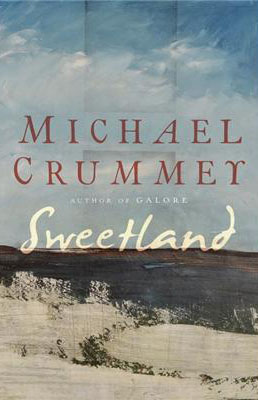 Sweetland is his fourth novel, and like the three previous, it is about Newfoundland’s fraught relationship with its history. In River Thieves (2001) he tells the story of the extinction of the Beothuk as seen from the perspective of British naval officer; in The Wreckage (2005), he depicts a romance between a Catholic young man and a Protestant girl, and the intrusion of the Second World War into Newfoundland in the form of the recruitment of its young men and the presence of American military bases. Both novels are solid pieces of storytelling, beautifully written; but it was his third novel Galore (2009) that truly blew me away. Set in the fictional outport of Paradise Deep, it is a multi-generational narrative (I hesitate to use the word “epic,” though it comes close to being appropriate in this case) that tells the story of a community and their struggles: with each other, with their own selves, but especially with this hostile geography to which they have been brought by hope, misfortune, or happenstance. Galore is a magical realist novel whose most obvious influence (or at least precursor) is One Hundred Years of Solitude. Like Gabriel Garcia Marquez’s landmark novel, Galore is about a small village beyond the fringes of civilization, in which anything can happen and indeed often does. Crummey employs a combination of harsh realism to describe the hardships endured by the community, and a host of legends and folklore from Newfoundland’s past; the result is a narrative that pivots between a painfully tactile sense of reality and outsized events and circumstances.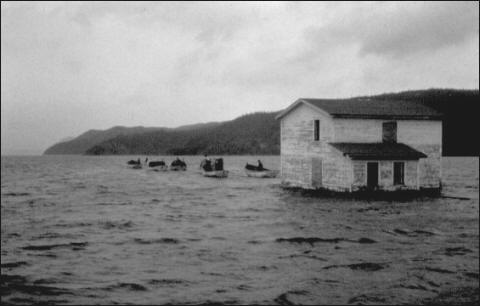
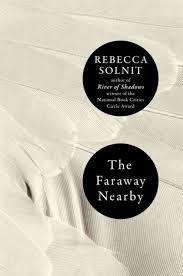

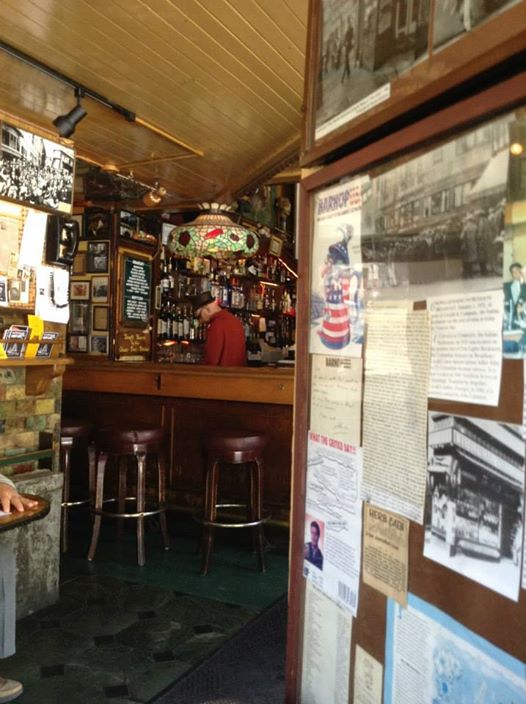
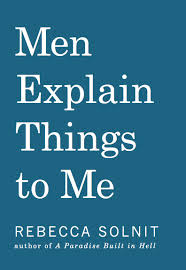
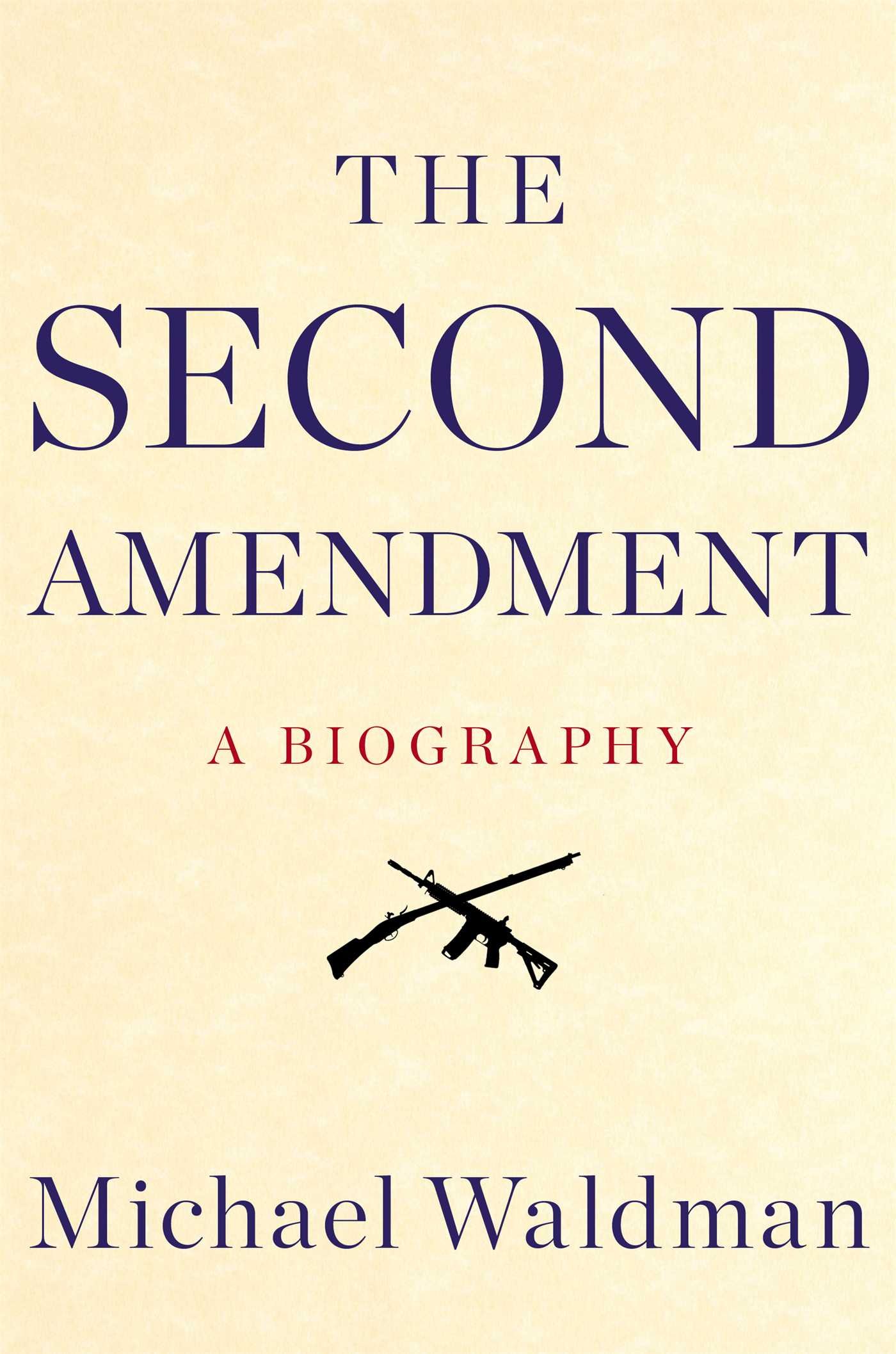
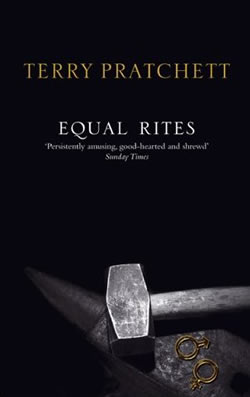
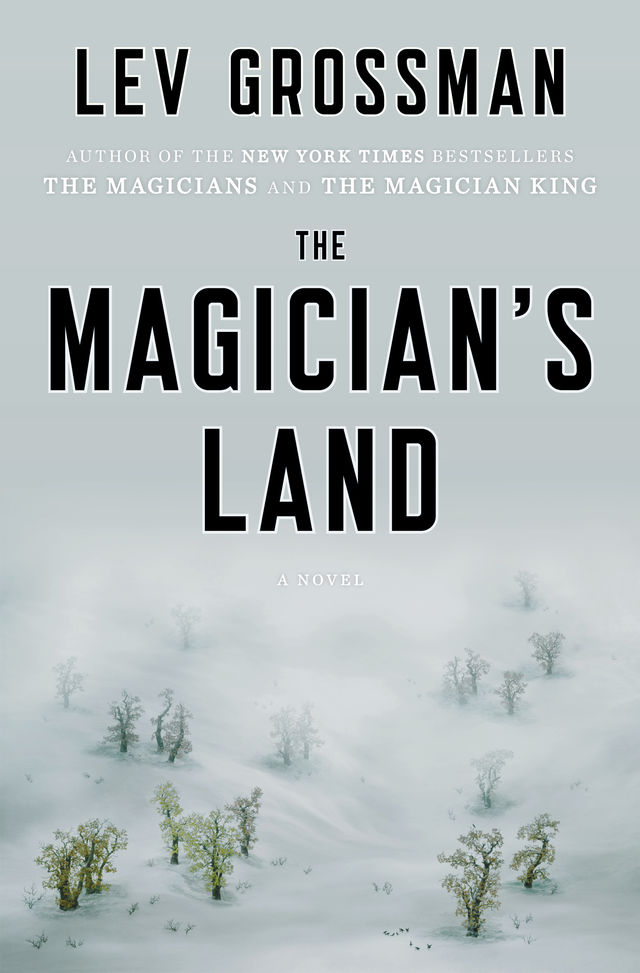

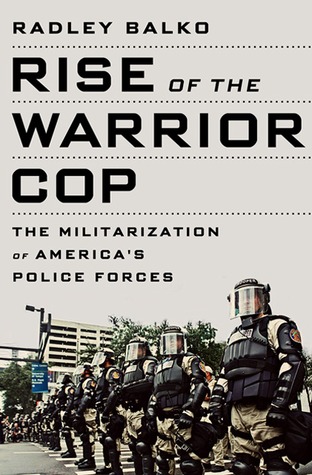
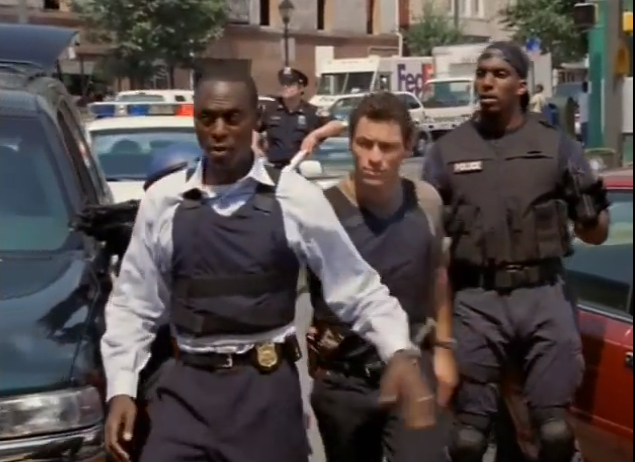
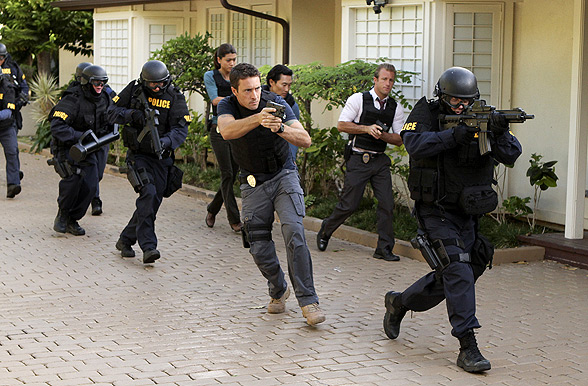



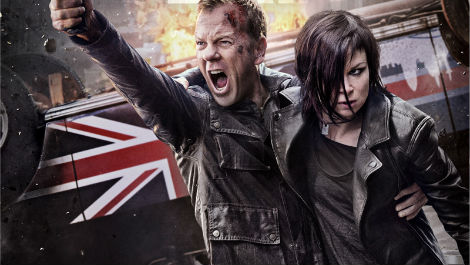

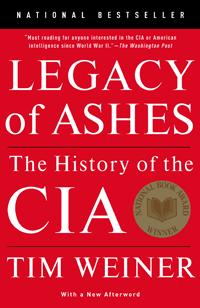

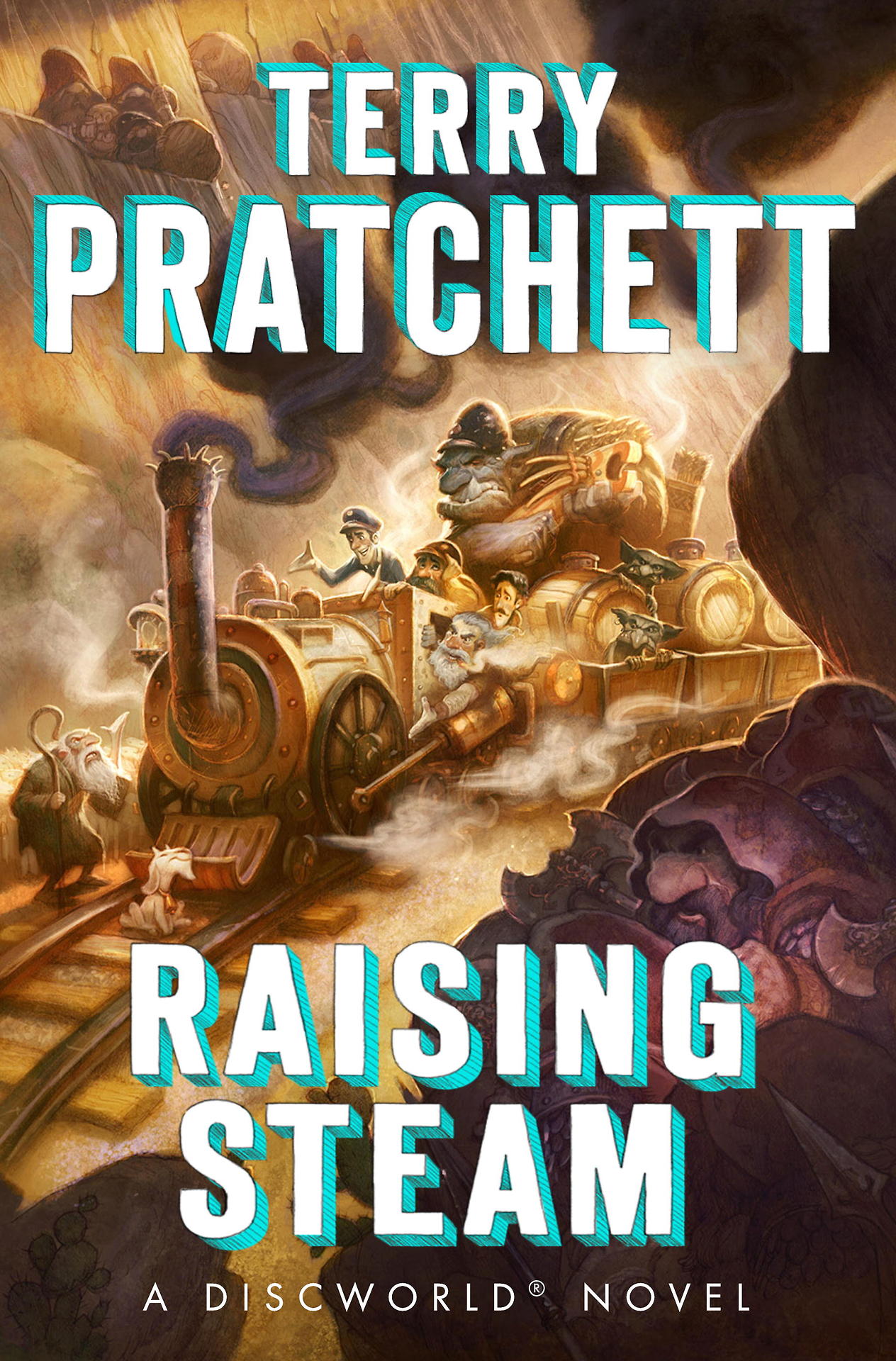
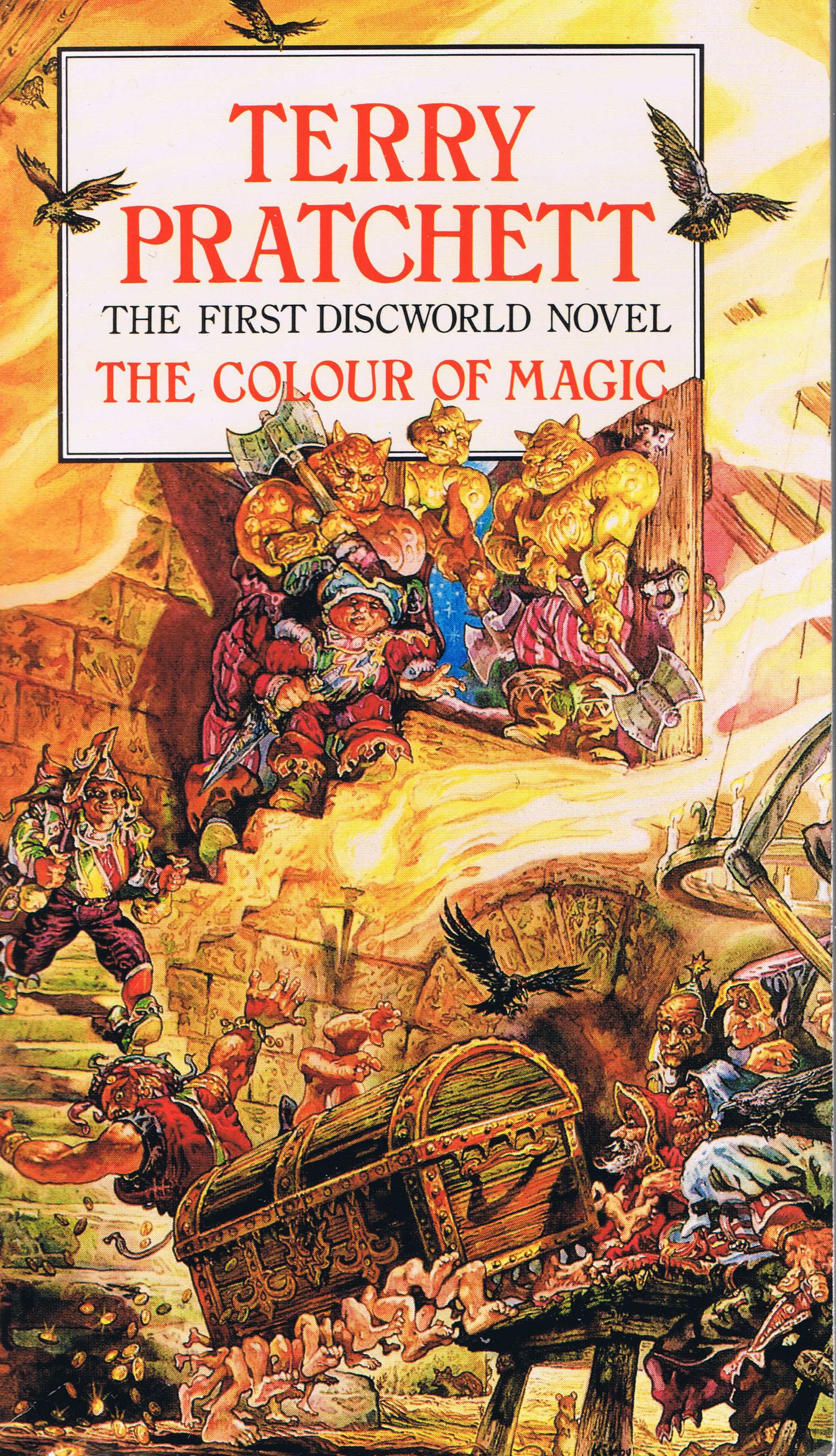
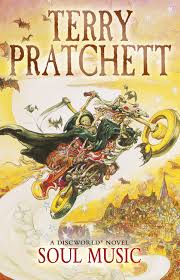
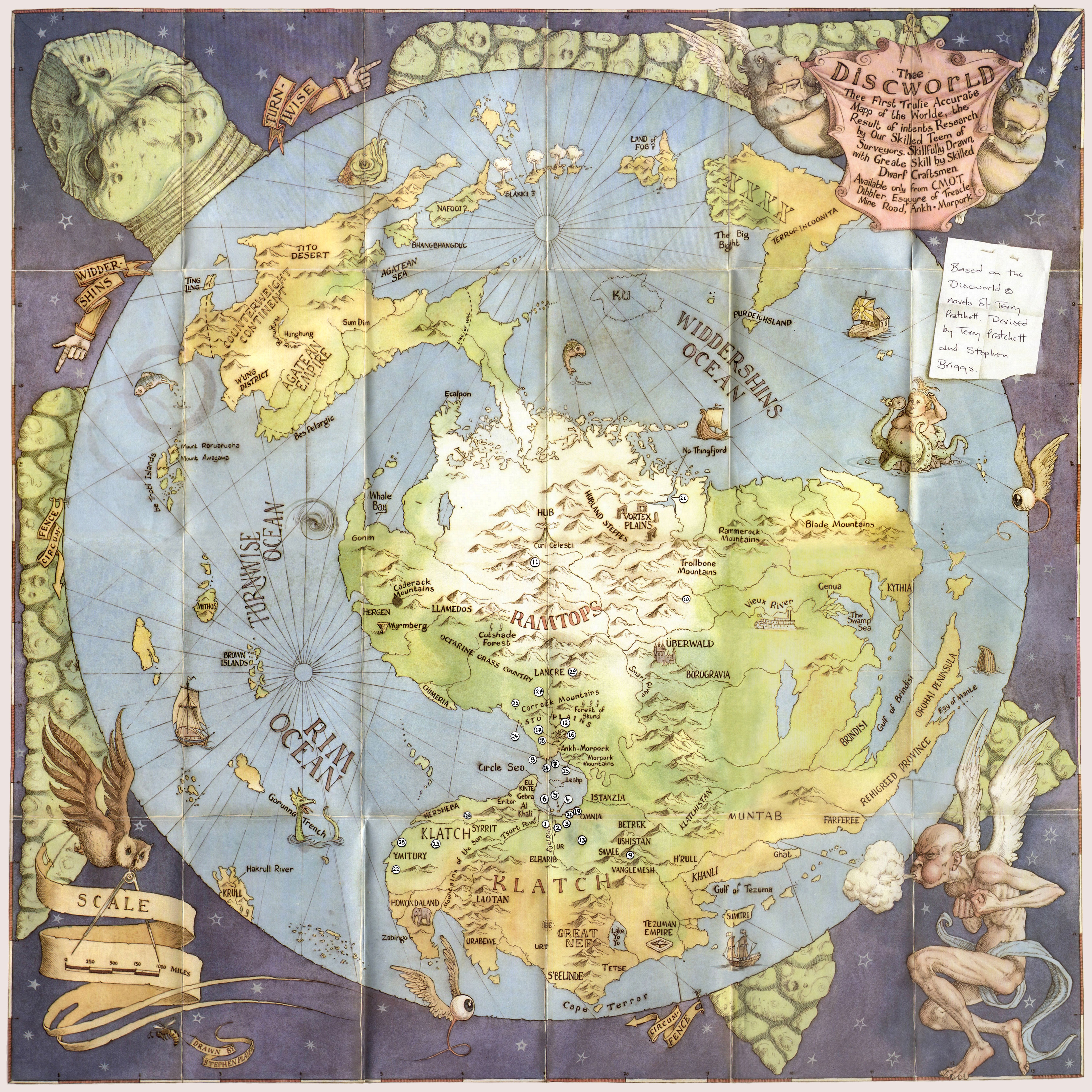


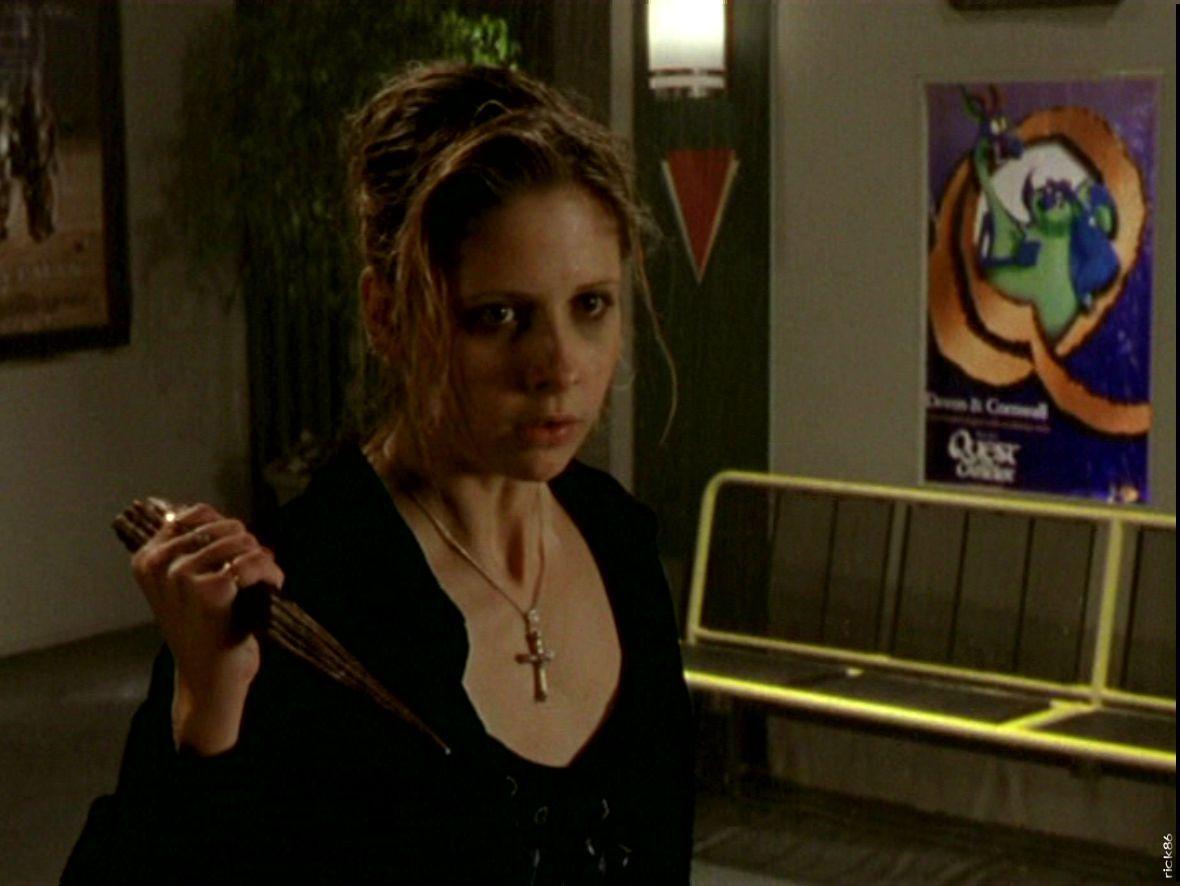
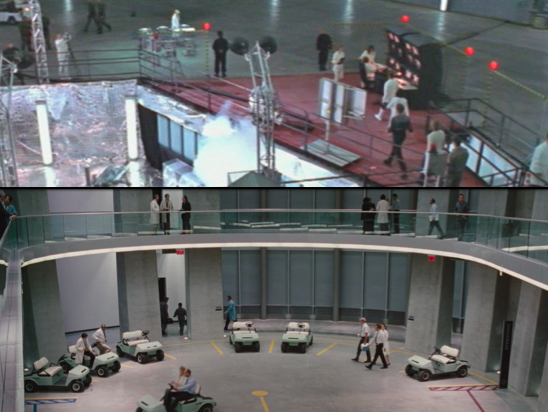
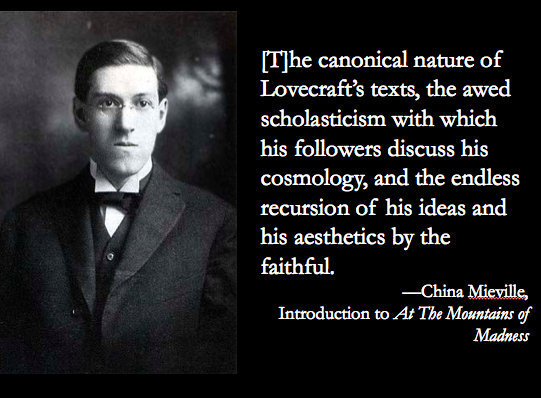
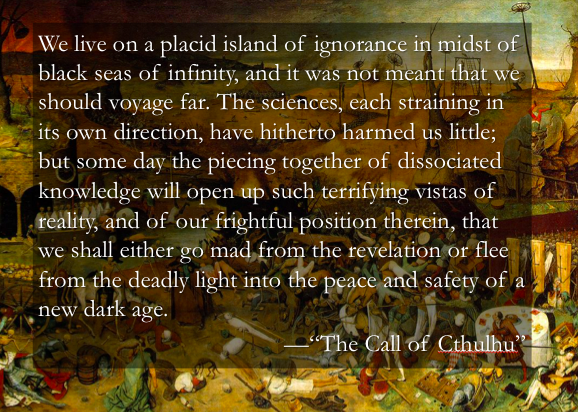
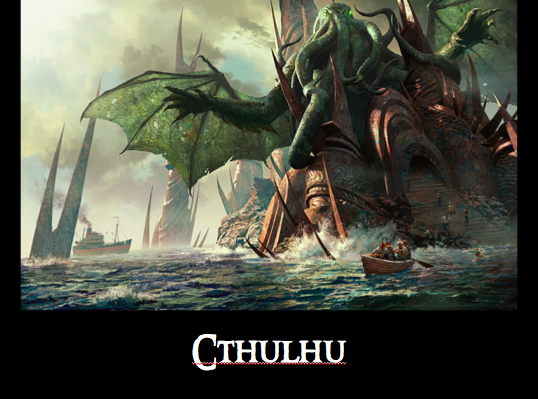
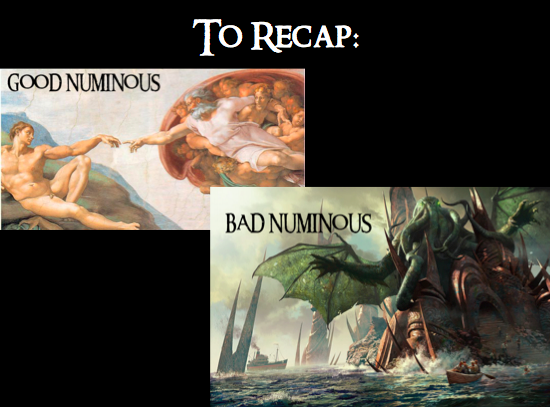

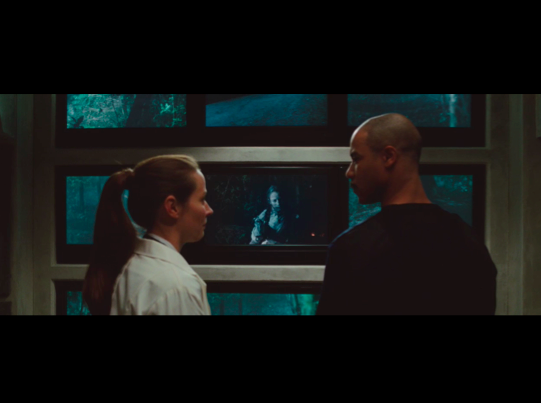
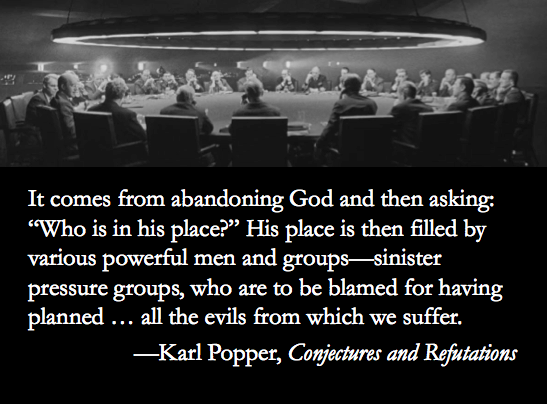
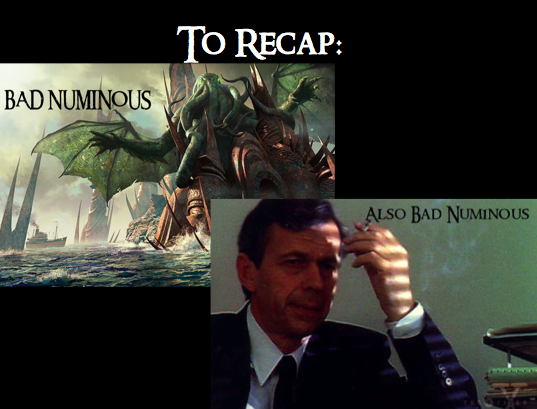
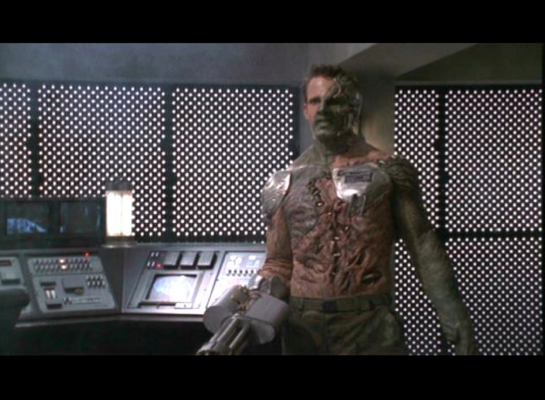
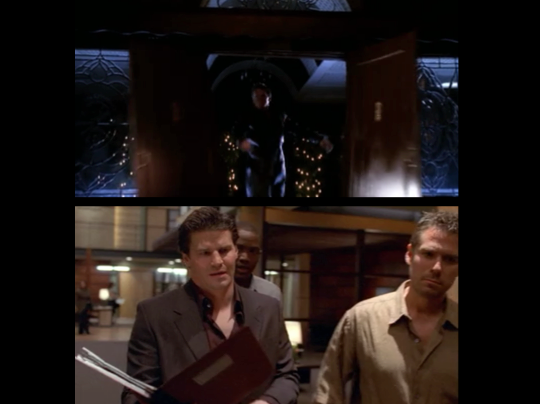
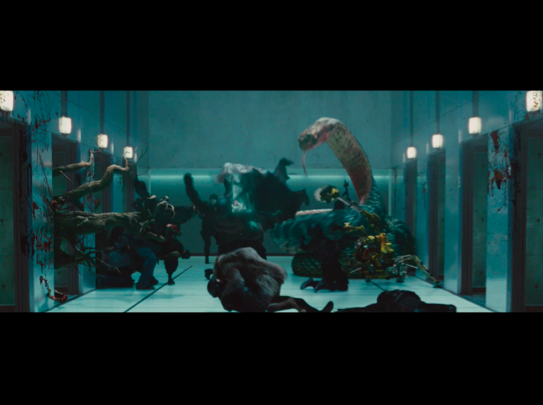








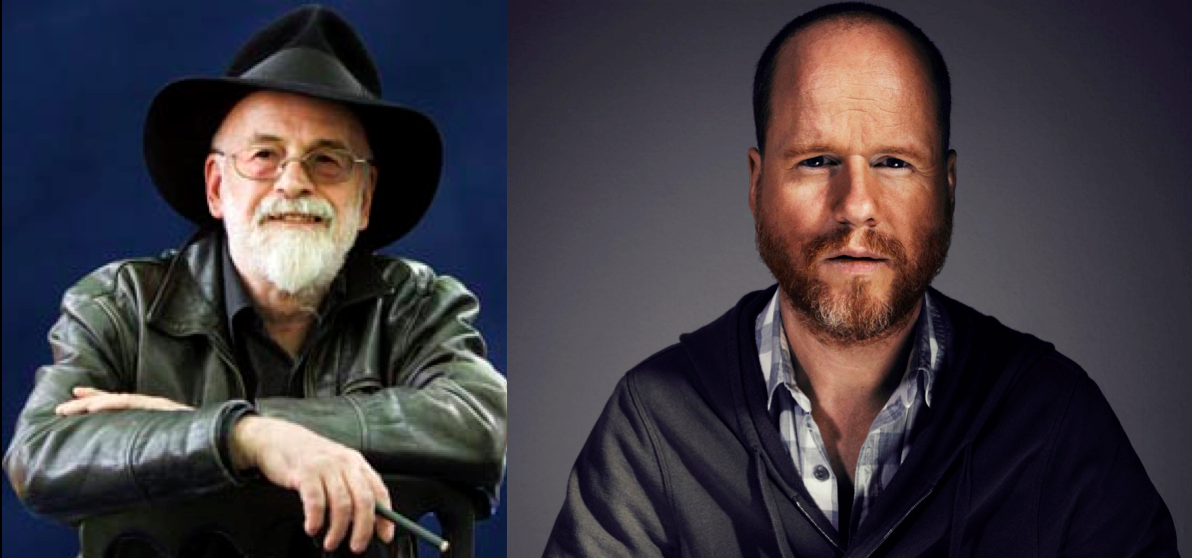
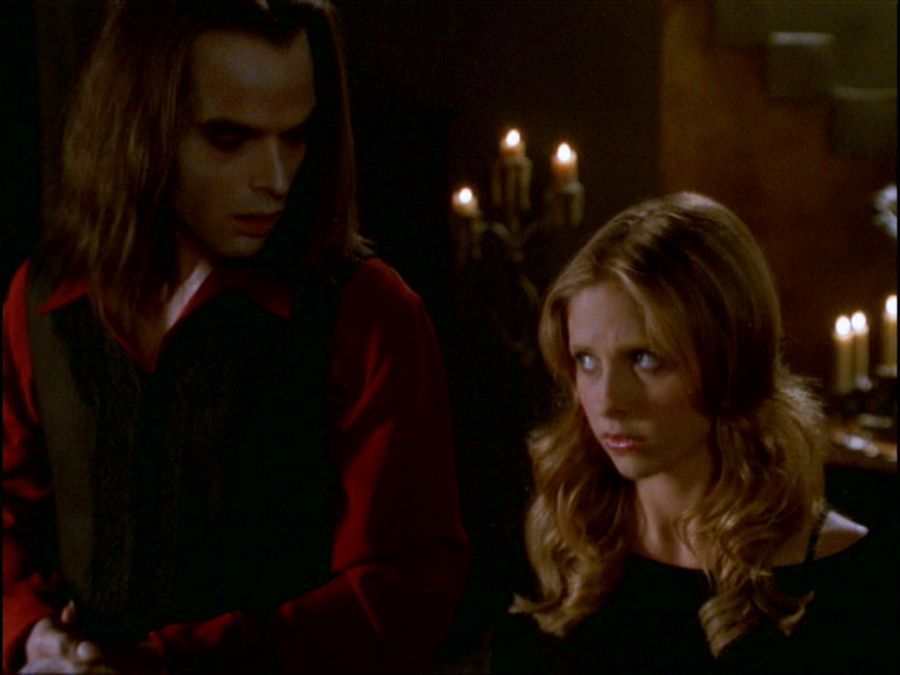
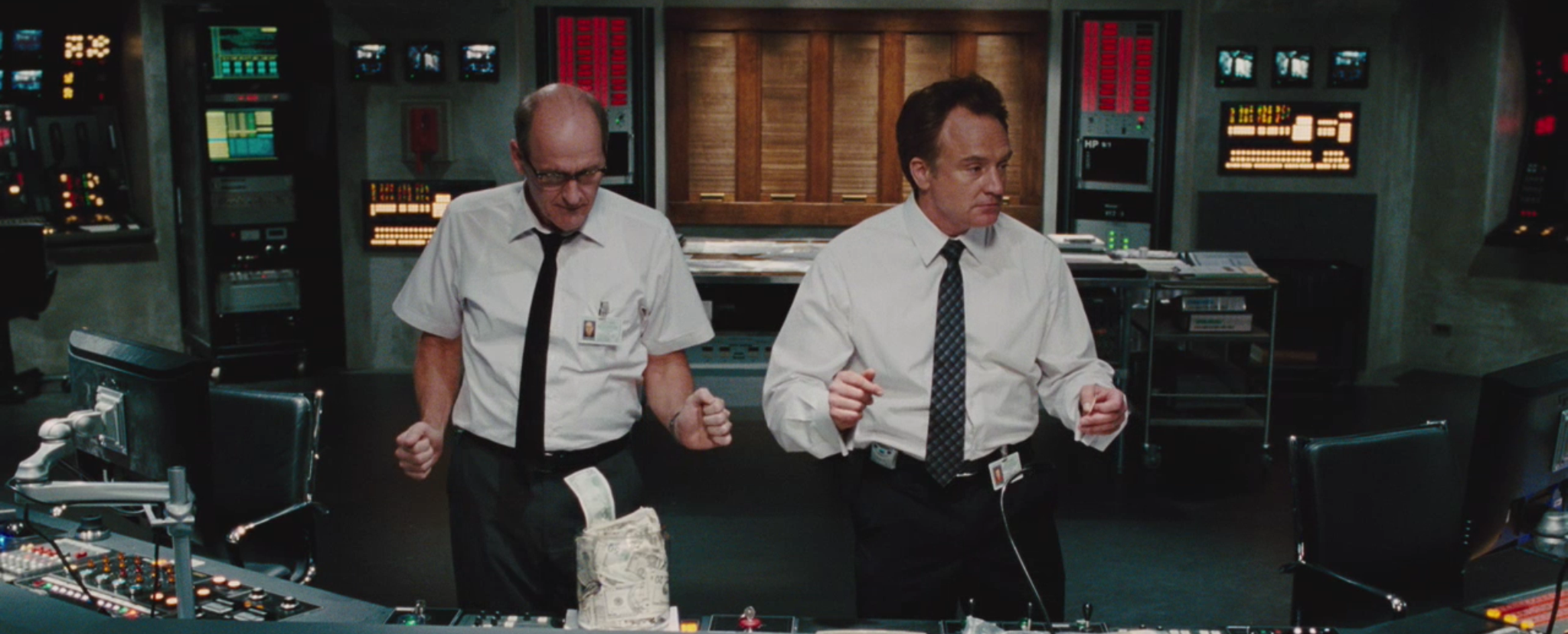
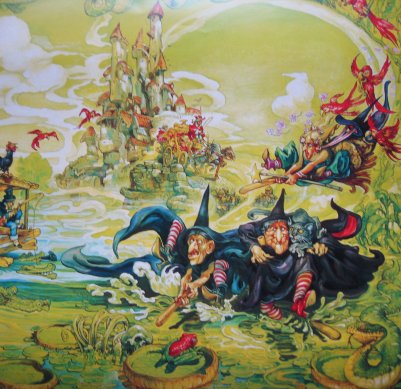


 it's all narrative