Just for starters, I have a new Medium post up. This one was supposed to just be a regular blog post, but, as so frequently happens with me, it grew in the telling. It’s a bunch of thematically linked musings precipitated by finally watching the HBO adaptation of Station Eleven (so good!), the ongoing drama of the WGA/SAG-AFTRA strikes, and starting to prep my Fall classes in earnest. As is usual with my thought processes, I was struck by the serendipities: the relevance of the strikes to the popular culture class I’m teaching, the ways in which Station Eleven plays with the distinctions between high and low culture, the fact that I’m teaching Station Eleven in my Utopias/Dystopias class, and that I’ll be asking both classes a question arising from these musings.
Which is: in the event of a civilization-ending apocalypse that wipes out electrical infrastructure, assuming you survive, what would you do for entertainment in your down time? When not foraging for food or killing zombies, how will you nourish your soul?
Considering the critical mass of post-apocalyptic ideation over the past twenty years, it’s not a question that has had much play.
Anyway, I get into it in the Medium post.
Prepping my classes is oddly energizing. As I mentioned in my previous post, I didn’t teach in the winter term, so I’m excited about getting back into the classroom. I’m particularly looking forward to my first-ever poetry class. I’ve taught a lot of poetry in the twenty-six years since I was a TA at the start of my PhD … but I’ve never taught a course exclusively about poetry. A number of years ago, my fellow Americanist in the department and I completely revamped all the American literature courses, basically burning it all down and rebuilding. Third year classes are our genre classes: drama, fiction, poetry. My colleague is the American theatre encyclopaedia, so he has taken drama, and I’ve taught the fiction class numerous times. But I didn’t want the poetry class to lie fallow forever, so I put it on my roster this year.

I’m covering the years 1922-1968—basically from the first cannon-shot of modernism (i.e. The Waste Land) to the symbolic end of 60s counterculture, from Pound and Eliot to Ginsberg, with stops along the way at imagism, the Harlem Renaissance, WWII, mid-century women poets, and voices from the Civil Rights era.
I was always trepidatious about teaching a poetry class, for the simple reason that I was concerned about enrolments. Poetry classes have had a tendency to be undersubscribed, and in the university’s current economic straits, the powers that be are quicker to cancel classes than usual. I was marshalling my arguments for keeping the class in the event it garnered students in the single digits (the class is capped at 35), and was prepared to let me other classes be oversubscribed.
Turns out I needn’t have worried.

As of writing this, the class is full. Apparently, students want to read poetry after all. I really have to stop underestimating this generation—they’re always surprising me in heartening ways.
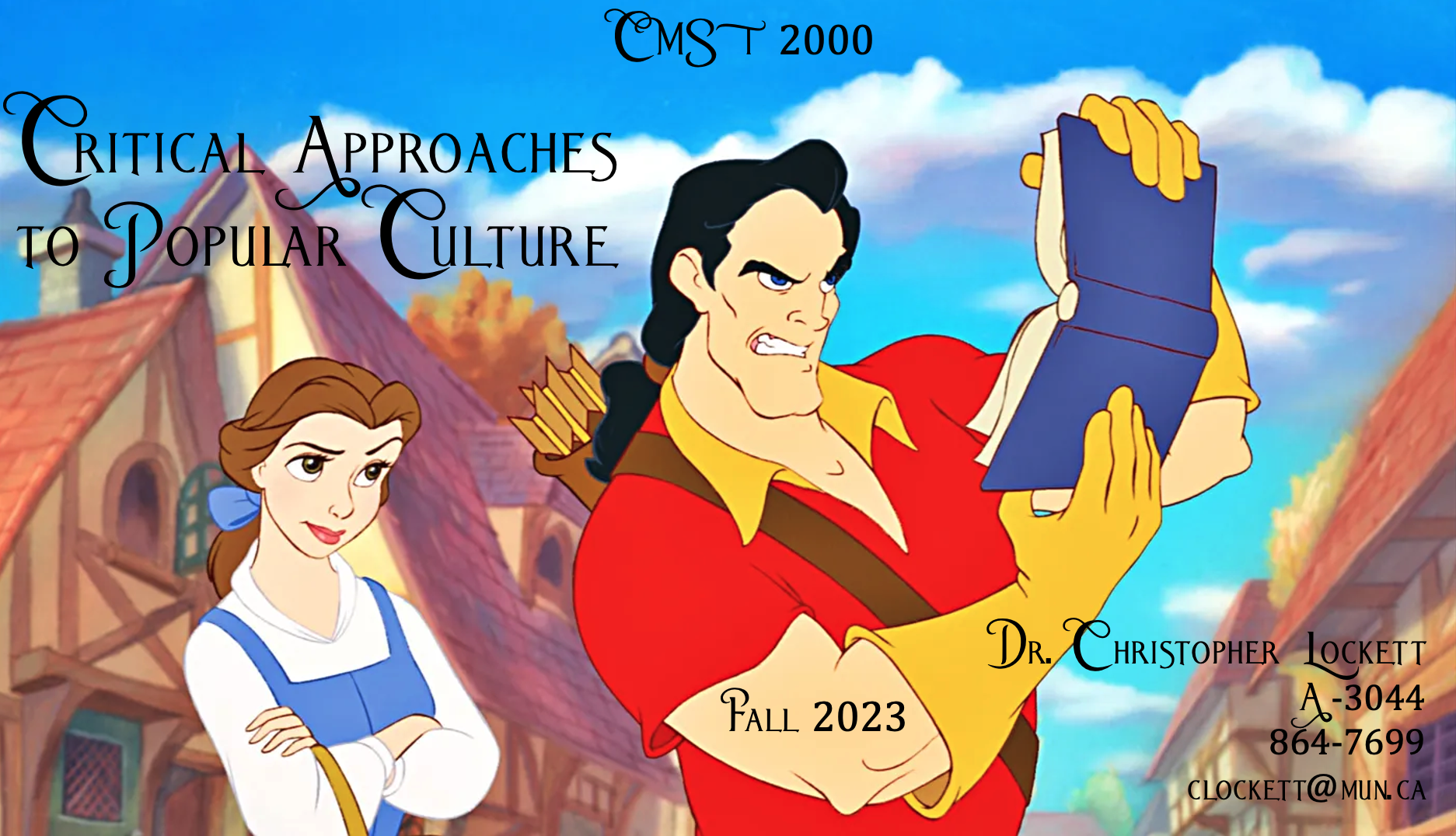
I haven’t taught our Communications Studies course on popular culture in six years; when starting to put it together for this fall, I realized one of my decisions would be which streaming services I would oblige my students to subscribe to. There are other ways to do things, of course, but streaming is now where the lion’s share of content resides. After a certain amount of deliberation, I decided to opt for just one: Disney+. There were several reasons for this. One, Disney is now so all-encompassing that it includes all Star Wars properties, all Marvel, Pixar, as well as a host of stuff that seems weird to find on the Disney service (What We Do in the Shadows, for example, or It’s Always Sunny in Philadelphia are hardly content one would associate with the Mouse). Two, that very all-encompassing quality will comprise a very useful meta-question when thinking about the history of the culture industry and its present state. Three, the ongoing feud between Ron DeSantis and Disney just begs to be interrogated in a class such as this. Four, Disney has Hamilton, which will let me revisit the play—when I did our pop culture class the first time, in fall of 2016, we did Hamilton, but were limited to the cast recording. Coinciding with the election of Trump, Hamilton went from being a musical embodiment of the Obama era to a naïve relic of “hope and change” in the space of a day. It will be interesting to consider Lin-Manuel Miranda’s theatrical phenomenon after the past seven years.
Finally, the real seed of this choice came when I watched Andor and thought “Oh, if I ever teach pop culture again, this is totally going to be on the course.”
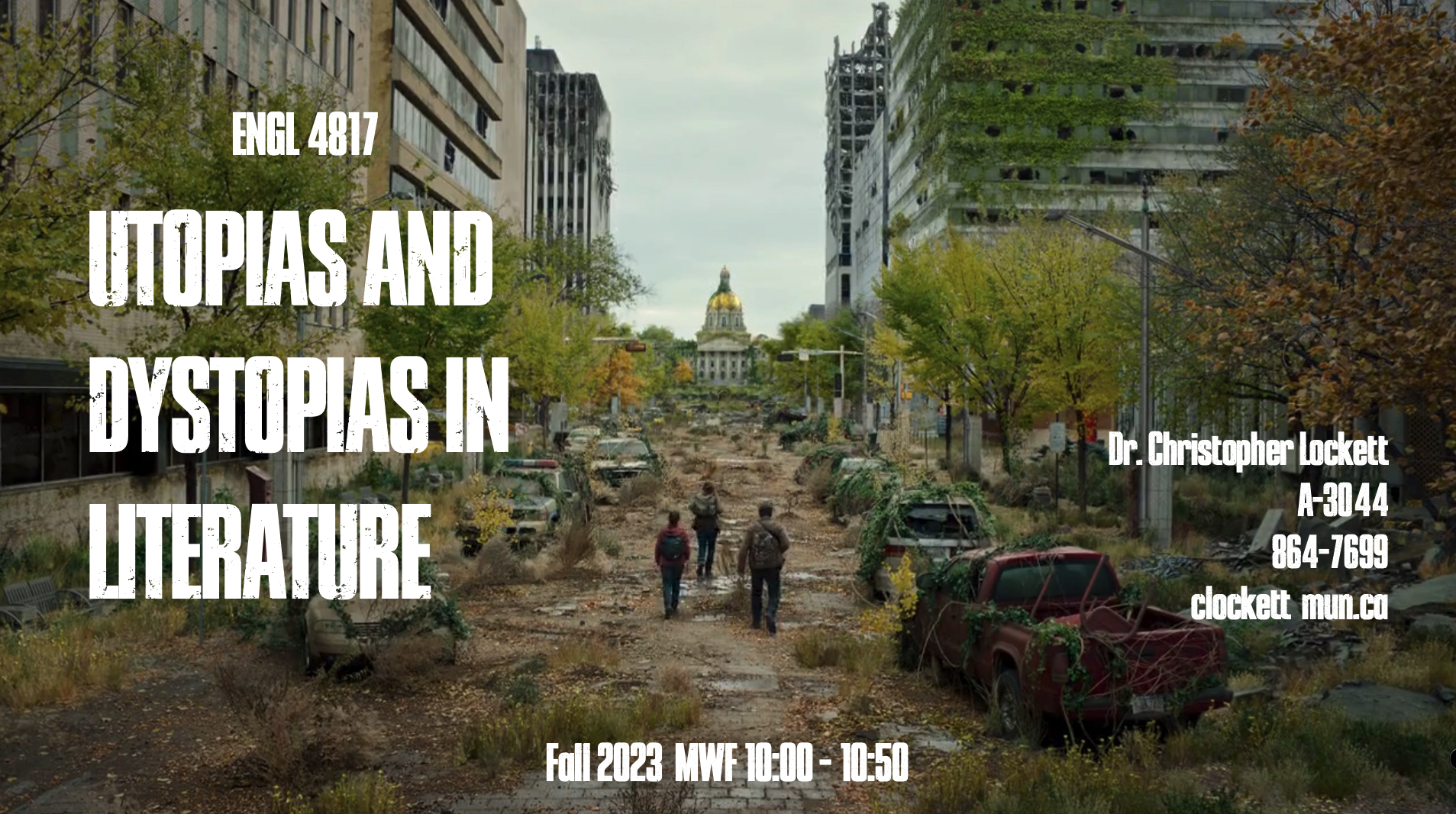
Finally, Utopias and Dystopias. This course was on the books when I started at Memorial eighteen years ago, the creation of a senior colleague now retired. I coveted it from the start, and finally got a chance to teach it in winter 2021. Teaching a course on utopias and dystopias remotely during a pandemic lockdown was … well, a little on the nose, shall we say? Though I was also teaching a graduate seminar on post-apocalyptic literature at the same time, so I was sort of leaning into the theme I suppose.
That first go-around I did not include Orwell’s 1984—I went in with the vague assumption that all my students would have read it. Turns out none of them had, which I found odd. So I put it on the course this time, and am currently re-reading it for the first time in I don’t know how long. I went on a big Orwell kick last year and read a whole bunch of his essays, inspired by Rebecca Solnit’s Orwell’s Roses. Getting stuck back into 1984 after having done all that reading, and after having not re-read it for so long, is quite lovely. And terrifying.
Oh, and for those wondering, based on my poster image—yes, we’ll be doing an episode of The Last of Us. In fact, we’ll be doing that episode concurrently with Station Eleven under the general theme of “what will survive of us is love.”
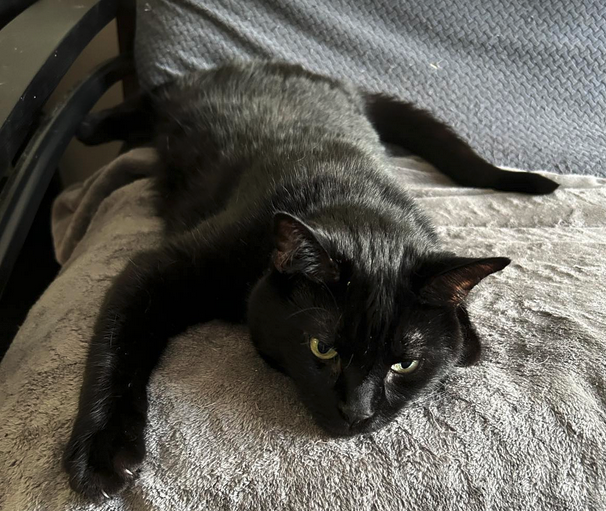
That’s it for now. Again, I leave you with a cat: Gloucester, not quite coping with the recent spate of un-Newfoundland hot weather.


 it's all narrative