Monthly Archives: April 2015

Game of Thrones 5.03: The High Sparrow

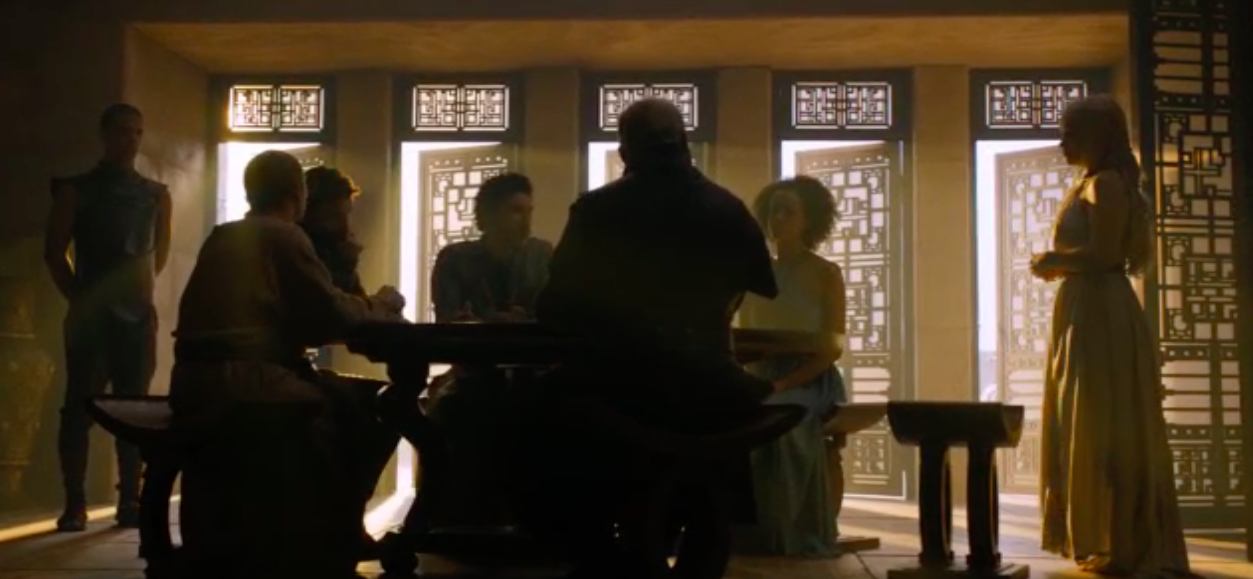
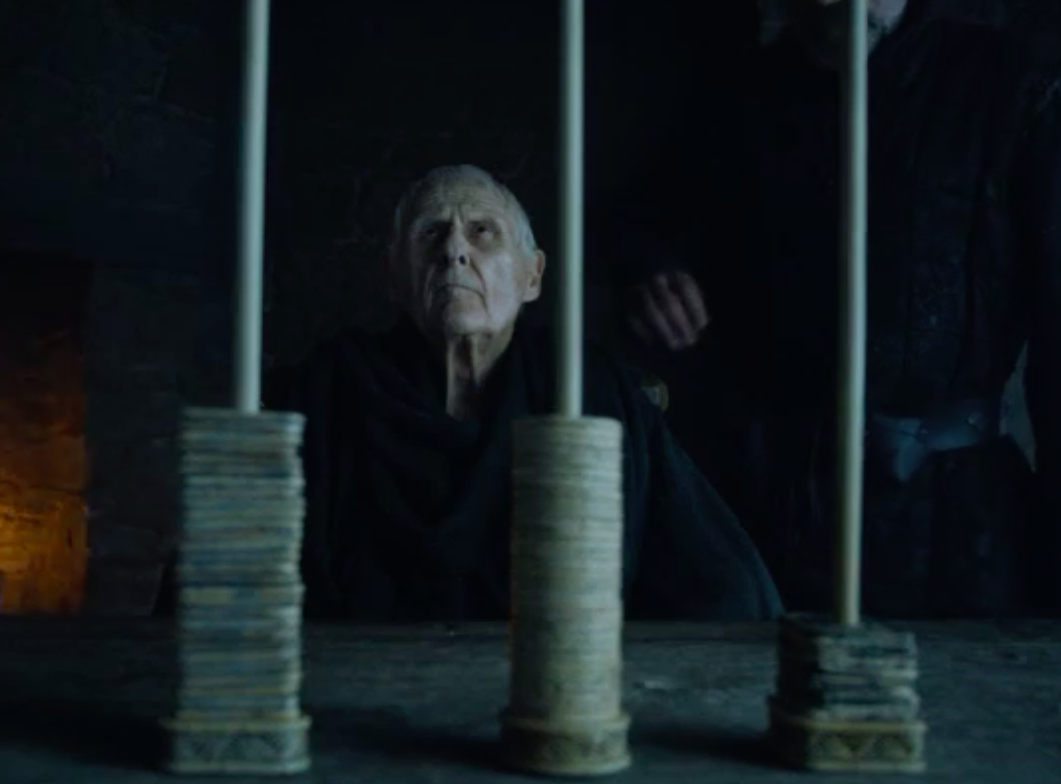
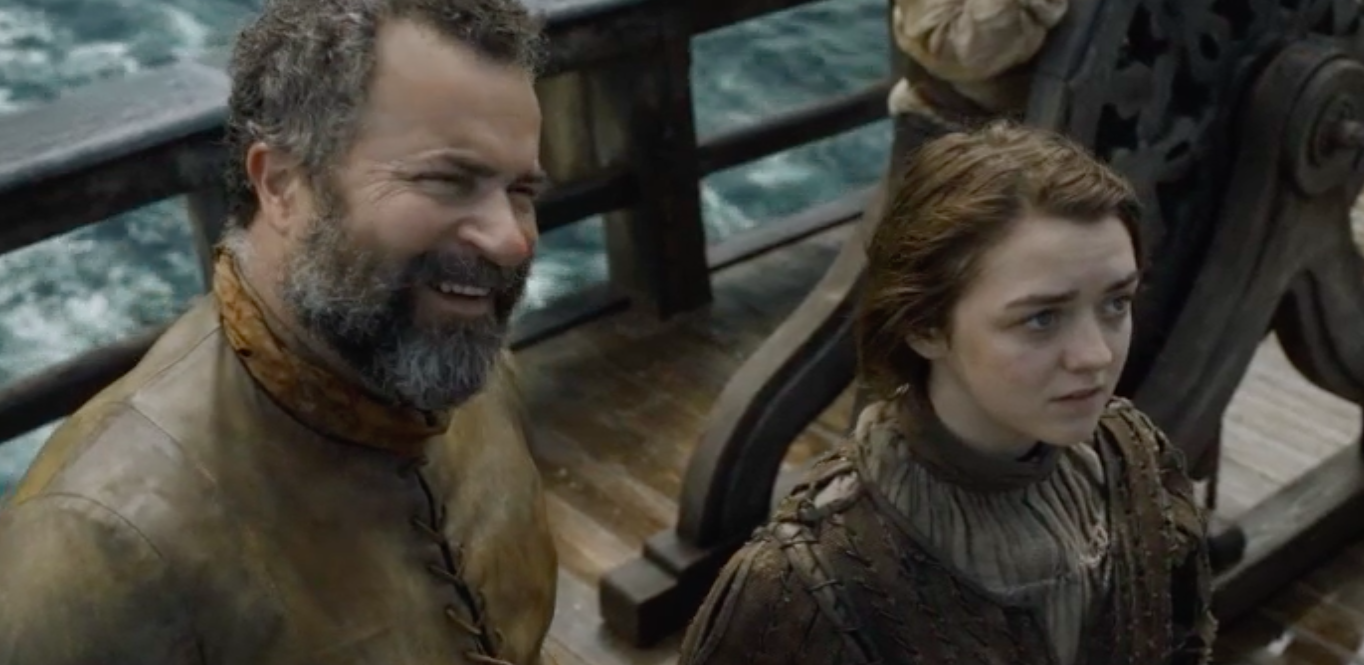
gameofthrones_teaser02_screencap10

Welcome once again friends to the great Game of Thrones co-blog, featuring myself and the fearsome Nikki Stafford, Destroyer of Worlds.

This week was a corker, there can be no doubt about that. Purists, presumably, are fuming at the way in which Weiss and Benioff (peace be upon their names) have continued to wander off-script, but I have to say: I’m kind of digging the changes they’re making. This week we get a weirdly un-bloody wedding, a supremely smug Margaery, a supremely scandalized Sansa, militant Gandhi, Arya getting totally Mr. Miyagi-ed by Jaqen, Jon Snow getting badass, and a bit of totally undignified dwarf-napping.

Are you seated comfortably? Then we’ll begin …
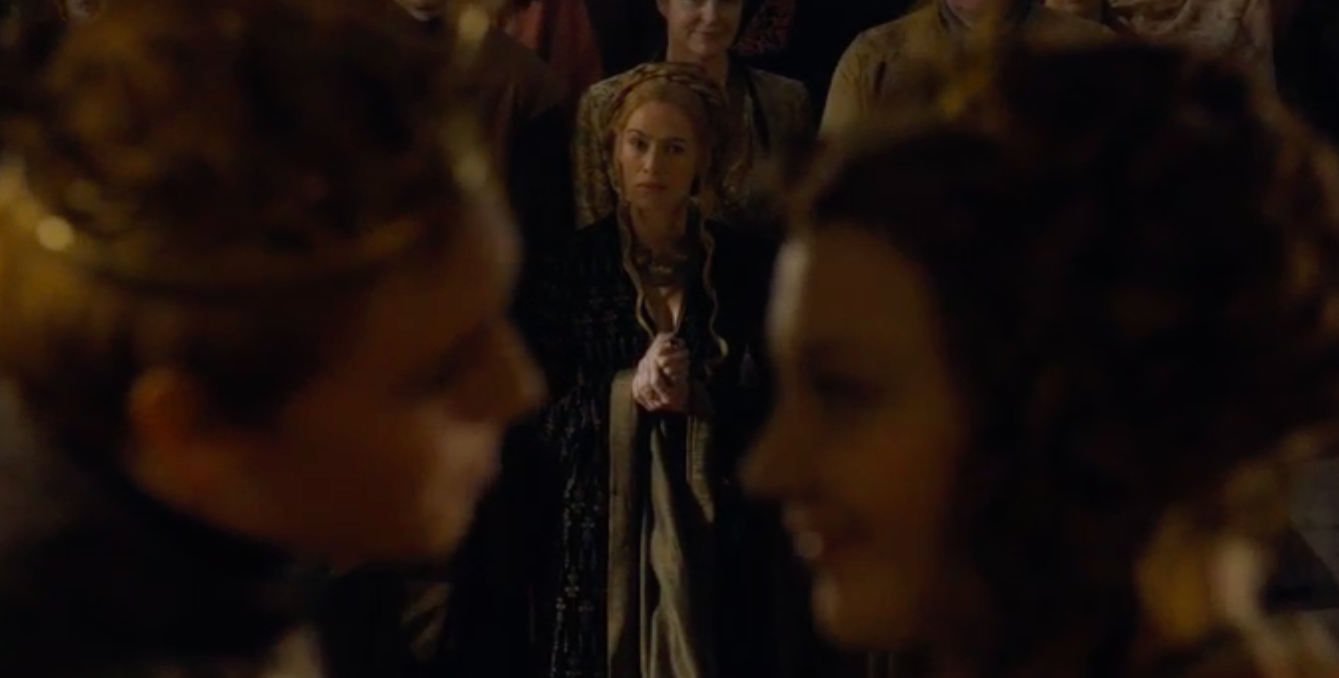
cersei-wedding

“Nope. Nope. Nope. Nope. Nope. Nope. Nope. Nope. Nope. Nope. Nope. Nope.”


Nikki: Well, shockingly for Game of Thrones, one of the least notable moments of the episode was a wedding — ! — that didn’t involve any deaths of any kind — !!.

Unless, um, you count la petite mort that happens afterwards. #frenchhumor

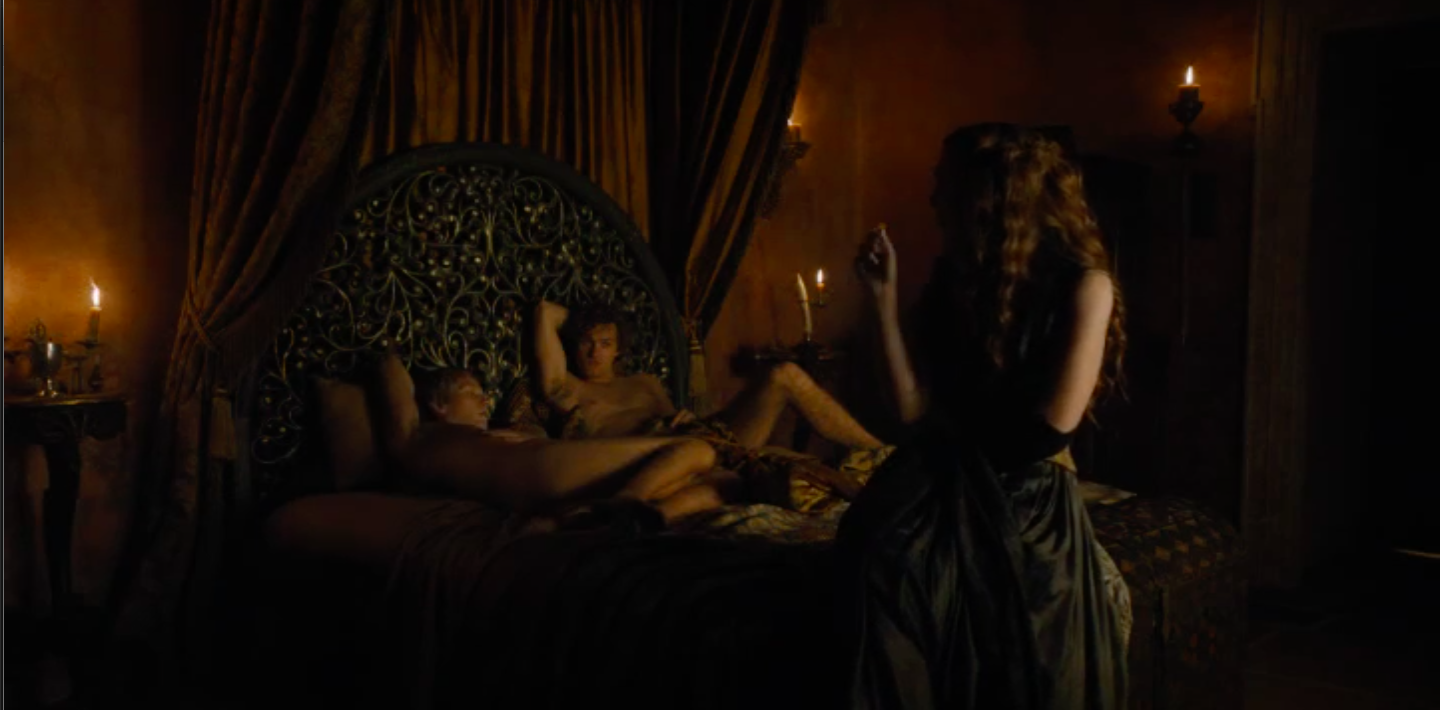
Yes, the boudoir scene that follows the wedding — where one swears you can see Cersei two-fisting goblets of phantom wine just to take the sting off the fact that that whore has married yet ANOTHER ONE OF MY SONS — is uncomfortable, to say the least, mostly because Margaery appears to be much older than Tommen, who looks 12, and who giggles his way into the bed as if to say, “OMG, I’m gonna get some!” Afterwards, he doesn’t seem to know what hit him, while his more worldly wife tweaks his nose and commends him on doing a pretty good job. “It all happened so fast!” he says, and we know that that must have been a magical experience for Margaery.

This picture needs to be in the dictionary next to "smug."

This picture needs to be in the dictionary next to “smug.”

Post-wedding, the gloves are off with Margaery when she sees Cersei the next day, and I admit that I actually felt rather sorry for Cersei in that moment, as Margaery’s ladies-in-waiting all titter around her as she first apologizes for not being able to offer some wine to Cersei, it’s just that the rest of them tend not to drink so early in the morning (ha!), before launching into details of the wedding night that NO mother wants to hear, not even one who used to bang her own brother. Then Margaery manages to manipulate her son little brother husband (I just can’t get used to this) into attempting to talk his mother into leaving King’s Landing and returning to Casterly Rock, where she’ll stop babying him and allow him to become a man once and for all. Or, you know, allow him to prepare to become a man… but dammit once that puberty arrives he will be SET.

But don’t cry for the Dowager Queen (ouch!) just yet, for she has quite the counter-move up her sleeve.

The main victim in all of this is poor Tommen himself. He doesn’t see it yet (I mean, how many other little boys have a woman who looks like THAT in their bed?), but Margaery condescends to him, manipulates him, and only married him as a power play, whereas Cersei will go to any lengths to bury his wife, emasculating him in the process when both women remind him of just how powerless he is.

You mentioned in our first week of season five, Chris, that you were looking forward to the arrival of the Sparrows, and this week we meet their leader, played by the inimitable Jonathan Pryce. What did you think of the introduction of the High Sparrow?

high-sparrow

Christopher: Well, as always, the casting is great. Pryce is an incredibly accomplished actor, and can do bombast (think of his scenery-chewing Rupert Murdoch-esque Bond villain in Tomorrow Never Dies) and subtlety with equal facility. Here, he’s doing subtlety, providing an understated and quiet performance in which he comes across as something of conflation of Jesus and Gandhi. And again, in casting Pryce, the showrunners have yet again given us an actor capable of communicating profound gravitas—like Tywin, Mance Rayder, the Queen of Thorns, and now Doran Martell, the show keeps giving us these amazing characters whose very presence on the screen radiates self-possession and innate strength.

The sparrows and their leader provide an interesting dimension to the novels, so I’m very happy they’re remaining faithful to them on the show. The squalor and want Cersei witnesses as she seeks out an audience with the High Sparrow reminds us of the devastation wrought by the wars between the great houses: with farmland burned and pillaged and villages razed, those common folk who survived find themselves homeless and starving and come to the capital in the hope of finding succor. The High Sparrow ministers to the people and wears the badges of humility—again like Gandhi or Jesus—but it is significant that the lead-in to his appearance is Lancel and a group of other sparrows invading Littlefinger’s brothel to beat and humiliate the High Septon. Lancel’s words to Cersei in the first episode were the first ominous indication that the sparrows have no interest in non-violence. However Gandhi-esque the High Sparrow appears, his rhetoric about lancing boils, however euphemistic, is violent.

And yet, Cersei seems to believe this is a man she can work with, refusing the High Septon’s demands for justice and instead incarcerating him for soiling his high office. Cersei has a track record of overestimating her own ability to scheme and play politics, though she’s mostly oblivious to her failures, as with the way in which Littlefinger gamed her so deftly (resulting in the death of her son). She wears the blinders of privilege, almost certainly seeing in this shoeless, filthy man someone she can easily bully and manipulate.

This will get interesting. The arrival of the sparrows is like a microcosmic allegory about religious extremism: how it arises, flourishes, and shocks the powerful with its force and tenacity. For four seasons, the great houses played the game of thrones with little concern for all of the common people being hurt, impoverished, and disenfranchised. The starving masses descend on King’s Landing in desperation, not just for physical sustenance but spiritual sustenance as well, something that the Lannisters and Tyrells are particularly ill-equipped to provide. The scene in the brothel with the High Septon dramatizes this dissonance in the way it very specifically echoes the kind of hedonism enjoyed by the upper echelons of the papacy on the eve of the Protestant Reformation. The faux-religious pantomime played out by the High Septon could easily be a scene from The Borgias.

high-septon

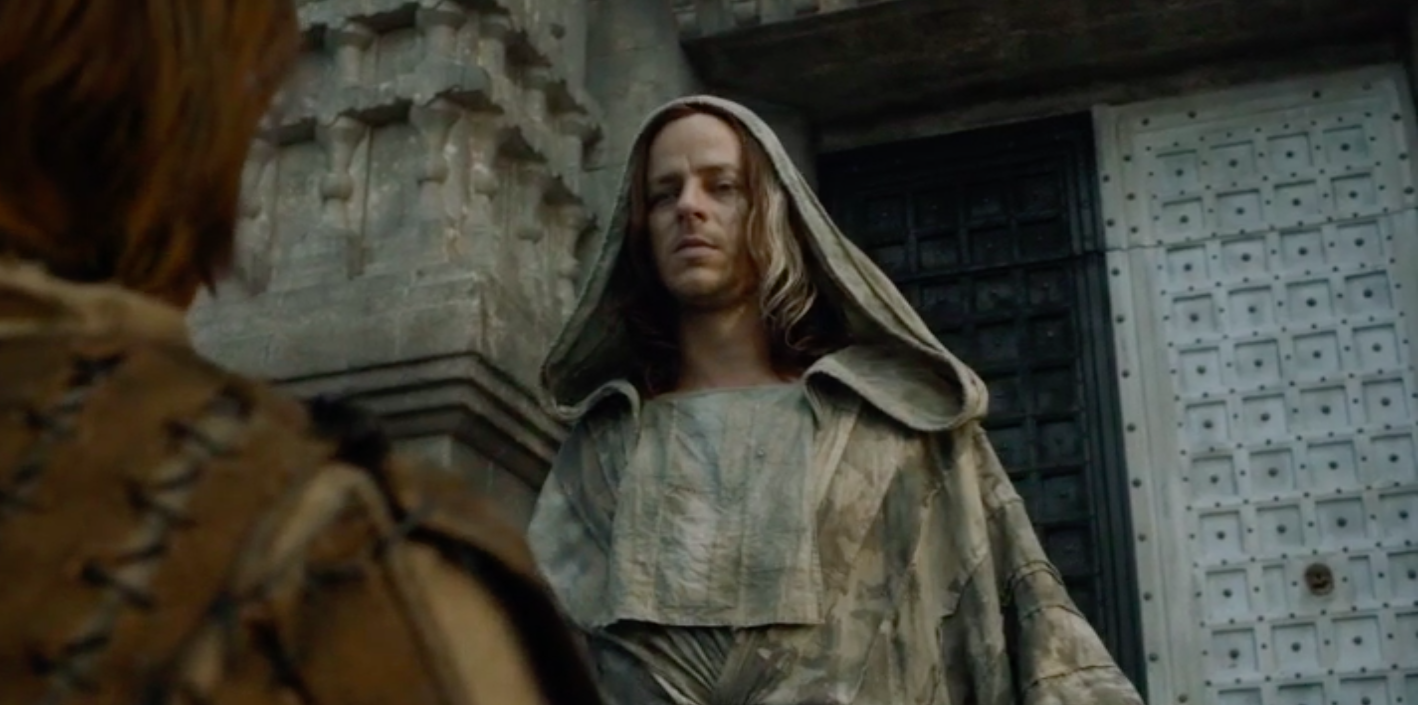
There’s an interesting resonance in this episode between the High Sparrow’s denial of self (I have to add that his line “I tell them I’m nothing special … and they think that I’m special for telling them so” totally made me think of The Life of Brian) and what Arya learns at the House of Black and White. It too is a house of worship, and the god they worship is death. And in order to join their ranks, Arya is enjoined to lose all of the things that make her Arya Stark, to truly become “no one.” “A man wonders,” says Jaqen, “how ‘no one’ came to be surrounded by Arya Stark’s things?”

What did you think of the continuation of Arya’s Braavos adventure, Nikki?


"What the hell do you mean, 'wax on, wax off'?"

“What the hell do you mean, ‘wax on, wax off’?”

Nikki: Life of Brian, ha! I totally agree. I knew that scene was reminding me of something, but couldn’t put my finger on it. You hit the nail on the head.

Jaqen’s assertion that in order to lose oneself, one must divest oneself of all personal possessions is something that most of us would be unable to do. But not only would I be throwing my hands up and saying, “Well, it’s been nice knowing you, my friends” as I run back home and surround myself with my books, promising them that I will never, EVER be rid of them, I found I was also attached to Arya’s belongings. I’ve watched many a character die on this show, and it was sad, yet the moment of Arya standing above the water and holding Needle out like she was going to throw it? I didn’t think I was going to make it. I watched this on my own first, then with friends, and their reaction was the same. “Don’t do it!” we were shouting at the television. One friend said, “Just bury it somewhere, he’ll never know!!!” Amazing how much attachment we have to this sword, but it’s the one physical thing Arya has left of her father, besides herself, of course. Every time we see Needle we’re reminded of him sitting on the bed beside her and giving her the sword in the first place. No matter how strong and defiant Arya seems, in that one moment, as she looks out at the water while holding Needles, tears welling up in her eyes, she’s a little girl again. You can practically see her daddy standing next to her, his arm around her shoulder. In some ways, I believe she derives her self-confidence and power from that sword, the same way Samson derived it from his hair. I can’t tell you what a relief it was to see her putting it in the stone wall, even if I’m worried that Jaqen will know.
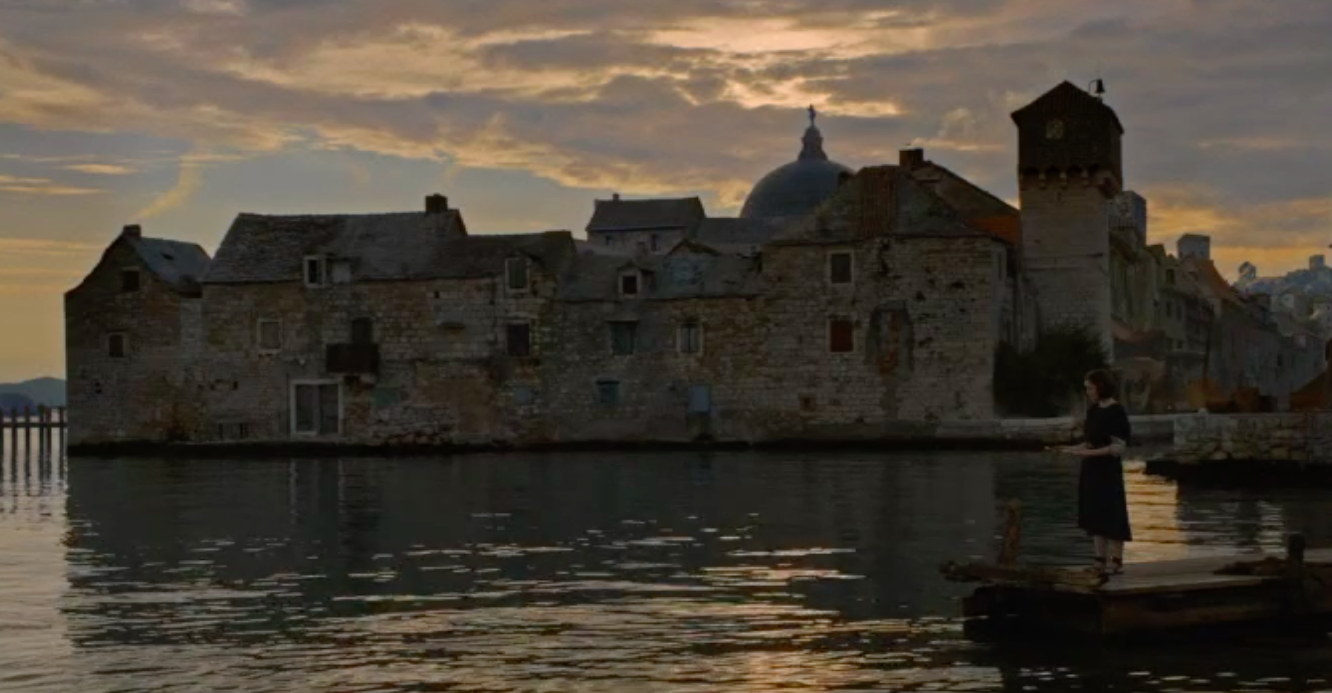
arya-pier

When Jaqen first revealed himself last week I thought to myself, Oh please let him still talk like Yoda. And he doesn’t disappoint in this episode. Very carefully avoiding any personal pronouns, he never says “I” or “you,” but instead “a man” and “a girl,” once again absolving him and Arya of any sense of self. My friend John was watching the episode with me, and he has read the books (sorry, Chris, I almost feel like I was cheating on you!) and he reminded me that Jaqen first claimed back in season 2 to be from Lorath. He later emailed me an excerpt from The World of Ice and Fire, the companion book to GRRM’s series, where he explained why this is significant:

The Free City of Lorath stands upon the western end of the largest in a cluster of low, stony islands in the Shivering Sea north of Essos…the isles were home to the mysterious race of men known as the mazemakers, who vanished long before the dawn of true history…Others followed the mazemakers on Lorath in the centuries that followed…a small, dark hairy people…[and] Andals…afterward the dragonlords flew onward, bringing blood and fire to the isles of Lorath…not a man, woman, or child survived the Scouring of Lorath…When men at last returned to the isles to live, they were…a sect of religious dissidents…worshippers of Boash, the Blind God….An essential part of their doctrine was an extreme abnegnation of self; only by freeing themselves of human vanity could men hope to become one with godhoods.  Accordingly, the Boash’i put aside even their own names, and spoke of themselves as “a man” or “a woman” rather than say “I” or “me” or “mine.” Though the cult of the Blind God withered and died out more than a thousand years ago, certain of these habits of speech endure even now in Lorath, where men and women of the noble classes regard it as unutterably vulgar to speak of one’s self directly.

Forgive me if you already laid this out in season two, Chris. But anyway, I found this fascinating, and it gives us some insight into this strange man. It also reminded me of Divergent, where, in a dystopian future, people must divide themselves into one of five factions based on social and personality-based features, and one of them is Abnegation (where our heroine finds herself at the beginning of the book). These people wear potato sacks, never look in a mirror, live to serve others and never themselves, and are made to believe it’s because they don’t exist as selves.

Meanwhile, back at John Locke’s house, the other girl — nameless, presumably — with Arya is particularly vile, but she also seems to endure Jaqen’s scorn at times. I must admit, however, that I wasn’t quite clear what happened to that man who drank the water. I’m assuming I’ve missed something. In any case — and I’ll try to write this the way Jaqen sees the world — after a girl disposes of a girl’s belongings, a girl returns to the House, where a girl is washing a man, and a girl asks a girl what two girls should do after two girls wash a man. A girl simply glares at a girl, and a man or a woman, sitting and watching a man or a woman’s television at a man or woman’s house, watches and wonders, “What DO two girls do with a man after two girls wash a man?”

OK, seriously, I’m assuming there are no books in Lorath.

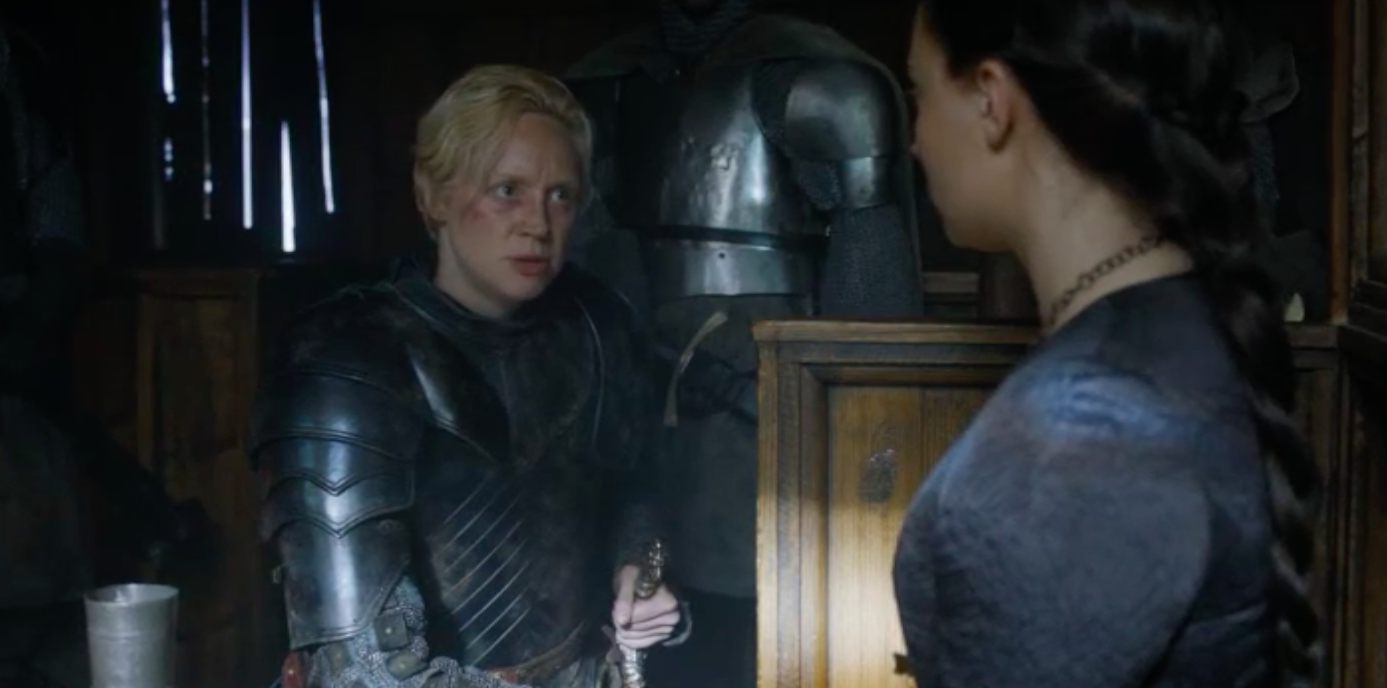
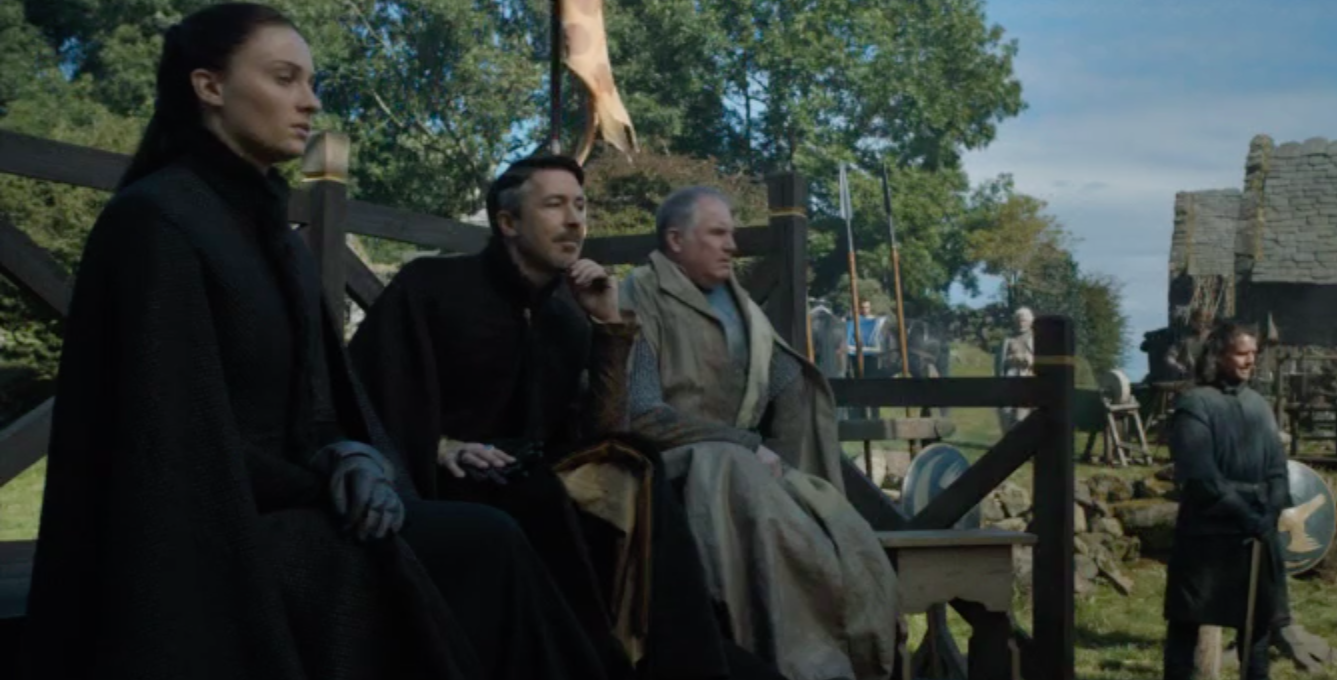
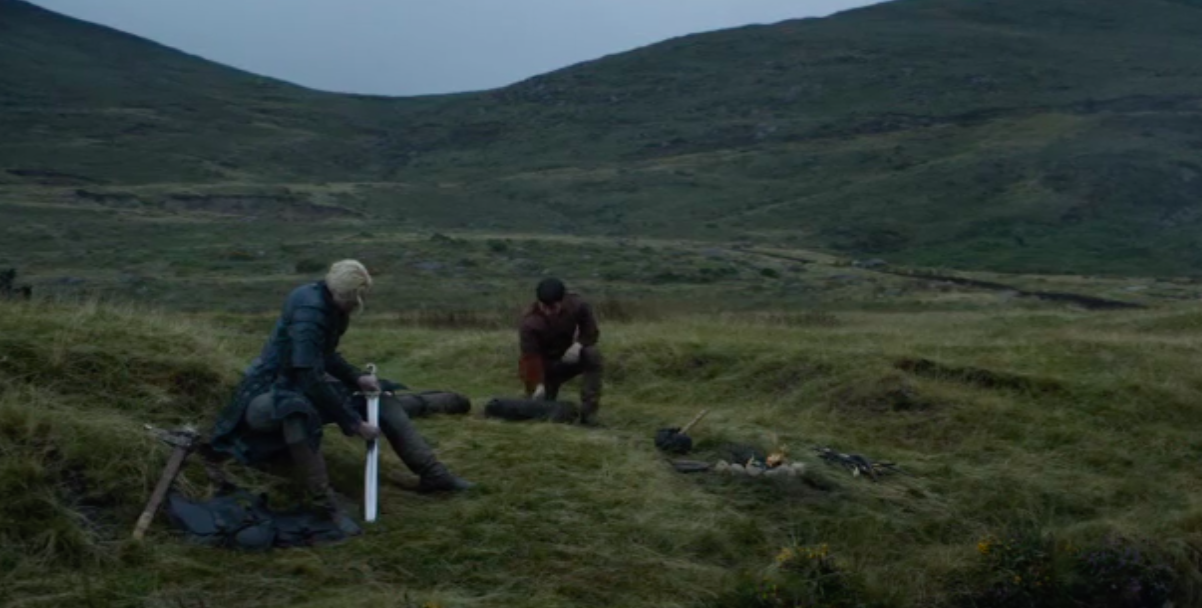
Last week, Chris, you speculated on where Brienne and Pod were following Sansa, and this week we discover it was Winterfell, containing bodies that look like Dark Willow had dealt with them (“Bored now…”) and an increasingly disturbed Reek. Now THAT adds an interesting wrench into the story! What did you think of everything happening there?

brienne_pod

Christopher: I suspected I’m not the only follower of the novels who had a huge “HOLY SHIT HE’S MARRYING SANSA TO RAMSAY” moment. This is the moment for me where I had an image of Weiss and Benioff chucking all five of the novels out of the boat.

To clarify: in the novels, Roose Bolton schemes to solidify his hold on the North by marrying his now-legitimate psychotic son to a Stark girl. Except that he means to marry Ramsay to Arya. But Arya’s in Braavos, you protest? Well, the actual authenticity of the “Arya” in question isn’t really a major concern for the Boltons, who find a brown-haired girl with a vague resemblance and declare to the world that, look, Arya is alive! And she’s marrying Ramsay! As for Sansa’s narrative arc in the novels, Littlefinger does hatch a marriage scheme for her, but it involves a whole lot of labyrinthine genealogy that would have Sansa marrying a young man with a soupcon of Targaryen blood—an even more tenuous claim to the throne than Henry Tudor had when he deposed Richard III, but a claim that would have more force when he marries the heir to Winterfell.

Once again, we see significant changes being made here in the name of expediency: eliminating Littlefinger’s byzantine plot in the novel, and by the same token giving the faux-Arya’s story more pitch and moment, as it now involves not a peripheral character but a central one (and, if I may venture, a well-loved character—Sansa started out as everyone’s annoyance, but I think it’s safe to say that Sophie Turner’s portrayal of her has earned our respect and affection). And it also means that faux-Arya’s storyline (which I’m obviously not about to spoil here) will have way more tension and drama.
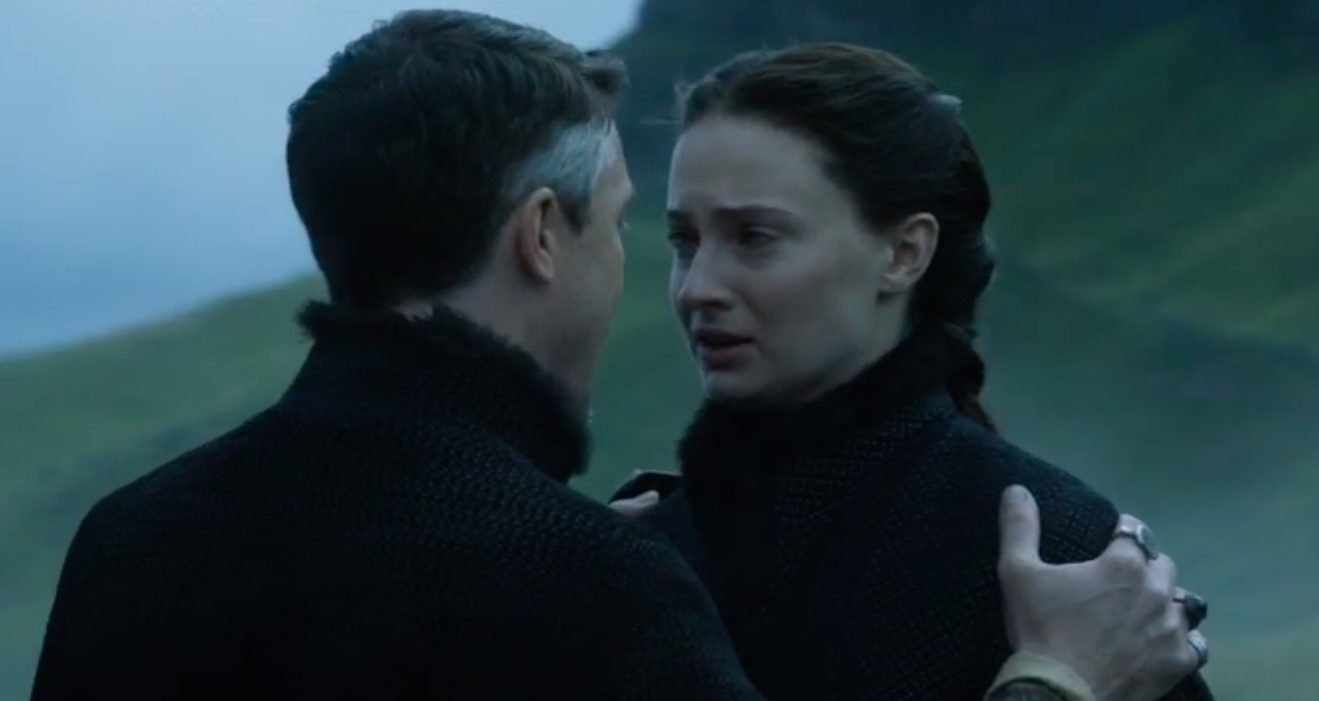
anguished_sansa

I absolutely loved the scene between Sansa and Littlefinger when she realizes what he has planned, both for the power of Sophie Turner’s performance, but also as yet another example of Littlefinger’s vile cunning. I suppose we can give him the benefit of the doubt and grant that perhaps he has no idea just what a psychopath Ramsay is (though I find it hard to believe that he wouldn’t know), but he’s still planning to marry Sansa into the family that betrayed and murdered hers. And as his little speech to her makes clear, he’s maneuvered her into a position where she quite simply has no other choice. He might genuinely care for her, but as has been made clear over the previous seasons, he is a man willing to sacrifice anything and anyone on the altar of his own ambition—or as Varys astutely said of him, he’d burn the realm to the ground so he could be king over the ashes.

“Every ambitious move is a gamble,” he tells Roose Bolton when Bolton (rather sensibly) questions his motives. But he has moved his pieces with consummate skill, placing himself out of reach of the ever-weaker Lannisters, and (it seems) gearing up to repeat history. “The last time the lords of the Eyrie formed an alliance with the lords of the North,” he reminds Roose, “they brought down the greatest dynasty the world has ever known.” Is he really proposing a new war? If so, who does he imagine sitting on the Iron Throne? Himself?

We’re in uncharted territory here. I honestly have no idea what his plans are.

But for all of his gamesmanship, the flaws in his plan become ever more apparent. His ignorance of Ramsay’s sociopathy will almost certainly come around to undermine his well-laid plans; and when Ramsay greets Sansa and kisses her hand, the camera pans around to show us the jealous face of his erstwhile girlfriend. Even if Ramsay manages to keep his worse tendencies in check (not holding my breath), I can’t imagine that woman will be at all inclined to make Sansa’s life easier. And there is also the reminder that while the Boltons won the North and hold it with an iron fist, there are many people who see their rule as illegitimate. “The North remembers,” Sansa’s chambermaid says feelingly, a simple mantra that resonates back through everything Sansa has endured.

There is also, of course, that blonde woman on the other side of the world who, if she ever gets her dragons back in line, could be something of a spoiler for Littlefinger’s dreams of power. The “greatest dynasty the world has ever known” isn’t quite dead.

But more immediately, there is a sword hanging above Winterfell’s head at the Wall. Stannis informs Jon Snow that he means to march on Winterfell within a fortnight, so Roose and Littlefinger might have a little discomfort in the short term. And once again, Jon respectfully declines Stannis’ offer to make him Lord Stark of Winterfell, embracing instead his new position as Lord Commander. And … well, he doesn’t waste time in asserting his authority. What did you think of our first taste of Lord Commander Snow, Nikki?
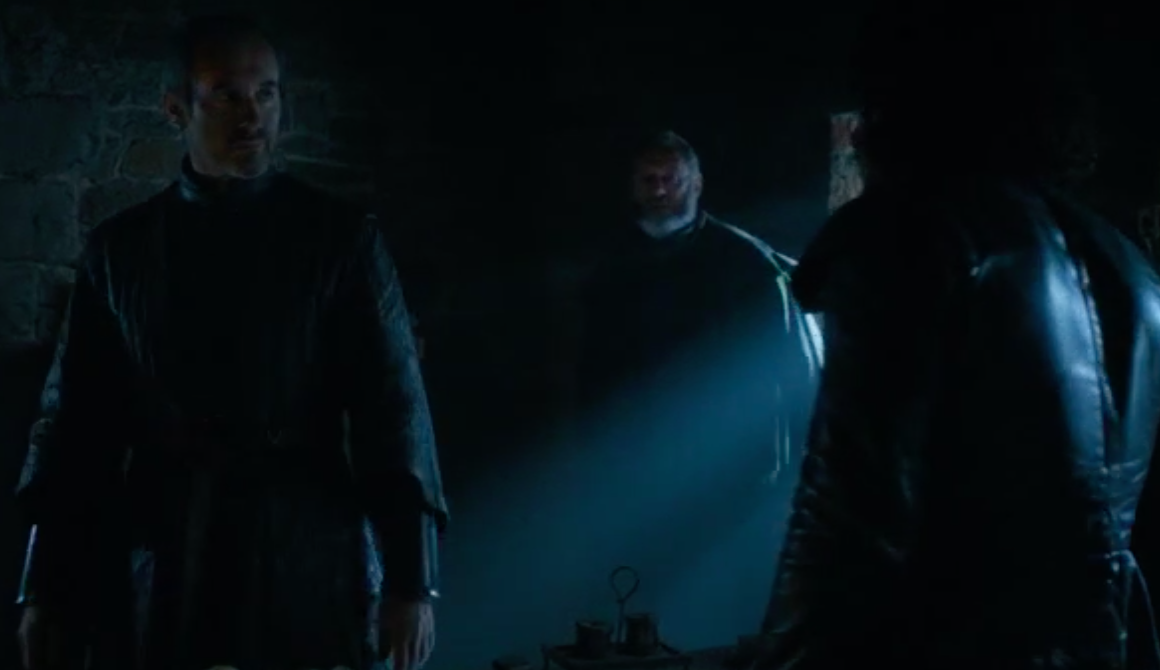
stannis_davos_jon

Nikki: Whew. What a scene. Every episode of the season thus far has ended with an execution: Mance Rayder by Stannis; Mossador by Daenerys, and now Janos by Jon. And what a powerful scene it is.

But let’s back up. I loved the scene between Jon and Stannis, where Stannis is offering him for the last time the name Jon Stark, a name Jon has wanted his entire life. But he already went through the agony of choosing to decline in the previous episode, and here he resolutely — and, as you point out, Chris, respectfully — says no. He has a new purpose as the Lord Commander, and it’s a title he earned, not one that was just bestowed upon him by someone who wants to use Jon to help him avenge the Baratheon name. What is interesting is that, like Sansa, Jon is being asked to accept a new name in order to help another man gain power, with the carrot of Winterfell being dangled before him. Similarly, Sansa is being told to help take back Winterfell by changing her name and doing Petyr’s bidding. It’s a fantastic parallel scene.

His first job as Lord Commander is to let Stannis know that they don’t have enough supplies to keep feeding both Stannis’s men and the wildling prisoners — “Winter is coming,” after all… an apparently perpetual state in Westeros that has been going on for five years now — and Stannis assures him they’ll be gone within a couple of weeks. As for the wildlings themselves, though, he says he’ll leave it up to Jon to decide what to do with them.

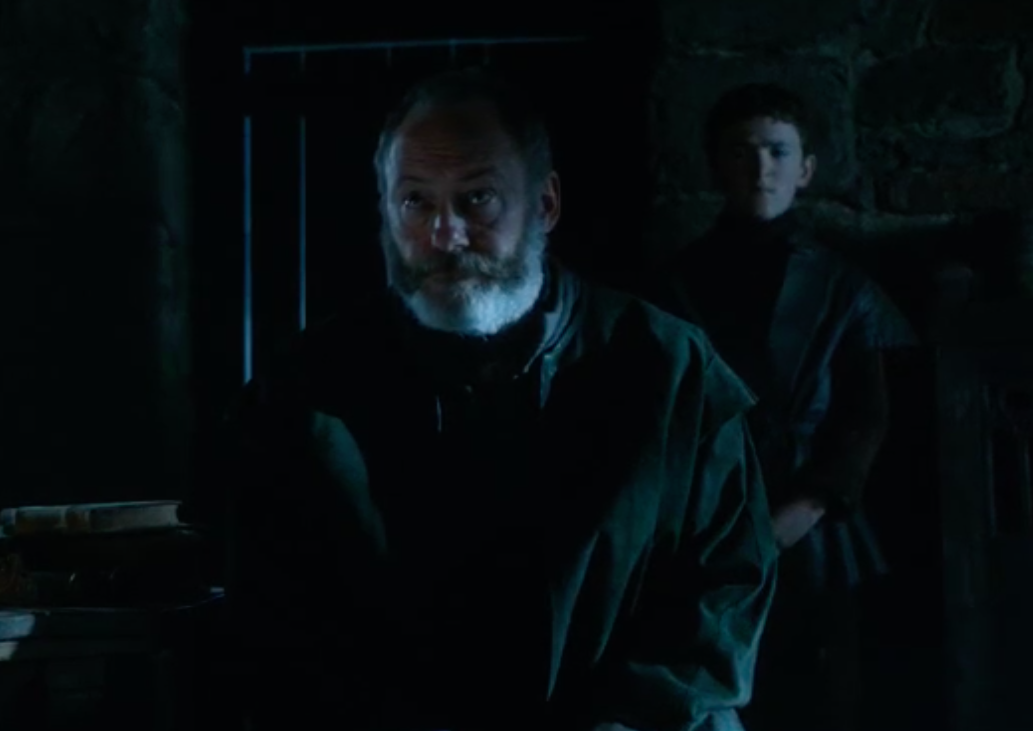
Jon shows deference and respect for Stannis, but he doesn’t listen to him. Davos, on the other hand, has always been a reasonable man, and he hangs back as Stannis leaves, telling Jon that Stannis isn’t just blowing smoke; he actually believes in Jon Snow and knows what a powerful man he could be. He reminds him of his pledge as a man of the Night’s Watch, that he is “the shield that guards the realms of men.” And he explains to him that sitting up here at the Wall, away from the politics and bloodshed that’s happening in the Seven Kingdoms, might not be the most effective use of his talents, nor the most helpful he could be here. As he leaves, he says forebodingly that “as long as the Boltons rule the North, the North will suffer.”
davos

Later, at the first Council meeting — where Maester Aemon is noticeably absent, which worries me — Jon immediately shows that he will be a fair ruler, and one the men will follow. When he assigns a man to oversee the rebuilding the latrines — “seems like a good job for a ginger — the man simply laughs along with everyone else, but does so without argument. Ser Alliser has a look on his face as if he thought that was going to be the task Jon would assign him. But Jon isn’t looking for revenge; he wants the most effective team of men he could possibly have. Instead, Jon makes him First Ranger, telling everyone that he’s proved his worth and valour. Alliser looks surprised, but immediately chuffed. Jon has made a cunning move — in one swoop, he puts the best man on the job, but also pulls that man over to his side by praising him before all the other men.

Lord Janos, on the other hand, doesn’t fare so well. And again, it’s because Jon is honest: he wants the men on his side, but not at the cost of the Night’s Watch. And he knows that Janos is a snivelling coward, unable to take on anything but the most menial of tasks. While he doesn’t put him as captain of the latrines, he does place him as Commander of Greyguard. This is a castle located further along the Wall that has been largely abandoned, and is falling apart. In other words, the perfect fortress for a coward.

Unlike the ginger, Janos is not going to go quietly into that good night. Jon calmly and reasonably explains to him, as if he’s a toddler, that he is the Lord Commander, and that was an order. “I will not have it!” says Janos. “Do you hear me, boy? I will NOT have it!!” Jon, once again calmly, asks him if he’s refusing to obey an order. And Janos, much to the delight of the viewers — because who doesn’t want to see bad things happen to Janos? — tells Jon to stick that order “up your bastard ass.” Ser Alliser smilingly looks in the direction of Jon, waiting to see what the boy will actually do. Does he have the stones to be the Lord Commander? Is he willing to do what it takes? Jon tells his men to get Janos outside and to grab his sword. The men do so willingly. For one moment, Ser Alliser stands between Janos and the men, but then steps aside. He’s on Jon’s side, and will, for now, follow the Lord Commander who has given him this new honour.

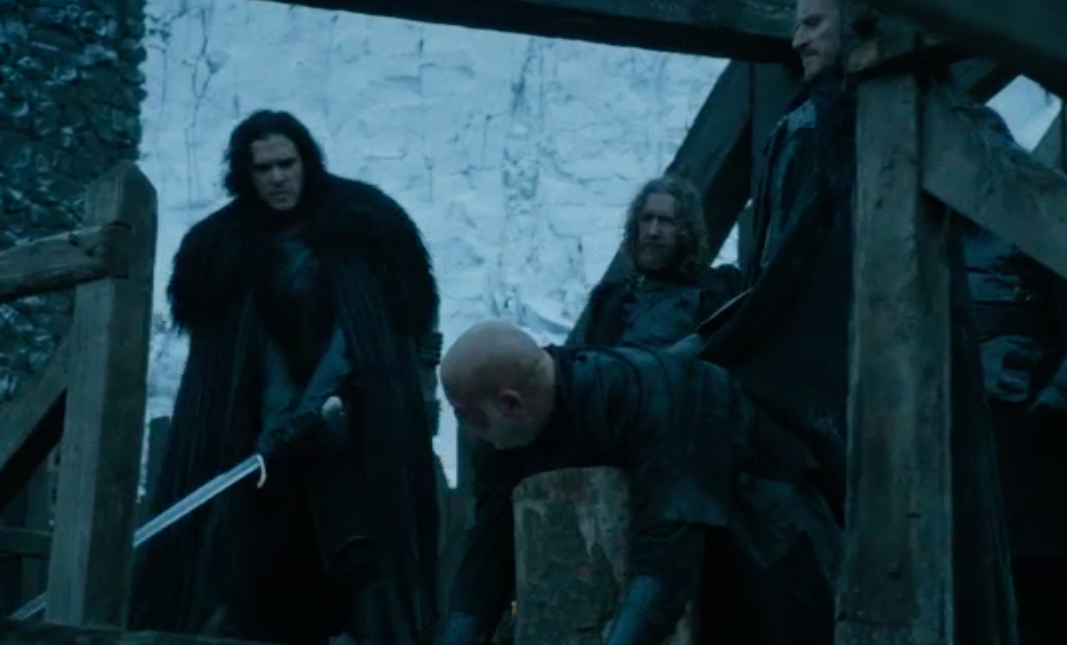
Jon walks meaningfully to the executioner’s block outside, as Stannis watches from the balcony, and stands before Janos, both hands folded on the handle of his sword.
janos_beheadingned

The very scene reminds the viewer of our first scene with Ned Stark, all the way back in the pilot episode. A deserter from the Night’s Watch is brought before Ned, and pleads with him that he really did see white walkers, something that Ned and every other sane man of the North believes is a lie. As the man is put on the executioner’s block, Ned pulls Ice from its sheath (held by Theon Greyjoy) and says he is doing this is the name of King Robert. Jon Snow leans over to Bran, and tells him not to look away, because Father will know if he does. Robb stands silently, watching intently, and Bran very carefully does not close his eyes.

All these years later, so much has changed from that now-quiet scene, and Jon knows that Ned was wrong in his assessment. The white walkers are real, and that man wasn’t a deserter, but was telling the truth. Janos, on the other hand, is not innocent, and Jon must do this to earn the respect and fear of his men.

Earlier, when Stannis made his offer for Jon to take the Stark name, take back Winterfell, and rule the North, he says in response to Jon’s refusal: “You’re as stubborn as your father. And as honorable.” Jon replies, “I can imagine no higher praise.” Stannis replies tersely, “I didn’t mean it as praise — honour got your father killed.”

Now, unlike the deserter a lifetime ago, who refuses to back down on his story, Janos immediately takes back everything, apologizes, says he was wrong and that he’ll do Jon’s bidding. But Jon knows better: if he lets him go, Janos will see how weak he is. He pulls back the sword, and Janos begs for mercy — in a way Mance Rayder refused to do two episodes ago. Jon pauses as Janos snivels that he’s afraid, and has always been afraid. Jon’s face is a complicated mix of sympathy and loathing. He’s disgusted by Janos, and yet Janos is begging for mercy. Does he grant him that mercy, and banish him in disgrace? The problem is, the Night’s Watch is, in itself, a banishment. And so he does the only thing he believes he can: he chops off Janos’s head in a MUCH more graphic close-up than the one Eddard had four seasons ago. Stannis, standing on the balcony, nods almost imperceptibly, but Jon sees it. He showed no mercy, just as Joffrey showed none for his father when Ned lied and took back everything on the executioner’s block. Just like Daenerys showed no mercy to Mossador. Just as Stannis showed none to Mance (not that Mance was asking for it). Jon has now shown that he has what it takes to be a leader in Westeros, for better or worse. And you can tell just by looking at his face, that having Stannis’s approval makes him wary of whether or not he did the right thing.

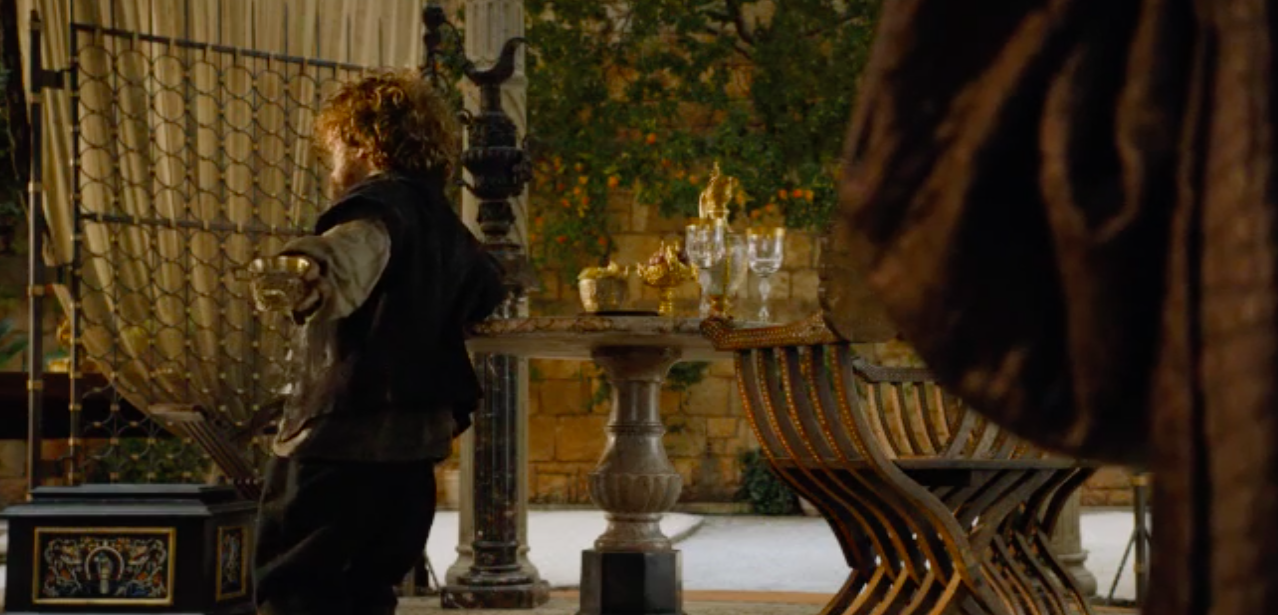
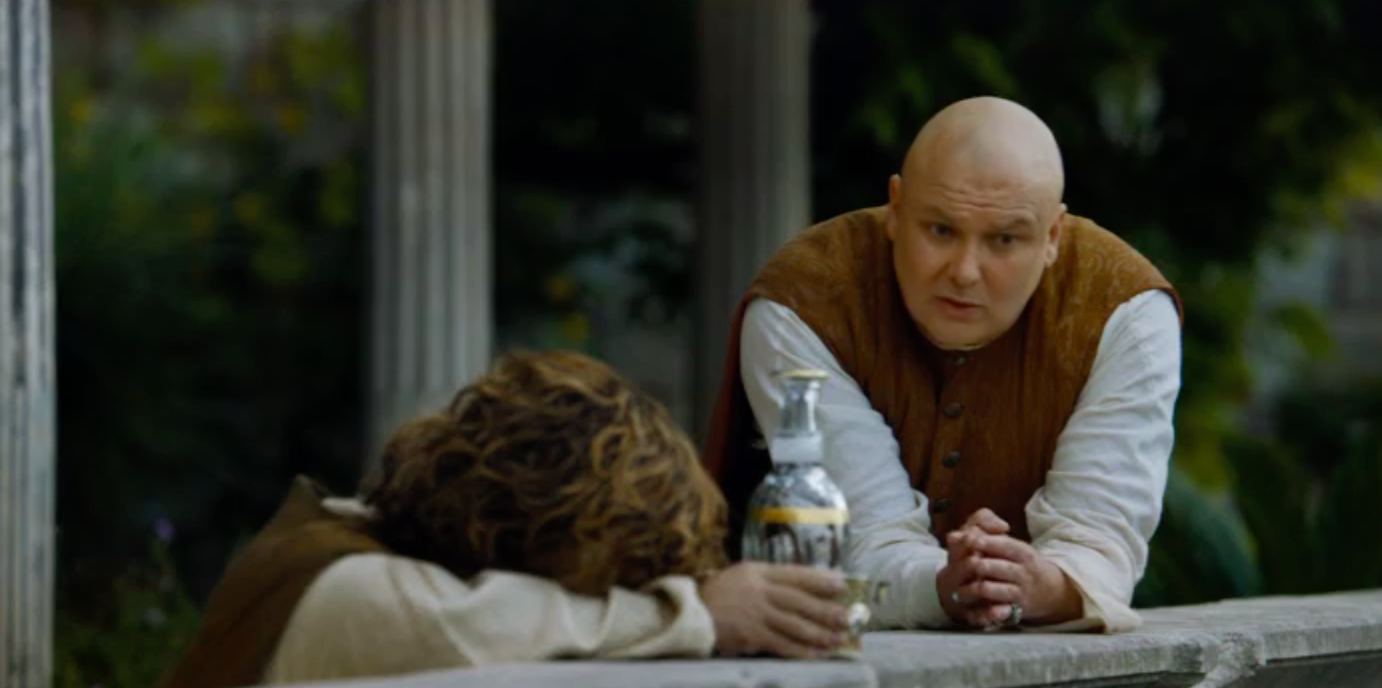
And finally, the Varys and Tyrion road show disembarks and Tyrion gets to see real humans with hair once again as he dresses in an Obi Wan Kenobi robe to blend in. Do you think Tyrion took a chance he shouldn’t have taken, Chris?


Jedi Tyrion.

Jedi Tyrion.

Christopher: That’s a difficult question to answer, in part because we sort of meet up with the novels’ storyline here again: Tyrion’s journey to Volantis is dramatically abbreviated, but his abduction by Ser Jorah is consistent with GRRM’s version. So to answer your question: well, yes … given that he ends the episode with a hood over his head and a noose around his neck, perhaps it would have been better to stay in the wheelhouse. On the other hand, of all the possible problems of which they might have run afoul, being recognized by a disgraced Westerosi knight in his cups at the brothel they just happen to choose seems like something of an infinitesimal eventuality.

Whatever else one thinks of the Volantis interlude, once again the designers have outdone themselves. That long bridge stretching across the bay, piled high with buildings, is a magnificent rendering of how GRRM describes it in A Dance with Dragons. I remember that last season you commented about the odd dearth of high-end CGI in the first two-thirds of the season, which was seemingly explained by the massive expenditure that must have gone into the creation of the battle at the Wall. They’re not being so parsimonious in the early stages of this season … I wonder if the powers that be at HBO have just decided to give Weiss and Benioff whatever toys they desire.

There are several notable moments during this sequence aside from the sudden re-appearance of Lord Friendzone. The view of the massive bridge encrusted with precariously tall structures is one. Another is Varys’ exposition on the way in which the Volantines brand and organize their slaves, by the small but unavoidable tattoos they all have on their cheeks. We begin to see something that has not yet made its way to Westeros, namely the spread of the Daenerys legend. Until this moment, we have either known her as a rumour, a gnat in the ear of people like Tywin Lannister—who, half a world away, can’t bring themselves to take her seriously—or we have been immersed in her story. We haven’t had this halfway experience: far enough away that she is more legendary than real, but close enough that people take her seriously. The tales of her conquests, we realize, must be so very tantalizing to the huge slave population of Volantis, and rumours of her beauty are palpable enough that a prostitute with white-blonde hair can style herself reasonably well as Daenerys, and be in great demand by the brothel’s clientele. The street sermon by the red priestess reminds us that the reappearance of dragons in the world must be quite the thrill for those who worship the “Lord of Light,” but there’s also the added dimension here that she was obviously herself once a slave—the appearance of an abolitionist queen with dragons must be like the signs of the End Times.

hot-priestess

One wonders what Melissandre would think.

One thing I found interesting in the brothel scene was Tyrion’s sudden, surprising inability to hire the whore he’d been chatting up. The show has gone out of its way to make Tyrion an appealing character, starting from the casting of Peter Dinklage. The Tyirion of the novels is far more repulsive in appearance than the handsome Dinklage, especially after his wounding at the Battle of the Blackwater (which leaves Dinklage-Tyrion with a fetching scar as opposed to losing most of his nose). By the same token, the Tyrion of the novels, while charming, is also given to more repulsive behavior at times, never more than when he arrives in Volantis. Rather than suddenly suffering from uncharacteristic inhibition, he gets blind drunk, and has sex with a prostitute with whom he is verbally and borderline physically abusive.

I’m not saying the Dinklage-Tyrion isn’t preferable, just that it looks as though the series is keen to sanitize his behaviour rather a lot—right down to his reason for preferring the brunette to the faux-Daenerys, because she has a “skeptical mind.”

Which of course leads us to the moment where his series storyline merges again with the novels. We see Ser Jorah briefly before the final moment, obviously drinking away his misery as best he can … and presumably not succeeding as he watches faux-Daenerys flirting with a bunch of drunken louts. One wonders if he’d paid for the trade of this particular prostitute; as he watches her basically giving a guy a lap dance, I was wondering if he would go over and pick a fight with the louts, or possibly drag her away for his own pleasure.

But of course he does neither, having instead spotted Tyrion and recognized him. And we end with his snarled promise that he will bring him to the queen.

But … which queen?
 

Uh oh.

Uh oh.


Well, for that answer, check in with us next week … for now, on behalf of Nikki and myself, I say: stay warm, make sure to feed your direwolves, and be wary in strange brothels.
Leave a comment

Filed under Game of Thrones

Game of Thrones 5.02: The House of Black and White

gameofthrones_teaser02_screencap10

Willkommen, bienvenue, valar morghulis!

Welcome to the second installment of the fifth season of the great Chris and Nikki Game of Thrones co-blog. With me as always is the beautiful and brilliant Nikki Stafford, who has not read the books, and will offer the perspective of one who does not know what’s coming. HOWEVER, as mentioned last week, this season looks primed to depart from GRRM’s script in significant ways, and this episode makes those departures more emphatic.

But enough preamble. Forward!

titan

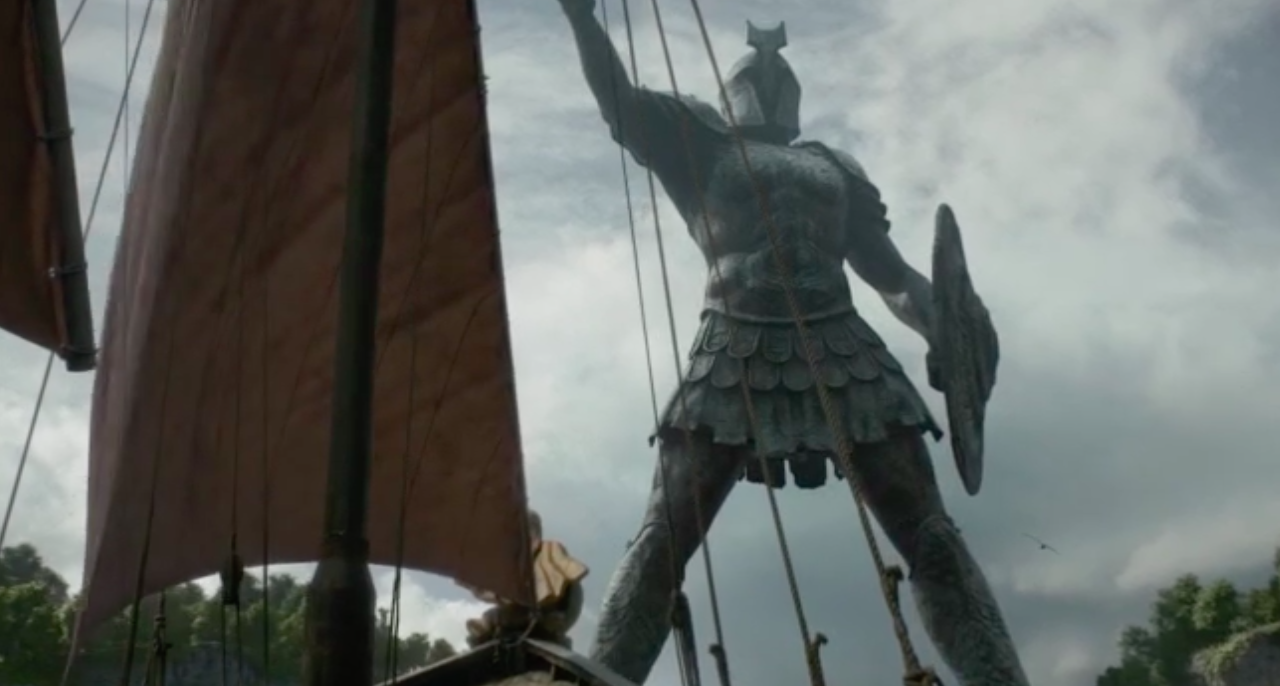
Titan of Braavos upskirt!


Christopher: I just want to begin by saying: wow, they weren’t kidding when they said this season was going to diverge far more significantly from the books. We have a number of crucial changes here, ones that very likely can’t be mere narrative side-trips that then link up with the main story again (such as Jon Snow’s raid on Craster’s last season). Sansa and Littlefinger’s departure from the Vale, their encounter with Brienne at the inn—which effectively obviates Brienne’s narrative through A Feast for Crows, as she now has no mission—Jaime’s mission to Dorne with Bronn in tow, all of these plot points open up uncharted territory for anyone who has read the books.

I think it’s safe to say that the message boards and discussion threads will become very heated as fans argue themselves hoarse. For myself, I am cautiously optimistic, but also somewhat realistic about where we’ve arrived in the show versus the novels. When A Dance With Dragons first came out, I tore through it in a day and a half, reading it like a starving man at a Vegas buffet. When I reread it some time later, taking my time, it was a much more ambivalent experience: it became, as a friend of mine said, like pulling taffy. There were still a lot of amazing sequences, but the overall feeling was that GRRM had let the story get away from him. ADwD boasts no fewer that sixteen POV characters, which is double that of A Game of Thrones. So I think it’s not just fair, but necessary, that Weiss and Benioff venture off on their own, presumably with GRRM’s blessing.

But I’ll speak more to the divergences as they come up in this post. For now, let’s begin at the beginning with something that, until its final moment, falls out roughly in line with the novels: Arya’s arrival in Braavos, and her induction into the House of Black and White. We’ve seen Braavos before, though mostly from the perspective of the inside of Mycroft’s Tycho Nestoris’ impressive bank. Now we get something more of a street—or canal—view, and see more clearly the specifically Venice-like quality with which GRRM has imbued this city. I halfway expect to see Salerio and Salanio hailing Arya with “What news on the Rialto?”

arya_boat

Arya, in spite of her assertion that she’s not afraid, is obviously at the least rather trepidatious, startling when the Titan hails her ship’s arrival with a massive horn blast. The ship captain ferries her to the House of Black and White, waving off Arya’s thanks with “Any man of Braavos would have done the same.” That being said, he is by no means inclined to hang around and make sure everything works out for her, immediately rowing off as soon as he’s said his goodbyes. It’s made a little clearer in the book that the captain has fulfilled something resembling a sacred obligation, but that, his duty done, wants nothing more to do with Arya or her destination. Which makes sense: if this is indeed a house of assassins, I certainly wouldn’t want to linger.

And … Arya is rather coldly turned away. “I have nowhere else to go!” she protests to creepy robed man. “You have everywhere else to go,” he responds cryptically, and closes the door in her face.

What is Arya to do? Well, besides camp out in front of the House of Black and White, fingering Jaqen’s coin and reciting her kill list? After an indeterminate amount of time, which seems to be at least a day or two, she despairs and throws the coin in the canal. Exit, stage left … and when we next see her, she is quite deftly decapitating pigeons in the narrow streets of Braavos because, well, holding a several day vigil culminating in despair makes a girl hungry. But she runs afoul of a bunch of local thugs—and we see just how fearless Arya has become, telling them to walk away without flinching or any hint of nervousness. Traveling across half of Westeros in the company of the Hound makes a few street louts small beer, apparently. It would have been interesting to see how the fight proceeded, and whether Arya was justified in her bravado; but she is saved by the reappearance of creepy robed guy, whose very presence makes the thugs run away (not like little girls though, as it’s the little girl who has the stones to hold her ground).

She follows him back to the House, and gets back her coin—which considering that it was last seen sinking to the silt of the canal, is an impressive piece of prestidigitation. And then comes the moment that, as I watched it, the disturbance I felt in the Force was presumably Nikki squeeing.

What do you think of the return of your favourite assassin, Nikki?

jaqen_returns

A man always maintains his highlights.


Nikki: Your premonition was correct, sir. My notes reflect it with the “JAQEN!!!!!!” that’s written in huge letters across the bottom of one page. Oh, how I have missed him. Or, should I say, oh how a woman has missed a man.

I must add that the Lostie in me couldn’t help but snicker when Arya walked up to the doorway. Watching with a group of friends, I said, “Two doors, two sides: one is white, one is black.” I was convinced John Locke was going to be on the other side of that door.

The special effects they used to show us Braavos were magnificent. I did wonder why, in Arya’s kill list, she’d left off Ilyn Payne. He was always one of the ones she was after. Or why she hasn’t added Roose Bolton to the list. Joffrey’s gone, so clearly word has leaked to her that he’s dead, so one would think that she’d hear little voices giving her other updates.

brienne_sansa

Meanwhile, in the north, Brienne has caught up with Sansa and Baelish, as you pointed out, and she is totally badass, as I love my Brienne being. She has lost her purpose when Arya turned down her offer of protection, and now she’s two for two with being rejected by Stark girls. Unlike with Arya, however, Brienne intuits that Sansa isn’t acting of her own volition, and she cuts loose the horses of Baelish’s men, races through the forest with them on her heels, gets separated from poor Pod, turns around, and still manages to save Pod, take out a knight or two, and get back on the trail of Baelish’s men. She is amazing. Gwendoline Christie continues to up her game every year with this character. She’s meant to be this lumbering giant of a woman, who is unattractive yet exceedingly loyal, and Christie — who is gorgeous outside of the character — pulls it off, giving Brienne this stubborn resolution that when she makes a promise, she damn well keeps it. Her loyalty to Catelyn Stark is unyielding, and in a show where every character switches sides several times an episode, Brienne’s allegiance never wavers. It’s hard to tell if Sansa is scared of Baelish, as Brienne believes she is, or if she’s just made yet another wrong decision in a long line of wrong decisions by turning her down, but in any case, Brienne isn’t giving up this mission.

Meanwhile, way over in Dorne, Ellaria, Oberyn’s lover, is super pissed at what has happened to him. She appeals to the Prince of Dorne that they torture Myrcella in retaliation, and she is clearly the one behind the threatening pendant that gets sent to Cersei. Also, she mentions the Sand Snakes; thanks to Entertainment Weekly, I not only know who they are, but I’m ca-RAY-zee excited to see their debut. What did you think of our glimpse of Dorne?

bashir&niobe

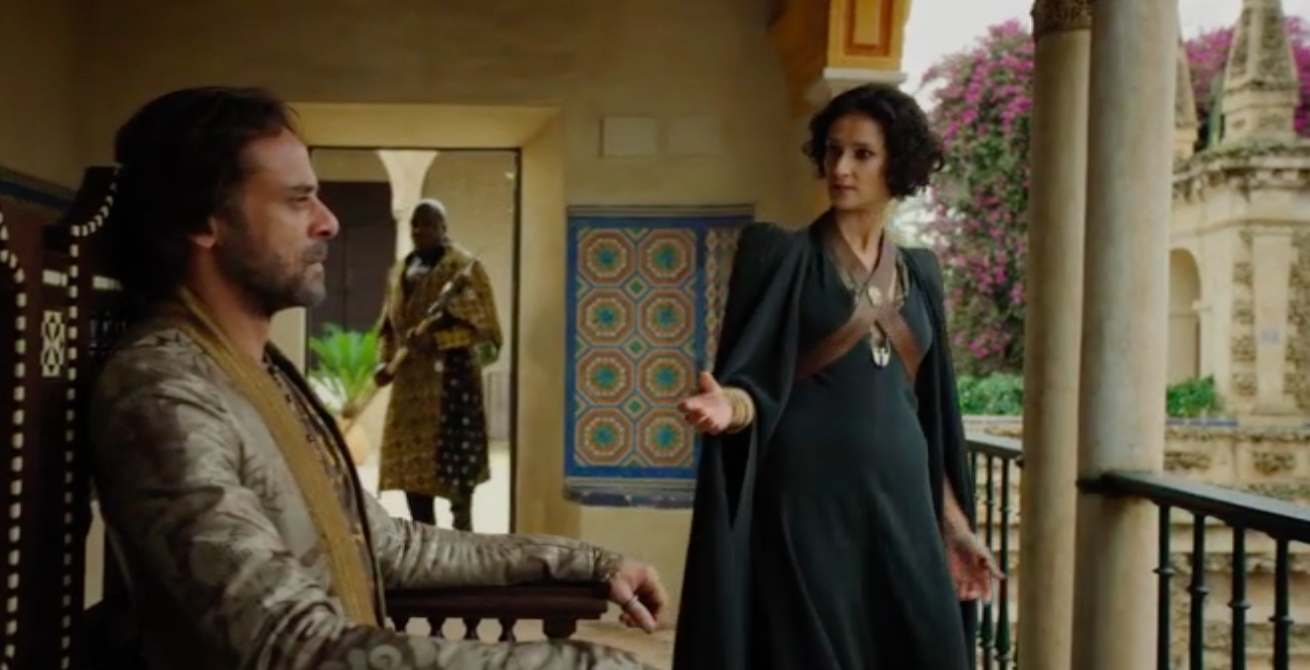
Christopher: As with Braavos, they’re not scrimping on the sets and effects budgets. The Water Gardens, Prince Doran Martell’s favourite place to hang, has been rendered in nothing less than exquisite detail. Dorne is one of the more interesting places in the Seven Kingdoms, not least because it is the one region that does not conform to the typical fantasy convention, bequeathed by Tolkien, of an alternative world that bears a striking resemblance to medieval northern Europe. Sad to say that GRRM does indulge in some typical clichés: the hotter climes are inhabited by similarly hot people, both in terms of their looks and temperaments, but even so it makes for a welcome change from the usual mail-clad Saxons that have pervaded the story so far. Oberyn and Ellaria added depth and complexity to season four—I look forward to seeing what their broader families bring to season five.

I’m delighted that Indira Varma is reprising her role as Oberyn’s paramour, and not just because I think she’s one of the most beautiful women ever. Her rage and intensity in her scene with Prince Doran was a great bit of almost-but-not-quite scenery chewing, and wonderfully offset by the prince’s steely calm.

And if I may nerd out for a moment: GoT continues with its spectacular casting with Alexander Siddig as Doran Martell. The all-caps in my notes when he first appears are “DR. BASHIR!” I was a big fan of Star Trek: Deep Space Nine, which I think is my sentimental favourite of all the Star Treks, and I always loved his character on that show.

He is himself a pretty extraordinary actor, and you see that in his understated performance in this brief scene, playing against the cliché: he is all icy restraint in the face of Ellaria’s simmering rage, and his expression communicates to the audience that which Ellaria is apparently, in her rage, blind to: that he too desires revenge against the Lannisters, but is too smart to take his vengeance in the most obvious and immediate way. “We do not mutilate little girls for vengeance,” he says, “Not here. Not while I rule.” When he said this, I immediately remembered Oberyn’s conversation with Cersei in the previous season, when he assured her that in Dorne they do not hurt little girls. “Everywhere in the world,” Cersei replied bitterly, “they hurt little girls.” But not, apparently, on Prince Doran’s watch; and his admonition to Ellaria is just one of the myriad little signals of the similarities between brothers.

I too am excited to see the Sand Snakes. I think the only thing I’ve ever seen Keisha Castle-Hughes in was her Oscar-winning performance in Whale Rider; I loved that film, and was utterly blown away that a thirteen-year-old girl could pull off such a powerful performance. And her she is, all grown up, and the publicity shots HBO has circulated make it clear she is every inch her father’s daughter and the undisputed leader of the Sand Snakes.

sand-snakes

Keisha Castle-Hughes, Jessica Henwick, and Rosabell Laurenti Sellers as the Sand Snakes: Obara, Tyene, and Nymeria.


There is a lot more I could say about these characters apropos of the novels, but I will resist until they have actually appeared on the show. But wow, do I want to talk about them.

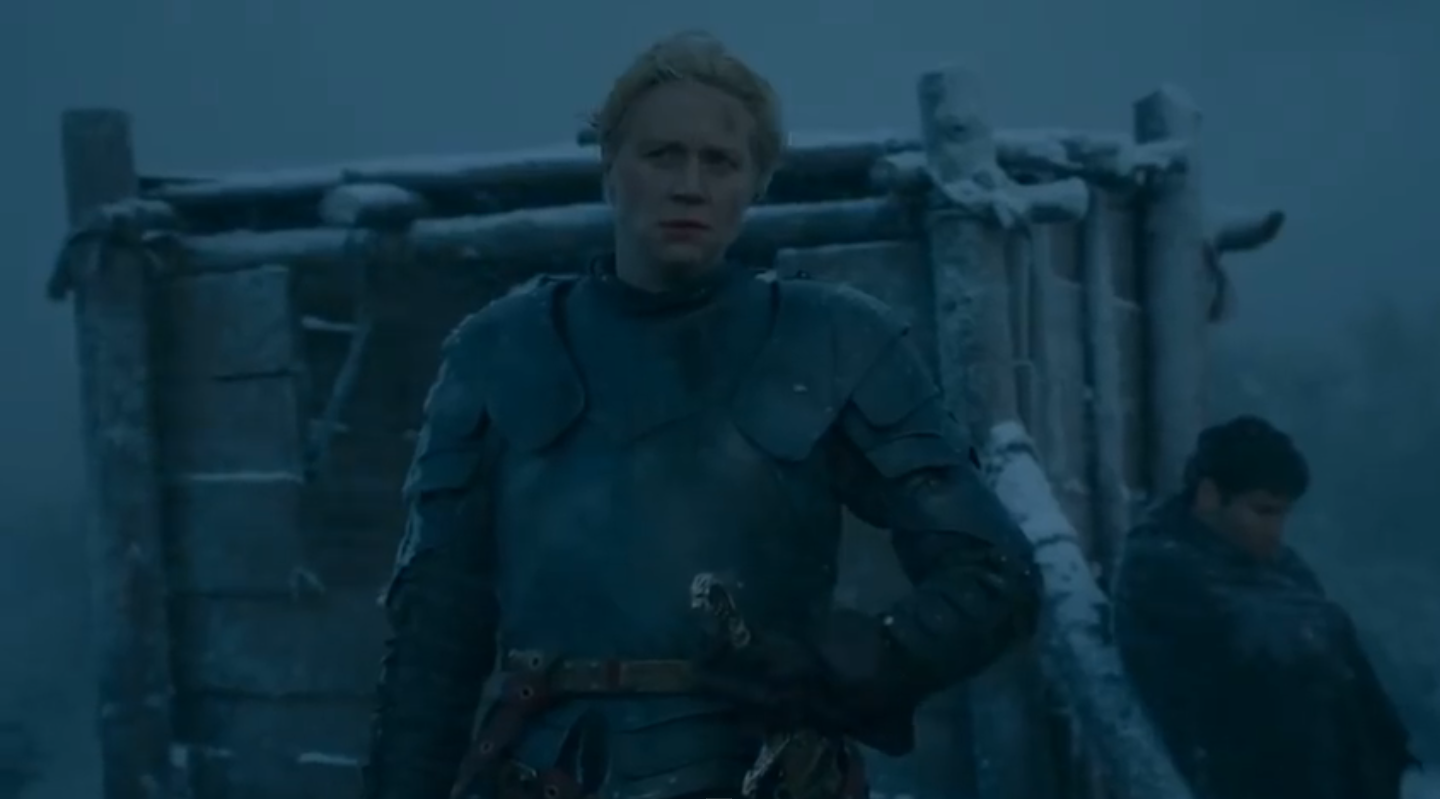
If I can just return for a moment to Brienne’s encounter with Sansa: I can’t emphasize how much of a change this is from the novels, not least because it completely obviates her entire storyline in A Feast for Crows. She’s now found and been rejected by both of the girls she was sworn to protect. In the novels so far she finds neither of them, but has a road-trip tragicomedy with Pod. Now … what? presumably she tries to follow Sansa, as seems to be her intention at the end of this episode, but that doesn’t seem wise. I think I know where she’s heading, however, based on a split second image in one of the trailers. Speculating might seem a bit spoilery, so I’ll just show you the screen cap.

cold-brienne

From Dorne … wait, one more point. We went to Dorne in this episode, but it wasn’t in the credits! What’s up with that?

Ahem. From Dorne, we go to Mereen, where Daario schools Grey Worm on the finer points of undercover investigation. And what transpires can really only be called a clusterfuck. What do you make of the Mother of Dragons’ increasing difficulties in managing her provisional kingdom, Nikki?

council

Nikki: I was surprised not only that Dorne wasn’t in the credits, as you point out, but that the golden harpy continues to be on the top of the palace of Meereen in the opening credits, despite it being taken out in quite astonishing fashion in the previous episode. Usually they’re really good with keeping the credits in line with the episodes themselves. Maybe that’ll be corrected before the end of the season.

But oh, Daenerys. I said in last week’s post that Tyrion could be the perfect advisor for her, but at this point, the problem isn’t who advises her — it’s how she interprets that advice. Earlier in the episode Ser Barristan tells her about the Mad King — her father — who was so ruthless, so brutal, that he more than earned the negative name by which he’s now known. After listing off the tortures that Aerys imposed on people — and the pleasure he derived from it — Ser Barristan says, “His efforts to stem dissent led to a rebellion that killed every Targaryen… except two.” Daenerys listens to every word, her chin falling as her eyes remain on Ser Barristan, almost looking like a little girl again for a moment, and you see her take a nervous swallow at one point as she processes everything he’s telling her. “I’m not my father,” she says. He agrees, but adds that the Mad King “gave his enemies the justice he thought they deserved,” and despite it making him feel more powerful, his reign came to a bloody end.

Ser Barristan delivers his speech immediately following a Council session, where Daenerys and her advisors discuss what to do with the man who killed White Rat. The table is split down the middle between those who want him killed, and those who want a fair trial. Mossador, the former slave, argues that this is Meereen, and here, when he was a slave, he worked under people who showed no mercy. Anyone who kills should be shown the same, he says. This man does not deserve a trial, and should be killed to teach a lesson.

Oh, how prophetic his words will become.

In the previous episode, when Mossador asked why Daenerys would annoy the nobility to search out who had killed White Rat, she replied that when angry snakes are bothered and lash out, it’s easier to cut off their heads. And so, in this episode, even when he finds out that Daenerys has decided to offer a fair trial to the murderer, Mossador goes down to his jail cell. The man is rude, tells him Daenerys doesn’t deserve to be there, that she will never be his mother no matter how many times they call her “Mhysa.” With the help of the Unsullied, Mossador kills him and stands him up in the street for all to see. He believes that he’s doing what Daenerys wants, that she’s being pushed to offer a fair trial when what she really wants is justice for her children.

But Daenerys is furious. He tells her that he did it for her, that the masters will never allow the slaves to rise up into positions of power. Daenerys, naive as always, says there are no more masters or slaves, as if people’s very ideology can be changed overnight. He argues that the Golden Harpy is killing her children. We cannot forget that when Daenerys first came to Meereen, Mossador was the slave who stood up and argued for the other slaves to join her, to rise up against their masters and fight. He reminds her of this, and that he lost his own father in the fight that he helped lead to allow Daenerys her victory. But despite everything he says, despite his pleas, she resolutely states, “The law is the law.” The look on Mossador’s face is one of utter disbelief: how could the woman who was there to free him offer a trial to the murderer, but execute one of her “children” in front of all the others?

Yeah. THIS will end well.

Yeah. THIS will end well.

The Mad King acted out of sadism; Daenerys acts out of a sense of teaching discipline. Despite their different intentions, the end result is the same. Daenerys stands as the mother before her children, explaining that Mossador acted wrongly. The people have accepted her as their Mhysa, and they call Mossador their “Brother” as he kneels before Daenerys. They assume they’re here to see a whoopin’, but when Daarios pulls out a scythe dagger and holds it next to Mossador’s neck, their adoration suddenly turns to horror. They beg her, they cry, they hold out their arms and plead with her. Mossador quietly pleads for his own life, but it’s too late. With one swipe, Daenerys commits infanticide in the eyes of her people, and they begin hissing at her.

She’s provoked the angry snakes, all right, but they turned out to be her own children.

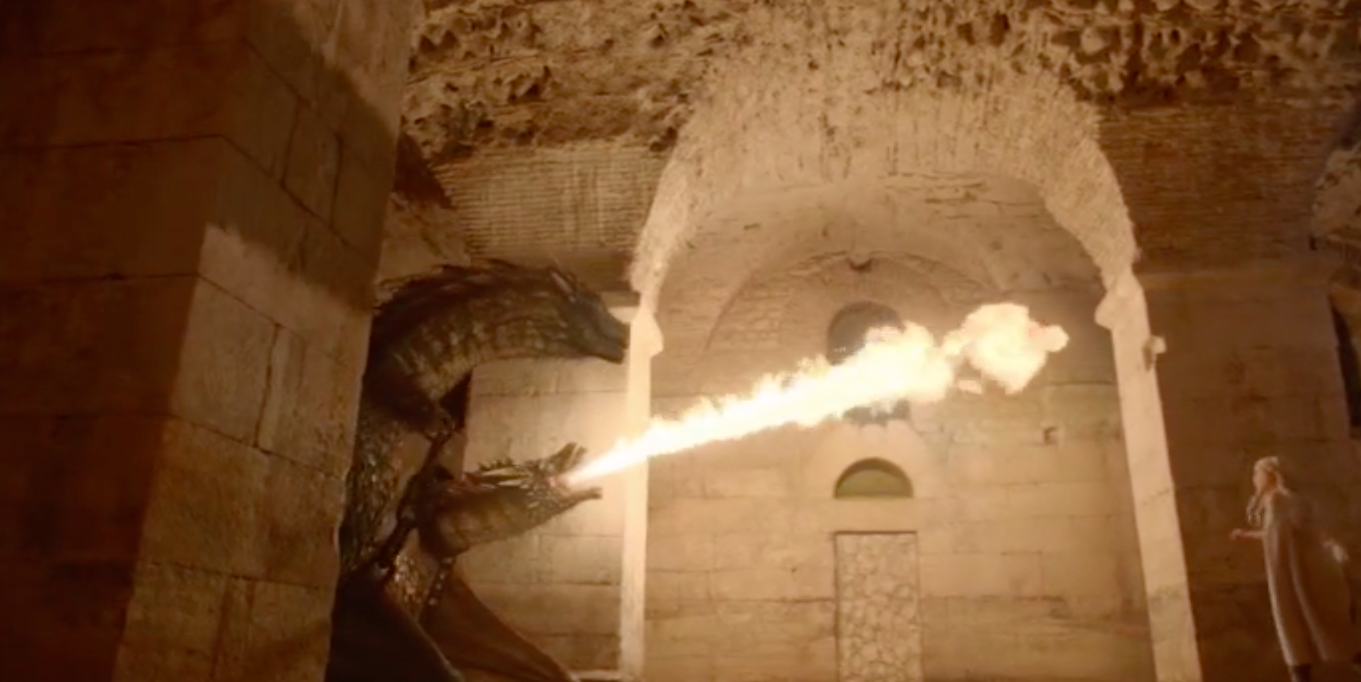
The Unsullied are no longer there to protect her people against those who would oppress them, but are now there to protect her against her people, who see her as a turncoat who promised one thing and turned out to be quite another. Just as her two dragons — her other children — attacked her when she went to check on them in the previous episode, now these people who see her as their mother have turned on her. As their Mhysa, she freed them from their chains. In order to keep them safe, she had to chain up her other children. But in trying to teach them a lesson, she’s taken things too far. At the end of the episode, when Drogon returns and leans down to her, she smiles in surprise, and reaches up — tentatively — to his face. Drogon was always her favourite dragon, but he’s also the most dangerous. He’s wreaked more havoc than anything or anyone else who has pledged fealty to her. Will he turn out to be an asset, or more of a detriment? Can she get out of this one?

Meanwhile, up in the land of the ice and snow, Gilly is learning to read thanks to Shireen, and the Happy Lords of the Night’s Watch are choosing a new leader. Was the vote for Jon (which is, no doubt, a Vote for Change) consistent with the novels, Chris?

gilly_shireen

Christopher: Vaguely consistent, but carried out (mercifully) with far more brevity. In A Storm of Swords, the voting is a protracted affair that proceeds like a presidential primary: a multitude of candidates, some popular and some not, an interminable series of ballots, some candidates pulling out of the running and throwing their support behind someone else, and so forth … all while Stannis fumes at how long it’s taking.

One of the key differences is that Janos Slynt is the key antagonist here, with Ser Alliser backing him, as opposed to vice versa as they have it on the show. In terms of differences from the novels, I should point out here that Janos was actually a much bigger antagonist in the book: he arrived at Castle Black just as Jon made his way back from his sojourn with the Wildlings. Taking provisional command of the Night Watch, Janos threw Jon in a cell, branding him a traitor. And he remained Jon’s implacable enemy from that day forward, even after Jon was exonerated and released.

The whole voting process (which, though protracted, wasn’t actually that tedious) unfolds mostly from Sam’s perspective, and he manages to work behind the scenes to convince some of the major players to endorse Jon Snow. When the final vote happens, it is overwhelmingly in his favour.

That being said, I appreciate how they’ve tightened it up here; I loved Sam’s speech about Jon; and I loved even more that it was Maester Aemon who cast the deciding vote.

Maester Aemon goes all in.

Maester Aemon goes all in.

All of which takes place while Jon has to decide whether or not to accept Stannis’ offer to legitimize him as a Stark and give him Winterfell. Which on one hand is of course a betrayal of his vows; on the other, it’s everything he’s ever wanted. His decision in the novel is more agonized, and effectively decided by his elevation to Lord Commander. There’s also the added dimension that, in the novels, Mance Rayder has a wife and a sister-in-law. His wife dies in childbirth as Stannis’ forces descend on the Wildlings, but the child lives. Gilly becomes wet nurse to the King-Beyond-the-Wall’s heir. And the sister-in-law is a strikingly beautiful blonde woman named Val. Given that she is Wildling “nobility” (and gorgeous besides), a not-insignificant number of Stannis’ knights start to imagine that she would make a good and profitable marriage. But to sweeten his offer to Jon Snow, Stannis says that he would give him Val as a wife, thus cementing by marriage an alliance between the North and the Farther North.

Of course, Jon turns Stannis down. He is his father’s son, after all (or is he?). Honour and duty define his actions, whatever his previous dreams and desires.

Which I believe brings us to Tyrion and Varys, who have wasted no time in getting on the road to Volantis. And at the risk of repeating myself: thank the gods. Way too much time was spent in A Dance with Dragons with Tyrion moping about Illyrio’s mansion, getting really drunk and feeling sorry for himself. He’s still feeling sorry for himself, but at least he’s doing it on the road, and being quite funny at the same time. One of the things I’ve loved about this series is the way it always manages to give us at least one odd couple per season, paired characters whose personalities provide tension comic, dramatic, or both: Varys and Littlefinger, Jaime and Brienne, Brienne and Podrick, Arya and the Hound, Tyrion and Bronn.

What do you think of the comic potential for the Varys and Tyrion roadshow, Nikki?


Life in a box is better than no life at all. I expect.

Life in a box is better than no life at all. I expect.

Nikki: Every season I’ve said I would absolutely watch a spinoff of one of the roadshows, all ones that you’ve mentioned above. And Varys and Tyrion are no different. You have Varys, who always remains eerily calm — we have never seen him lose him temper or even raise his voice — even when prying the lid off a box containing the whimpering man who had castrated him so long ago. Tyrion, on the other hand — much like his sister — is looking for some sort of solace at the bottom of a bottle, and he’s a mess. Put them together, and you have the Imp being as obnoxious as he possibly can be, whining and stomping his feet that he wants out of the box (and, by the way, understandably so, since he just crossed the sea while crammed into one), and Varys, rolling his eyes and putting up with everything Tyrion does; the Felix to Tyrion’s Oscar. You mentioned last week that Tyrion spends far too long in the books feeling sorry for himself, and it seems they’ll definitely be truncating that for the show, though what we’ve seen is no doubt entertaining.

Also entertaining is the new Bronn/Jaime pairing, which as you’ve said above, doesn’t take place in the books. As viewers will recall, in season 4 Bronn was going to be Tyrion’s champion against the Mountain, but Cersei bribed him with a marriage offer that would raise his station. The price? He wasn’t allowed to help Tyrion. He took the bribe, but was up front with Tyrion that he did so. Tyrion, sitting in his cell, assured Bronn that there were no hard feelings, because Bronn had never hidden the fact that he was an opportunist, and that that quality is what Tyrion liked about him.

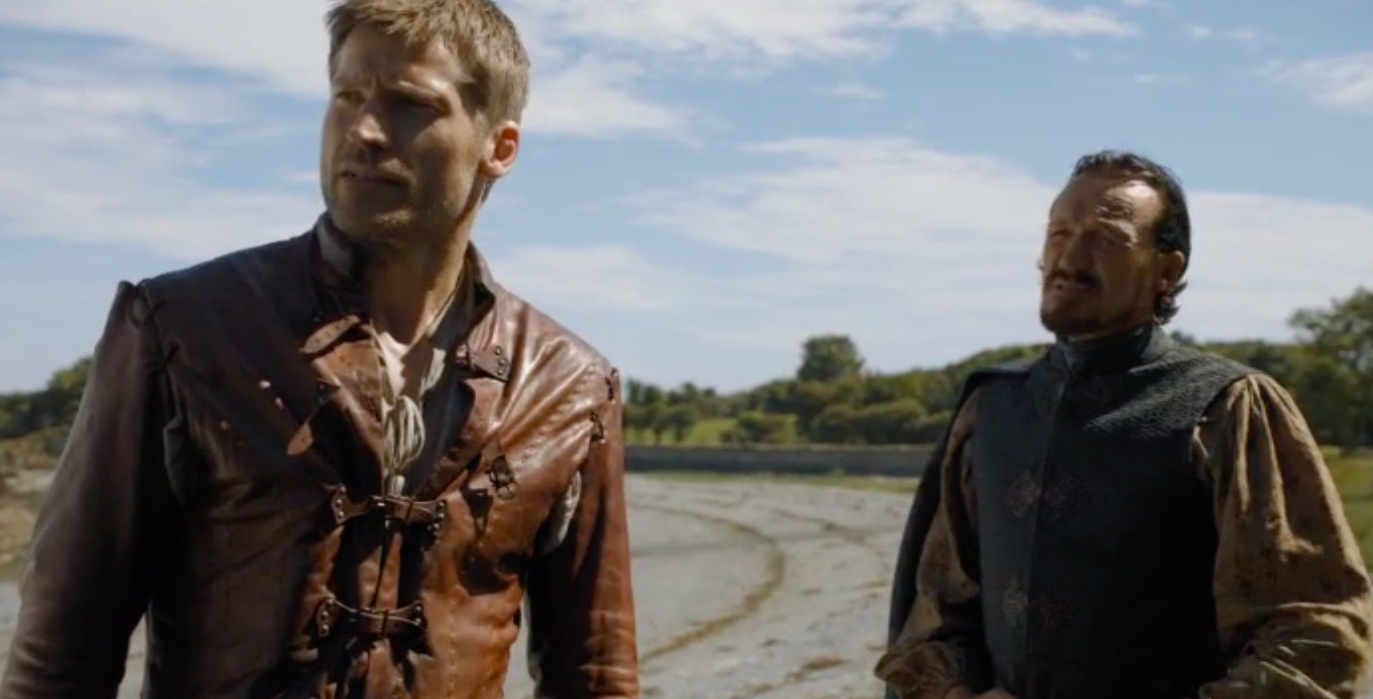
jaime_bronn

And so now we see Bronn with his new lady love, Lollys Stokeworth, or as I like to think of her, the Lady Edith of Stokeworth Abbey. She’s plain, and the barely-thought-of second daughter, though this one seems to be a bit of an idiot, blubbering about how her sister is so mean to her but that she’ll never inherit the castle (which seems to come as some surprise to Bronn, since Cersei had reassured him the sister would never lay claim to the castle and instead it would fall to him). When Jaime shows up, she’s like a 12-year-old at a One Direction meet and greet, fawning all over him, flirting, giggling, and generally acting like even more of an idiot than she had been before. Jaime tells him that Bronn is coming on a mission with him to rescue Myrcella from Dorne, and in return he’ll give him an even better marriage. Like the guy selling Christmas trees in A Christmas Story, who, after praising the virtues of a scrawny tree suddenly looks at it, says, “Hell, this ain’t no tree!” and tosses it aside, Bronn leaves without a second thought. And, just like her poor Downton counterpart, Lady Lollys is left alone once again, dealing with her awful sister.

Next week: Jon Snow is the new commander, Jaime and Bronn begin their own road trip, Tyrion continues his journey inside a box (or goes crazy enough that he finally breaks out of it), and Daenerys deals with the fallout of the execution of Mossandor. Or, as we like to think of it, just another day in Westeros!

1 Comment

Filed under Game of Thrones

Some thoughts on the Chakma affair

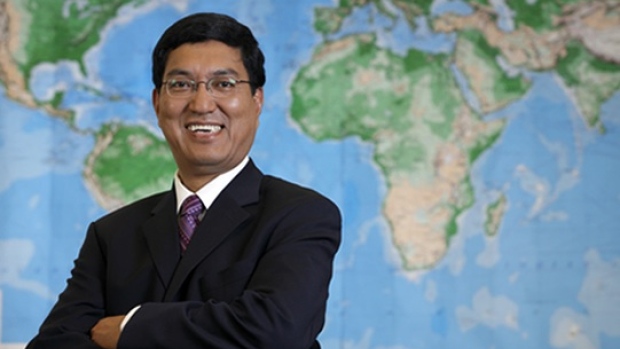
UWO President Amit Chakma.

UWO President Amit Chakma.

I have been watching the recent uproar at the University of Western Ontario lately with keen interest, not just because it is my alma mater, but because it epitomizes everything that is currently wrong with Canada’s university system.

For those unfamiliar with the situation, when Ontario’s annual “Sunshine List”—a publication of every public employee’s salary that exceeds $100,000—it came to light that UWO president Amit Chakma’s salary this year was $967,000, almost twice what it normally is. When people collectively said “WTF?”, a spokesperson for the university’s Board of Governors revealed a clause in Chakma’s contract: that after five years of service, he was entitled to take a year of paid leave to pursue research interests. This in itself is not unusual: it is what we normally call a sabbatical. The clause in question, however, stipulated that, should Chakma choose to work through his leave, he would collect his regular salary AND what he would have earned on sabbatical.

The “WTF?” outcry, predictably, only grew louder—and was aggravated by the fact that the responses from the president’s office were utterly tone-deaf, by turns dismissive, condescending, and entitled. It took them about two weeks to fully realize just how deep the outrage ran, and their attempts at damage control were paltry, culminating in a disingenuous apology from Chakma and a plea for a “second chance.” Most weren’t inclined to give it, and a motion of non-confidence was brought to UWO’s Senate (the motion was defeated, but not by a wide margin).

As loud as the outrage has been, Chakma has not lacked for supporters. The defenses have tended to acknowledge that, yes, double-dipping on his salary was probably not the best of all things, but maintain that if Canadian universities want to be competitive, they have to be willing to pay for talent at the top. That Chakma is a man of “vision,” that he has increased enrollments, secured grant money, and been a productive fundraiser.

What his defenders don’t mention is that, however much money he seems able to bring into the university, Chakma has also presided over increasing class sizes, huge cuts to staff, hiring freezes on faculty, and of course the concomitant rise in the use of part-time lecturers—all of whom are overworked and underpaid.

To anyone working in the academy today, this disjunction between the corporate rhetoric of upper administrators—for whom “excellence” is the watchword, though excellence in what form is never made clear—and the day-to day realities of teaching and research, in which professors are constantly enjoined to “do more with less,” to preside over ever-larger classes, and grind our teeth in frustration when retirements go unreplaced, has depressingly become the new normal.

To a certain extent, I’m not really in a position to complain: I am one of the few people who, upon graduating with my doctorate, were able to secure a tenure-track (now tenured) position. I am doing a job I love and compensated for it more than fairly. But when I look at the academy more broadly I get depressed and saddened by what seems to be an inexorable shift into a corporate model in which the foundational principles of academic freedom, tenure, and the intrinsic value of a liberal education are being eroded by such neoliberal preoccupations as austerity, utilitarianism, and profitability, and most perniciously the need to “synergize” the university with business.

The bellwether of this shift is administrative bloat: while faculty complements have contracted, administration has grown by a magnitude, with ever more positions for deans, associate deans, vice-presidents, provosts, and so forth being created, largely for the purpose of competing for a finite pool of students, donations, and grant money. And while faculty are being told to do more with less, that we have to tighten our belts, the salaries for administrators continue to grow along with their numbers. Amit Chakma’s base salary of $440,000 is at the higher end of presidential compensation, but is not unusual. Doubling up on this kind of money is outrageous, but a question that has been more or less overlooked in this kerfuffle is, quite simply: in what universe is a nearly half-million dollar salary not just acceptable but expected for a public servant? An Ottawa Citizen column chiding us for “salary-shaming” Chakma reminds us that “He’s running a $650-million institution with almost 30,000 students.” And yet he earns over twice as much as the premier of Ontario ($208,974), two hundred thousand more than cabinet ministers ($242,000), and about one hundred and twenty thousand more than the Prime Minister ($327,400). Yes, running a university is a big job, and we want talented people in those positions, but the inflated salaries of administrators are an insult to the legions of part-time professors earning barely above the poverty line and for whom the prospect of stable, full-time academic employment has become increasingly unlikely.

The tumult, over Chakma’s compensation and the moronic way he and Western’s Board of Governors has dealt with it, at least offers a few stirrings of hope. In my more optimistic moments, I think that the increasingly vocal response among faculty, students, and interested onlookers indicates a growing inclination to fight back; the recent TA and sessional lecturers strikes at York and U of T would seem to indicate as much, as did the furious backlash at the peremptory firing of Robert Buckingham at the University of Saskatchewan.

In my darker moments, I can’t help but feel that these events are just the extreme weather events in the climate change of our universities, and that we’re past the tipping point when it can be fixed.

But we must continue to be vocal and fight back. Chakma has pledged to engage with faculty and student concerns with “One Hundred Days of Listening.” Perhaps unsurprisingly, people are skeptical about just how much listening he’ll actually do. In response, an “Alternative Listening Tour” blog has been started for faculty, students, and alumni to submit their thoughts, questions, and criticisms. As an alumus, I submitted my own thoughts yesterday.

Earlier this week, a group of prominent Western alumni and benefactors published an open letter in The Western News that basically told everyone protesting “stop it now, this is unseemly,” and voiced concern that the attacks on Chakma and the bringing of the non-confidence motion were going to damage Western’s brand. This is my open letter in response to theirs:


Dear “benefactors, alumni and friends of Western”:

I am an alumnus of Western. I started my PhD in English there in 1997, and completed it in 2004. I then worked as a sessional lecturer for a further year, and had the great good fortune to get hired into a tenure-track position at Memorial University of Newfoundland. I am still at Memorial, having been granted tenure in 2011. I am very happy here in the company of extraordinary colleagues and students.

The fact that this career arc, which in generations past would have been unremarkable, is today the ever-receding exception to the rule, is but one of the ways in which the Canadian university system is broken. Too many talented academics I know, who have done everything right, done everything they were enjoined to do, now look at tenure-track jobs as vanishing possibilities. To remain in academia, as so many of them do in the hopes that things may change, they work back-breaking course loads for wages barely above the poverty line.

Hence, your open letter in response to the outrage over President Chakma’s double-dip—when his regular salary is roughly double that of the premier of Ontario—epitomizes precisely the kind of neoliberal tunnel vision currently afflicting the academy. I quote your letter in its entirety:

We, benefactors, alumni and friends of Western, care deeply about this University.

But for weeks now, we have watched as the controversy surrounding Western President Amit Chakma’s pay threatens to tarnish the reputation of this great institution. We are disappointed and concerned this controversy has distracted from Western’s focus on achieving excellence on the world stage.

Today, we respectfully ask that it stop.

A vote of non-confidence is not only unnecessary, but reckless and divisive. We ask members of the university Senate to vote against the motions of non-confidence facing it Friday and embrace the president’s call to move forward as a united university.

We call on like-minded faculty, staff and students – and especially on like-minded alumni, benefactors and friends – to stand up, speak out and get behind this president and board chair.

We have had the pleasure of seeing first-hand as President Chakma’s vision and ideas have taken hold. But these accomplishments can only be built upon when faculty, staff, students and alumni are working together.

We fully endorse the leadership demonstrated by President Chakma and Western’s Board of Governors. We have the right people, for the right time.

It’s time again to reaffirm our place among the world’s best universities.

I respectfully reject one of your main premises, which is that you “care deeply about this University.” I have little doubt that you do care about Western, but our respective understandings of what Western is are dramatically different. I submit to you that you do not actually care about the university: you care about the Western brand, and your privileged relationship to it.

I know this because the long and short of your concern seems to be how the very vocal outrage both at Western and in Canadian academia at large will wreak havoc with Western’s reputation and diminish its “place among the world’s best universities.”

I know this because you do not address with any specificity Western’s principal missions, which are teaching and research. Instead, you worry that “this controversy has distracted from Western’s focus on achieving excellence on the world stage.” Two points: first, why is the “world stage” your concern here, as opposed to the quality of education for Western’s students, which has been denuded by larger classes, faculty contraction, and the ever-expanding role of overworked and underpaid adjuncts? Second, I challenge you to resubmit your letter—and instead of using the word “excellence,” use as many words as you need to explain what you mean by this.

The years I spent at Western were among the best years of my life. I came of age as a thinker and a scholar and forged the foundation for the career I have now, not because I was immersed in some abstract pool of “excellence,” but because I was taught, mentored, encouraged, and challenged by some of the most remarkable people I have ever known. Professors, fellow graduate students, and the students I myself taught, first as a TA and then as a sessional lecturer, all made indelible impressions on my life and my mind.

Perhaps you protest that this is what you mean by “excellence,” but I think we both know that’s patently untrue. I would not demean these people by calling them excellent; they were by turns brilliant, compassionate, arrogant, infuriating, hilarious, odd, or quietly ingenious. They ran hot and cold, they ran the gamut of perspectives and politics, loved each other, hated each other, schemed and partied, possessed enormous intellects and fragile egos. They were, in other words, academics—both established and aspiring, and they defined the university as a space for thinking and discovery, argument and critique.

These people were, and are, the university. Them. Not the administration, not the benefactors, and certainly not some abstract sort of brand loyalty, but the people who show up to think, to research, to teach, to learn. And in asking them to shut the hell up lest they taint Western’s image is to display a breathtaking ignorance not just about the nature of academics, but about the mission of the university itself, which is to question, challenge, critique, and above all to inculcate these stroppy tendencies in our students. When Immanuel Kant first conceived of the modern university in The Conflict of the Faculties, he said that the university’s mission was to produce good citizens. Today’s administrations see students not as citizens to be educated, but customers to be kept.

This uproar over President Chakma’s compensation is not, as you seem to think, an undignified temper tantrum, but the academic community both within Western and without reasserting not just its best character, but its very raison d’etre. President Chakma has pledged to engage in “One Hundred Days of Listening.” Rather than telling the rest of us to shut up, perhaps you should heed your own advice. And listen to what this unruly mob has to say.

Who knows, you might learn something.


Christopher Lockett
Associate Professor, English
Memorial University of Newfoundland
Western alum 2004.

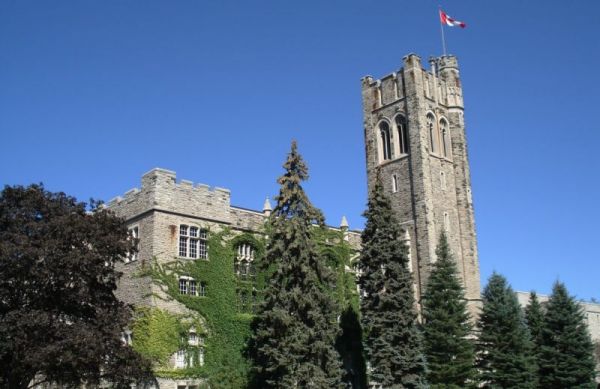
university_college_building_university_of_western_ontario_1_0

University College, UWO. My intellectual home for eight years. I still miss this place, sometimes.


Leave a comment

Filed under Uncategorized

Game of Thrones 5.01: The Wars to Come

gameofthrones_teaser02_screencap10

April has arrived, the sun is shining, and the temperatures have started to creep upward, which can only mean one thing.

Winter is coming!

And we’re back with the great Chris and Nikki Game of Thrones co-blog, now entering its fifth iteration. My partner for these posts, as always, is the beautiful and talented Nikki Stafford, Duchess of House Hale. As those of you who have been following us lo these four years know, Nikki comes at the series having (to date) only read the first novel, whereas I read A Game of Thrones when it was in hardcover, and have thus become one of those sad, sad people whose lives are but sloughs of despond in the ever-lengthening years between new books.

BUT. This season should prove interesting, as our respective roles of reader and non-reader might start proving less relevant. The series has more or less caught up to the books, but there is also a lot of talk about how this season will begin to deviate more and more from the source material—and in some cases give spoilers for the as-yet-unpublished novels in progress. We shall see.

But before I hand the mic to Nikki, I first give you why you never invite Jon Snow over to dinner:


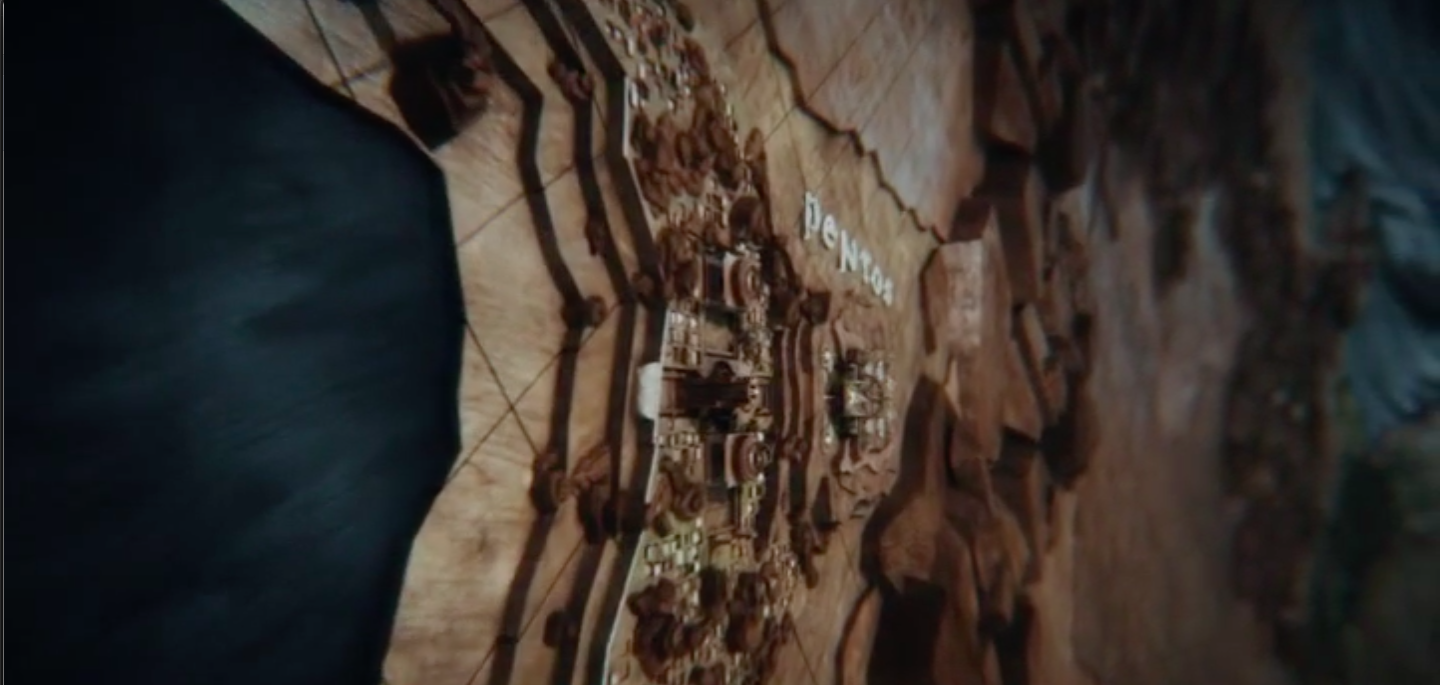
Nikki: Let’s start at the very beginning, a very good place to start. In the opening credits sequence (which my husband insists will be 10 minutes long by the time the show is in its tenth season, but which I always love to watch), you are always given the places that will feature in that episode. In this one, we are shown King’s Landing, The Eyrie, Winterfell, The Wall, Pentos, and Meereen. Winterfell is finally no longer spewing out smoke, but notice it now contains the rack upon which we see Reek (formerly Theon Greyjoy) tied to when Ramsay Bolton wants to torture him. The new place, Pentos, is shown only sideways in this episode, and considering Tyrion approaches the city while lying on his side, and then is off-balance and drunk the entire time he’s there, this angle makes perfect sense.

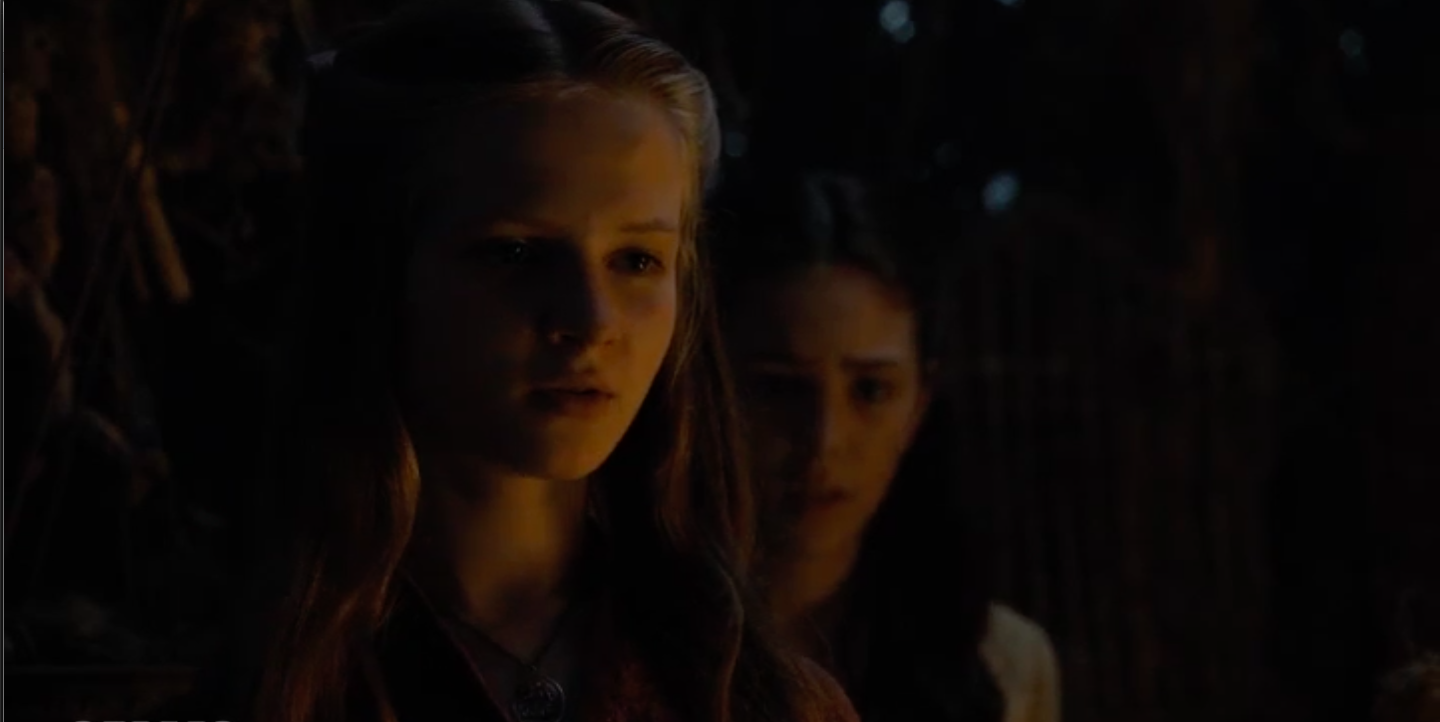
young-cersei

We open with two girls wandering through the woods, one wanting to turn back lest they get into trouble, and the other, golden-haired one a haughty little thing who forges ahead, insisting her father is not a man to be feared. It doesn’t take long to guess that the defiant one is a young Cersei, as much a peach in childhood as she is when she’s grown up, and she’s going to see a witch who will predict her future. She will marry a king, and will become queen. When she asks if they will have children, the witch replies, “No,” and then says he will have 20, and she will have three. The child looks baffled and says that doesn’t make any sense, but we viewers at home nod knowingly — of course they won’t have children, but she will have three children with her brother Jaime, while Robert will populate King’s Landing with his bastards. But her reign as queen will be short-lived: she will be displaced by someone younger and more beautiful, who, she is told, “will cast you down and take everything you hold dear.”

You can just feel the adult Cersei clenching her fists, gritting her teeth and muttering, “Margaery…”

What Cersei holds dear are her children, and her family’s power. Margaery Tyrell displaced her as queen by marrying Joffrey, and Margaery’s grandmother saw to it that that marriage wouldn’t even make it to the wedding night (thank GOD for that). Now Margaery is about to marry Tommen, displace her a second time, and we can only imagine what that will mean. Olenna’s murder of Joffrey put the blame on Tyrion, who was locked up and ultimately killed Tywin, so, knowing Cersei’s mind, she will eventually twist the events in such a way as to trace the blame for her “beloved” father’s death back to Margaery. One could be grateful that Cersei’s daughter, Myrcella, is safe in Dorne, except for the fact that she’s in Dorn, which is the homeland of Oberyn, the man who was slaughtered by the Mountain at Cersei’s insistence. Knowing that her daughter was being married into his family, Cersei clearly didn’t think that one through.

“Gold will be their crowns,” the witch tells her, “gold… their shrouds.”

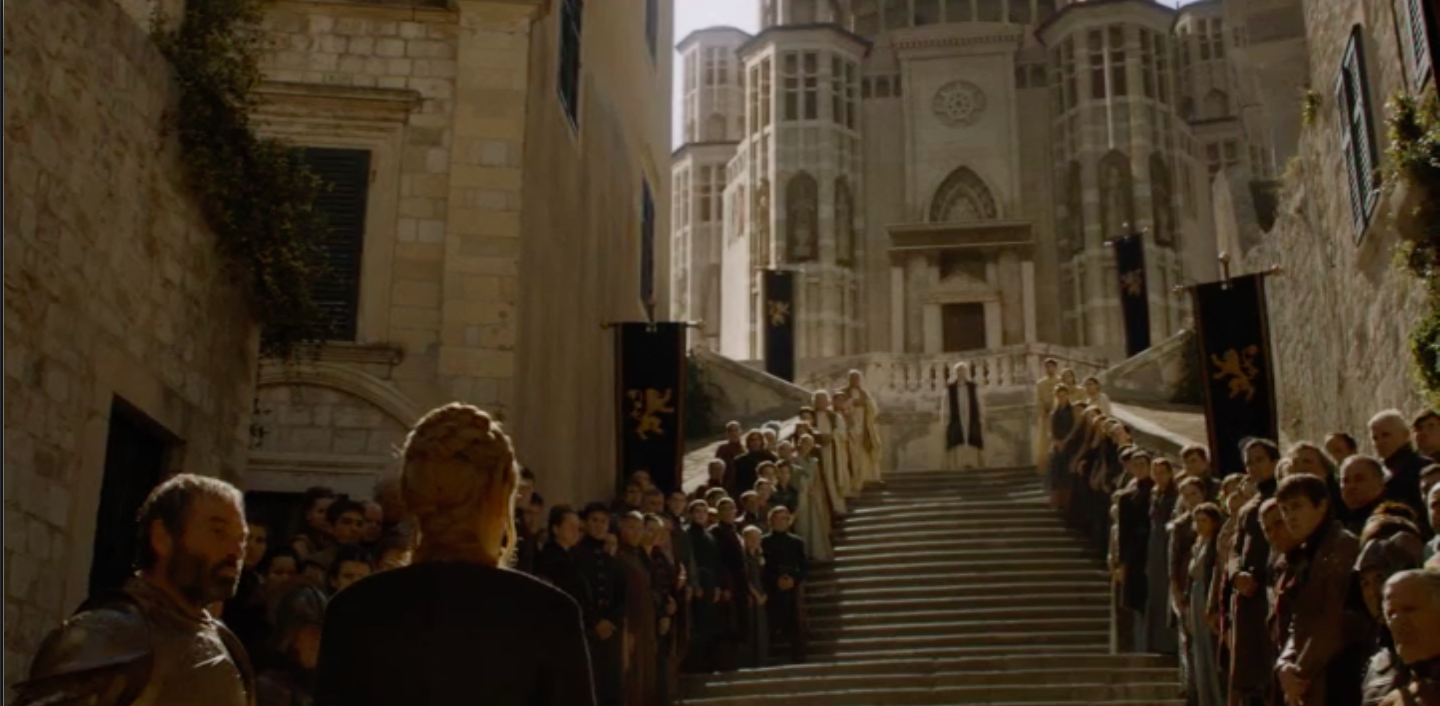
cersei-steps

And now we are in the present, with Cersei climbing the stairs to see her father’s body, as it’s laid out just like her son’s was, with Jaime standing guard nearby, “The Rains of Castamere” gloomily playing, the statues of the Seven surrounding the corpse, and Tywin’s face adorned with those stones that make him look like he’s still staring up at you, and are about as effective and creepy as Richard Harrow’s mask on Boardwalk Empire. She blames Jaime for Tywin’s death at the moment, because he freed Tyrion, which allowed him to commit the act. “Our father is dead and that little monster is out there roaming free,” she hisses at him. She tells him that the other families aren’t their enemies (wrong) — it’s Tyrion. She shames Jaime, calls him stupid, that he doesn’t think through the consequences of his actions (rich considering the position in which she’s placed her daughter), and tells Jaime that their father loved him most of all as she kisses the top of his head.

If there’s one thing Cersei is a master of, it’s kidding herself.

And from there we move to a new place on the map of Westeros: Pentos. Our diminutive hero has escaped the clutches of Cersei, but he’s looking a little worse for the wear. Thankfully we have Varys there to deliver the episode’s best lines, as always. What did you think of our introduction to Pentos, Chris?

pentos

Christopher: Ah, but we’ve been to Pentos once before, with the same skew-wiffy map view, way back in the very first episode when we met a young and scared Daenerys and her psychotic brother Viserys … in the very same manse to which Varys brings Tyrion. Varys talks about his friend Illyrio, who owns the place, and who has been his co-schemer in trying to save Westeros from itself. (I was a little disappointed that Illyrio doesn’t make a reappearance, as he was played by the lovely Roger Allam, whom some of you might know from his role on the BBC radio comedy Cabin Pressure, in which he plays sage and world-weary co-pilot to Benedict Cumberbatch’s arrogant but inept captain).

Anyway … here we have one of our first big divergences from the novels. In them, Varys does not accompany Tyrion to Pentos—he just sends him on his way and disappears. Tyrion arrives in Pentos and is delivered to Illyrio’s house, and it takes somewhat longer for him to be read into the scheme. (In truth, I kind of like the brevity of this episode versus the novel—Tyrion’s drunkenness and self-pitying gets very tedious very quickly, and it goes on a long while). But here we have Varys to give his new ward the 411.

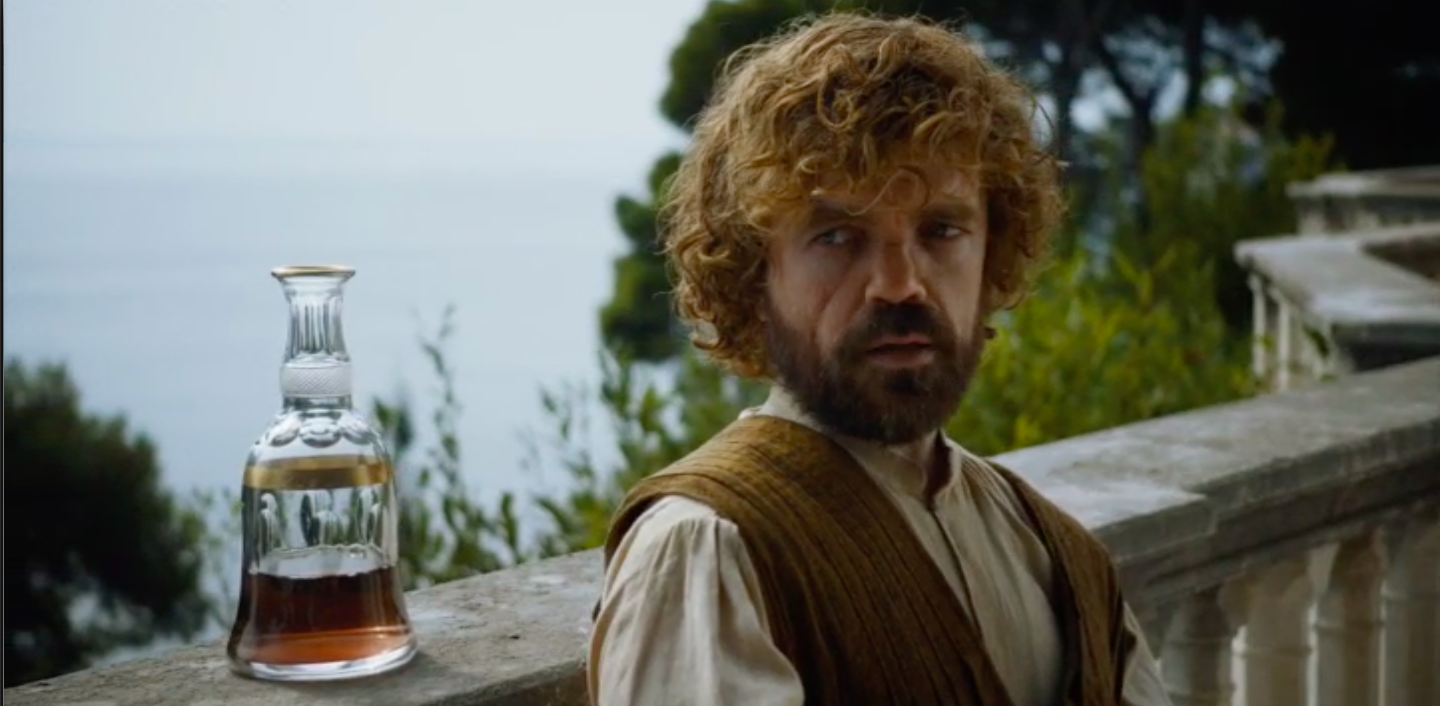
I have to say, I really loved how they introduced this scene, with Tyrion’s claustrophobic POV through one of the holes in his crate. I can’t say I blame him for heading straight for the wine. And the way in which Varys releases him to tumble onto the ground in a mound of straw made me think of The Hobbit when Bilbo releases the thirteen dwarves from the barrels after making their escape from the Elven king.

And we get a handy little bit of exposition here from Varys as Tyrion stumbles his way to the wine. From early on there has been the hint of a conspiracy at work: if you’ll remember from season one, there’s a scene in which Arya—chasing cats as part of her training with Syrio—chases one into a basement room where they store the dragon skulls. There she overhears Varys and Illyrio talking about the animus between the Starks and the Lannisters, and worrying over the timing of the inevitable war in Westeros, as Khal Drogo “will not make a move until his son is born.”

Now we learn more: there has always been a cabal of plotters, “a group of people who saw Robert Baratheon for the disaster he was,” who have been working behind the scenes to save Westeros from itself.

Tyrion, unsurprisingly perhaps, is having none of it. It’s questionable whether he’s even listening to Varys, only responding to him to contest his status as a lord. “I don’t think I am any more … a lord,” he growls. “Are you a lord if you kill your father?” As I already said, I’m happy that we move through Tyrion’s self-pity briskly—what’s on display here is to be expected and, to a certain extent, darkly entertaining. We hardly expect him to pop out of the crate bright-eyed and bushy-tailed, but GRRM really kind of overdid it in A Dance With Dragons. Here instead we get a few moments of Dinklage-quality comedy and pathos, and I quite enjoy the contrast between his cynicism and Varys’ earnestness. “Why stop now?” he asks when Varys observes that he drank all the way from King’s Landing. “Because we are talking about the future of our country,” Varys chides him.

Me after a departmental meeting.

Me after a departmental meeting.

I need to pause there and note how rare such a sentiment is in this series: people talk about the “realm” at times, but mostly what’s at issue there is the Iron Throne and the power it confers. Besides that, the preeminent thing with which people identify themselves is family—or with whatever major family they are sworn to. “Country” is not a term or concept that has really appeared on this show, which is keeping with GRRM’s fidelity to history—and the fact that such concepts as country and nation were more or less alien to feudal societies. So to hear Varys speaking in such terms sets him apart from the squabbling factions he’s hoping to unite, and shows us that, for all of his scheming, he’s really quite the lofty thinker (certainly much more altruistic than his erstwhile foe Littlefinger).

But again, Tyrion is having none of it. “The future is shit,” he says, “just like the past.” And as if to punctuate his words, he proceeds to puke up the wine he’s just drunk. And pours himself another drink.

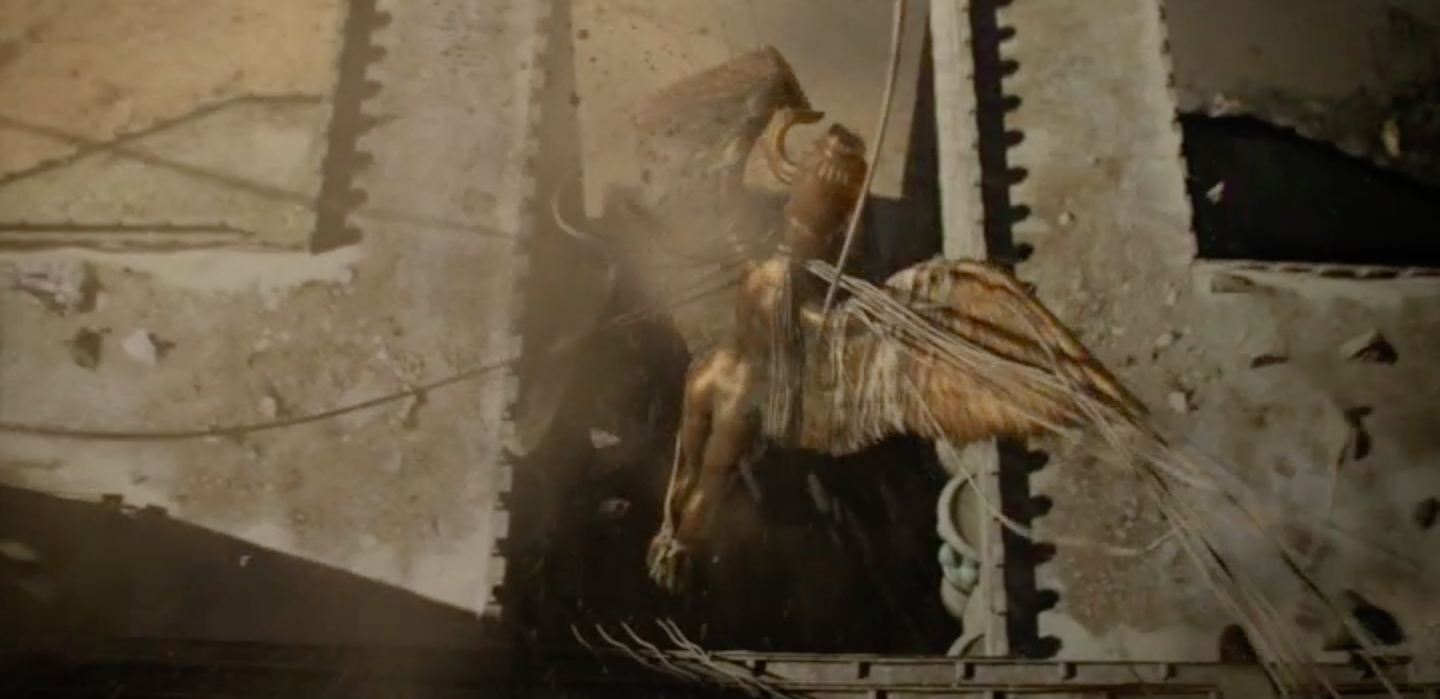
But then we cut to Mereen and the rather spectacular toppling of the harpy statue, a moment of ecstatic symbolism—the new queen ushering in a new order—almost immediately undercut by the murder of an Unsullied at the hands of a masked assassin. What did you think of where we’re at in Mereen, Nikki?

harpy-falling

Nikki: Well, as you know, I pledged fealty to House Targaryen back in season 1, so Daenerys has always been my Khaleesi, my Mhysa. Until last season, she seemed to be the shoo-in for that Iron Throne. Who cares if you have the family name or believe it’s your hereditary right or you have an army? This woman’s got dragons. She has taken on the role of The Mother wherever she goes: she’s the mother of dragons, and the mother of her people. She frees slaves, they pledge loyalty to her and her alone, and she builds up armies this way. She seemed unstoppable.

But if it were that easy, everyone would be doing it. Turns out, when you free the slaves, you piss off the masters. Oh, and they don’t live side by side very nicely. The slaves have nowhere to go, no way of making money, no roofs over their heads. The slave-owners can’t function without the help and the economy tanks. And those dragons? Freakin’ HUGE and out of control. They’re swooping down from the sky and picking goats right out of the fields. When Drogon, the biggest and fiercest (and, named after her husband, the one to whom she is closest) went AWOL, Daenerys did the only thing she could think of, and chained up her other two children in a dark cellar, for their own good.

And now, things are falling apart. The people want the fighting arenas back: it makes the slaves feel powerful, and gives the slave-owners something to watch. Daenerys says no: it’s degrading and she’ll have none of it, regardless of what anyone, including Daario, tells her to the contrary. She doesn’t need to appeal to the lowest common denominator, she tells Daario; she has power in other ways. But she is now finding violent resistance in the form of the Sons of the Harpy — whom I’m assuming are made up of the nobility who have lost their power — who are attacking the Unsullied.

As she points out, she has the Unsullied patrolling the streets to remind people of her army. He scoffs, and tells her that any wealthy person could buy an army of the Unsullied. “You’re not the mother of the Unsullied; you’re the mother of dragons.” She tells him she can’t find Drogon, and can’t control the other two. “A dragon queen with no dragons?” he says. “Not a queen.” She descends into the cavern to find Rhaegal and Viserion, the two dragons named after her late brothers — who, similarly, could not be contained — and they attack her, breathing fire, screaming, and yanking at their chains. They’ve gone feral, and see her not as their mother, but the one who trapped them in this dark place.

A scene from the new Pixar film How NOT to Train Your Dragon

A scene from the new Pixar film How NOT to Train Your Dragon

Can Daenerys regain the strength she had in earlier seasons? The episode opened, as you say Chris, with that stunning sight of them taking down the golden harpy statue, which she means to be an act signifying that the slaveowners no longer run this place, but her. However, the statue is of a golden woman with wings — like a dragon — and I couldn’t help but fear that it was foreshadowing what was to come: she will come crashing to the ground just like that statue if she can’t find a way to regain control. The harpy statue wasn’t the only moment of symbolism in the episode: In a particularly brutal scene, we see a member of the Unsullied visiting a brothel. As part of their training years earlier, the Unsullied were ripped from their families, and stripped of anything that would ever make them enjoy sex. So he’s not there for that; no, he’s there for something else. Later Missandei asks Grey Worm what a member of the Unsullied would be doing at a brothel, and he says he has no idea. But it’s clear from the act what this man wants: to be mothered. He wants the woman to keep her clothes on and not make this act sexual in any way, so let him lie at her breast as she strokes his head and sings him a lullaby, to make him think that everything in the world will be fine. This is perhaps why Daenerys casts herself in the role of the mother — she is telling her people she will take care of them, that they have nothing to worry about, that she will be the safety net around them as long as they remain loyal to her. But, just as her motherly tie to her dragons has been snapped, so too does White Rat lull himself into a false sense of security in the arms of the prostitute, just as his throat is slit open.

Hipster Tyrion.

Hipster Tyrion.

Later, in the episode, Tyrion and Varys are speaking, once Tyrion has cleaned himself up and is trying to drink himself to death. (And thank you for correcting me on Pentos, Chris! The interesting thing is, during this scene with Tyrion and Varys standing on that ledge, I said to my husband that it looked exactly like the place where Daenerys had been standing with Viserys! I just assumed it was similar, and didn’t realize it was the same place.) He tells Tyrion that he is a compassionate man, and that what the land needs is peace, to be a place where the powerful don’t prey on the powerless. He asks Tyrion if he’d spread misery throughout the land were he to take the Iron Throne. Tyrion scoffs and says he’ll never sit on it. No, Varys agrees, but he says, “You could help another climb those steps and take that seat. The Seven Kingdoms need someone stronger than Tommen, but gentler than Stannis, a monarch who can intimidate the high lords and inspire the people, a ruler loved by millions with a powerful army and a right family name.”

Me during departmental meetings.

Me during departmental meetings.

Tyrion scoffs again. “Good luck finding him,” he sneers. Varys stands up straight and replies, “Who said anything about him?” Daenerys has everything it could take to be a good, strong leader of Westeros. What she lacks is a proper advisor who is cunning and knows exactly how to maintain that power. The thought of her joining forces with Tyrion — the first time Daenerys’s character would ever actually share screen time with another character from another family on the show — makes me giddy with excitement. Now, if they could just get Brienne and Arya over there, it would be a perfect union.

As for that other Stark, Sansa’s hair is jet black and she has assumed a new air of confidence as she stands by Baelish’s side. What do you make of how our little girl has grown up, Chris?

bored-sansa02

Christopher: As I have said many, many times over the four years we’ve been doing these posts, Sophie Turner has done a yeoman’s job in what is easily the most thankless role in the GoT firmament. She started coming into her own at the end of season one, and spent most of seasons two and three undergoing the painful process of growing up in a hard, harsh world that is effectively the antithesis of all her dreams of princesses and knights. And then last season was yet another gauntlet, which she endured with poise and imagination, having learned some crucial lessons from Littlefinger. And now she seems to read the people around her well, and to carry herself with a confidence born of hard lessons.

And it is here that we find another divergence from the novels: Littlefinger’s plan to take her far away, not just from potentially treacherous people in the Vale, but far enough away to elude the long reach of the Lannisters, is new. In the novels, Sansa and Littlefinger stay in the Vale and she remains disguised as his bastard daughter Alayne. So where are they now going? Wherever, it will be news to me.

(And I’m curious to know what you think of this other tease, as Sansa’s coach passes by where Brienne and Pod have stopped at the roadside. Poor Brienne).

coach-ride

Which brings us back to Cersei, who is drinking rather heavily at her father’s wake and enduring a painfully insincere monologue from Loras Tyrell, telling her what a force he was. And we have our first glimpse of a new religious order in the person of Cersei’s cousin and erstwhile lover Lancel: he comes dressed in penitent’s robe, barefoot, and seeks her out, alone, to offer her his apologies for having tempted her into their “unnatural relations.” And we all snicker a little: as if Cersei was the weak, tempted woman in that relationship. And she herself cannot contain a laugh when Lancel promises to pray for Tywin’s soul. “The day Tywin Lannister’s soul needs your help …” she trails off and sips her wine.

I’ll be very interested to see how the show deals with the infestation of Sparrows. This is our first taste of the “bloody fanatics” who begin to descend on King’s Landing. Like much else in Game of Thrones, this austere, rigid religious order speaks to a larger sociohistorical truth: that fanaticism breeds out of despair. We’ve seen stark images of a countryside ravaged by war, people’s livelihoods ruined, families destroyed by violence, villainy, and rapine as the armies of the warring factions sweep back and forth across the continent. None of the great houses are innocent of barbarism, as Brienne’s fight with rogue Stark soldiers showed in season three. And out of all this death and despair rises a new order of people who attach themselves to whatever can give them meaning. “Their world is at hand,” Lancel tells Cersei ominously, referring to the Seven Gods, but we can also interpret that as meaning Lancel’s fellow Sparrows.

Of course, Cersei Lannister is not one to take a barefoot penitent seriously or for one moment imagine that a rag-tag band of fanatics possesses any power.

the-penitent-and-the-queen

Nikki: And Cersei also has an enemy in the form of her widowed daughter-in-law, who’s about to marry Son #2. We see Loras in bed with Oliver, discussing plans to move to Dorne, when Margaery just breezes into the room and plops down on the side of the bed as if she has every right to be there. Just as she doesn’t kowtow to social conventions when it comes to her brother and his lover, she’s not going to bow before Cersei, and is clearly planning something. Loras says he doesn’t have to marry Cersei now, but it’s in Margaery’s best interests for him to do so because he’d take her away from King’s Landing. Otherwise, she’ll stick around and make Margaery’s life miserable. “Perhaps,” says the young queen, as she pops a fig into her mouth. “Perhaps.” What does she have up her sleeve?

margaery-et-al

Thanksgiving dinner at the Tyrells must be interesting.


Lancel has played a relatively small role in the series so far, and some of the non-reader fans might not recognize him or remember him (I had to jog my husband’s memory when he wondered aloud who he was). Viewers will remember him from the first season as the meek guy with the long hair who was always at Robert Baratheon’s side, whom he constantly mocked. He was his constant wine-pourer, and in one scene he is helping Robert put on his armour, which doesn’t fit, and then makes the mistake of suggesting that perhaps it’s too small. Just when it looks like Robert is going to have him executed, Ned shows up and says the armour isn’t too small, it’s that Robert has gotten too fat. Robert laughs and sends Lancel out to get his breastplate stretcher, and Lancel rushes out of the room to do so, completely oblivious to the fact there’s no such thing. Knowing that Lancel is Robert’s wine-pourer, Cersei sets him up by having him give the poisoned wine to the king, killing him on the hunt. When Jaime is taken away, she begins having a sexual fling with Lancel, who always comes off as a dolt whenever he opens his mouth to speak. Now, with his head shaven and his clothes gone, he looks and sounds completely different. He’s been abused and treated badly by the Lannisters and Robert Baratheon, and he’s changed his ways. We don’t know too much about the Sparrows yet, but I’m assuming there will be more explanation for us non-readers in the episodes to come.

brienne&pod01

As for Brienne and Podrick, their scene is brief, but important for exactly the reason you mention. As Brienne is licking her wounds from having lost Arya Stark, the one thing she thought still gave her life purpose, a coach goes by that contains Sansa and Baelish. I definitely squeed… now that Brienne has lost Arya (and is asking Pod to leave her alone), what if she were to find Sansa? Will she discover that another Stark girl is alive? Could this renew her sense of purpose? I’m VERY intrigued by the fact that the scene of Sansa and Baelish heading away from the Eyrie diverges from the books, as you have told us. I wonder how much it will stray from the story you know?

Of course, one of the best moments of this episode is the ending, which takes place in the Nawth, up at the Wall. Mance Rayder has been captured by Stannis, who asks him to bow before him and pledge fealty. But Rayder will do no such thing. I know how much you love Ciarán Hinds, the actor who plays him, so I’ll leave this last section to you, my friend.

mance

Christopher: I do love Ciarán Hinds. He’ll always be Julius Caesar to me, but he has done an extraordinary job as Mance Rayder. And like many great actors, he brings out the best in those he works with: Kit Harrington’s best moments, to my mind, have been in the scenes between Jon and Mance. And as good as those other scenes have been, this one might well be the best.

It is an impossible situation, which Jon doesn’t quite grasp as intuitively as Mance does. He wants to save his people, but cannot do it by bending the knee. His one play had always been an all-or-nothing gamble: taking the Wall and Castle Black on his terms and letting his people escape the coming horrors of the north. His people won’t see the nuances—they’ll see their erstwhile leader surrendering and doing that which runs against their very identity of wildlings, and there vanishes whatever authority and respect he’d possessed.

ciarin-acting

Hinds is brilliant in this scene. If you want to see a subtle moment that communicates volumes silently, watch his face when Jon tells him he is to be burned alive. Until now, he has been implacable; here, a little twitch under the eye on hearing the news offers a brief but telling indication of the powerful emotions roiling beneath. “Bad way to go,” he says, laconically, but that brief moment tells us everything we need to know about the terror he’s feeling. And it makes the speech that follows that much more powerful: “I’ll be honest with you—I don’t want to die, and burn to death. I don’t want people to remember me like that. Scorched, and screaming. But it’s better than betraying everything I believe.” Jon still does not understand, not entirely: “I think you’re making a terrible mistake.” And Mance responds with what could very well serve as his epitaph, and his people’s: “The freedom to make my own mistakes is all I’ve ever wanted.”

The execution sequence is excruciating, even before the fires are lit: Mance’s slow walk out of his cell, his point-of-view shot as he sees the pyre, the ever so slight hitch in his step as he approaches his death. But he possesses more dignity than any of the kings south of the Wall we’ve met, as he responds to Stannis’ offer of mercy by simply saying “I wish you good fortune in the wars to come.” It is a simple but powerful statement, and serves to remind us that he truly bears the southerners no ill will or malice, and understands better than anyone the dangers they face if they remain divided in their petty power struggles.

We see then the fear in his face as the guards lead him up on the pyre and tie him to the stake. This scene I found difficult to watch, and not just because it is difficult not to imagine oneself in Mance’s place. It was difficult because you see Mance’s struggle, as the flames lick higher and he feels them scorching him, to not surrender to the pain, to keep his implacable demeanour for the sake of his people present … and for the sake of not being remembered that way. The reaction shots as he starts to break down are telling: Melissandre’s smug satisfaction, Queen Selyse’s almost erotic religious fervor, the anger and sorrow on the faces of his people, especially Tormund.

And then … Jon Snow gives him the parting gift of an arrow in the heart, so he will not suffer and his people won’t have to see it.

All of this falls out more or less precisely as it does in the novel. There is, however, one small detail I was watching for that I did not see. Which means that there might be a somewhat significant divergence from GRRM’s version. I can’t say for certain—we’ll just have to wait and see.

mance's-pyre

Well! That ends the first installment of the great Chris and Nikki Game of Thrones co-blog for season five, and I have to say I think the show is off to a promising start. We’ll see you next week for number two. In the meantime everyone, stay warm, and keep that door barred against ice zombies!

Leave a comment

Filed under Game of Thrones

Some thoughts on the Hugo Awards and Puppies who are Sad

hugoI’ve been reading a lot over the past few days about the ongoing controversy about this year’s slate of Hugo Awards nominations. For those unfamiliar with the Hugos and what’s currently going on right now, here’s the thumbnail sketch: the Hugos are one of the most prestigious awards for science fiction and fantasy (SF/F); the nominations and awards are voted on by the membership of Worldcon; last year was considered a banner year by many because of the number of women and writers of colour represented among the nominations; this year is experiencing a Gamergate-like backlash, in which a group of very vocal writers and fans successfully lobbied the Worldcon membership to nominate their slate of choices; they did so, in the words of one of their more vociferous agitators, to strike back “against the left-wing control freaks who have subjected science fiction to ideological control for two decades and are now attempting to do the same thing in the game industry.”

This movement, for reasons I haven’t discerned (nor do I care to), has labeled itself “Sad Puppies,” the architects of which are writers Brad R. Torgersen and Larry Correia. The group has spawned a more vitriolic spinoff called (of course) “Rabid Puppies,” led by Gamergate doyen and general aresehole Theodore Beale, aka Vox Day (a sad excuse for a human who believes in repealing women’s suffrage and who referred to the talented N.K. Jemisin as a “half-savage”).

Apparently this is the third year that Sad Puppies has attempted this; from what I gather, this year they were successful to a large extent because they gained momentum off Gamergate. Normally I don’t pay much attention to the Hugo Awards, or really to any literary awards. I haven’t read any of the novels or stories being pushed by the various puppy-related groups, and so can’t pronounce on their quality or lack thereof. But in my reading about this controversy, I came across a rationale written by Brad Torgersen for why the puppy-ization of this year’s awards is necessary, and it so perfectly summarizes the kind of narrow, reactionary thinking that was on full display during the Gamergate idiocy that it is worth parsing.

Basically, what Torgersen seems to be lamenting is a sort of false advertising: SF/F no longer delivers to fans what they expect, and what its packaging would appear to promise. To make his point, he offers an analogy so torturously obtuse that I really just need to quote in its entirety:

Imagine for a moment that you go to the local grocery to buy a box of cereal. You are an avid enthusiast for Nutty Nuggets. You will happily eat Nutty Nuggets until you die. Nutty Nuggets have always come in the same kind of box with the same logo and the same lettering. You could find the Nutty Nuggets even in the dark, with a blindfold over your eyes. That’s how much you love them.

Then, one day, you get home from the store, pour a big bowl of Nutty Nuggets . . . and discover that these aren’t really Nutty Nuggets. They came in the same box with the same lettering and the same logo, but they are something else. Still cereal, sure. But not Nutty Nuggets. Not wanting to waste money, you eat the different cereal anyway. You find the experience is not what you remembered it should be, when you ate actual Nutty Nuggets. You walk away from the experience somewhat disappointed. What the hell happened to Nutty Nuggets? Did the factory change the formula or the manufacturing process? Maybe you just got a bad box.

So you go back to the store again, to buy another box of good old delicious and reliable Nutty Nuggets!

Again, you discover (upon returning home) that the contents of your Nutty Nuggets box are not Nutty Nuggets. The contents are something different. Maybe similar to Nutty Nuggets, but not Nutty Nuggets. Nor are the contents like they were, with the prior box. You dutifully chomp them down, but even adding a spoonful of sugar doesn’t make the experience better. In fact, this time, the taste is that much worse.

Two bad boxes in a row? Must have been a bad shipment!

Return to the store. Buy another box. Bam. It’s not Nutty Nuggets.

This time, you add bananas, sugar, and berries. This only makes up for the deficit a little bit.

Return to the store again for yet another box. Yup. It says NUTTY NUGGETS proudly on the packaging. You are sure in your heart that you love and adore Nutty Nuggets! And yet, the magic is gone. This is not the cereal you first fell in love with. The box may say NUTTY NUGGETS but you won’t be fooled any longer. Nutty Nuggets are dead. Or at least they are no longer of any interest to you.

So, you reluctantly turn to another brand. Maybe Freaky Flakes or Crunchy Bits? You give up on Nutty Nuggets, and you let some other cereal woo your taste buds. A cereal that is reliably what it claims to be on the outside of the box.

That’s what’s happened to Science Fiction & Fantasy literature. A few decades ago, if you saw a lovely spaceship on a book cover, with a gorgeous planet in the background, you could be pretty sure you were going to get a rousing space adventure featuring starships and distant, amazing worlds. If you saw a barbarian swinging an axe? You were going to get a rousing fantasy epic with broad-chested heroes who slay monsters, and run off with beautiful women. Battle-armored interstellar jump troops shooting up alien invaders? Yup. A gritty military SF war story, where the humans defeat the odds and save the Earth. And so on, and so forth.

These days, you can’t be sure.

The book has a spaceship on the cover, but is it really going to be a story about space exploration and pioneering derring-do? Or is the story merely about racial prejudice and exploitation, with interplanetary or interstellar trappings?

There’s a sword-swinger on the cover, but is it really about knights battling dragons? Or are the dragons suddenly the good guys, and the sword-swingers are the oppressive colonizers of Dragon Land?

A planet, framed by a galactic backdrop. Could it be an actual bona fide space opera? Heroes and princesses and laser blasters? No, wait. It’s about sexism and the oppression of women.

Finally, a book with a painting of a person wearing a mechanized suit of armor! Holding a rifle! War story ahoy! Nope, wait. It’s actually about gay and transgender issues.

Or it could be about the evils of capitalism and the despotism of the wealthy.

Do you see what I am trying to say here?

I’m pretty sure I don’t need to point out the most obvious flaw in this analogy, but I’m going to anyway: you don’t consume stories and poop them out as you do with breakfast cereal. If your favourite packaged food product changes its ingredients, you’re pretty much shit out of luck. But your beloved space operas and bare-chested barbarians haven’t disappeared: there they are on your bookshelf, or at the library, waiting for you to read them again.

I’d love to be able to say that Torgersen’s jeremiad is disingenuous, but it feels way too earnest. Given that he is himself a SF/F author of some note, one might expect him to be not so … well, ignorant. Lamenting the fact that SF/F is different today than in previous decades, in part because it incorporates new voices and preoccupations, is like complaining that we haven’t had any good new Elizabethan plays lately. Literature reflects its historical moment, but it also reflects the way in which its authors engage with their literary milieu. Torgersen writes: “SF/F literature seems almost permanently stuck on the subversive switcheroo. If we’re going to do a Tolkien-type fantasy, this time we’ll make the Orcs the heroes, and Gondor will be the bad guys.” To which I say: why not? What’s wrong with that? The Lord of the Rings will always be there for you to read. It spawned a huge number of imitations, which ranged from artful homage to derivative dreck, but at a certain point writers of talent are going to transform the genre because they don’t see the point in simply recapitulating the formulae of the writers who influenced them. Neil Gaiman is fond of saying that he became a writer because he wanted to write The Lord of the Rings and was always annoyed that Tolkien beat him to it. So he wrote Sandman and American Gods instead, and we’re the richer for it because he did not simply give us a new variation on Middle-Earth. When Time magazine called George R.R. Martin “the American Tolkien,” they were correct in the spirit of the compliment and utterly wrong in terms of the substance of A Song of Ice and Fire, a series that has done as much to change the parameters of fantasy as The Lord of the Rings did to establish them.

He goes on to list other representative “subversive switcheroos”:

Space opera? Our plucky underdogs will be transgender socialists trying to fight the evil galactic corporations. War? The troops are fighting for evil, not good, and only realize it at the end. Planetary colonization? The humans are the invaders and the native aliens are the righteous victims. Yadda yadda yadda.

Which is not to say you can’t make a good SF/F book about racism, or sexism, or gender issues, or sex, or whatever other close-to-home topic you want. But for Pete’s sake, why did we think it was a good idea to put these things so much on permanent display, that the stuff which originally made the field attractive in the first place — To Boldly Go Where No One Has Gone Before! — is pushed to the side? Or even absent altogether?

A few points here. First, a fatal contradiction: the adventuresome spirit of SF/F Torgersen ostensibly celebrates here is utterly absent from his argument. His entire rationale is really about advocating Boldly Going Where We’ve Totally Gone Before.

Second, when he claims that these themes are on “permanent display,” I think of that West Wing episode when the president, having listened to a series of impassioned arguments in favour of an anti-flag burning amendment, is compelled to ask, “Is there an epidemic of flag burning I’m unaware of?” Perhaps I just don’t read widely enough, but I have seen no such “permanent display.”

Third, and most important, is the canard that animated the Gamergate idiocy: namely, that the introduction of new voices and new perspectives, some of which you find not to your taste, entails the wholesale destruction of what you love, whether it be gaming or SF/F. Anita Sarkeesian produced a handful of video essays critiquing the representation of women in video games. As such critiques go, they were pretty mild—mainly just taking images from a slew of games and letting them speak for themselves. Given the vitriol with which her videos were met, you’d be forgiven for thinking she’d advocated dictatorial censorship of the gaming industry, incarceration of the game creators, and fines to be levied on those who played them. But of course she didn’t—she just suggested that we be aware of the often unsubtle misogyny of many video games, that perhaps this was something that should be curtailed in the future, and further that the gaming industry would do well to produce more games that female gamers—an ever-growing demographic—would find amenable.

The canard underwriting the kind of hostility Sarkeesian experienced is the idea that this is all somehow a zero-sum game. The gaming industry is vast, and SF/F boasts an ever-growing readership, but the gamergaters and Brad Torgersens of the world seem to believe that for every new novel featuring a transgender hero, or every new game lacking half-naked female victims, that they somehow lose something—that their world shrinks. Torgersen seems to believe this will contribute, ultimately, to the “unraveling” of SF/F:

We’ve been burning our audience (more and more) since the late 1990s. Too many people kept getting box after box of Nutty Nuggets, and walking away disappointed. Because the Nutty Nuggets they grew to love in the 1960s, 1970s, and 1980s, were not the same Nutty Nuggets being proffered in the 2000s, and beyond.

He goes on to say that “there may not be enough cohesive force to keep SF/F tied together as a whole.” Seriously? Seriously. I translate this as “The SF/F that I like isn’t being written in great volumes any more, which therefore means that the genre is in its death throes.” The reductiveness of this kind of thinking is truly sad, as it implies yet another canard—that one can’t do sweeping, epic, Tolkienesque fantasy, or bombastic space opera, and introduce the elements Torgersen derides. Except that you can, and writers do, all the time. It might not precisely be Tolkien or Heinlein, but the last time I was at the bookstore (yesterday), Tolkien and Heinlein were still quite well represented on the shelves.

Yes, SF/F has changed. It is changing. It will continue to change. The generic boundaries defining it have blurred as authors and the reading audience grow more inclined toward crossing those boundaries, as more young adults cut their teeth on Harry Potter and The Hunger Games, “literary” authors like Colson Whitehead, Margaret Atwood, and Kazuo Ishiguro venture into the SF/F realms, and prestige television like The Walking Dead and Game of Thrones make people less prejudiced toward genres long ghettoized as “pulp.” But then, that opening up of SF/F breeds resentment among those fans who see such changes as encroachment of interlopers, and they take on the querulous tones of an old man yelling at the rest of us to get off his lawn.

sad cat

My cat is sad because he just can’t even with the Sad Puppies.


5 Comments

Filed under maunderings, wingnuttery