Monthly Archives: April 2014

Game of Thrones 4.04: Oathkeeper

GameOfThrones_Teaser02_Screencap10

Hello again and welcome to the great Game of Thrones co-blog, starring yours truly and my brilliant partner in thronegab, Nikki Stafford. Take it away, Nikki!
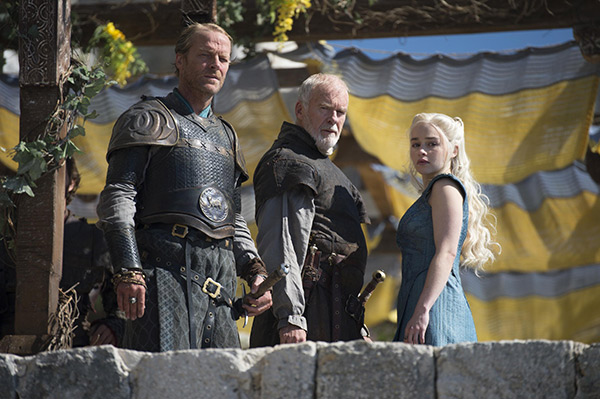
Mereen

Nikki: Let’s start at the very beginning (cue Julie Andrews… on second thought, let’s not cue Julie Andrews…) with my girl Daenerys. As we discussed last week, she has raised a massive army based on loyalty and love and gratitude for freeing slaves. But there’s a new dark side that’s been cast with this week’s outing.

We begin with Grey Worm taking lessons from Missandei on reading or learning English (it wasn’t exactly clear to me what she was teaching) and they begin discussing who they were before Dany freed them. Grey Worm said he was always Unsullied, never anything before that, and Missandei doesn’t accept that, and tells him he needs to remember back to when he was a human being, before that was taken away from him. She remembers her village being burned, reminding me of the child from last week’s episode who watches his village being burned and massacred by the Thenns and wildlings; was she like him? Will he grow up to be a slave?

Grey Worm won’t remember this, because his brain has been washed clean of anything he ever was before the Unsullied, and despite what Missandei says, he doesn’t ever see himself returning to the Summer Isles. “Kill the Masters…” he mutters to himself. And, in an uncomfortable return to his roots, he dresses up as a slave along with other former Unsullieds and they sneak into the tunnels where the slaves of Meereen are discussing whether or not to rise up against their masters, falling heavily on the side of “not.” This scene is made even more intriguing because of the “disguises” that Grey Worm and his fellow soldiers are wearing — they aren’t posing as slaves, but showing the other slaves that they were once just like them, and now, with the weapons they have brought to them, they too can free themselves of the masters. The powerful become so because they convince the weak they are, well, weak, and the vulnerable people never actually look at their numbers and realize hey, there are more of us than there are of them! (Think of high school classroom politics: there are usually about 10 “popular” kids in each grade, and 50 “unpopular” kids… but no one ever actually runs those numbers to realize how preposterous it all is.)

But here’s where it gets interesting. The slaves do rise up and quash the masters while declaring fealty and love to their new Mhysa, Daenerys calls for an eye for an eye, wanting the masters crucified at the same mile markers as they’d crucified their slaves. Ser Barristan Selmy tries to advise her against it, telling her that she should answer injustice with mercy. She defiantly tells him she will answer injustice with justice, and the men are hammered into the posts, with their left hands nailed to the horizontal slab of wood, while their left hands are nailed to their ribcages, just as they’d done to their slaves. Now, instead of 163 slaves, you have countless masters pointing the way to Meereen with their grisly bodies, and Daenerys shows them absolutely no mercy as she stands at the top of the tower of Meereen, just as she showed no mercy to Doreah, her handmaiden, and Xaxos, whom she locked in the vault for eternity back in Qarth. As the sigil of the House of Targaryen waves behind her, we hear the screams of the fallen masters below, echoing up to the Khaleesi like a national anthem.

Now, while I’m focusing here on the opening of the episode, I saw Twitter explode at 10pm over some major deviations from the book. Am I right in assuming (from what I could gather over there) that the end of the episode, with the white walkers, is actually from future books and not from the third book, Chris?
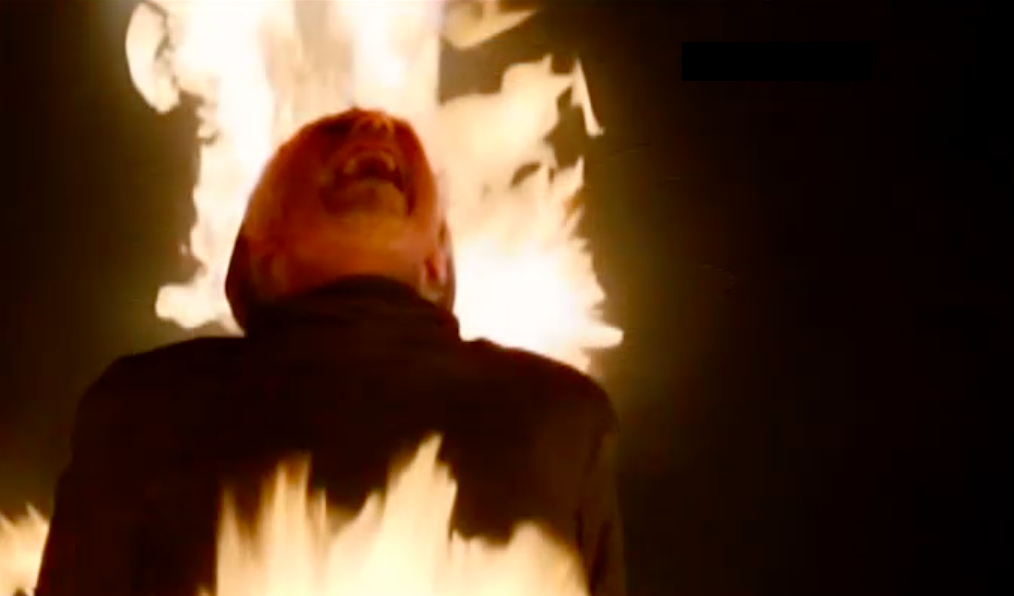
walker

Christopher: There were rather a large number of deviations from the novels in this episode. The one thing the Mereen sequence hewed to was the way in which Daenerys’ people entered the city through the sewers. They did that in the novel, too … except there it was Jorah and Barristan leading an actual attack. And they were in the vanguard for reasons I cannot share here for fear of spoilers. Suffice to say, we’re rapidly arriving at a point where the series is making irrevocable changes: the nature of the subjugation of Mereen, the presence of Locke (not a GRRM character) at the Wall, the scenes at Craster’s, Bran’s capture, Margaery’s secret midnight rendezvous with Tommen, and of course the final scene with … a White Walker? It was a Walker who took Craster’s boy to the mini-Stonehenge, but it looked like an entirely different race/species of ice demon who touched the infant and transformed him.

The thing is: unlike other televisual adaptations of novels (Dexter, for example), Game of Thrones has worked in pretty close concert with the writer, from having him on board to write an episode every season, to demanding his notes as a condition of the contract (in case he dies before finishing the series), to generally using him as an invaluable resource. All of which tells me that nothing happens without GRRM signing off on it (officially or otherwise). Which raises an interesting question: is that scene in the mini-Stonehenge at the end of this episode a spoiler? Does it reveal something that we’re going to learn about in The Winds of Winter? Are Weiss and Benioff giving us a glimpse of what we can expect from future novels? Or are they merely inventing something that GRRM leaves implicit?

But to get to the substance of the episode … we must be approaching the mid-point of the season, because tonight’s episode was one of those in which a huge amount of stuff happened, but there was no particular note that resonated—nothing that will have the proverbial water coolers abuzz with discussion (excepting those water coolers populated by people who have read the novels, apparently). Which is not to say this wasn’t a good episode, just that it was one of those bridges we tend to see mid-season that moves the story along without offering any truly OMG moments. I suppose the one thing approaching that in this episode is the sort-of reveal of who actually killed Joffrey. But we’ll come to that later.

After the Mereen sequence, we’re back in King’s Landing … and oh, my, but Jaime has been getting much better fighting with his left hand. Until Bronn again teaches him an abrupt lesson and smacks him across the face with Jaime’s right hand. This was a nicely-crafted scene for a variety of reasons—some of which I cannot mention, because spoilers. But if I can drop hints, their discussion about how Tyrion evaded Lysa’s grasp by demanding the right of trial by combat is something to keep in mind. Bronn reminds Jaime that Bronn only ended up standing for Tyrion because Lysa (or as I suppose we now have to call her, the future Mrs. Littlefinger) asserted that the combat must happen immediately … negating the possibility of waiting for Tyrion’s first choice of champion, his brother. Bronn tells Jaime that Tyrion knew he would have ridden day and night to defend his brother. But now?

Now Jaime is caught between love of his brother and love of his sister. And Tyrion is more than a little embittered by that fact, responding badly to Jaime’s attempts at banter, just as Cersei is more than a little paranoid about the fact that Jaime visited Tyrion. And at no point in that meeting between Jaime and his sister is there a hint, a sense, a reverberation of the fact that he raped her the last time we saw them together. What did you make of that, Nikki?
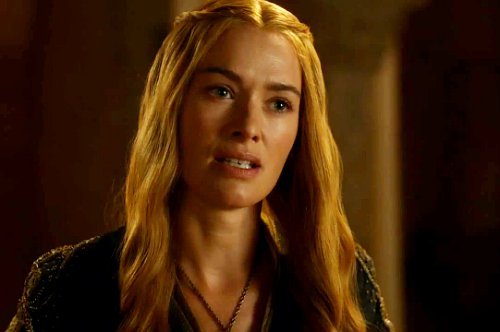
 

cersei-wants-sansa-s-headNikki: I think, like everyone else watching last night, the moment Jaime entered the room I waited for there to be some comment about the rape. After all, the internet went crazy with the discussion over it last week. Yes, they have a history together, and yes, knowing these two I would presume their sexual relationship is a rather sado-masochistic one, and within the parameters of what they are used to, perhaps, maybe part of their foreplay is for her to say no and him to say yes. But… he did it beside their son’s corpse. The very setting of the rape defines it as rape, whether she was hesitantly welcoming or not. She is at the lowest moment of her life emotionally, her father just reminded her that she will never have power and as long as he can manipulate Tommen the power will be his, she knows that Margaery will have her talons in Tommen in no time (and we all know what Cersei thinks of Margaery), and she believes her younger brother is her son’s murderer.

But maybe the writers want us to see it as just another day in Westeros. After all, we’re not screaming about the injustices being done to the Craster daughters right now at Craster’s Keep. And we didn’t even mention what was happening to the innkeeper’s daughter when the Hound and Arya showed up to kill Polliver and his crew. Or how about Sansa just being betrothed to whomever suits Tywin’s fancy? Or Margaery being used as a pawn for the Tyrell family, being married off to unsuitable men just to further their power? Or, you know, Viserys telling his little sister to strip and clean herself in boiling hot water right after he tweaks her nipple and slaps her ass? We swoon over the relationship between Khal Drogo and Daenerys, and overlook the fact that he rapes her on their wedding night (she’s 13 in the books, and on the show is sobbing openly as he has sex with her) and she must take charge of their sexual relationship in order for him to respect her.

There have been many words written about the complicated portrayal of women in GRRM’s novels and on the show. It’s the most positive portrayal of women on TV right now. It’s an incredibly negative and nasty portrayal of women on TV right now. It shows women rising up and being powerful. It shows women as helpless and powerless in the face of a masculine universe.

I think it’s all those things, which is why I could turn this into a giant paper on feminist responses to Game of Thrones and why they are correct and why they are terribly wrong. But I won’t. Because our posts are already too long as it is. 🙂

Suffice to say, I wasn’t exactly surprised when Jaime walked in and there was no mention of it, because I think Cersei has resigned herself to being a pawn in the masculine Lannister family: aside from whatshername who was stuck on a boat and sent to Dorne, I can’t name another female Lannister. (Come to think of it, I guess technically I can’t even name THAT Lannister. Starts with an M. I’ll think of it.) Cersei is alone in this family, and has always been alone in this family. Her mother died giving birth to Tyrion, and the only comfort and acceptance she’s gotten has been in the incestuous arms of her twin brother. Tyrion loathes her, her father dismisses her, she was married off to a boor of a man… being raped beside her son’s corpse probably feels like a Tuesday to Cersei, not a monumental event that will shatter her psychologically. She lives in a different world than we do. Does that make it right? No. Does it make my love of Jaime and his character more complicated now? Absolutely. Am I happy that Brienne went off and left Jaime behind so we can love Brienne while having to work out our difficult feelings about Jaime separately? YES.

(Myrcella. Her name was Myrcella. Whew.)

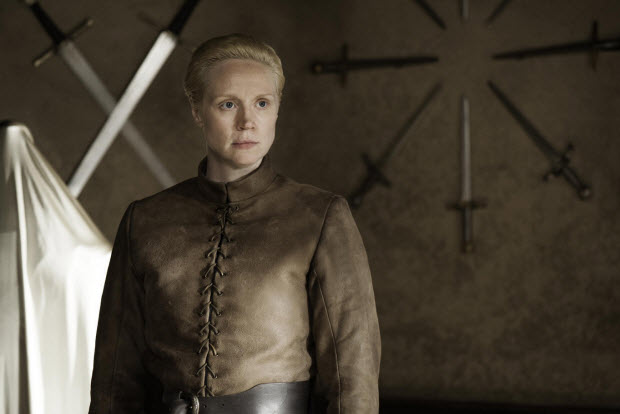
I adore Brienne, and have from the beginning. As I said to my husband last night, I’m still in awe over the perfect casting of this woman. “Find me a woman who’s 6-foot-3, very plain-looking, almost unattractive and man-like, and yet very feminine, beautiful in the right light, who can play tough and vulnerable at the same time.” I can only imagine how much the casting director must loathe GRRM at times… and yet, they found the perfect woman. Brienne is tough, but very vulnerable and lost at times; plan and masculine-looking (Pod calling her “Sir” is hilarious) and yet gorgeous — none of us shall forget what she looked like in that hot tub — very tall, and yet one who can be made to look small just by the look on her face. We almost never see her smile, which I’m sure is one of the actress’s tricks; if she did smile, she would probably be beautiful, so she keeps her face very shocked and angry-looking all the time, and it works. As she rode off on her horse with Podrick at her side (what a GREAT duo, I never would have thought of it but can’t wait to see what they do with it), my husband said, “I really hope they have a great storyline for her, because she’s one of the best characters on the show.” Yes she is. Let’s put her in the “GRRM writes amazing female characters” category.
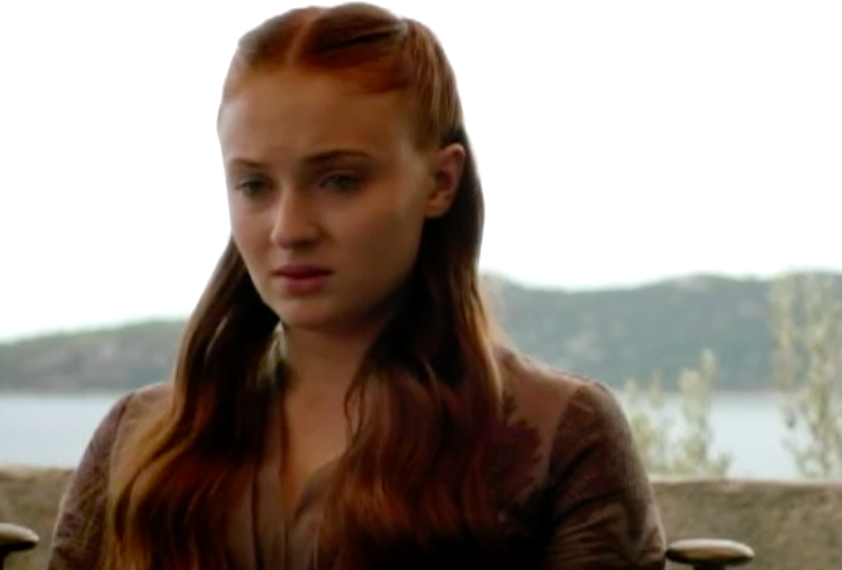
brienneIn the scene that you mentioned with Tyrion and Jaime, Tyrion is very quick to defend his wife’s honour, telling Jaime that she couldn’t have killed the king. “Sansa’s not a killer . . . not yet, anyway,” he says. I immediately wondered if that was foreshadowing. We cut to Sansa being over on the ship with Baelish and saying the same thing about her husband, that there’s simply no way he could have done it. I love that the writers on the show have included scenes of Sansa and Littlefinger in every season, as if building up to them ending up on this ship together in the fourth season. What did you think of their conversation, Chris?


Christopher: I loved it. There have been some wonderfully crafted character arcs on this show; one of the best things about the revolution in television these past ten years or so has been its ability to employ its long-form storytelling in the service of developing layered, complex characters who evolve as they suffer life’s indelicacies. And the best shows take their time, so that the Ellis Carver we see in the final episode of The Wire or the Jesse Pinkman at the end of Breaking Bad are utterly different people than they were at the start. We see this most strikingly in Game of Thrones, I’d argue, with Arya; but Sansa’s evolution has been far more subtle and in some ways far more profound. She did not have much to do last season as she languished in King’s Landing, but we see from her conversation with Littlefinger that she has been paying attention.

And you’re absolutely right, Nikki, to observe that we’ve been privy to a handful of strategically placed scenes between Sansa and Littlefinger that, taken individually, don’t amount to much—but by the time Sansa clambers over that ship’s rail, the two of them have established a connection. Or rather, Littlefinger has established a connection with Sansa, who was certainly unaware that anything was happening. Their conversation thus is as much of a reveal as when we first saw Littlefinger again—as Sansa slowly starts to piece things together, we see she’s pretty damn far from the obnoxious child she was in season one.
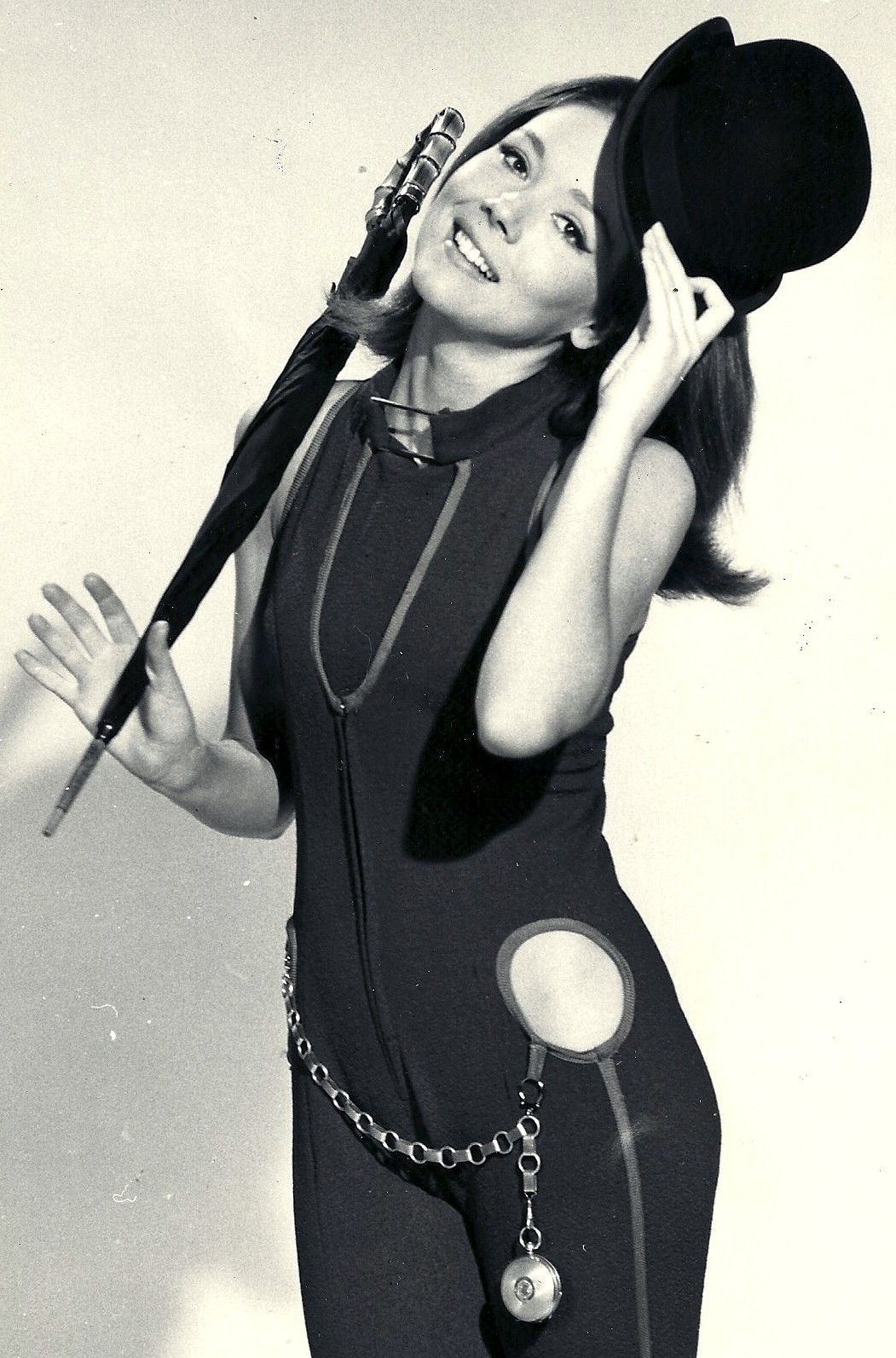
dianariggavengers

The Queen of Thorns in her prime.

If this season is teaching us anything about politics in Westeros, it’s that it doesn’t pay to be a capricious or unpredictable king. We see Tywin’s satisfaction at the malleable and decent Tommen, Tyrion wonders if his father is responsible for Joffrey’s death for the sake of stability, and here Littlefinger confesses to orchestrating Joffrey’s death because “he was not a reliable ally.” And … cut to the other half of the conspiracy, in which we see Olenna and Margaery spinning their own plot … though not until Olenna shares a scandalous little secret, namely that she seduced her late husband away from her sister and basically ensnared him by being so spectacular in bed that he was helpless before her (and speaking as someone who first discovered The Avengers and the knee-trembling spectacle of Diana Rigg in a catsuit when I was about Tommen’s age, her claim to have been “very good” rings absolutely true). Keep in mind, of course, that she hasn’t yet spoken of her late husband with anything other than contempt until this moment: her nostalgia for literally fucking him into submission betrays no pleasure at the memory, just pleasure in remembering how good she was. There is no affection here, just satisfaction at having played the game well … and reminds us that Olenna, like Tywin and Littlefinger, has absolutely no sentimentality for anyone but her inner circle, seeing people as objects to be used as means to an end.

Reflecting back on your earlier comments, Nikki, I’d add that in addition to depicting a neomedieval world in which cruelty and pain are inescapable facts of life, Game of Thrones does something that Rome also did wonderfully—namely, to counterpoise masculine and feminine power. The scheming of Atia and the feud she engages in with Servillia have a lot in common with the behind-the-scenes maneuvering done by Olenna, as well as the nascent conflict with Cersei.

With Joffrey out of the way, they now need to consolidate power by taking control of Tommen—which Olenna knows will be difficult, as Cersei will guard him like Cerberus. Did you catch Margaery stroking her necklace? A nod’s as good as a wink to a blind man, and that read rather loudly as an assertion that Margaery and Olenna are pretty much willing to do whatever the hells they need to get what they want.

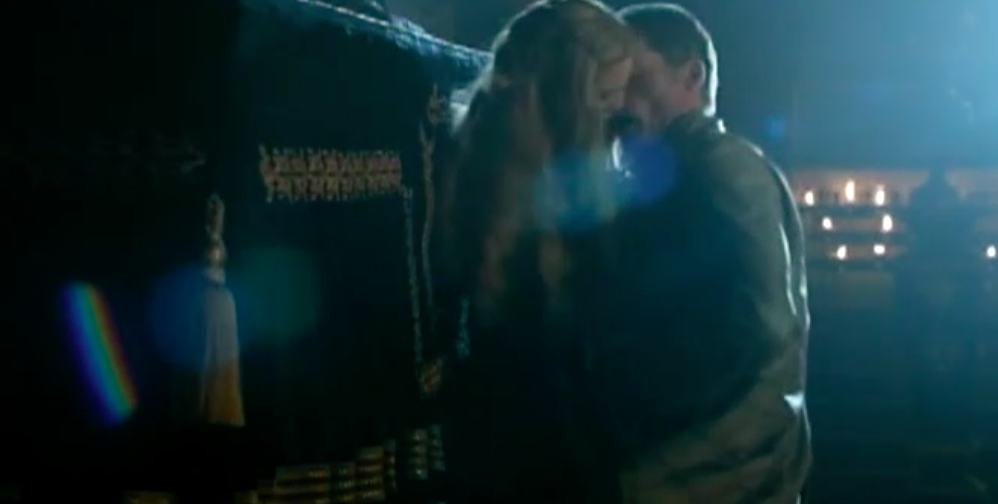
Which for the moment, fortunately for Cersei, involves sneaking into Tommen’s bedchamber. Margaery mercifully does not employ her grandmother’s tactic and go all statutory-rapey on Tommen, but proceeds with a little more subtlety. What did you make of that scene, Nikki?
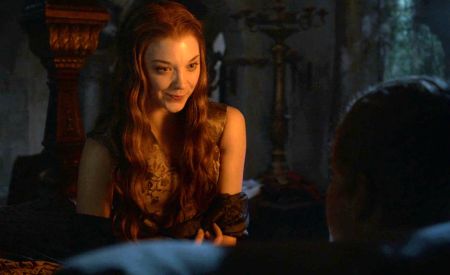
margaerytommen1

I’m reasonably certain I had precisely this dream when I was Tommen’s age.


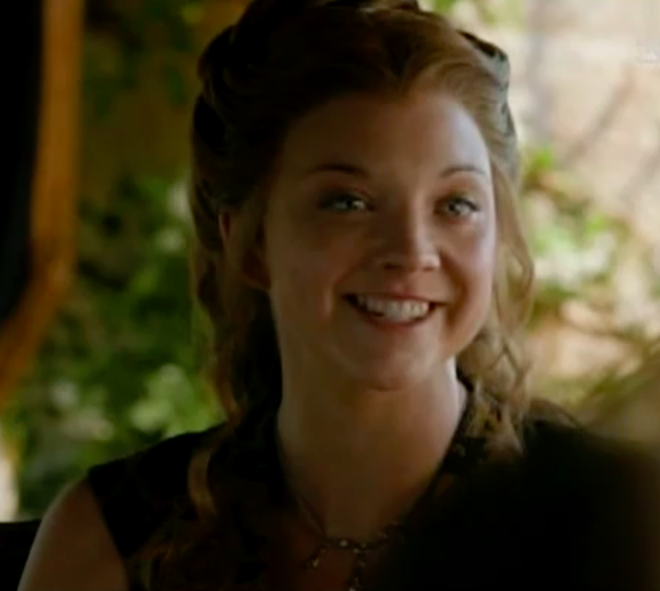
Nikki: Nudge nudge… say no more. First of all, I do have to say I didn’t see Tommen coming. The kid’s been in a handful of scenes and has barely uttered more than a grunt, and I never even noticed him standing there. I was going to say last week that the casting directors were once more brilliant in casting this kid way back in season one before he actually had to do anything spectacular… until I checked this week and discovered that no, he’s actually being played by a new actor this season. That makes a little more sense. But, at the risk of being totally cougary myself, I do have to say they’ve cast a really good-looking guy to play him. I don’t know yet if he has any charisma in the books, but so far the actor is playing him as cautious and smart, yet wide-eyed and quiet. And when Margaery comes into the room to see him and Mr. Pounce joins them on the bed, let’s just say when she leans forward to talk to Tommen, I don’t think Mr. Pounce was the only thing jumping up in that scene. She’s as brilliant as her grandmother when it comes to subtlety and tactics, and just like Grandma Peel (yes, when Olenna made the comment about being really fantastic back in the day, my mind immediately went to Emma Peel in a catsuit, too!), Margaery knows how to use her feminine wiles to get what she wants. I love that she’s able to control Tommen far more than she ever could Joffrey, which not only makes me intrigued for the little “secrets” they’re going to keep from Cersei, but also hopeful that for once, maybe one of her kingly husbands might actually survive the marriage.

Speaking of getting things up, let’s move northward, shall we? (In case you’re wondering, I’m in a self-imposed contest to come up with the worst segue ever. I’m thinking that one might be a major contender.)

Over at Craster’s Keep, Karl Tanner is holding court, using dialogue from the Al Swearengen School of Emoting. I recently stayed with a couple of friends in the UK and they showed me several episodes of The Thick of It, starring Peter Capaldi as a foul-mouthed governmental director of communications, but in these scenes in this week’s Game of Thrones, Owen from Torchwood makes Capaldi’s character look like a Sunday school teacher. As he drinks wine from Mormont’s skull, he lords over everyone else, encouraging them to fuck the girls to death (subtle, dude) and take what’s theirs. In the background you can see Craster’s daughters in various stages of undress, beatings, and being brutally raped. It’s a horrific scene, made worse when the old woman comes in carrying yet another male heir of Craster. The mother in me cringed at the newborn baby playing the role of the newborn baby, and I remember thinking note to all expecting mothers: do NOT agree to let your newborn baby appear in an episode of Game of Thrones. It never turns out well for the wee bairn.

But THEN… Bran moves into the mind of Summer and sees Ghost (a reunion of direwolves!!) and then the whole lot of them gets caught. And THEN… they beat on Hodor and stab him. I had no idea how much I loved the big lunk until that happened, and then I was furious and frightened that this might be the end of the character. I literally sat up straight on the couch and yelled, “DON’T YOU DARE HURT HODOR!!” When Tanner smacks Bran and jokes that where he came from in Gin Alley, if he’d struck a highborn he would have lost his right hand, I couldn’t help but think please please please let this be foreshadowing. But if there’s one thing I’ve learned from Game of Thrones so far, the pricks seem to get theirs in the end. I’m gleeful about what could possibly be awaiting Tanner.

I was shocked when you said that Locke wasn’t in the books, Chris; you did actually say that back when he was lopping off Jaime’s hand, but of course I’d entirely forgotten that you did until you just mentioned it again. So if it’s not in the book, I wonder if we should fear Locke at all, since one would assume Bran’s story wouldn’t be messed with in a big way (i.e. you wouldn’t kill off Bran on the show if he survives in the book)… or would it? With all the divergences from the book that you mention above, it made me think that maybe the Game of Thrones guys are either doing what you said — they know the ending to the books and are now turning things more quickly to that end, knowing they can’t keep the show going for another eight years — or they’re following The Walking Dead’s lead on moving so far away from the books that the readers can no longer predict what’s coming next … to the extent that when something major DID happen this past season that was exactly from the books, it caught everyone — including the readers — off-guard.

My guess is the first, because what has really set GoT apart from so many other adaptations is its fealty to the books, and I would hate for that to be destroyed. But now I also see why the readers would be up in arms: you all choose to read the books because you want to read it from GRRM first, and don’t want the show to spoil it for you, whereas those of us who started on the show watch it first and read later. But if they’re going to jump ahead and include information from future books that haven’t yet been released, they’re taking the choice out of the hands of the reader/viewer and surprising them with spoilers.

Any final words about Locke and those white walkers at the end, Chris?
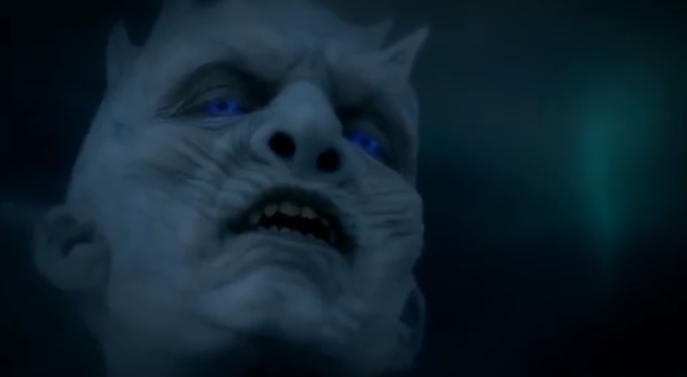
creepy

Christopher: Locke’s current role is puzzling. I understood why they created him initially; in the novels, Jaime’s hand is cut off by a psychotic group of mercenaries called the Bloody Mummers, who had originally worked for the Lannisters, but then switched sides to Roose Bolton. So the series was consistent insofar as Jaime loses his hand to Bolton’s men. But the whole infiltration of the Watch and the capture of Bran are huge deviations from the novels. Assuming they mean for Bran to escape and carry on north, then this is just a little diversion from his main storyline—probably created because Bran’s storyline is otherwise JUST SO DAMN BORING. But Locke seems to be developing into a fairly significant character. I have a few thoughts about how this might play out so that the main storyline is preserved, but I think I’ll keep them to myself for the moment.

Though it is worth pointing out that, to go on this mission, Locke must take the oath. And while he presumably plans to desert and return to Roose Bolton, the penalty for desertion is death. Full stop, no appeal. However much the Night Watch is mocked in the southern regions of Westeros, that law is about as absolute as they come. Would Roose shelter him? If I was Locke, I’d be leery of trusting Roose Bolton with my life …

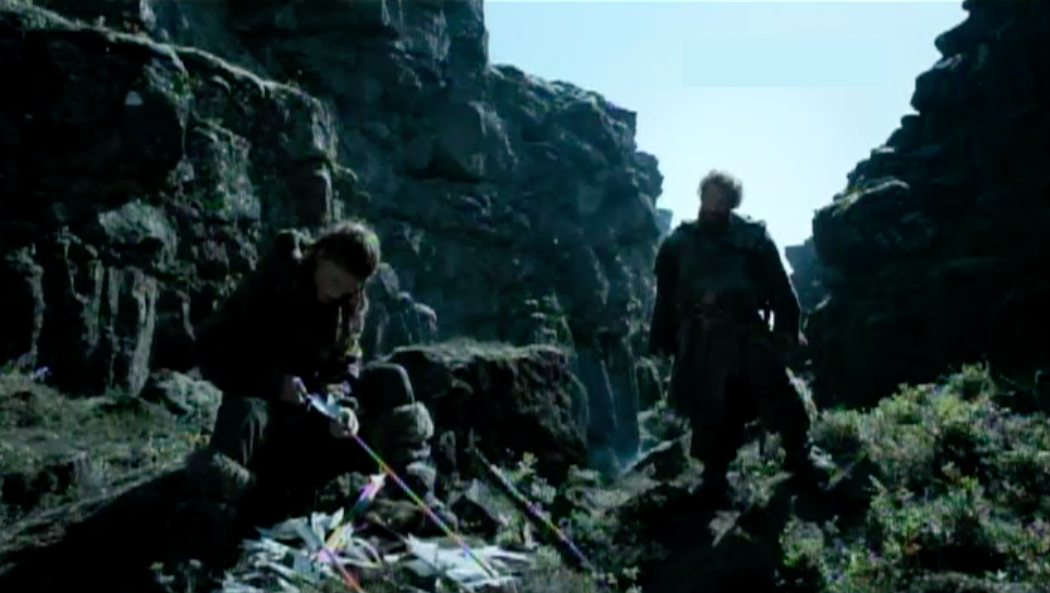
As for the White Walkers … I suppose it’s possible that we’re getting a glimpse into the books’ mythology, something that won’t necessarily be made explicit in them. Why do the White Walkers demand this horrifying sacrifice? What happens to the babies? Well, now we know—they’re made into more White Walkers (not such a great galloping shock, that).

But I’m not overly concerned with the series deviating in any fundamental way from the books, and not just because the outcry from the fans would be enormous. It makes a certain amount of sense for series like Dexter or The Walking Dead to go off in their own directions: the Dexter novels are discrete, stand-alone stories, and (from what I can glean) the Walking Dead graphic novels could potentially go on forever, as there is no cohesive, overarching story. But A Song of Ice and Fire is building to a specific conclusion (dragons, meet White Walkers; White Walkers, these are Daenerys’ dragons), and the showrunners have in their possession GRRM’s notes and plot outline. I have to assume that the changes they make, however baffling, won’t paint them into a corner. It’s sort of like when J.K. Rowling read the screenplay for The Order of the Phoenix, and asked “What happened to Kreacher?” The writers said they left him out. “Noooo …” said Rowling. “He’s actually kind of important.” So we have a brief little glimpse of the sour house-elf.

Well, that wraps things up for another week! Once again, Nikki, a pleasure. We’ll see everyone here next Monday. In the meantime, as my favourite CBC personality used to say, be cool, stay warm, and be good to the people you love. And strongly encourage your cousin to switch her wedding venue from Westeros to Narnia. Even if she loses the deposit.
1 Comment

Filed under Game of Thrones, television

What I’m (re)Reading: Evolution

baxter_evolution-181x300I haven’t posted about books I’ve been reading for a while, partly because much of it has been the rereading I do for teaching. And since classes ended, I’ve continued in my rereading of some favourite books. Just this morning I finished Evolution by Stephen Baxter, a novel that is the epitome of nerd crack.

Basically, the novel is the story of human DNA: from the first rodent-like primates running around under the feet of the dinosaurs, to homo erectus, to Neanderthals, to homo sapiens … and then speculating millions of years into the future as to where we’re going. Spoiler alert: we don’t become balls of pure energy as Gene Roddenberry suggested.

The novel is part interlinked short stories interspersed across millions of years, and part extended lecture on evolutionary biology. If you’re the kind of reader who hates novels that explicitly try to teach you something, take a pass. But if you’re like me and love a good story that also offers tons of cool facts, well … like I said, nerd crack.

The story begins with Purga (from purgatorius, one of the first species of primates), and her anxious life at the feet of the dinosaurs. More importantly, Purga lives through the comet-strike that resulted in the mass extinction of the great saurians. The description of the comet hitting the earth, and the effect it had, is really worth the price of admission: while Baxter’s prose is mostly serviceable, here he attains a certain brutal lyrical elegance.

The impact had sent an energy pulse through the body of the earth. In North and South America, across thousands of kilometers, faults gaped and landslides crashed, as the shocked ground shuddered. The rocky waves weakened as they propagated, but the Earth’s internal layers acted like a giant lens to refocus the seismic energy at the impact’s antipode, the southwestern Pacific. Even here, the width of the planet away, the ocean floor heaved in swells ten times higher than the 1906 San Francisco earthquake.

The shock waves would continue to pass through the planet’s body, crossing, interfering, reinforcing. For days, the Earth would ring like a bell.

If the novel has a flaw, it’s that it tends to be repetitive. Certain tenets of evolutionary theory are narrated again and again, and Baxter never misses an opportunity to remind us of the cruel, cold calculus that is survival of the fittest. Aside from this occasional didactic tendency, however, the novel manages to tell the story of evolution with almost a potboiler-level of immediacy—no mean feat, considering that each chapter introduces new characters and new settings that necessitate a whole lot of exposition and mental adjustment on the reader’s part to animals and landscapes literally reshaped and reinvented by time. The narrative’s principal pivot-point balances on the story of a pregnant paleontologist (try saying that five times fast) named Joan Useb who, with the assistance of her friend Alyce Sigurdardottir—a biologist—has organized a huge conference of scientists of varying disciplines in (appropriately) Darwin Australia. The year is 2031, and all the global problems of our present day—climate change, wealth inequality, rapacious corporate culture, dwindling natural resources—have only gotten worse. Much worse, to the point that Joan and Alyce have an ulterior motive for organizing the conference: to bring together the best scientific minds in the world and bang out a manifesto for how to arrest and reverse the global descent into crisis. It’s a Hail Mary play, but we never get a chance to find out if it will work. The conference is attacked by a group of fundamentalist fanatics just as a massive volcano in Papua New Guinea explodes and pushes the planet’s fragile climate past the point of no return.

The chapters following the conference’s failure chart the fortunes of humanity millions of years into the future. A group of Royal Navy soldiers, cryogenically frozen as part of an elaborate deterrence strategy, awake to discover that they had been forgotten and left asleep through the fall of civilization. They do not know how long they have been frozen, but it slowly becomes obvious that at least a millennium has passed. They do encounter people, but people who have reverted to a bestial state, with no language. When one of the soldiers voices incredulity that humans would lose language, another replies,

Why not? Birds lose flight all the time. To be smart costs. Even a brain the size of yours is expensive; it eats a lot of energy from your body’s supply. Maybe this isn’t a world where being smart pays off as much as, say, being able to run fast or see sharply. It probably didn’t take much rewiring for language, even consciousness, to be shut down. And now the brains are free to shrink. Give them a hundred thousand years, and they’ll look like australopithecines.

The “cost” of intelligence in evolutionary terms is another of the points Baxter hammers home repeatedly, describing the evolutionary steps that made intelligence and language advantageous and the concomitant difficulties it posed our genetic ancestors: the inability to breed prolifically, for example, or the necessary helplessness of human infants. Other species’ offspring are vulnerable but emerge with all their faculties intact; deer and horses can walk, turtles can swim, and so forth. Given a lack of predation, they can fend for themselves, whereas a human baby simply cannot. The reason, Baxter points out, is because our brains are incomplete when we’re born. If they weren’t, we simply wouldn’t fit through the birth canal. Human beings, in effect, continue to gestate for several years after birth.

The devolution of humanity, which comprises the final three chapters, is one of the most remarkable elements of the book for the simple reason that it challenges the tacit assumption of progress, that evolution inevitably describes an upward arc. The soldier who commented on the brain’s energy cost also points out, when his commander declares his intention to rebuild civilization, that there is nothing to build with—all of the easily accessible natural resources that made civilization possible have been used up. One of my favourite chapters in the novel—the last historical one before the ill-fated conference—takes place in CE 482, in the midst of the ruins of the Roman Empire. It details a Roman named Honorius’ fascination with old bones. He has traveled widely, collecting a mishmash of fossils, dinosaur bones, and pre-human skulls. Honorius is sort of a proto-Darwin, slowly piecing together an understanding of a much more ancient past than ever previously imagined, out of which humans emerged. But he never has a chance to be Darwin, as he is murdered in a power struggle between Romans and local Gallic nobles.

Honorius’ death, and with him the death of a theory that won’t re-emerge for fourteen hundred years, is a potent little allegory of how Rome’s demise deprived Europe of its social and technological sophistication for a millennium. More significantly however, the chapter is an excuse to depict the tatters of Rome, whose empire “had thrived on expansion, which had brought triumphs for ambitious generals, profits for traders, and a ready source of slaves.” But at a certain point expansion was no longer possible, and the system collapsed:

There came a point of diminishing returns, in which every denarius collected in taxes was pumped into administrative maintenance and the military. The empire became increasingly complex and bureaucratic—and so even more expensive to run—and inequality of wealth became grotesque. By the time of Nero in the first century, all the land from the Rhine to the Euphrates was owned by just two thousand obscenely rich individuals. Tax evasion among the wealthy became endemic, and the increasing cost of propping up the empire fell ever more heavily on the poor. The old middle class—once the backbone of the empire—declined, bled by taxes and squeezed out from above and below. The empire consumed itself from within.

I said this was one of my favourite chapters; I didn’t claim it was subtle. The Roman with Darwinian thoughts is really just an excuse to use the fall of Rome as an object lesson. Rome fell and plunged Europe into the dark ages, but civilization was ultimately rebuilt. One of the novel’s central messages is that, as a species, we won’t have that opportunity. Roman civilization crumbled, but was preserved piecemeal in the east; the Renaissance was to a large extent its rediscovery, and that historical drama of fall and rise was played out in a small section of the globe, having no direct effect beyond the former extent of the empire. Evolution reminds us that any collapse now would necessarily be total, global, and we will lack the resources for anything resembling a reconstruction of the world as we know it.

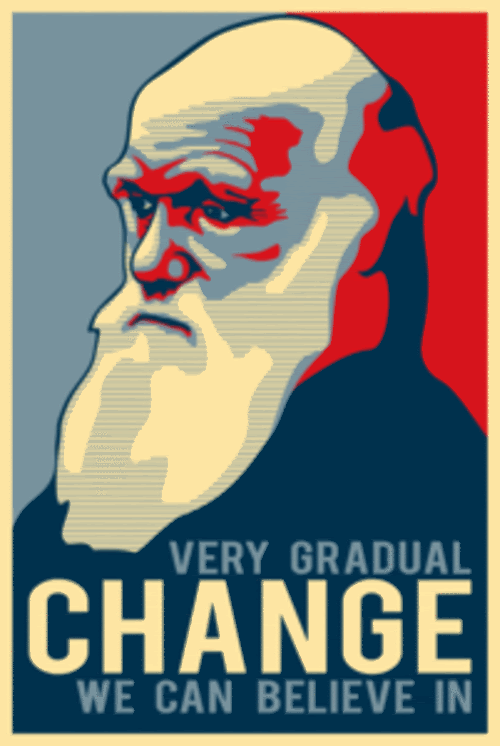
As enjoyable a read as it is, Evolution is a deeply depressing novel, both for its bleak outlook and for the way in which our current existence is rendered utterly insignificant when viewed on a geological time line. It makes the appeal of creationism somewhat more understandable, as a six thousand year old world made specifically for humanity is a far more comforting prospect than the mind-numbing swath of years depicted in Evolution. Yesterday I watched a documentary on HBO called Challenging Darwin, which looks at creationism in contrast to Darwin’s life and his gradual distancing of himself from his faith, which had been strong enough early in his life to consider a career in the clergy. The documentary itself is forgettable; what I came away from it with was a depressing sense of just how incommensurable these two discourses are. Creationism begins and ends with the Bible, full stop. One of the evangelicals interviewed proudly declared that “if the Bible said two plus two equaled five,” he would have to adopt his understanding of math to conform. But what a lot of the creationists maintained is that they simply cannot accept the idea that the universe was not made specifically for them; again and again they express the belief that everything is meant to be and everything has meaning as part of God’s plan, and that our presence on the earth is not transient but immortal.

They really ought to read Evolution.

darwin

Leave a comment

Filed under what I'm reading

Game of Thrones 4.03: Breaker of Chains

GameOfThrones_Teaser02_Screencap10Hello again and welcome to the great Game of Thrones co-blog, featuring Nikki Stafford and myself, who gets to ride along in her TARDIS of televisual commentary (sorry, I was watching season five of Doctor Who earlier and watched an episode in which Ser Jorah Mormont appears. Iain Glen does get around).

Tonight episode picked up pretty much precisely where last week’s left off—which is just a great way for me to remind everyone that Joffrey is dead. Do not pass GO, do not collect your two hundred gold dragons. Dead. And his former betrothed Sansa has been liberated from the scene, which brings us to …

littlefinger-sansa

Tommy Carcetti, the post-Baltimore years.

Nikki: And the episode begins with Sansa racing off across the waters, escaping the accusations of the Lannisters for the death of the Little Shit (one week later, STILL GLORIOUS) and her connection to Tyrion, and is placed safely in the hands of…

Goddammit!!

From one psychopath to another. Now, as we discussed back in our book discussion, Lord Baelish is more sympathetic in the books (we see how Catelyn mocked him and how much he yearned for her love but was physically helpless to fight in any battles to win her hand) but on the show, he’s a scheming bastard who in season 3 arranges for the torture and death of Ros, the prostitute who’d been working for him and who he assumed betrayed him. The last we see of him is having a verbal sparring match with Varys, telling him that he believes chaos is necessary to move ahead. He has already asked Sansa once to join him on his ship, and she refused, and so, we assume, he leaves for the Vale of Arryn…

…when in fact it looks like he just threw down an anchor and tried to come up with a new plan to get Sansa on that ship. And if this means that he is behind Joffrey’s death somehow… woo, that plan was a doozy. In the previous episode, Ser Dontos approaches Sansa with a necklace that he says belonged to his mother and is the only thing of value that he owns. He’s thanking her for saving his life back at the beginning of season 2, when she talked Joffrey out of beheading Dontos and making him the king’s fool instead. But it turns out the necklace was a ruse to get Sansa on-side. Dontos clearly didn’t think he was betraying Sansa or putting her in harm’s way, and was instead saving her from certain death at the hand of the Lannisters (which is probably true). Because of Baelish’s unrequited love for Catelyn, one assumes he’ll keep Sansa safe, not only because she’s the daughter of his great love, but because she looks like Catelyn, and he appears to be partly in love with Sansa, too. But when it comes to Baelish, one should never assume anything. Just like the lovely Ser Dontos never should have assumed he could have done a job for Baelish and gotten out of this alive.

And man, that ship must have been anchored waaaay out in the waters, since it was mid-day when Sansa got into the dinghy, and it appears to be midnight when she gets to the boat.

Were you happy to see Littlefinger again, Chris?


Christopher: I keep thinking to myself, there’s something to be written about the fairly singular pleasure those of us who have read the books have in anticipating key moments as they occur in the series: both in terms of wondering how they will be rendered, whether they’ll be done well or not (and so far, to my mind, there haven’t been any missteps); and in terms of anticipating how you lot who haven’t read the books will respond. When the shadowy man who has helped Sansa onto the ship steps back and we see Littlefinger, I came close to punching the air and saying “Yes!” Not because I didn’t know it would be him, but because the reveal was crafted so beautifully. Knowing that you, Nikki, and thousands of other people who haven’t read the books were having a frisson of shock and surprise was almost as good as experiencing it myself. Or perhaps even better. I’m sure the Germans could come up with a word for the experience.

All of which is by way of saying: yes, I am delighted to see Littlefinger again. Though I did wonder (out loud, in fact) “what that hell’s going on with his voice?” It’s like Littlefinger suddenly remembered he was Irish. And don’t get me wrong—I love hearing Aiden Gillen speak with his natural accent, but it was a bit surprising after hearing him speak in a neutral, clipped mid-Atlantic accent these past three seasons. Also, his voice was hoarser than normal … which I suppose is partly because he was whispering, but it was something of an odd effect. He sounded like Irish Batman.

One of the things I liked about this episode is the way, in the first three scenes, we get a contiguous set of schemes: first Littlefinger, then the Tyrell women, then Tywin staking immediate claim to the mentorship of the new king. Let’s talk about Margaery and Olenna first: this scene is understated but deeply significant, at once touching in the obvious affection Olenna has for her granddaughter but also a wonderful display of the Queen of Thorns’ ruthless pragmatism. A shame, she observes, that Joffrey did not have the courtesy of consummating the marriage before dying. Margaery perhaps can be forgiven for having a moment of despairing cynicism, wondering if she is cursed—but what is interesting is that she seems more concerned (however glibly) that she might herself be somehow deficient, rather than railing in totally justifiable anger at her role as a pawn in the game of thrones. Of course she doesn’t: she has shown herself to be precisely as pragmatic as her grandmother in the matter-of-fact way she dealt with Renly’s sexual preferences, and again in the shrewd way she worked with Joffrey, learning to seduce him not through sex but feigned interest in his enthusiasms. Her momentary despair comes from the fear that Joffrey’s untimely death has upset her family’s ambitions … but Olenna sets her straight, observing that “Your circumstances have improved remarkably.” After all, she points out, the Lannisters need this alliance—they cannot hold the throne without the power of Highgarden, and so will wed Margaery to the new king … who is younger, more malleable, and above all, not a psychopath. “You did wonderful work on Joffrey,” Olenna compliments her, and adds “The next one should be easier.”

margaery2

She smiles through the pain. As must we all.

Cut to: the next one! Prince Tommen, standing beside his mother, gazing down at his elder brother’s corpse, complete with those flat stones with creepy eyes painted on them. Poor kid doesn’t look like he knows what to think … I mean, I can only imagine what it would have been like to be Joffrey’s little brother! (We get a somewhat better sense in the novels—for instance, Tommen had a pet fawn, which Joffrey killed and skinned and had made into a vest). On one hand he’s aware of the enormity of the situation, but on the other, he can’t be excessively sorry that the little shit is dead.

Enter Tywin, who proceeds to engage his grandson in a Socratic dialogue about what it takes to be king. What did you think of that scene, Nikki?

Tywin

Nikki: Irish Batman, hahahahaha!!! I was wondering the same thing about that accent? “Where the hell has Baelish been sailing?!”

You wrote, “Tommen had a pet fawn, which Joffrey killed and skinned and had made into a vest.” Good Christ, he was even worse than I thought. Like many of the fans this week, I’ve been thinking how I would have liked to see Joffrey tormented the same way Theon has been before Joffrey finally kicked the bucket; he was let off too easily. Ugh.

Anyway, Tommen has been such a minor character thus far that I barely remembered he existed, but for the first time we see him step up and be questioned by Tywin, who is calm, pragmatic, and as you say, leads the conversation but requires Tommen to come up with the answers. Throughout this utterly brilliant bit of dialogue, I kept imagining Joffrey answering the same questions:

Tywin: Your brother is dead, do you know what that means?
Joffrey: It means the best man has won, and I AM KING! Bow down before me, grandfather.
Tywin: What kind of king do you think you’ll be?
Joffrey: The ONLY king, grandfather, does it matter what kind?! (swagger, looks to the left for confirmation from a guard, smirks, puts his hand on his sword) Now bow down before me.
Tywin: What makes a good king?
Joffrey: I’ll show you what makes a powerful king if you don’t bow down before me RIGHT NOW, Grandfather. How much do you like your head?

Instead, Tommen answers with humility and deep thought. He suggests “holiness” is an important quality. Tywin tells him about a man who was holy, but made a terrible mistake and died. Perhaps “justice.” Definitely important, says Tywin, but the most just king he can recall was killed by an unjust brother. “What about strength?” Tommen asks. For that one, Tywin pulls out Tommen’s own “father,” Robert Baratheon, and tells him how strength didn’t do him much good in the end. What do they all lack? “Wisdom,” Tommen answers wisely, and at home we think, oh my goodness, the Lannisters might actually have a shot under the rule of this kid. For the past three seasons, the Lannisters have been the bad guys, despite the fact both Jaime and Tyrion are two of the most sympathetic characters, and Tywin, despite having evil moments, is a genius. With Cersei and Joffrey in power, the Lannisters were loathsome, the house we were fighting against. And now, with Tommen, that might shift.

As Tywin and Tommen walk out, Tywin puts his hand on Tommen’s shoulder, a gesture I never saw him make with Joffrey, and one Joffrey never would have welcomed or even allowed. Tommen is wise, and he will listen to his even wiser grandfather.

Jaime enters the room to see Cersei, staring down at Joffrey (and I second your creeped-out feeling on those hand-painted stones for eyes, geeeyaaaah). I must mention that I thought Lena Headey was pretty fantastic in this episode and in the previous. There’s so much love for this little monster because at her heart, she’s a mother who loves her son no matter what. During the Tywin/Tommen scene she just continues to stare at her son’s corpse, with anguish on her face, at one point quietly suggesting this isn’t the time or place for this conversation. And now that Jaime enters the room, he rapes her beside their son’s corpse, an intensely uncomfortable scene. Was that in the books the same way, Chris?

jaime-cersei

Christopher: No, in the books Cersei was still reluctant, but Jaime didn’t force her. An important difference here between the books and the series is that Jaime doesn’t return in the novel until after Joffrey is killed. In fact, it is in the presence of Joffrey’s corpse that Cersei sees him again for the first time, and that simple difference makes the hasty, uncomfortable sex somewhat more understandable (if still awkward and creepy. Also, in the novel, Cersei is having her period, which makes the scene more than just figuratively messy). I wondered to myself whether this rape scene—because, really, there’s no other way to describe it—was written for the express purpose of denuding our growing sympathy for Jaime. He has gone from being a smug and hateful villain to someone far more sympathetic and thoughtful. Did the writers think he needed to be taken down a notch? Or perhaps Cersei raised a little in our sympathies?

One way or another, I think the scene was a catastrophic misstep, made all the worse by the fact that the bit leading up to it was amazing. I agree with you entirely: Lena Headey was phenomenal here, her grief palpable and no less powerful for the fact that we’re all sitting there shouting at her that her son was a monster (or maybe that was just me). Jaime’s confusion was also poignant, as was his shock when Cersei implores him to kill Tyrion.

I think part of my problem with this scene is rooted in my problem with Lena Headey as Cersei. As you know, she has long been the one bit of casting that hasn’t worked for me, which is no reflection on Headey’s acting—I think she’s done a superb job. But she plays Cersei as cold and aloof. There is very little sensuality there, very little sense of the pungent sexuality that addles the minds of the men about her. Which wouldn’t be a problem if I had any sense of chemistry between her and Jaime when they’re alone—all of their scenes together, alone, have tended to be him being flirtatious or ardent and her being standoffish. The one time before this we see them having sex—the scene that ends with Bran being thrown from the tower—I did not get the sense that she was into it at all.

By contrast, in this scene, that first moment when they kiss was the first bit of real chemistry I’ve seen between them. For a moment Cersei loses herself—but quickly recalls her grief. Jaime’s anger at being rebuffed, and the expression on his face as he stares at her, is a great little bit of face-acting. You can see the tumult in his mind: his desire for the woman he loves, his jealousy that she is more interested in grieving her son than being with him (which is consonant with the novels: Jaime’s POV chapters make it clear that he’s more or less indifferent to the children he fathered on Cersei—all he wants is her), and his helpless anger at being caught between his love for his sister and his love for his brother. That, I think, is where the “You’re a hateful woman” line comes from, her outsized loathing of Tyrion, but it is also perhaps the realization of a painful truth long suppressed.

But the rape? Frankly, it makes no sense, not unless you’re truly invested in keeping Jaime firmly on the villain side of the equation. I think it would have been a more powerful scene if he had just stalked out after the “hateful” line, with Cersei’s pleas following him.

I have a sneaking suspicion this scene will be fodder for a lot of arguments.

One last word on Tywin’s Socratic lesson with Tommen: I think you’re being somewhat optimistic there, Nikki … yes, Tommen is far more thoughtful and kind than Joffrey, and yes, I think we can look forward to a more equitable kingship under Tommen (always assuming, of course, that the principals here escape GRRM’s capricious death pen); but I saw this scene as Tywin cementing his power. Joffrey was unpredictable; we know his petulance and childishness sat poorly with his grandfather (of the various theories about who the poisoner is circulating on the web, this scene gives weight to those saying it was Tywin, who didn’t like being hand to a sociopathic king). What is the ultimate and more crucial lesson for Tommen? Wisdom is the most important quality for a king. “But what is wisdom?” Tywin asks. “A wise king knows what he knows and what he doesn’t.” Which is to say: listen to your advisers. Which is to say: listen to me. “Your brother was not a wise king,” he tells Tommen. “Your brother was not a good king. Perhaps if he was, he’d still be alive.” This last sentence spoken with a glance over his shoulder at the grieving Cersei as he leads Tommen away. This for me was the crux of the scene: visibly separating Tommen from his mother as he continues to murmur advice in his ear, Tywin silently rebukes his daughter for having been so catastrophically indulgent with Joffrey.

The next scene brings us back to Arya and the Hound, whom we had left at the end of episode one having vanquished a handful of Arya’s foes. Then, we were all delighted by their newfound camaraderie … but in this episode? It strikes me that this episode is, in part, about disillusionment. What did you think of the Hound’s cynical treatment of their host, Nikki?

arya-hound

Nikki: Just as the scene with Jaime and Cersei reverses our sympathies on both of them, so does this scene with the host turn my sympathies against the Hound. And yet, at the same time, cements his place as a guy you don’t mess with. On the one hand, I thought it was a dastardly thing to do, so awful and thoughtless, basically ensuring that they’ll starve even faster than what the Hound assumed was already inevitable. But on the other, I wouldn’t want the Hound to turn into a puppy, and we were on the road to that happening. They need to keep showing his teeth to remind us that he’s dangerous, and I like that about the character a lot. I still love his sarcasm most (when Arya says she wants a map and he growls, “Just point out the next map shop you see and I’ll buy you one” he is utterly brilliant), but I like this sense of danger about him so we never get too comfortable around him. Just as a Hound should be.

Arya is constant in her sense of justice for the weak, and therefore turns on the Hound with furious vengeance, but he instantly puts her in her place, cutting her deep by aligning her with the weak hosts he’d just robbed by telling her the weak end up dead, and adding, “How many Starks do they have to behead before you figure that out?”

Harsh. But important for her to see and understand. By ensuring she never gets too comfortable with things, he also prevents her from ever letting her guard down, which could be the thing that saves her in the end.

Meanwhile, in the North… Sam is worried that Gilly is surrounded by too many men of the Night’s Watch, and therefore relocates her to Molestown, a horrible dump of a town nearby filled with frightening people who loathe anyone or anything that comes from north of the Wall. Yeah… Gilly will be totally safe there. Yikes. As she was trying to settle the baby and turned her back on Sam, my heart broke for him, but I also was terrified. Will she even make it through the night there? Is Sam doing the right thing at all?

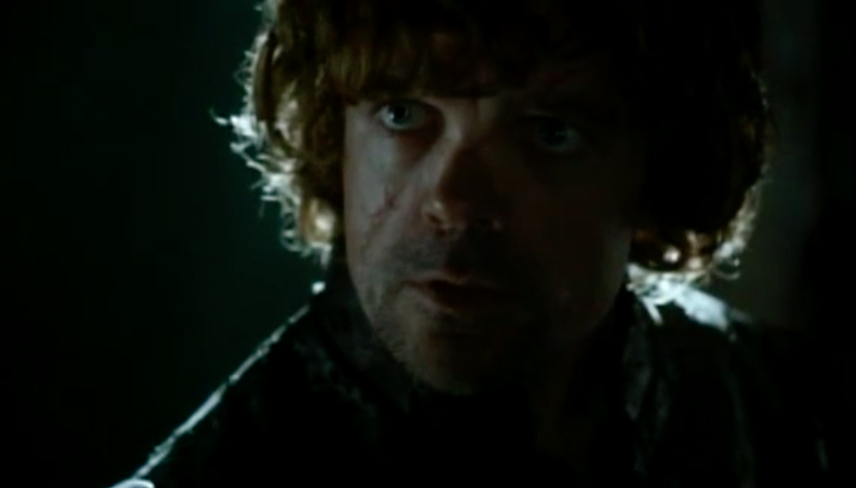
And then there’s Tyrion, my favourite. Imprisoned, blamed for the death of his little shit nephew, he meets with Podrick, who tells him Sansa is gone and there’s no one left to vouch for him. Even at his lowest, he still manages to crack a joke, saying that Cersei is the only one he believes is innocent, “which makes this unique as King’s Landing murders go.” Ha!! But even more importantly, he begs Podrick to testify against him if that’s what they’ve asked him to do, because while he wants to be exonerated, and we know he didn’t do it, it would kill him for Pod to be somehow sacrificed in the name of Cersei wanting Tyrion condemned above all others. There’s never a sense of defeat about Tyrion, even as he looks worried about it, as if he knows somehow he’ll get out of this pickle despite his sister wanting his head on a spike. He knows Cersei’s weaknesses, and maybe he’s already putting together a plan of how he can use them. Or, perhaps, he has a better relationship with Tommen than we know at this point, and if, as you say (clearly having a better sense of Tommen/Tywin and their future from the books than we do from the show at this point), Tywin is the one who’s really in charge at King’s Landing, would he really let Cersei kill Tyrion?

tyrion

Speaking of knowing what’s coming up while reading the books, last season you mentioned that Stannis using the leeches was going to become very important, and in this episode he takes credit for Joffrey’s death and relates it back to that scene. What did you think of all the Stannis/Davos material this week? (And also, did you catch the Monty Python reference when Shireen tells him you can’t pronounce “knight” like “kuh-niggit”? Ha!!)


Christopher: I laughed almost as hard as when the Hound said, in the first episode, “Man’s gotta have a code.” I kind of love that the writers aren’t above tipping their hats to their audience. I also love the fact that, once upon a time, knight was pronounced “kuh-niggit” (or more like “kuh-nict,” actually), and that the Python boys all knew that (Terry Jones is actually a medieval scholar).

The Stannis/Davos scenes were much as their previous scenes have been this season—they feel a little like placeholders, reminding us that they’re there without doing much to advance that story. There was an acknowledgement of that in Stannis’ concern: that if he doesn’t press his suit, he’ll be forgotten. Certainly for the moment he’s doing little besides brooding on his rock while his wife descends further into religious fanaticism. That being said, there seemed to be the suggestion that Davos is about to change the game. The scene with Shireen was interesting, as it unfolded similarly in the novel—except that his epiphany was dramatically different, so I’m not sure what’s happening now, aside from that he seems to be about to take out a loan from the Iron Bank of Braavos … or possibly not. Recall from when Tyrion was Master of Coin last season, and he lamented the sorry state of the throne’s finances to his father? The Iron Throne was in a lot of debt to, among others, the Iron Bank. Perhaps Davos sees an opportunity …

But if I can return for a moment to the Hound and Arya scenes … the Hound is such a great character, in both the series and the novels—and Rory McCann has done a spectacular job in portraying his odd blend of pathos, cruelty, and personal ethics, all sedimented over top of profound, roiling anger. GRRM does a disturbingly good job of depicting out-and-out sociopaths like Joffrey, Viserys, or the Hound’s brother Gregor, but it’s the characters like Sandor Clegane that set these novels apart and add a degree of complexity you don’t find in fantasy that imitates the Tolkien model. He is a distinctly Darwinian character: adaptable but merciless in the face of weakness. He is not wantonly cruel—he leaves the farmer and his daughter alive and unmolested—but unsentimental. He made a cold calculation: sooner or later other bandits would be along to kill the man and his daughter for their silver. If they’re about to lose it anyway, it might as well go in his purse.

Arya’s fury at this seeming betrayal is something of a relief, too. There has been a sense since the two of them paired up that they’re both changing each other, with the Hound becoming more sympathetic and Arya becoming colder and more ruthless. Watching her kill Polliver in the first episode was deeply satisfying, but also disturbing: we’ve watched Arya go from playing at violence with Syrio to becoming a practiced and unflinching killer. It’s good to see that her basic understanding of right and wrong hasn’t changed, though one wonders how much longer it will endure.

Tyrion’s scene was heartbreaking, and it offers a cynical commentary on life in King’s Landing. He knows all too well that he dooms himself in ordering Pod to accept the bribe—but also that his loyal squire would be dead if he did not. In ordering him to save his own life, Tyrion shows more capacity for human compassion than any display of grief on his sister’s part could. He has been an adept player of the game of thrones, but at a certain point he cannot do what his father, sister, Littlefinger, et al do, which is see other people merely as pieces on the board. At a certain point, he is unwilling to sacrifice others for his own sake. Whereas his father capitalizes on events to cement his power, offering Oberyn revenge on the Mountain in exchange for his cooperation and thus solidifying Dorne’s loyalty. “Give it to my father,” says Tyrion, “He never fails to take advantage of a family tragedy.”

Meanwhile, in the North, Tormund’s wildling band, augmented by the terrifying Thenns, descend on a village, killing all but a child they send to Castle Black . Speaking of characters we’ve grown to love behaving viciously, we see Ygritte killing helpless people as efficiently as Alabaster Seal does. What did you think of this spot of pillaging, Nikki?


ygritte

Post-Jon Snow Ygritte = honey badger.

Nikki: The Thenns are terrifying in a way the wildlings never were. The wildlings were feared, but the Thenns are merciless, and when they kill, they eat the corpses. Now that the wildlings are working with them, they become an unstoppable army, made all the more real when we move to Castle Black and realize that they have 100… against 100,000 of Mance Rayder’s people. AND… they still have rangers up at Craster’s whom they know will tell Rayder that. If Rayder finds out just how unmanned that Wall really is, the south doesn’t stand a chance.

And then there’s Daenerys over at Meereen. Back in episode 1, neither of us was too sure of this new casting of Busted Josh Groban for Daario, but he sort of won me over in this scene, where he goes up against Meereen’s champion in a literal pissing contest. Daenerys once again goes for numbers over seeming power when she targets the slaves, telling them that they could be free to follow her if they just throw off their collars. And then she hurls all the collars at the city — the ones they’d been taking off the mile-marker corpses that they’ve been burying for the past 163 miles. It’s a glorious scene, especially when you see the looks on the faces of the slaves, followed by the realization on the faces of the slave-owners. Ruh-roh. I’ve pledged my allegiance to House Targaryen since season 1, and my loyalty remains unchanged.

We haven’t yet discussed Tywin jockeying for the support of the Dornish by offering Oberyn a seat on the judge’s council at Tyrion’s trial, where he reminds the viewer that he’s trying to unite the seven kingdoms against my girl Dany. I’ll leave the final word on this to you, Chris.


Christopher: If Tywin could have witnessed the final scene of this episode and seen Daenerys in action, he’d be a whole lot more anxious about things, I think. Daenerys will be a formidable enemy not because she gains the people’s respect (though she does) or inspires fear, but because she has earned their love. However masterful a strategist Tywin is, he will never be loved—though he’ll do his best to make certain Tommen is.

We haven’t developed a solid sense of Dorne as a place yet—in the novels we learn it is sort of the outlier of the Seven Kingdoms, and has always had a fairly elevated sense of itself (which is why Oberyn’s brother calls himself a “prince” rather than just the Lord of Dorne). Meeting Oberyn and Ellaria certainly evokes the sense of its exoticism. This episode kind of bludgeoned us with the stark contrast by having Tywin walk in on what was essentially a mini-orgy—and reminded us that Tywin is a cool customer, keeping his face utterly impassive while Oberyn flaunts his hedonism. I of course know what will come of this putative alliance, so I’ll just say that for all of Tywin’s shrewd plotting, one wonders if he underestimates the passions of other.

And that is all for this week! Tune in next week, for the further adventures of Chris and Nikki watching television and yakking about it!

Leave a comment

Filed under Game of Thrones, television

Game of Thrones 4.02: The Lion and the Rose

GameOfThrones_Teaser02_Screencap10

Hello all, and welcome once again to the great Chris & Nikki Game of Thrones co-blog. This post is a very special post, as we say a sombre goodbye to one of the show’s best loved characters, someone who warmed our hearts with his gentle generosity and simple compassion for his fellow …

Nah, I can’t keep that up. Joffrey is dead! Ha!

But in the interests of professionalism, I will attempt to keep my gloating to a minimum. I’ll let Nikki do the grave-dancing. But first …

wee-prick

Christopher: This episode is an excellent reminder that, however much we might complain about GRRM killing off our favourite characters, every so often he kills the people we hate with the white-hot intensity of a thousand suns. The wee prick is dead! But because I knew that was coming, and because I have enjoyed your vitriolic loathing of the little shit lo these three years, Nikki, I will let you do the first jig upon his grave in this post.

Instead, I will begin by talking about the beginning of this episode: last season we left Theon in the throes of torture, mind-games, and castration. This season we see that young Ramsay Bolton—sorry, Ramsay Snow—was not merely tormenting Theon for his own amusement. Oh, make no mistake: he was totally amused by the whole process, the sick bastard … but it was all also done with an eye to breaking and subjugating Theon to the Bastard of Bolton’s will.

theon01

Poor Theon. I know you have very little sympathy for him, Nikki, but I wonder if the events of this episode have softened that perspective at all. We first see him hobbling along as fast as he can behind Ramsay and his (apparently) equally sociopathic lady friend (I think I heard him call her Miranda?) as they chase a terrified girl through the woods. I must confess that, watching this scene, I could not help but think the same thing as when similar moments occur in A Dance With Dragons—namely, a flashback to that moment in the Simpsons when Ranier Wolfcastle announces at the local community center that he will be teaching people how to hunt “ze deadliest prey … maahhn.” Apparently, Ramsay took the remedial course, in which he learned to hunt helpless terrified chambermaids (I’d like to see him try to hunt Brienne).

However much my mind may jump to such inappropriate allusions, this opening scene serves as a reminder later that Ramsay is only partially a calculating psychopath, and that at heart he takes perverse joy in inflicting terror and pain. For me, the most affecting—and horrifying—moment of this scene is when Ramsay sics his hounds on the wounded girl, which we don’t see but hear … instead we see Theon’s tortured face as she screams. Again, Nikki, you have to admit: however much you might not care about Theon’s torments, Alfie Allen shows his acting chops in this episode. He has little enough to say, but shows everything on his face. In those few seconds of hearing the girl’s screams mingled with the hounds’ growls, we see Theon’s own terror, horror, fear, hatred, and self-loathing … in short, we see Reek.

And we see Reek again when Ramsay commands him to shave him in front of his father. “Theon was our enemy,” he tells Roose Bolton. “Reek? Reek will never betray us.” Roose has not appeared in the series as he is in the novels: in the novels he is described as slightly built, rheumy-eyed, pale, and generally physically unprepossessing … and yet carrying with him cold threat and danger, a man who looks through you. In A Game of Thrones (the novel), when Catelyn suggests at one point that Robb needs someone with cold cunning to lead his southern forces, Robb presciently replies “Roose Bolton. That man scares me.” In the series, Roose (played by actor Michael McElhatton) is somewhat more physically imposing than I imagined the character, but he does a good job of conveying Roose’s cold, calculating nature. We meet his new wife briefly: Lady Walda, a daughter of the Frey clan, part of his reward for helping Walder Frey betray the Starks. I’m probably spoiling a point that will be revealed in a later episode, but the deal with Frey was that Roose’s dowry would be his betrothed’s weight in gold. And so without hesitation he chose the most corpulent of the Frey girls. Roose is not, in other words, a man swayed by anything so fickle as sensual appetites (a reason he was probably disgusted with Robb Stark’s willingness to betray a marriage contract for love); and so we see his disappointment at the pleasure his bastard takes in torturing and killing. “We’ve been flaying our enemies for a thousand years!” Ramsay protests when his father takes umbrage at his treatment of Theon. “The flayed man is on our banners!” “MY banners,” Roose corrects him abruptly. “You’re not a Bolton. You’re a Snow.”

But however much Roose might regret the trust he put in his bastard, Ramsay’s exhibition of Theon’s compliance impresses him in spite of himself, and he suggests that, if Ramsay can retake Moat Caillin, perhaps—perhaps!—that designation of Snow can be reconsidered.

I’ll ask you what you thought of the Ramsay/Theon scenes, Nikki, but first—please, do your Dance of Joy on the corpse of the Wee Prick.


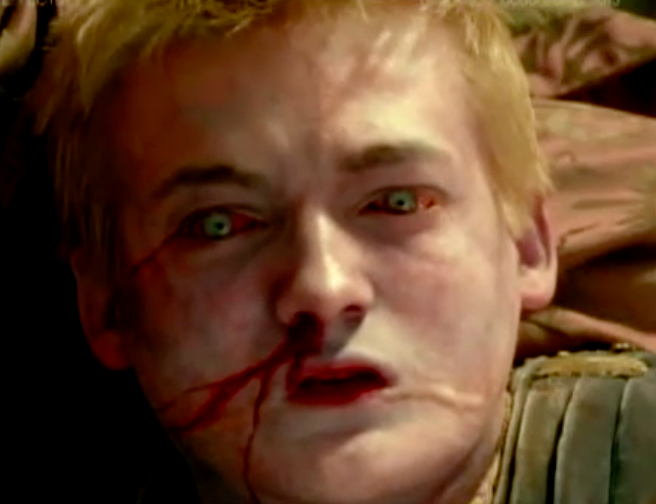
dead-joffrey

Next appearing on The Walking Dead as zombie #7.

Nikki: Eeeeeeeeeee!!!

Ding dong, the little shit’s dead!
Which little shit?
The INBRED shit!
Ding dong, the lit-tle shit is DEAD!!

Ah. You know, I said last season that Joffrey deserved to die, and yet I didn’t want him to because I enjoyed hating him so much that my enjoyment in despising him outweighed wanting to see him die a horrible death. Now, I shall revel in the moment (even though I know I’ll probably miss him soon). Never has a mess of vomit and blood and snot been so… beautiful. I had no idea this was going to happen; as far as I’m concerned, GRRM kills off the characters we love, and the only time a bad guy dies is when it’s someone we haven’t much invested in (like Polliver in the previous episode). To take out the most despicable of the Lannisters? The king? The single worst person on television right now? Glorious.

And by the way, Joffrey had to die for so, so many reasons, but chucking money at Sigur Rós and telling them to stop playing and get out? DIE, YOU LITTLE SHIT, DIE! (Anyone who follows me on Facebook knows my deep devotion for the Icelandic band, who play the minstrels at the party and then sing “Rains of Castamere” over the end credits; they are easily my favourite band and the best live band I’ve ever seen. How DARE he?!)

sigur-ros02

They’ve played to bigger, but quality counts for something …

But just in case it wasn’t clear that his death is definitely a good thing, they’ve really upped his dickishness these last episodes, especially in his despicable treatment of Tyrion. First bringing out a bunch of dwarf jesters to reenact the war between the kings of Westeros, once again beheading Ned Stark before his daughter Sansa, then treating Tyrion like garbage in front of the hundreds of guests, Joffrey’s sniveling face is the one every viewer most wants to smack, and has been since the first season.

Tyrion, I’ll let you have the honour:

However, beyond our personal grievances, and him being a horrible person in general, Joffrey is, quite simply, a terrible king. He’s weak, too scared to run into battle (as Tyrion brilliantly reminds him when he stands up at the wedding and tells Joffrey to reenact for all the guests how he had handled the Battle of Blackwater). He never, ever listens to any sort of counsel, whether it’s from Tyrion or Tywin or Cersei or Baelish. He knows very little about Westeros in general; remember in the previous episode where Daarios handed Daenerys the flowers and told her that in order to rule, she needs to understand the flora and fauna of the country, the people and what they need and want, and every bit of the landscape? Joffrey wouldn’t know what the difference between a flora and fauna was, much less have any sense of his people. The reason the marriage to Margaery was going to be positive was because she could stand before the people and say all the food was being given to the poor (an offer that Cersei quickly and privately repeals), which is the sort of thing Joffrey would never think of doing, but she tells everyone he did to make him look like a good and benevolent king. A king isn’t any sort of king if he doesn’t have one iota of support from his subjects.

The question now is, who could have done it? Was it Tyrion? He was holding the goblet, but there was really no time that I saw (having watched the wedding scene three times now) where he could have slipped something into that goblet. Could it have been Sansa, who holds the goblet at one point? (Again, she doesn’t seem to slip anything into it.) The final glass of wine was poured from the decanter sitting before Cersei, and she clearly didn’t do it, but that wine had to have been brought in from the kitchens. Sansa is quickly whisked away by the fool we’d seen in the previous episode, the man whose life she’d saved back in the second season, as if he’d known all along this was going to happen. Could he have poisoned Joffrey? Suddenly showing up the day before the wedding to say “heya” to Sansa and then grabbing her by the hand and telling her to run away seems a little suspicious. Could it have been the pie? Joffrey was drinking the wine the whole time, but it’s only after he takes a bit of the pie that he begins choking. Margaery is the one feeding it to him, and she never takes a bite (it’s passed around to others but you never see them bite into it, either). If someone had laced the pie, they would have been chancing killing everyone sitting up on the dais. It makes more sense to have put something in Joffrey’s goblet, but again, he’s using that goblet through the entire scene and it’s only at the end he begins choking.

In any case, there are so many people who would want him dead, the possibilities of who actually killed Joffrey are endless. Jaime for mocking him in the previous episode? (Jaime is his father, and seems to know that, so I doubt he’d kill his own son.)

The court jester?

Tyrion, just because he knows more than anyone what a sniveling little shit he is? (And for mercilessly slicing to bits the book that Tyrion had bought as a wedding gift, which had probably been handprinted and cost a fortune?)

Tywin? Seems like a long shot but since Joffrey’s such a horrible king, perhaps he was cleaning house with him the same way he was trying to do with Jaime? (If he’s willing to kill Shae, the woman Tyrion loves, why not kill the result of his twin children having an incestuous relationship?)

Lady Olenna? She seems pretty darn unfazed by the whole thing, and the goblet that he grabs right near the end is sitting on her table.

My money’s on Jónsi from Sigur Rós. As if I needed a reason to love that man more.

I’m sure the mystery will continue throughout the season, perhaps longer, perhaps just until the next episode, who knows, but at this point it doesn’t matter. All that matters is the king is dead, which will no doubt plunge all of Westeros into war once again. Although, we as viewers know that for all the talk of peace in the land and the war finally being over, there’s nothing but scheming and planning for more wars happening all around. That war will never be over.

I do want to add, however, one last time, that I think Jack Gleeson played Joffrey brilliantly. He was SO despicable, not just in his words, but in the way Gleeson held his lips in a constant sneer, in the way he always nonchalantly leaned against the sword on his hip, or crossed his arms in laid-back defiance, or flicked his hands about as if dismissing the one in front of him. I couldn’t imagine any actor playing him as perfectly as Gleeson did, and I really will miss the way he portrayed his character.

Back to Theon, you’re right, I’ve never been a fan, and perhaps it’s just that I’m not a fan of Alfie Allen. I don’t know why, he just bugs me. But it’s never clouded my judgment about the character and what is happening to him; I think his life has been difficult, being taken from his father as a spoil of war and being a second-rate child to Ned Stark his whole life, constantly reminded he is not a Stark, but a POW, essentially. And then when he finally returns to his own father, Balon shows him even less love and respect than did Ned. He’s spent his life trying to prove he’s someone, and now he’s been tortured both physically and psychologically, and reduced to this sniveling, shaking thing we see before us. The scene of him shaving Ramsay Snow is masterfully executed, from Ramsay’s flippant way of telling him that Robb Stark was dead, to Roose’s very subtle look that he might actually be impressed by what his bastard son has done to the creature, to Theon looking one second like he’s about to lose his mind and try to take all of them out with a razor, then keeping it together and getting back to the task of shaving his slave driver, and calmly and politely telling them the truth about Bran and Rickon, probably the most important bit of information anyone in the Seven Kingdoms could have right now.

Now that you’ve allowed me to rejoice and kick up my heels with glee (I thank you for that, sir), how did the death of Joffrey on-screen compare to what you read in the books?

Meanwhile, I shall continue to do the dance of joy.


Christopher: No longer do the dance of joy, Numfar! For though we rejoice at our least favourite Lannister’s timely and appropriately agonizing death, it looks as though our favourite Lannister will be taking the fall for it—whether he did it or not. And obviously I know who was actually responsible for the assassination, and just as obviously won’t betray that fact … and even more obviously will watch in glee as you try and figure it out.

But one way or another, Tyrion has been accused, and suddenly all those images from the trailers of him in a small, dark room make more sense. Cersei is obviously unhinged by her son’s death, which creates a perfect storm between her mother’s grief, her general irrationality, and her hatred of Tyrion. Will Tywin (reluctantly) defend his son? Will Jaime intercede? Or is this the end of Tyrion? Stay tuned!

This was a very Lannister-heavy episode, which makes sense … the final scenes can’t help but echo the toast raised by Tyrion at the beginning, “To the proud Lannister children: the dwarf, the cripple, and the mother of madness!” Joffrey’s madness—or at least his complete and utter willfulness and petulance—is certainly at the forefront of this episode. There is a brief moment when he seems to have attained some semblance of grace and generosity, first when he is magnanimous with Margaery’s fatuous father Mace Tyrell, and then again when he manages to be gracious about Tyrion’s gift of a book. Of course, that lasts only until he receives Tywin’s gift, which is exactly the kind of toy his sociopathic little mind delights in and cannot resist from cleaving Tyrion’s gift in two (it’s probably just as well there wasn’t a hapless servant in reach). As you say, Nikki, the book looks expensive, and it is—in the novel, Tyrion is beside himself, murmuring that that had been one of only four copies of the book in the world. We know, of course, how much Tyrion loves books: that he gave such a rare and valuable tome to Joffrey probably wasn’t the wisest course. He must have known such a gift would goad him (in the novel, after he hacks it apart, he sneers at Tyrion that “You owe me another gift, Uncle”); it would have been smarter to have given him some sort of innocuous weapon, but I tend to see the gift of that book as a moment of genuine hope and kindness on Tyrion’s part, the infinitesimal hope that Joffrey might actually learn something from it, and a kind gesture from someone who knows the true value of books and learning. Whatever moment of sanity Joffrey appears to have had vanishes as he acts out like a spoiled child on Christmas morning, so outraged by a gift that displeases him that he breaks it.

I think it is this essentially childish nature that makes Joffrey’s madness at once so infuriating and so terrifying. Imagine giving a willful toddler power of life and death, and adding into that mix innate sadism, and that’s what we have with Joffrey. His petulance at his own wedding reception is emblematic of this, when he gets impatient with Sigur Ros; also in his planned “entertainment,” which is comedy of the lowest possible brow. Any more lowbrow and it would be underground. What is most interesting about this scene is less the show itself than the reactions of its audience: how everyone responds is a good insight into their character. Margaery at first looks amused and happy, smiling and clapping—probably relieved to see her new husband in good humour for the first time that day—but quickly becomes perturbed as she realizes the cruel intent behind it. Joffrey’s little brother Prince Tommen, who is sitting beside Tyrion, laughs until he also suddenly realizes that it is meant to mock his uncle (his quick, chagrined sideways look at Tyrion exhibits more humanity in a nanosecond than Joffrey has shown in three seasons). Loras Tyrell looks disgusted, and exits as soon as the dwarf Renly is humiliated; his father, Mace Tyrell, looks dismayed; Sansa is in shock; Tywin is at first mildly amused, but slowly grows more obviously impatient with the proceedings; Varys can’t quite keep an appalled expression from his face.

dwarf-battle

The only person who seems as amused by the show (besides a handful of sycophants in the audience) is Cersei, who watches the whole event with a smug, indulgent smile. “Mother of madness,” indeed—it’s as if she’s the only person watching who hasn’t realized what a monster, and a childish one at that, her precious Joffrey is. She’s even delighted and amused when Joffrey is so convulsed with laughter that he spits wine.

And then … well, the entire confrontation between Joffrey and Tyrion plays out almost exactly as it does in the novel, and if possible, it is even tenser. I’ve got to hand it to GRRM: you know something bad is going down from the moment Tyrion verbally smacks Joffrey down, but you assume it’s going to happen to Tyrion … that he’ll be driven past whatever reserves of patience and calm he has to say or do something that will be unforgivable. It’s one thing to smack Joffrey when he’s still just a prince, with only the Hound and the horses in the stable as witnesses. It would be something else entirely to cuss out the king, or worse, strike him in front of hundreds of witnesses at his own wedding. And I honestly thought, the first time I read it, that that would be Tyrion’s downfall.

Instead, it’s Joffrey’s. But also Tyrion’s, as the distraught Cersei—showing herself as unreasoning at her son’s death as she was blind to her son’s life—points the finger at him.

But as delightful as it is to dance on the little shit’s grave, I suppose we should address the other two key parts of this episode: the ongoing saga of Lady Melissandre’s purgation of nonblievers in Stannis’ household, and Bran’s evolving talents as a skinchanger and seer. What did you make of the Stannis bits, Nikki? That scene does not, to the best of my memory, appear in the novels.

burned-at-stake03

Nikki: You mean something ELSE happened in this episode? I’ll have to consult my notes… why yes, you’re right. I wanted to note first the sheer beauty of the production of the wedding scene: from the fire eaters and jugglers to the music and the banners; from the gorgeous dresses and hairstyles to the setting (I believe they actually filmed this scene in Croatia), once again the production values and set design of this show just send it soaring above everything else on television. And you commented on the direction of this scene, which is so true: Joffrey’s antics with the little people dancing about in their silly costumes is one thing, but far more important are the reactions to those around him, and I think the look on Varys’s face is the most telling of all. He’s the spider, the one who flits from side to side, knowing exactly what to do or say that will keep him alive, but still performing his little Machiavellian machinations behind the scenes.

He’s the one who has arranged for Shae’s comfortable life across the sea; it just took Tyrion to be cruel enough to get her on the boat (another terrible moment in this episode that is overshadowed by the ending). Tyrion certainly looks devastated when Joffrey chops the book to bits, but much of his moroseness can be chalked up to the fact that he’s just overheard Cersei consulting with Tywin, and he knows what he has to do. He finally found someone who was able to look past his physical stature to love the man, and he has to give her up. “You’re a whore! Sansa is fit to bear my children, and you are not.” Watch the body language in this scene; he stutters and stammers his way through his speech, and is unable to look Shae in the eye as he does so. What he’s doing is saving her life, but he’s destroying her soul — and part of his own — in doing so.

burned-at-stake02

But now… to Dragonstone! “Lord of Light protect us, for the night is dark and full of terrors!” As we know, his wife is more of an acolyte and devoted follower of the Lord of Light than is Stannis, and when we first arrive at Dragonstone in season 4, it’s to see Selyse’s own brother being burned at the stake as a heretic. While most sisters would be horrified, begging Melisandre to reconsider, Selyse is so filled with the spirit of the Lord of Light that her face is glowing, and she looks like she’s on the verge of ecstacy. “Did you see? Their souls. It was their souls. Our Lord took them, did you see?” Stannis turns in disgust and walks away. I don’t think he saw what Selyse saw. Davos catches up to him to remind him what a travesty this is, that Stannis’s own father had worshipped the Seven Gods, and he was turning his back on his own tradition. Stannis just bluntly states that he’d told his brother-in-law to tear down his idols, and he’d refused. There’s very little conviction in Stannis’s voice; he believes in the Lord of Light — he definitely saw something come out of Melisandre back in the second season — but the Lord did him no favours at Blackwater, and there is doubt on his face. If he keeps killing the soldiers who don’t believe in Melisandre’s religion, he won’t have any left.

“Did you see, Ser Davos? They’re with our Lord now, their sins all burnt away. Did you see?” says Selyse, still beside herself with joy. “I’m sure they’re more than grateful, my queen,” Davos responds with fake sincerity, to the chagrin of Melisandre.

It’s interesting how the rituals to worship the Lord of Light always seem to happen in the dark.

Later, Melisandre goes to see Stannis’s daughter, and she’s gentle and kind, and tells Shireen that she doesn’t believe in a heaven and a hell, just a heaven. The only hell, she says, is the one we live in now. It’s rather difficult to disagree with her on that one.

I’m fascinated by the religion on the show (and as I’ve said before, it’s explained much better in the books) simply because in our world, so much of the turmoil, war, and hardship seems to stem from clashes of religious beliefs, far more than territory or personal grievances. Each group seems to worship someone different in Westeros, and while it rarely comes up as a topic of warfare, when it comes to Stannis, the religion and his devotion to Melisandre (which is stronger than his devotion to the Lord of Light) has been helping him make decisions. There’s an uneasy look on his face, however, that he’s not so sure about the results of those decisions so far…

One quieter aspect of religion on the show is the weirwood, the white trees with red leaves and sap that the Starks have always turned to in times of sorrow. What did you make of the Bran scene in this episode, Chris?

bran-vision

Christopher: Frankly, the Bran scene was a bit of a relief. For so long he’s been carried and dragged northward, with Jojen and Meera telling him how important he is, but with only a few exceptions—mostly when he sees through his direwolf’s eyes—we haven’t really had much evidence that this is in fact the case … instead, we’ve been treated to a rather tedious and uneventful journey north. It is a welcome change to have such a vivid scene in which we see through Summer’s eyes as he brings down a kill, and be about as irritated as Bran to be yanked out of it. Jojen reiterates a point (I think) he’s made before: that it is dangerous to spend too much time in your animal’s mind, for the longer you’re in there the more tenuous your grasp on your own humanity. His little speech does a good job in reminding us of the temptation for Bran: to be able not only to walk, not only to run, but to hunt, and be the master of the forest … “It must be glorious,” Jojen acknowledges, and for crippled Bran, who suffers the daily humiliation of having to be carried everywhere, it must be like a drug. But one that is, as Meera warns, just as addictive and even more dangerous.

It is not, apparently, just Summer who offers Bran oracular sight, however—the weirwood he touches gives him a series of visions more vivid than any he has yet experienced: he has visions of the past (his father polishing Ice in the Godswood, the tombs beneath Winterfell, himself falling from the tower); he sees his three-eyed crow; he sees the massive shadow of a dragon over King’s Landing; and he has the same vision Daenerys did in the House of the Undying, of a roofless and snow-filled throne room in King’s Landing. And repeated several times is the image of a great weirwood, with the whispered words “Look for me beneath the tree.”

It’s the first time since the assassin attempted to kill the sleeping Bran that any part of his storyline has given me chills. Any final thoughts, Nikki?


Nikki: I, too, got chills, and it was a thrill to see Ned Stark again, even if it was just a flash of his face from some piece of stock footage. I still miss him…

I’m definitely excited about next week’s episode, and the fall-out of Joffrey’s murder. Tyrion is clearly in for a world of hurt, Tommen suddenly has a new and huge responsibility, and I hope Sansa’s able to get away before the Lannisters capture her. Until then!!

1 Comment

Filed under Game of Thrones, Uncategorized

Tolkien and the Humble Tater: Thoughts on Food and Fantasy

ring_edited-2

I always loved the fact that the original Japanese version of Iron Chef started with a epigraph from the nineteenth-century French gourmand Jean Anselme Brillat-Savarin: “Tell me what you eat and I’ll tell you what you are.” Besides being the perfect pretentious opening for one of the most beautifully bombastic television shows ever made, the sentiment has always rung true for me … and unlike many pithy aphorisms, does not start to crumble under examination.

In my other life where I’m still a university professor, I’m a food historian or possibly food anthropologist (as opposed to my other other life, in which I’m a military historian). This is, I should add, a relatively recent enthusiasm: moving to Newfoundland has been something of a catalyst in this regard, as there are so many examples of this province’s history built into its food traditions. Go into the liquor store and you find nearly an entire wall given over to rum—which at first glance is odd, as you wouldn’t think liquor made from sugar cane would have such a foothold in this northern clime. By the same token, the presence of salt cod in so many traditional Caribbean dishes is similarly counter-intuitive, considering the bounty of fresh fish readily available. But both of course are legacies of the trade routes running salt cod south and sugar and rum north, and both are deeply and unfortunately entwined with the horrors of slavery and the depredations of colonialism.

Perhaps it is because of this dilettantish enthusiasm for food (though I stop well short of calling myself a “foodie”) and its history, but I find myself noticing it a lot in fiction … or in some cases, noticing its absence. I always tell my students: pay attention to the stuff. That is, pay attention to what a given author foregrounds, what he or she chooses to devote especial attention to. If that happens to be food, all the better: why, for example, does someone so parsimonious with detail as Ernest Hemingway devote so much attention to what his characters eat and drink (especially drink)? Or consider our first introduction to Mr. Leopold Bloom in Ulysses:

Mr Leopold Bloom ate with relish the inner organs of beasts and fowls. He liked thick giblet soup, nutty gizzards, a stuffed roast heart, liverslices fried with crustcrumbs, fried hencods’ roes. Most of all he liked grilled mutton kidneys which gave to his palate a fine tang of faintly scented urine.

Bloom is, above all else, a sensualist, a man whose tactile and sensory relationship to the world is placed in contradistinction to the moody and cerebral Stephen Dedalus; a partiality to inner organs of beasts and fowls is eminently appropriate to a man with a more visceral experience of life.

Fantasy as a genre has a particularly interesting relationship with food, for the simple reason that the creation of an alternate world requires some benchmarks for readers rooted in what Tolkien called the “primary world.” The most obvious example today is A Song of Ice and Fire, in which George R.R. Martin lavishes loving detail on (it sometimes seems) every single morsel of food his characters consume (seriously: Every. Single. One). On one hand, it is the prose of an author who himself obviously loves good food; on another hand, it is a shrewd and pungent way to establish regional identity in a world that, as the series progresses, just keeps getting bigger.

Indeed, food plays a prominent enough role in Martin’s novels that one of the promotional gimmicks for HBO’s adaptation was a series of food trucks roaming New York and L.A. selling “the food of Westeros” … food inspired by the series and devised by celebrity chef Tom Colicchio:

feastoficeandfireMartin’s preoccupation with food has also spawned a Game of Thrones cookbook, A Feast of Ice and Fire—itself the product of a blog, Inn at the Crossroads, which has for several years been approximating meals from the novels like almond-crusted trout, honeyed chicken, honey-spiced locusts (which are probably best to avoid, and not just because they’re insects, as readers of the books will attest), and of course Sansa Stark’s beloved lemon cakes.

But in Tolkien? Not so much. If we are, as I enjoin my students, to pay attention to the stuff in The Lord of the Rings, our attention is drawn predominantly to descriptions of landscape. The most descriptive passages tend to focus on the terrain through which the main characters pass. This preoccupation is perhaps unsurprising, considering that Tolkien was an avid hiker and loved a good walk about as much as George R.R. Martin likes a good restaurant; but more specifically to the novel, landscape in its various iterations becomes deeply significant in its oppositions between the pastoral cultivation in the Shire and dangerous wilderness; between plain and forest; and most crucially between a utopian, idyllic world of beauty, and the blighted, dystopian spaces of Mirkwood or Mordor.

Food is of course present in the novel, but usually in passing and rarely with any detail or description. It is indeed rare that we even know what characters are eating (lembas excepted). There are no Game of Thrones-esque scenes in which “Pippin tore a crisp leg, sticky with honey and crusted with herbs, from the roasted capon.” And what specificity we do get with food tends to rest with the hobbits—the lavish feast at Bilbo’s birthday party, for example, or the hobbits’ two meals of mushrooms. Hobbits, as we are told repeatedly, are small creatures with capacious appetites, so it stands to reason that they’ll be more preoccupied with meals than stern men, stoic dwarves, or ethereal elves.

Hence, when Sam determines to cook a meal for Frodo and cajoles Gollum into catching some rabbits for the task, the scene stands out. And we get a fun little insight into hobbit priorities:

All hobbits, of course, can cook, for they begin to learn the art before their letters (which many never reach); but Sam was a good cook, even by hobbit reckoning, and he had done a good deal of the camp-cooking on their travels, when there was a chance. He still hopefully carried some of his gear in his pack: a small tinder-box, two small shallow pans, the smaller fitting into the larger; inside them a wooden spoon, a short two-pronged fork and some skewers were stowed; and hidden at the bottom of the pack in a flat wooden box a dwindling treasure, some salt.

The resulting meal is, however simple it ends up being, among the most vividly described in the novel. More than that however, it serves to make Sam’s familiar, banal act of cooking that much more remarkable. Indeed, given the context, cooking a simple and wholesome meal is nothing short of heroic, and the attention Tolkien gives it emphasizes its thematic importance, something I’ve touched on in a previous post: the role of “home” and the “homely” as a touchstone, the manner in which it, by contrast, emphasizes just how far from home they actually are, and (of course) it serves as a concrete manifestation of Sam’s loyalty and devotion. That being said, the stew’s lack is just as significant as what it possesses. It has nothing to flesh it out besides the rabbits themselves, and the paltry herbs Sam is able to forage. It is on one hand a reminder of the comforts of home; but Sam is also keenly aware of how deficient a stew it is, with its lack of any vegetative besides herbs—and in particular, its lack of potatoes. His little disquisition on taters in answer to Gollum’s question is one of my favourite Sam moments, and one rendered very well in the film:

“Po—ta—toes,” said Sam. “The Gaffer’s delight, and rare good ballast for an empty belly. But you won’t find any, so you needn’t look. But be good Smeagol and fetch me some herbs, and I’ll think better of you. What’s more, if you turn over a new leaf, and keep it turned, I’ll cook you some taters on of these days. I will: fried fish and chips served by S. Gamgee. You couldn’t say no to that.”

But of course Gollum can say no, preferring his own rather gruesome version of sashimi. This little wistful ode to potatoes speaks to Sam’s rustic and rural simplicity—if we think of potatoes in cultural terms, there is much of the peasant attached to them, in part because of their colonial associations with the rural Irish. And if we can cast our minds back to the very first chapter, we recall that the list of Bilbo’s bequeathals included two sacks of potatoes for “Old Gaffer Gamgee,” Sam’s father (as well as “a new spade, a woolen waistcoat, and a bottle of ointment for creaking joints”).

There is also here yet another fun anachronism, for both potatoes and the practice of frying in oil were alien to the European Middle Ages. We might associate potatoes with Ireland, but in fact potatoes were not indigenous to Europe—they were transplanted from South America in the sixteenth century. And frying as a means of cooking, while practiced in, for example, ancient Rome, was not at all common in the Middle Ages. Certainly, the dish of “fish and chips” as we know it did not become standard fare until the eighteenth century and after. (Fun fact: initially, the batter was not meant to be eaten, but was used to protect the flesh of the fish from the hot oil). The point here being that “fish and chips” is an ahistorical gesture on Tolkien’s part that grounds the hobbits and the Shire in a particular sense of Englishness—and again, in a particular sense of “home.”

So what? (you might well ask). Tolkien isn’t writing historical fiction; potatoes and battered, fried fish might be fatal anachronisms in a novel seeking to accurately depict the middle ages, but there’s no such restrictions in fantasy. Indeed, the presence of a potato in an ostensibly medieval, vaguely European context is rather insignificant next to sorcery, magical rings, and immortal elves. Which is true enough, but misses the point, which is that this scene, with Sam’s ode to the humble tuber, is deeply significant for the fact that nowhere else is food so celebrated except in the abstract. Hobbits, as we have established, love to eat; what they love to eat is left to the imagination.

“Tell me what you eat and I’ll tell you what you are.” Sam’s love of potatoes speaks to who and what he is, the simple but sturdy rural yeoman embodying certain qualities of the English agrarian working class. If other hobbits (such as the Sackville-Bagginses, Ted Sandyman, or those who get in line twice at Bilbo’s party to receive gifts twice) are Tolkien’s gentle poke at country folks’ small-minded parochialism, Samwise Gamgee is his celebration of their virtues of loyalty, tenacity, and common-sense (or “hobbit-sense”). Sam is, ultimately, the novel’s true hero: it is he who gets Frodo to Mount Doom through sheer force of will, finally carrying him when Frodo no longer has the strength to walk. He also, in a moment that bears quoting in full, resists the temptation to take up the Ring himself while he bears it:

As Sam stood there, even though the Ring was not on him but hanging from a chain around about his neck, he felt himself enlarged, as if he were robed in in a huge distorted shadow of himself, a vast and ominous threat halted upon the walls of Mordor. He felt that he had from now on only two choices: to forebear the Ring, though it would torment him; or to claim it, and challenge the Power that sat in its dark hold beyond the valley of shadows. Already the Ring tempted him, gnawing at his will and reason. Wild fantasies arose in his mind; he saw Samwise the Strong, Hero of the Age, striding with a flaming sword across the darkened land, and armies flocking to his call as he marched to the overthrow of Barad-dur. And then all the clouds rolled away, and the white sun shone, and at his command the vale of Gorgoroth became a garden of flowers and trees and brought forth fruit. He had only to put on the Ring and claim it for his own, and all this could be.

In that hour of trial it was the love of his master that helped most to hold him firm; but also deep down in him lived still unconquered his plain hobbit-sense: he knew in the core of his heart that he was not large enough to bear such a burden, even if such visions were not a mere cheat to betray him. The one small garden of a free gardener was all his need and due, not a garden swollen to a realm; his own hands to use, not the hands of others to command.

There is an awful lot in this passage to parse, and I want to come back to it in a future post to talk about Tolkien’s conception of tyranny and what it means to be a “free gardener” (or “free” anything). But for now the main point is the fantasy the Ring gives Sam: that of the uber-gardener, the Great Power who will make the desert bloom. As I mentioned in one of my first Lord of the Rings posts, Tolkien’s vision of the pastoral is not an unequivocal celebration of nature, which it its wild incarnations is perilous and frequently terrifying. Rather, he romanticizes the domestication of wilderness in the form of the Shire, in which domestication is effected not by domination but by cultivation. The twinned figures of the farmer and gardener are ultimately as heroic in Tolkien’s world as the warrior.

I seem to have strayed a little from my overarching topic here, which is about the thematic, symbolic, and metaphorical significance of food. Do I derive this reading of Sam solely from his love of potatoes? Of course not. But that moment—which is, in its way, a moment of honesty and vulnerability, spoken to an unsympathetic listener—stands out for me, not least because it is one of the only instances when food is described in specific terms. “Tell me what you eat and I’ll tell you what you are.”

****

UPDATE: I had literally posted this blog entry when my friend Allan Pero posted this picture to my Facebook wall.

one_donut

2 Comments

Filed under Return to Middle-Earth, what I'm reading

Game of Thrones 4.01: Two Swords

GameOfThrones_Teaser02_Screencap10

Well hello again, old friends, and welcome once again to the great Game of Thrones co-blog between myself and the talented and beautiful Nikki Stafford. As always, we will be posting our impressions, critiques, and interpretations of each episode after it airs, and as always we’ll be simulblogging™ on this humble blog of mine, and on Nikki’s far more widely read blog Nik at Nite.

So after a long year, and (appropriately, I suppose) even longer winter, here we are again—season four! When we last left Westeros, the ruin of the Stark clan had shocked everyone with the notorious Red Wedding; Jon Snow was limping back to Castle Black full of arrows courtesy of his erstwhile wildling lover Ygritte; Jaime Lannister was finally returning to King’s Landing, minus one sword hand; Sansa and Tyrion were unhappily married; the Jaime-Brienne buddy comedy was in the process of being superseded by the Arya-Hound version; and Bran was slowly, slowly making his way north.

So where are we now? I cede the stage to Nikki to start us off.

tywin_shadows

Lurking in the shadows: you’re doing it right.

Nikki: Valyrian steel, murdered families, brothel visits, a Lannister hand nailed to a table, backstabbing, arguing, and a little shit of a king.

Why, Game of Thrones must be back!!

I’m going to start with the one-handed knight himself, Jaime Lannister. The Kingslayer is back, and now owns a sword forged with Valyrian steel… Ned’s Valyrian steel, by the way. You would think Cersei would be falling at his feet in relief, that Tywin would finally have the beloved son at home and be holding a parade, and that Joffrey would be honoured to once again have his father uncle in the Kingsguard.

But it turns out, when you return to King’s Landing as damaged goods, your past deeds don’t mean shit. Ol’ Leftie is no longer the Great Kingslayer of old. Tywin tries to remove him from the Kingsguard, telling him instead to return to Casterly Rock and rule in his name. When Jaime is shocked at the suggestion, Tywin doesn’t mince words in telling Jaime that he’s a cripple, that he’s less of a man, that he can’t possibly properly protect the king, and that he’d basically receive an Honourable Discharge from His Highness The Little Shit. But Jaime pleads that his only wish is to serve, something that makes Tywin visibly sneer in disgust. He waves him away with the back of his hand, telling him to just take the damn sword, adding his biting goodbye: “A one-handed man with no family needs all the help he can get.”

jaime_sword

Figuratively emasculated man given the gift of a phallic symbol by his domineering father. Insert Freudian joke here.

Cersei spurns him, insipidly telling him, “You took too long,” when he told her what he did to fight his way back to her side. After her 45-second summary of The Series So Far, she pulls away from him like he’s some disgusting creature, whines that she’s had to live all alone all this time while being terrorized by her father, brother, and horrible son, and that he wasn’t there to save her. And then to return missing an appendage? He might as well slap her in the face. He’s no longer whole, and she doesn’t want him to touch her.

And finally, the little shit. Joffrey lords around the room, and Jaime doesn’t betray any surprise that his “nephew” has become even more insufferable than he’d been when Jaime left (Jaime probably saw it coming). As Jaime remains calm throughout the scene, constantly bowing to Joffrey’s insults and never failing to call him, “Your Grace,” Joffrey gets crueler and crueler. Jaime apologizes for not having been around, joking that he’d been a little busy. “Yeah, busy getting captured,” spits back Joffrey, immediately turning to the other guard for backup that he is simply HIGH-larious. Joffrey prances about the room, finally landing on a book that contains all the great deeds of the knights of King’s Landing. He flips through the pages with a purpose, posturing as he reads out the great deeds of Jaime’s predecessors with mock solemnity and awe. And then he gets to Jaime’s page, which is only half-filled, with a blank page beside it. He pretends to be shocked. “Someone forgot to write down all your good deeds!” “There’s still time,” whispers Jaime, with rage simmering just below the surface. “Is there? For a 40-year-old knight with one hand? How can you protect me with that?” “I use my left hand now, Your Grace. Makes for more of a contest.”

Jaime Lannister left King’s Landing as the great hope of the Lannister clan: he was the Kingslayer, Cersei’s lover, unknowing father of a king, unbeatable in battle, admired by all. He returns to a disappointed father, a disgusted lover, and a sneering king. He’s less than a man, worthless and a disappointment to everyone; his brains and brawn mean nothing to anyone because his body is damaged.

In other words, he’s become Tyrion.

Jaime is calm and measured in two of the scenes, doing a good job of suppressing his heartbreak with Tywin and keeping his head down and voice quiet around Joffrey. With Cersei he’s far more emotional and hurt, as if her rejection hurts him far more than the others. As he slams the book of knights closed after Joffrey leaves, we can see these comments are getting to him. Will it turn him against his family?

Later, with Brienne, she reminds him of his oath to protect the Stark children, or, in the immediate case, Sansa. He doesn’t know where Arya is, but Brienne tells him he must do everything in his power to keep Sansa safe. He argues that he can’t exactly steal her away from his own brother and whisk her off somewhere else to “keep her safe,” but she won’t listen, causing the two of them to banter back and forth like the days of old. “Are you sure we’re not related?” he says to her, clearly annoyed. “Ever since I’ve returned every Lannister I’ve seen has been a terrible pain in my ass. Maybe you’re a Lannister, too. You’ve got the hair for it… but not the looks.”

Brienne: [glare]

As an aside, I was a little surprised to hear Joffrey say that Jaime was a 40-year-old man. I remember back in season 1 being surprised to discover that Cersei was in her early 30s, so her age might have been mentioned at some point for me to have assumed her to be that young, and Jaime is her twin. Perhaps they’re simply changing the age at this point in the show because it’s less likely to believe you’re washed up at 32 than that you’d be washed up at 40. And now, being 40, I shall crawl away and cry.

This episode featured two new people: Prince Oberyn and his paramour, Ellaria, played by the gorgeous Indira Varma from Rome and Luther. What did you think of their portrayal here, Chris?

Pedro-Pascal-as-Oberyn-Martell-Indira-Varma-as-Ellaria-Sand_photo-Helen-Sloan_HBO-1024x681

Christopher: I’m quite delighted with Oberyn and Ellaria. When I saw pictures of Pedro Pascal, the actor playing Oberyn, I wasn’t convinced—he looked at first glance to be too slight and a little too pretty to be playing the Red Viper of Dorne, who is described in the novel as somewhat more ruggedly handsome. But I have no complaints about how Pascal is playing him … he brings a dangerous calm to the character, a sense of the threat always simmering behind flat eyes. The confrontation with the Lannister men (not in the novel) was very well done, and conveyed precisely how dangerous—and how impulsive—he is. One of the things clearly communicated about Oberyn in the novel is that he is hot-headed, given to acting without thinking and doing it with no warning whatsoever. That’s obviously at play here, but it’s balanced by a cold deliberation and precision.

As for Indira Varma … well, I’m happy to watch her in anything, as she is not only mind-numbingly beautiful but is also an extraordinarily talented actor. But as Ellaria Sand? That is one of the best pieces of casting I’ve seen on this show so far (and that’s saying a lot). Though I think it’s worth mentioning—Lucius Vorenus, John Luther, and now Oberyn Martell? Isn’t she starting to get typecast as a woman drawn to mercurial, dangerous men?

oberynWith the arrival of Oberyn and Ellaria, we’re getting introduced to more of Westeros’ fraught and bloody history. Part of that history was recounted in the conversation between Tyrion and Oberyn, but it bears repeating: Rhaegar Targaryen was wed in a dynastic marriage to Elia Martell of Dorne, Oberyn’s sister. She had two children with him, but Rhaegar was in love with someone else (Lyanna Stark, sister of the lamented Eddard). It was in part Rhaegar’s ostensible abduction of Lyanna that drove Robert Baratheon (who was engaged to her) to rebel. When the Lannister forces sacked King’s Landing, Gregor “The Mountain” Clegane, brother to the Hound, raped and killed Elia and killed her two children. Since that day, the rage and desire for revenge has simmered in Dorne … and now the hot-headed Oberyn has come to King’s Landing with vengeance on his mind. This should turn out well.

Speaking of volatile creatures … oh, how Daenerys’ dragons have grown! They’re getting quite massive. And dangerous. I love the opening bit where we find Dany reclining on a rock with Drogon’s head in her lap, purring like a giant kitten. For a few moments we get to enjoy an entirely maternal moment: the Mother of Dragons looks here like a mother indeed, until her other children returns and, like this dickish older brother he is, Drogon steals their food. And when Daenerys attempts to play peacemaker … well, it’s all fun and games when her dragons scare the crap out of her enemies, but it’s another thing entirely when they turn on mom. “They’re dragons, Khaleesi,” Ser Jorah observes. “They can never be tamed. Not even by their mother.”

Um. OK, I think I might have noticed a slight flaw in Daenerys’ plan.

We’re also introduced in this episode to the newest incarnation of Daario Naharis. The impossibly handsome, cleft-chinned Adonis from last season has been recast with … Sonny, the heroin-addicted musician from Treme. I think I’m going to have to wait and see on this particular choice. It’s not that I don’t like Michiel Huisman as an actor (I loathed Sonny, but that spoke to the actor’s talent), but he is almost the antithesis of how I imagined Daario based on his description in the novel. The previous Daario also did not conform to the novel’s depiction, but he was at least more overtly handsome and smugly arrogant. Huisman has the swagger, but not the looks—and certainly, he’s far too scruffy to even remotely resemble the piratical mercenary we first meet in A Storm of Swords, who is described as having flamboyantly dyed hair and beard, clad in colourful silks, and twin swords whose pommels are shaped like women in wanton poses. (Full disclosure: in my dream casting of this series before HBO picked it up, I always imagined Daario played by Joseph Fiennes).

His apparent rivalry with Grey Worm is an invention of the show, and makes very little sense in terms of his character—Daario would never consider a eunuch (and a former slave at that) either his peer or his rival. And I don’t buy Grey Worm rising to Daario’s goads. Aside from the obvious joke about the pointlessness of dick-measuring, Daario would be as little concern to Grey Worm as vice versa. It makes for a fun little scene, but I just don’t buy it. And I found Daario’s flirtation with Dany far less convincing than last season’s … I didn’t care for Daario much last season either, but there was a more tangible chemistry. But I will withhold further judgment until I can wait and see.

What did you think of Sonny’s reincarnation as a swaggering sellsword, Nikki?

bet

Insert more Freudian jokes here.

Nikki: It definitely took me by surprise, and made me confused; I tend to avoid Hollywood talk and didn’t know that Daario had been recast (after watching this episode, I looked it up and it would appear Ed Skrein, who originally played him, and who might have been the most beautiful man on the show, has been cast as the younger Jason Statham for the Transporter films and he left GoT to follow that opportunity. And, not having watched Treme in a while but instead more recently watching its far soapier network cousin, Nashville, my immediate response to my husband was, “Uh… what the hell is LIAM doing on Game of Thrones?!” And that accent? Terrible. Which is suprising, because he pulls off a great American accent in Nashville and Treme and rarely betrays that he’s actually Dutch, but he can’t seem to quite find the accent he’s looking for here. British? Northern British? South African? Perhaps that’s just growing pains, and he’ll be more comfortable with it in the scenes to come. If there’s one thing actors can get away with on Game of Thrones, it’s having strange accents. I say go with the Dutch, since Daario could pretty much have any accent; I’m not sure why they told him to try on British instead.

I thought he was intriguing and slightly dangerous and I didn’t know whether or not I could trust him when he was being played by Skrein. I’m not sure Huisman can play him with that same enigmatic quality, but again, I guess time will tell.

What did intrigue me was the scene where he showed Daenerys the plants, explaining that when she enters Meereen (which you see in the opening credits for the first time), she’ll need to know the plants of the area, and the rivers, and the people. He shows her three plants, and that one is dull but makes an excellent tea, and the other strange and beautiful, also making a good tea. But the third one is the most beautiful and strange-looking of the three, and is poisonous. Like Dany’s dragons, she’s learning that things aren’t always as they seem. As you said, when Drogon turned and screamed at her before flying away, my heart sank: if you can’t tame the dragons, you can’t make them necessarily work for you. And without the dragons, Daenerys just lost her main source of strength. (I’m still rooting for her, though!)

I am happy to say that now that I’ve read the first book, I understand the whole Rhaegar thing so much more: before, it was something mentioned offhandedly all the time, but its true significance kept getting lost on me. Now I realize just how heinous the Mountain was, and what Rhaegar had to suffer through before he was killed, and also why Dany’s claim to the throne is such a strong one. But also how complicated Rhaegar’s situation was, and that he’s not exactly the good guy, either.

sansaSpeaking of complicated characters, let’s talk about Tyrion. I loved the scene of him with Sansa, as she sat at the table in her abject misery, thinking about what had been done to Robb and her mother and her sister-in-law that she’d never even met. The world has become hopeless to Sansa: she’s an orphan, her eldest brother is dead, as far as she knows Bran and Rickon were hanged and burned at Winterfell, and Arya is probably dead too. And she never had a particularly soft spot for Jon Snow, so I doubt he even enters her mind at this point. As far as she’s concerned, she’s all alone, and it won’t be long before the Lannisters have their way with her, too.

Tyrion happens to be one of those Lannisters, but he’s someone who’s been the butt end of every Lannister joke since he was born, so he sympathizes and identifies with Sansa and her pain. He creates a beautiful eulogy for Catelyn, telling Sansa, “Your mother, I admired her. She wanted me executed… but I admired her.” His words are very powerful, as he remembers how much Catelyn loved her children, and wouldn’t want Sansa to starve herself to death the way she is right now. But to Sansa’s mind, what point is there to eat and go on living? At least if she starves herself her death is in her own hands. As she gets up and tells Tyrion that she’ll be in the godswood because it’s the only place where nobody tries to talk to her, you can see the misery on his face. He actually cares about Sansa. He’s not in love with her — he’s still very much in love with Shae, which is why he pushes her away in this episode and seems terrified that she’s in his room — but he does care for her very much. But Sansa is not in the mood to be comforted by a Lannister, and we can hardly blame her.

Hm… of the three Lannister children, two of them are sympathetic to the Starks and want to protect the family from further harm. Unfortunately, Tywin, Cersei, and Joffrey are a more powerful triumvirate. But for how much longer?

Another person mourning the results of the Red Wedding is Jon Snow, who tells Sam how much he looked up to, and sometimes even hated, Robb for being so good at everything, prompting Sam to say that’s how he often feels about Jon. And then Jon must go before the Night’s Watch tribunal to answer for his connections to the wildlings… or “free folk” as he accidentally calls them. What did you think of this scene, Chris?

Christopher: What I liked about this scene was what I liked about Jaime’s successive humiliations: the show does a good job of taking what comprises pages and pages and pages in the novel(s) and compressing it into a few relatively short but deeply poignant sequences. Jon Snow’s interrogation at the hands of his old nemesis Allister Thorne and the newly-arrived Janos Slynt (whom you’ll recall was the treacherous captain of the city watch in King’s Landing, whom Tyrion sent to the Wall) is somewhat more protracted in the novel. What we lose in its abbreviation is Jon Snow’s initial humiliation when Slynt arrives, as he is thrown into a cell and forced to endure a host of sneering accusations. We get the gist of them in this brief scene, whose brevity is both a blessing (we don’t have to endure endless interrogation) and a curse (we lose some of the depth of feeling). There are also some chronological inconsistencies between the show and novel, but in the interests of not spoiling plot points I’ll wait to expound on them in a later post.

The scene between Jon and Sam is original to the show: though it certainly articulates feelings one suspects Sam has about Jon, Sam is never quite so bold in the novels. It was a nice moment, however … a pause before Jon faces the music, and a useful reflection on fraternal relationships (considering that Sam is now Jon’s brother in a way Robb never could have been).

fletching arrows

Meanwhile, while Jon is having to atone for the fact that he slept with a wildling girl, the wildling girl in question is having to deal with accusations herself—even as she is obviously in the midst of plotting her revenge, fletching what appears to be an overabundance of arrows. Toramund’s question, “Do you plan on killing all the crows yourself?” has an obvious, if unvoiced, answer: “Just one … but I plan to make absolutely certain he’s dead this time.” Toramund’s accusation, “If that boy’s still walking, it’s because you let him go” is too true, and must rankle Ygritte’s wildling heart. There’s a cruel symmetry to Jon and Ygritte’s respective situations: they are both absolutely loyal to their people, yet in crucial ways they both betrayed them. But whatever the sanctity of Jon Snow’s vows, it is difficult not to see Ygritte as the wronged one in this equation—if only for purely emotional reasons.

Besides Ygritte’s enormous stockpile of arrows, things look bleak for Castle Black as we meet the reinforcements Mance Rayder has sent south of the Wall: Thenns, who in the novel are an entirely different breed of wildlings. The scene when they arrive does a good job of encapsulating the tribal divisions in Mance Rayder’s army, and reminds us of what he told Jon Snow last season: that the only reason he could actually get the wildlings to work in concert was their fear of the White Walkers. That doesn’t obviate their internecine conflicts and hatred—it just gives them a common enemy. Toramund is suddenly no longer the scariest wildling in the room, and the very question of Jon Snow’s betrayal, which he was berating Ygritte over a moment ago, becomes his own reason for being defensive. “I answer to Mance,” he growls when the leader of the Thenns challenges him on the same point. The newcomers appear as monsters from a nightmare, bearing tribal scars, contempt for weakness (which one would not have thought to seen in Toramund, or to have seen him get defensive about) … and a sack full of dismembered Night Watch brothers, which they proceed to spit and roast in preference to whatever game Toramund’s people were cooking.

[shudder]

What did you think of that scene, Nikki? And is it just me, or when you say “the Thenns,” does it sound like you’re referring to a one-hit 90s band?

Nikki: LOL!! I thought the Thenns were terrifying, which had a lot to do with the dark, one-note, foreboding music that played as they first walked into the canyon where the wildlings were sitting. (I just wanted to add that I loved watching Ygritte make the arrows, especially when she’d carefully slice the edges of the feathers.) But it also had a lot to do with their leader Styr, played by Yuri Kolokolnikov. I had to look him up, because he’s so mesmerizing I wanted to know what else I’d seen him in, but apparently this is his first English-speaking role. Was anyone else thinking Roy Batty from Blade Runner? Because I certainly was. But much scarier. I’m guessing the Thenns tattoo themselves by carving shapes into their skulls and then letting them heal? I second your [shudder] and raise you a [geeyaaaaahhh].

Of course, the scariest person in this episode was probably The Hound, and quite honestly, I’d love to see an Odd Couple–type show starring Arya and the Hound, just for their banter. (Of course, only after they’ve developed the Brienne and Jaime Hour.) They are hilarious, with Arya complaining about his stench to mocking him about his skewed morals.

Hound: “I’m not a thief.”

Arya: “You’re fine with murdering little boys but thieving is beneath you.”

Hound: “Man’s gotta have a code.”

I do hope I wasn’t the only one who was disappointed that the Hound wasn’t whistling “The Farmer in the Dell” while walking up to the inn immediately following this scene.

And what a scene it is. Arya and the Hound first peer in from the bushes, and he’s happy to just sit and watch and wait until the time is right. Unfortunately, when Arya spots Needle and the man who’d taken it from her, she changes his plans. Quick recap: Polliver is the guy who looks like Eddie from Nurse Jackie, who was working under the Lannisters when they attacked Yoren and then marched them to Harrenhal (that’s when Arya and Gendry, along with the others, were put in the pen and then pulled out one by one and tortured with rats inside buckets on their heads). He took Needle and killed Lommy, that little curly-headed kid who was with Arya. He’d been wounded when they attacked, and because they weren’t about to carry a kid back to Harrenhal, Polliver walked up to Lommy and pushed the sword up through his throat.

And now, Arya does the same to him. It’s a great scene, first with the Hound and Arya bickering in the bushes:

Arya: “He killed Lommy.”

Hound: “What the fuck’s a Lommy?”

Arya: “He was my friend. Polliver stole my sword and put it right through his neck… He’s still got it, my sword. Needle.”

Hound (sneeringly): “Needle. ’Course you named your sword.”

Arya: “Lots of people name their swords.”

Hound: “Lots of cunts.”

OK, so maybe the Odd Couple sitcom wouldn’t work on ABC.

When Arya runs to the inn, the Hound tries to stop her, but it’s too late. So he plays it cool, goes in, becomes belligerent, slurping rudely at his beer and demanding two chickens to eat, until the place goes nuts. And in the midst of the melee, with the Hound killing and maiming anyone who comes near, Arya manages to get Needle and return the favour that Polliver had given to Lommy. It’s a great moment, but also a shocking one — if you think of where Arya was just a few short months ago, she never would have been able to kill someone in cold blood like that. But now, not only does she do it, she enjoys it. The half smile that she gives as she looks down on him speaks volumes. Arya was never innocent, but we realize that she’s become ruthless when she has to be. Which she’s going to have to be if she’ll survive all of this. Both Maisie Williams and Rory McCann shine in this scene; they’re such fantastic actors. In this episode you see mutual loathing become mutual respect.

Tip #582 in surviving Westeros: Don't take Arya's stuff.

Tip #582 in surviving Westeros: Don’t take Arya’s stuff.

I think we’ve actually covered everyone at this point! Bran doesn’t appear in this episode, nor does Theon. Perhaps we’ll see them next week, along with what is probably going to be the Little Shit’s wedding. Is it too much to ask that he trips while coming back down the aisle and accidentally falls on someone’s sword? Because, other than being a truly awesome moment, it would certainly save Margaery from what will no doubt be the worst night of her life.

Any final thoughts?

arya_hound

Christopher: It was very wise of the writers to end this episode with Arya and the Hound … much of the rest was Red-Wedding reaction and Lannister angst (albeit very well done) and setup for what was to come in terms of the wildlings and the Wall. It was satisfying to conclude with a wee bit of the ultra-violence, no? I second your thoughts on the general awesomeness of Maisie Williams and Rory McCann—I was particularly taken with the way McCann plays the Hound’s studied hostility to his brother’s men. As you observed, he does not want to go into that inn … but when Arya effectively gives him no choice, he plays it with the cool menace of a man who holds his antagonists in utter contempt. The scene plays out almost precisely as it does in the novel, but with one crucial difference—something I will not mention here, because spoilers.

Well, that brings us to a close! It has been a long year waiting, and there’s always the worry that the new season will disappoint. But in the words of Syrio Forel: not today.

1 Comment

Filed under Game of Thrones, television